A Clean River?
Part 1 - A history
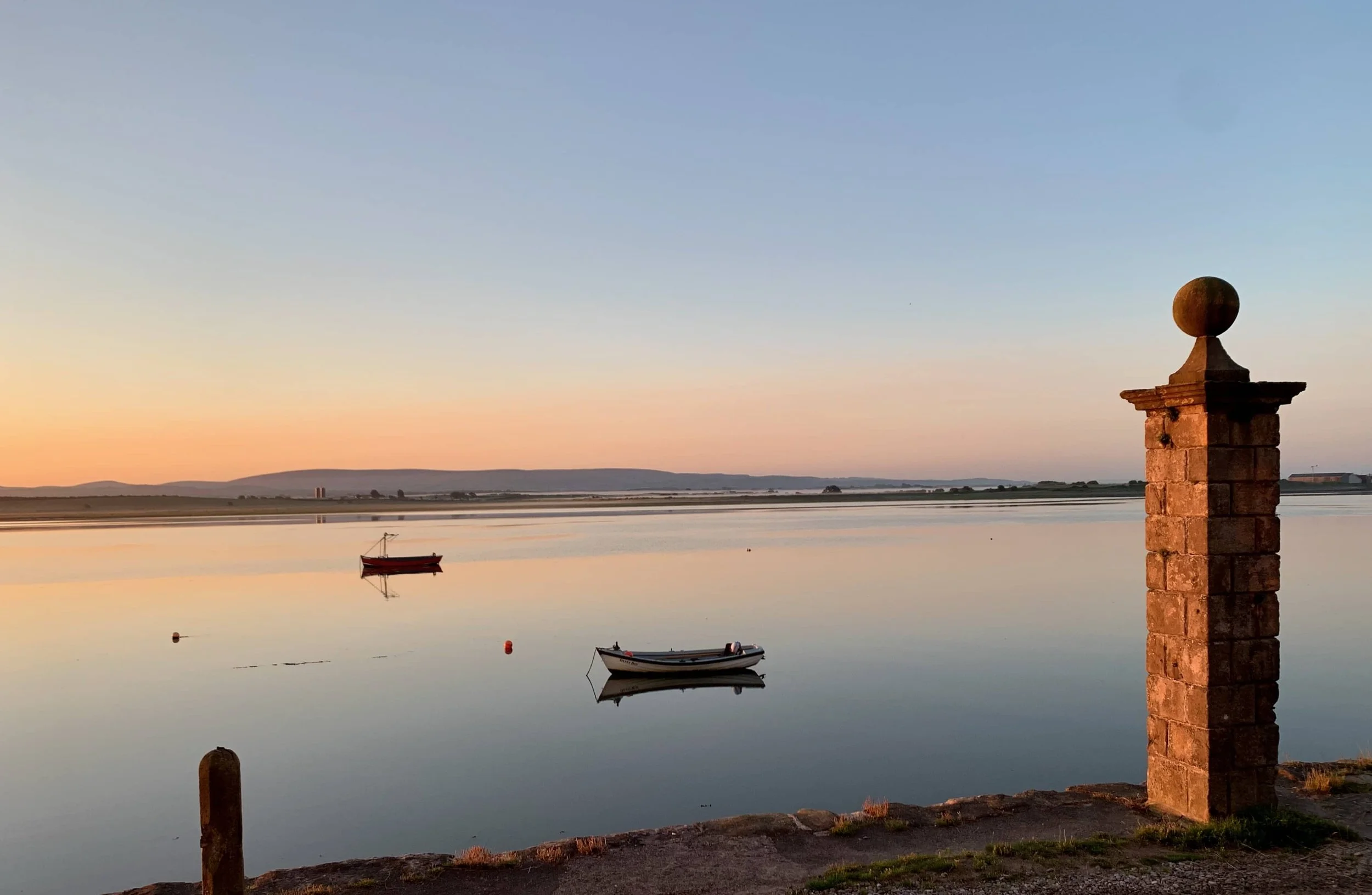
The River at dawn: Website photo.
Introduction
It’s a complex question and answer.
I will be shot for this sweeping generalisation, but the river is in good shape in the upper reaches, moderate as we approach Lancaster, not so good (bad) around Lancaster, and then moderate again as we pass the village and enter Morecambe Bay. Most pollutants come from our personal waste, agricultural runoff, and road and motorway runoff.
The River is probably in better health than at any time since industry and urbanisation became established. But the environmental movement's success since the 1970s has led to ever higher standards.
Removing raw human waste from the town had been a contentious issue since the early 1800s. The high costs of improvements led to delays and backsliding by Lancaster Corporation. It wasn’t until much later that concern grew for the river.
We will be discussing some of the grisly details of human waste disposal in the early nineteenth century, so those with a delicate constitution may wish to have smelling salts to hand.
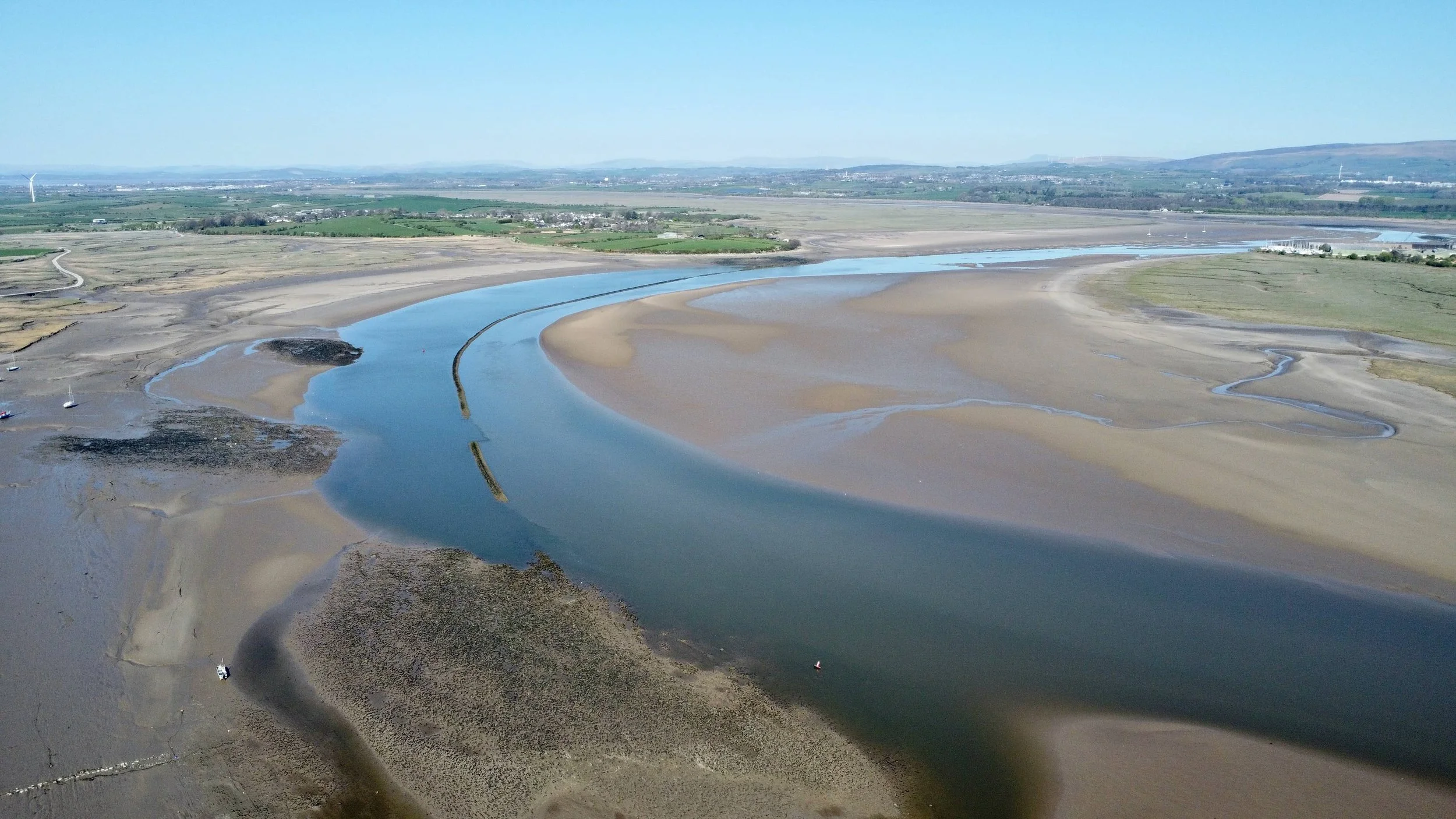
Looking towards Bazil Point: A Mark Fletcher photo.
Population Growth
Lancaster experienced rapid population growth during its early Georgian merchant period and again in the later Victorian era, as industries, notably linoleum manufacture, started to replace traditional cotton and wool weaving.
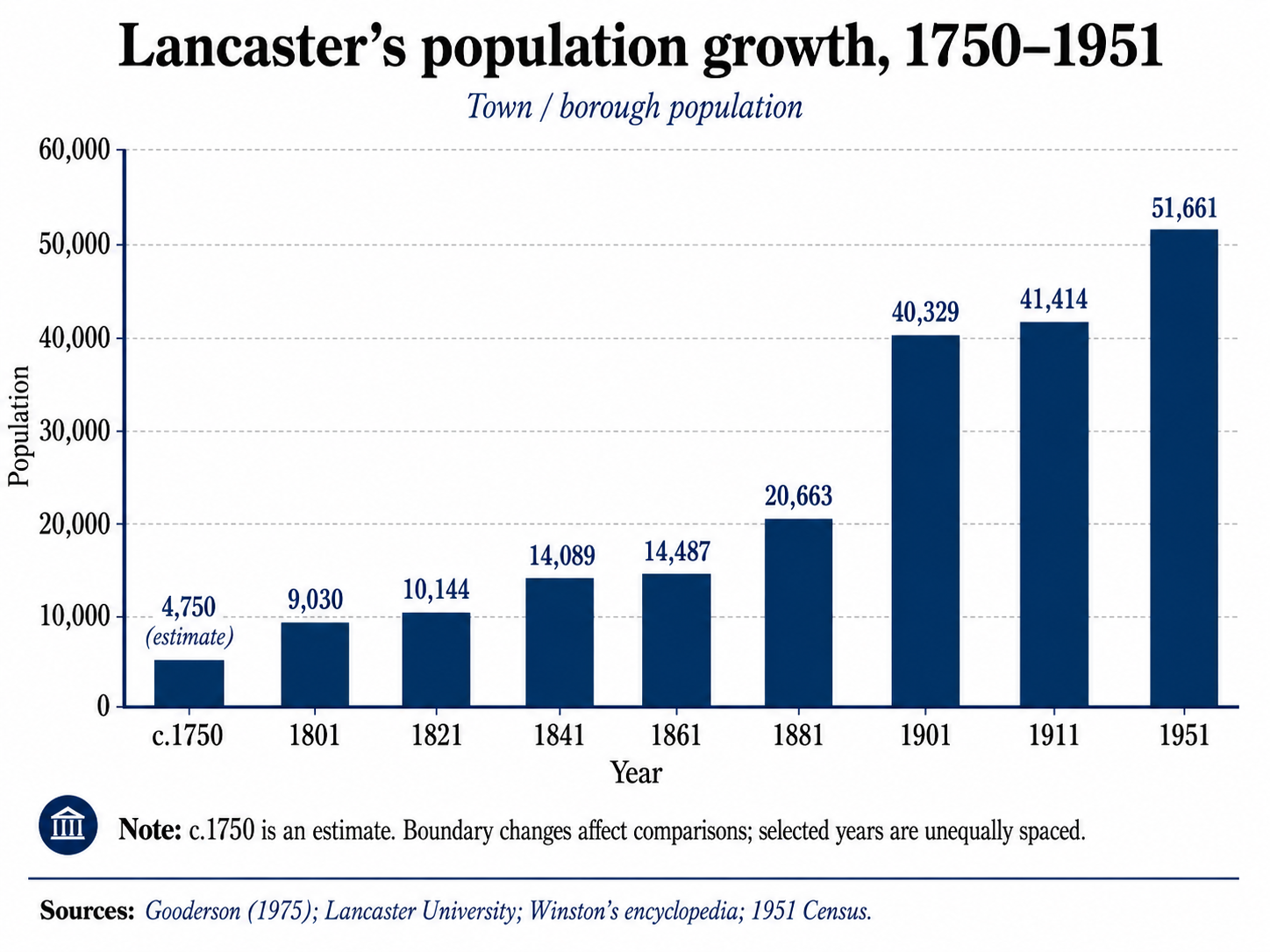
Living conditions in Lancaster were no worse than in other industrial towns in Lancashire. Dwellers crowded into housing frequently suffered from fevers and repeated outbreaks of typhoid, dysentery, and even cholera.
By 1821, the population had grown to over 10,000, and the town plan is recognisable today.
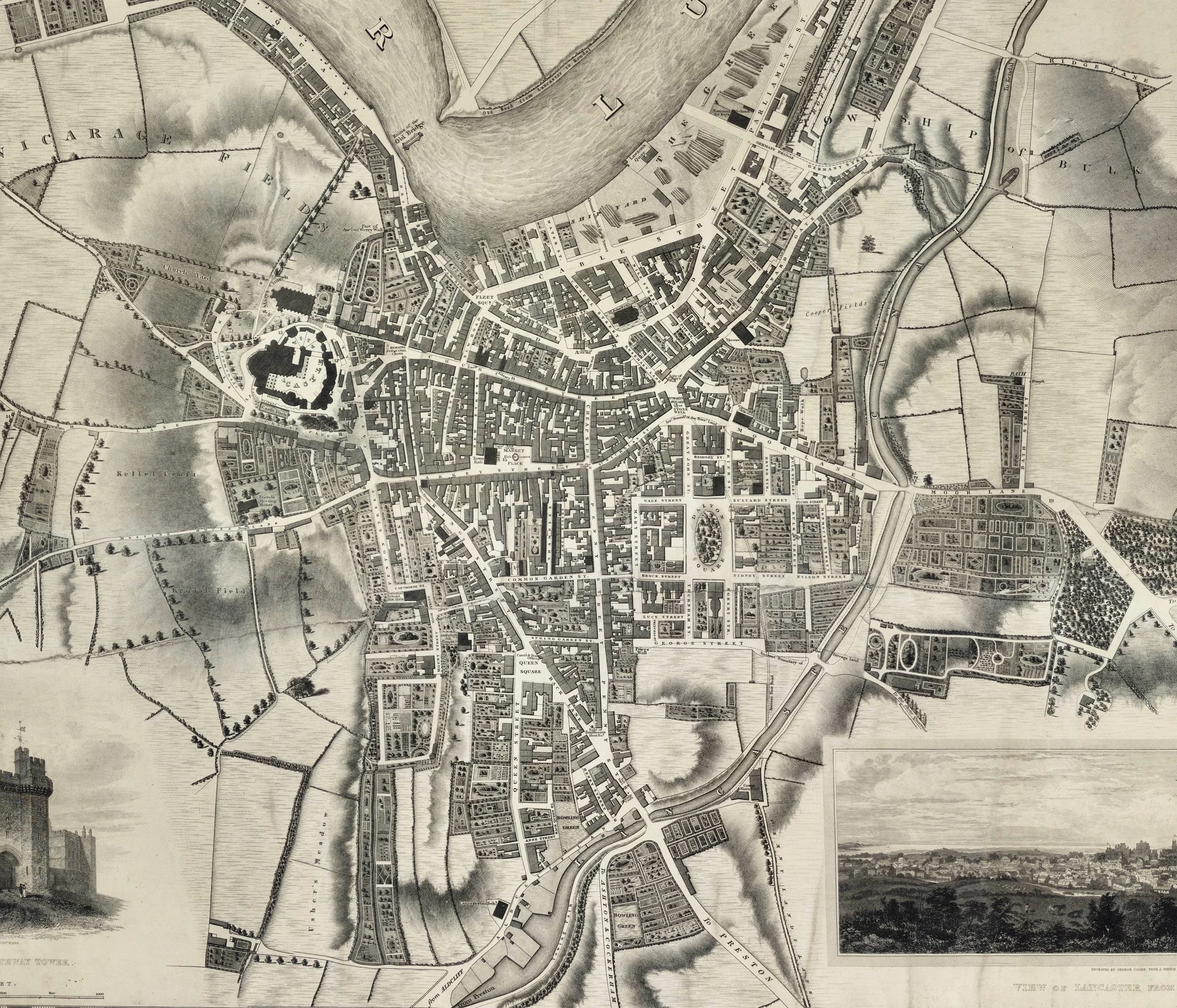
Source: Jonathan Binns, Map of the Town and Castle of Lancaster, surveyed 1821 and published 1825. Courtesy of Lancaster University.
There was no formal waste-disposal system. All sewage, both animal and human, and refuse were piled outside the houses, or in open middens and cesspits. Occasionally, these were cleaned out and taken by farmers as fertiliser, but often they were dumped into the old mill race (which led to the river) or directly into the river.
The runoff from this waste soaked into the ground, polluting the springs and wells that supplied water and causing outbreaks of disease.
Sanitation
Public health acts and other legislation enabled local reformers to press for the introduction of clean water.
The Lancaster Improvement Act 1824 granted powers to enforce sanitation standards, but these were largely ignored due to the self-interest of property owners and ratepayers unwilling to pay for improvements.
In 1843, the government set up a Commission to enquire into the state of large towns and the causes of disease among their inhabitants, with special reference to ventilation, water supply and sewerage.
Lancaster Sanitary reformers applied for Lancaster to be examined.
In 1848 the Lancaster Gazette gave a full account of the findings, including these passages.
The removal of the midden soil by the usual operations of digging and throwing it out into the court and wheeling it into the street to be carried away, was referred to in language sufficiently expressive of its disgusting nature, aggravated as it must be by the slow dissipation of the stench in this pent-up locality.
There had been fever in almost every one of the well-built houses enclosing Parliament St.
When the tide flows, the mill race, receiving the main sewerage of the town is driven back towards its source traversing the area in its progress and again slow returns at the ebb thus the enclosed area about 40 yards in length is ventilated chiefly by impure atmosphere, which escapes from beneath the arches at each end, at every flux and reflux of the stream, a more typical source of miasma can scarcely be conceived.
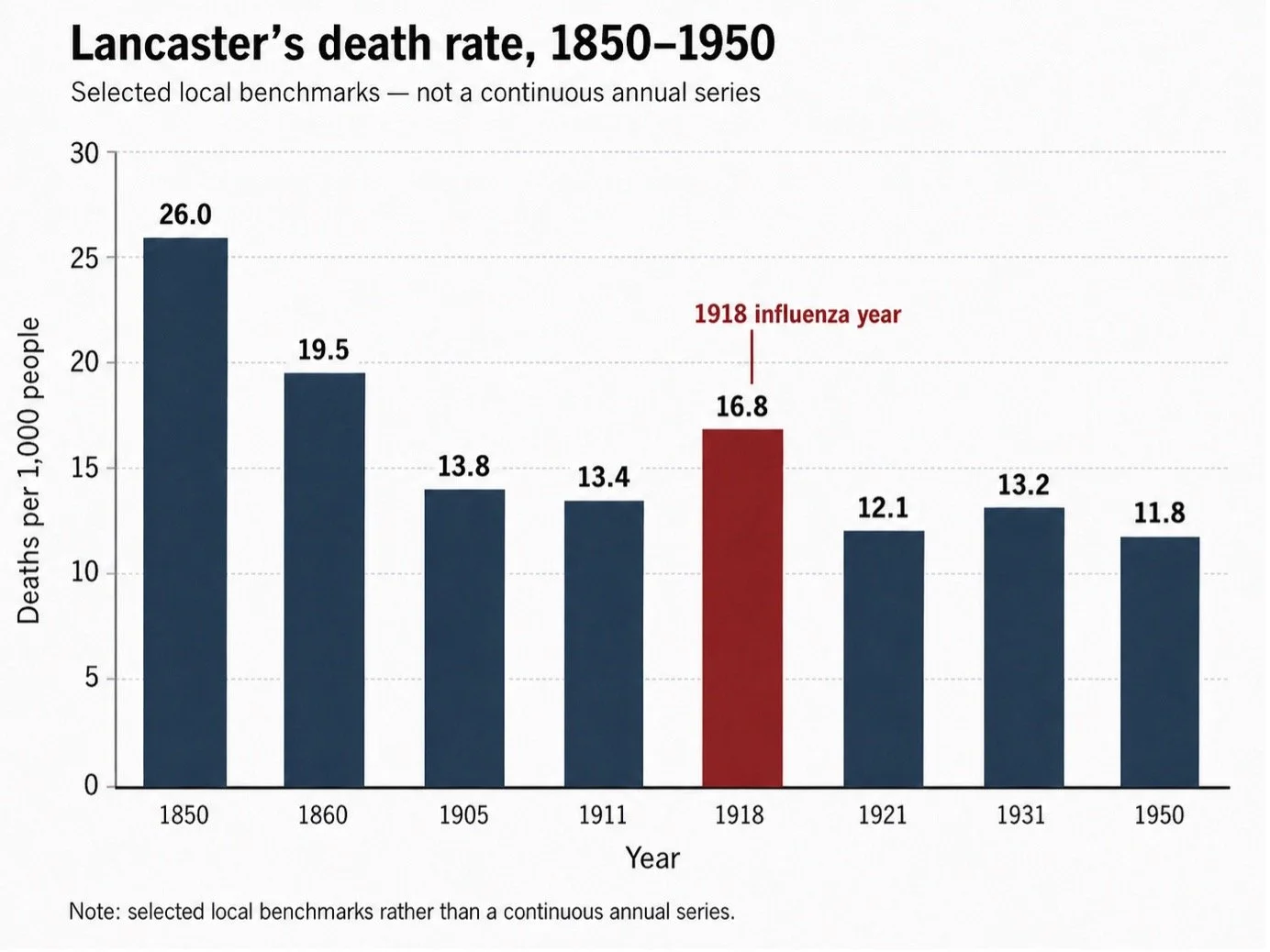
Fear of a typhoid epidemic prompted a survey to install clean water and a sewage system to remove waste. Parliament passed an Act allowing the corporation to borrow £20,000 to begin the scheme and later agreed an additional £7,000 for a sewage network.
By 1855, Lancaster was installing the new systems. Although repaired and expanded, much of the original Victorian sewer system remains in use today.
Imaginative thinking and engineering harnessed the pure waters in the hills above Lancaster, stored them in large reservoirs, and piped them into the town.
The public health impact can be seen contributing in the fall of Lancaster’s death rate.
The new sewers collected Lancaster’s waste and carried it, untreated, into the old mill race, which discharged directly into the River Lune near Damside (where the Millennium Bridge now is). This was later extended to a new outfall at Lancaster Marsh.
Lancaster installed a single pipework system that carried both sewage and rainwater. It requires emergency outflows to the river when excessive rainfall overloads it. This is a serious problem we live with today.
Civic pride
When asked by the National Inspector of Fisheries in 1864 if pollution existed, the corporation replied ‘none’.
Lancaster took considerable pride in its clean waterworks. Each year, the civic dignitaries and anyone else who could make it went on an inspection tour of the pipes and reservoirs.
In 1875, 70 people set off from the Kings Arms Hotel in carriages, with picnics and hampers of wine. The demand for transport was so great that all spare carriages and horses in Lancaster had to be used.
The water coming into Lancaster may have been the ‘purest in the land’, but the sewage network was quickly overwhelmed. Only 22 years later, the Medical Officer of Health was complaining about the river near the mill race, describing it as ‘an ultra-stygian river, overflowing into surrounding houses, especially at high tide.’
The Rivers Pollution Prevention Act of 1876 addressed river pollution directly. It made it an offence, subject to important qualifications and exceptions, for a person to cause or knowingly permit sewage matter to fall or flow into a stream.
Unfortunately, the Act was insufficiently precise, allowing improvement delays.
The Lune Fisheries Board
The Salmon Fisheries Act of 1865 led to the creation of the long-named ‘Board of Conservators for the Lune, Keer, Wyre, and Cocker district’, which was commonly known as the Lune Fishery Board until its dissolution in 1951. One of its main responsibilities was to protect salmon stocks from pollution.
The Board and committees included representatives from the fishing communities. Over its 80 years, many Sunderland Point residents were elected. Thomas Swainson, Lancaster’s Town Clerk and owner of number 22, was an original member; others included Robert Mansergh, M. Wellington Harrison, Richard Bagot, Alderman John Turney, and father and son Richard W.B. Gardner and James W. Gardner.
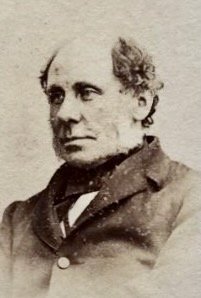
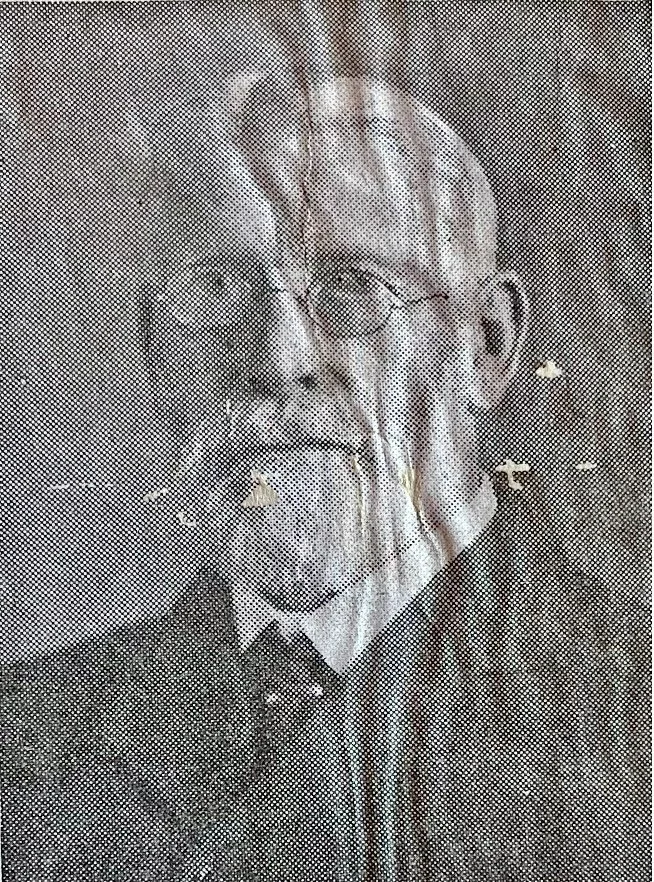
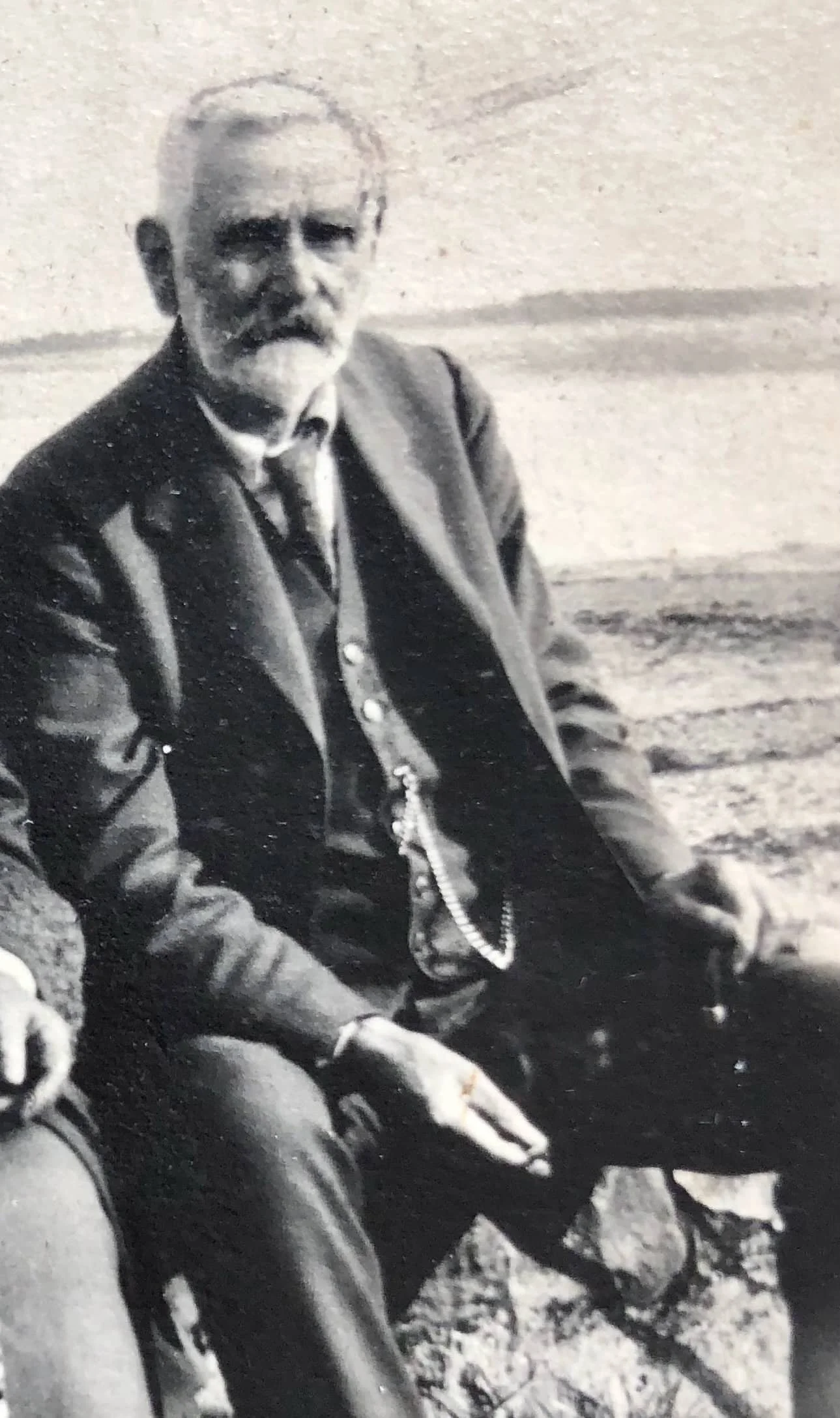
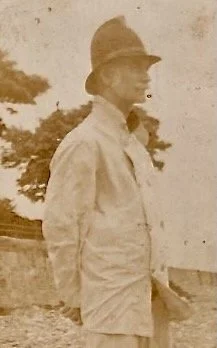
Clockwise from top left: Thomas Swainson, Robert Mansergh, M. Wellington Harrison, Alderman J. Turney.
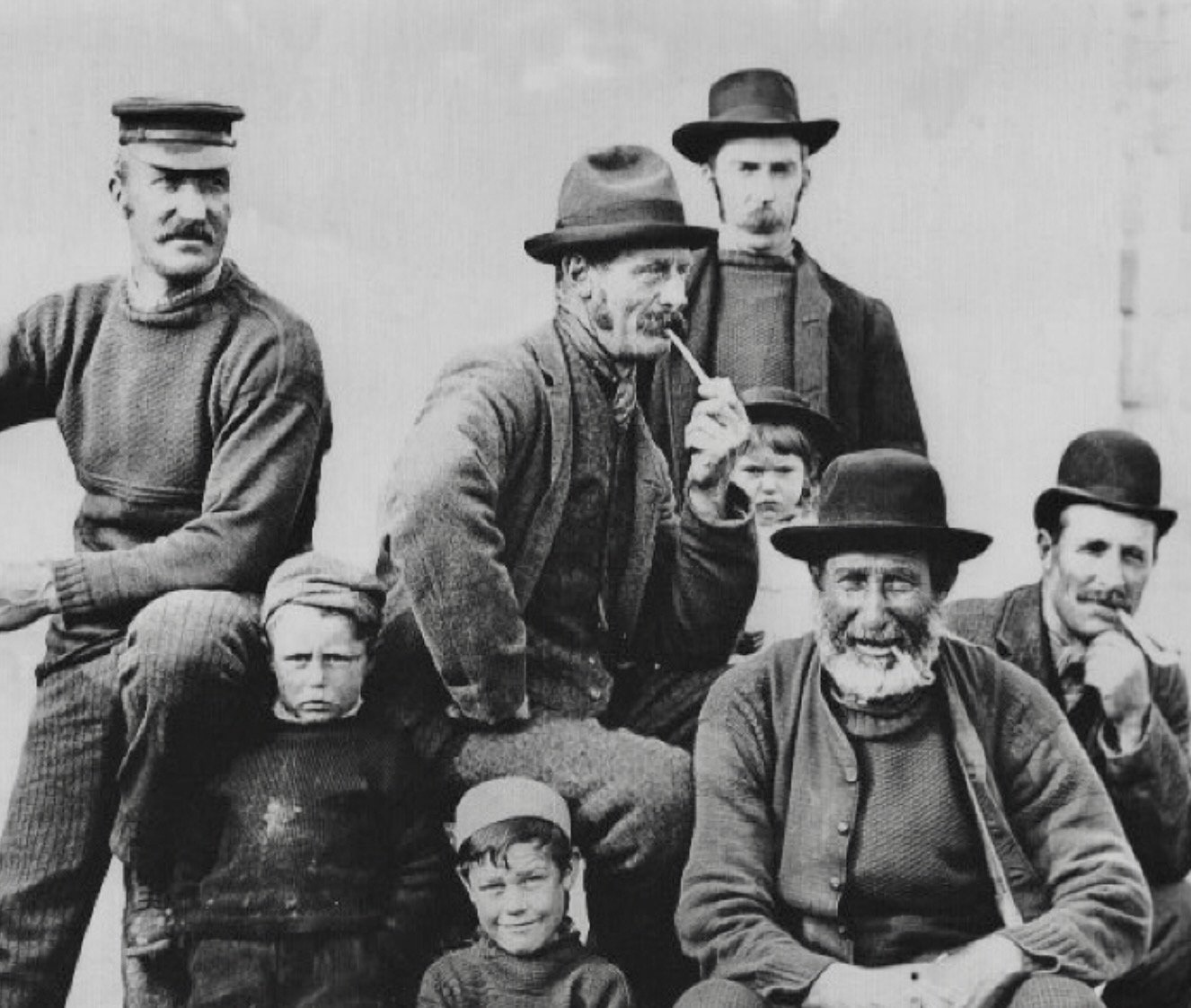
Richard Bagot is in the centre. A John Walker photo, courtesy of Lancaster City Museums.
Serious pollution issues were raised at Board meetings.
In 1872, the waste from paper mills near Sedbergh was described as ‘the water was completely discoloured and appeared like soap suds for some distance down the river’.
In 1877, a creosote tank burst at Tebay, releasing creosote into the river and killing all the fish for more than 10 miles downstream.
In the 1888 report to the board:
Gas tar from the gasworks at Ingleton, along with residue from skinners and tanners, lime-making, bleaching, and soap-washings from spinning mills, as well as human excrement, entered the River Wenning.
Logwood sawdust into the Lune at Halton, and grease and grease cleanings from axle boxes of railway trucks being emptied down the bank of the River Kier and running from the works of the Midland Railway Company at Carnforth.
In 1899, the head Bailiff reported on several incidents of pollution, including: ‘I also beg to report pollution of the Lune from the works of Messrs James Williamson and Son, who have written stating they have given instructions that it must not occur again’.
Strong complaints were directed at Lancaster over sewage being discharged into the river. The corporation was investing in freshwater schemes and water closets but obstinately refused to upgrade its sewage disposal arrangements. Lancaster was still discharging raw sewage through six outfalls on the south side of the Lune.
The Lune fisherfolk
By the turn of the twentieth century, Lancaster’s population had exceeded 40,000, and most human waste was collected and dumped untreated into the river.
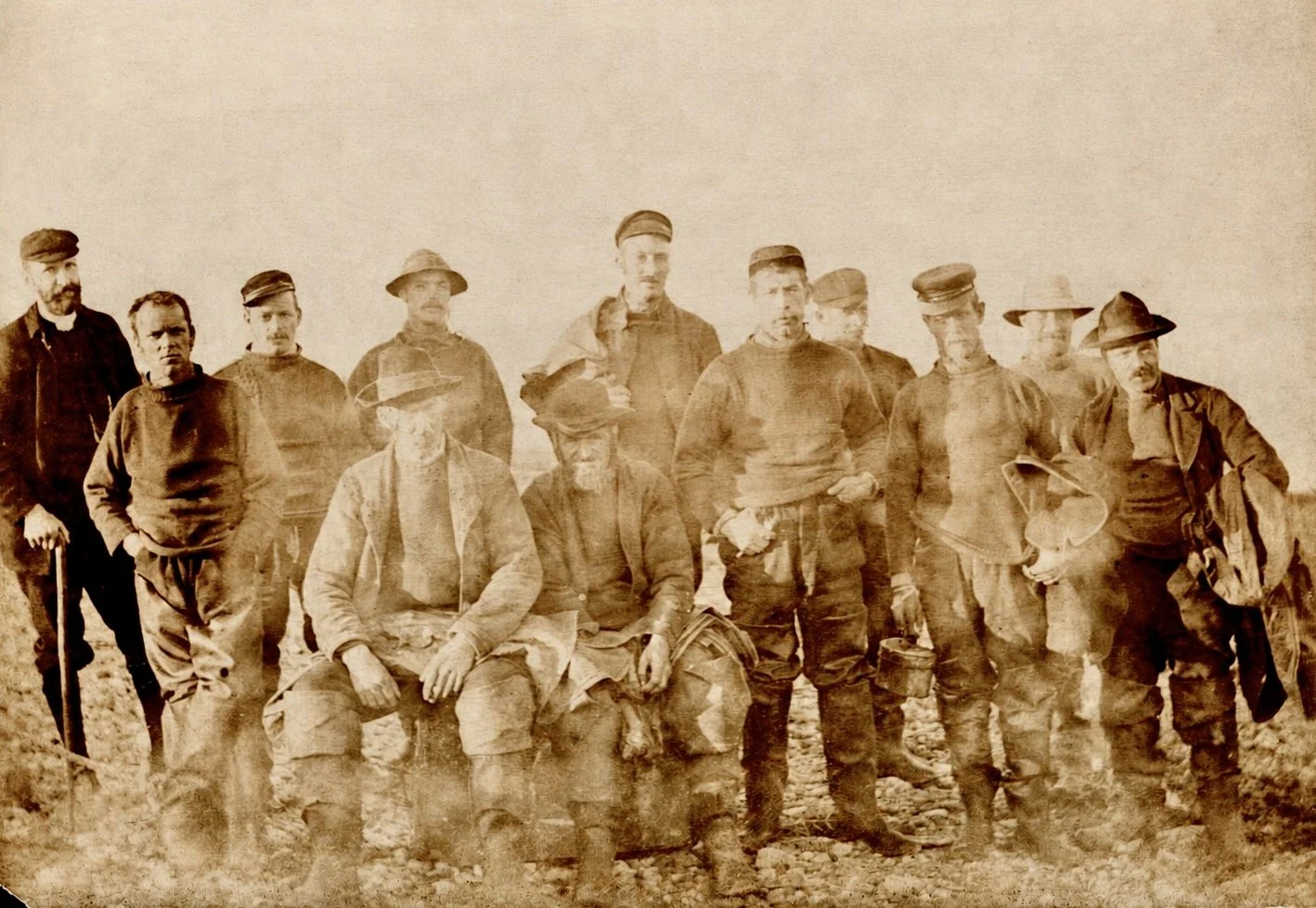
Fishermen of SP and probably Overton and Glasson Dock c.1900: Collection Dorothy Calverley.
In 1902, the salmon-fishing netsmen submitted a petition in protest. Tests conducted by Lancaster officials were interpreted as showing that the pollution was of no consequence, at least to Lancaster's satisfaction.
In 1920, they protested again. A second petition was drafted at the Vicarage in Overton, with the vicar's help, and sent to the Lune Fisheries Board.
“We the undersigned salmon fishermen at Overton, Sunderland Point, and Glasson respectfully beg of you to use your influence with the corporation of Lancaster to take measures to abate the pollution of the river Lune which is rapidly diminishing our takes of salmon and sea trout and thereby depriving us of a means of livelihood.
A similar petition is being sent to the Secretary of the Board of Agriculture and Fisheries. We have the honour to subscribe ourselves as fishermen of the Lune district”.
There were 23 signatures on the petition. The fisherfolk representative was Richard Gardner, a pilot who had lived at Sunderland Point for many years and would, in 1927, be appointed Harbour master at Lancaster.
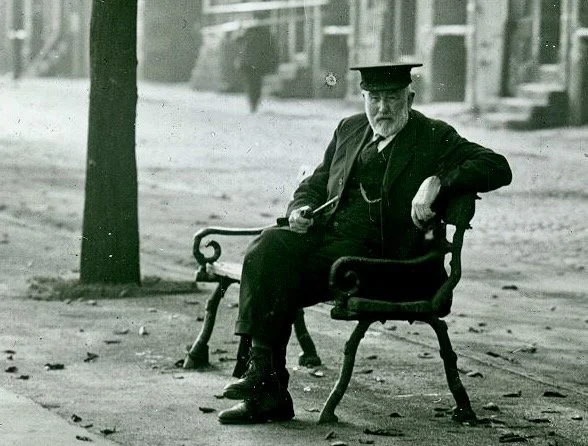
RWB Gardner, Harbourmaster at Lancaster c1935: A Sam Thompson photo courtesy of Lancashire Archives.
Although there was strong support for the fisherfolk, the lack of reliable evidence of a decline in fish catches weakened their case. The Fisheries Board asked the Government to investigate, but little came of it.
By 1930, the pollution was becoming intolerable. Waste from Lancaster’s new factories added to the rising domestic waste.
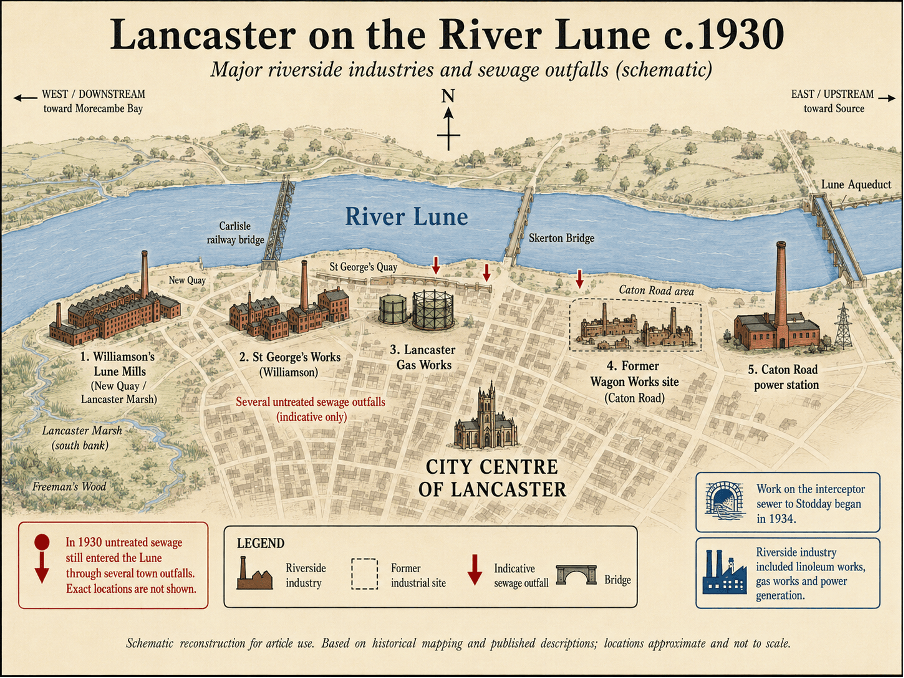
Schematic reconstruction with assistance from ChatGPT (OpenAI), 2026. Based on historical maps and published descriptions; locations are approximate and not to scale.
James Williamson began Linoleum production at Lune Mills in 1887. Standfast dyers began printing at the former Caton Road wagon works in 1924; Lansil produced spun cellulose fibres on Caton Road from about 1928. Nelson’s acetate operation was next to Lansil and, for a period, produced continuous-filament yarn from about 1933.
Legal Action
It was clear this had to stop. In 1930, the Lune Fishery Board brought High Court proceedings against Lancaster Corporation for polluting the river. Government pressure led to a new scheme, which forms the basis of what we see today.
The plan aimed to redirect all six outflows on the South Side of the river to Stodday (and later from the north side), where it was believed the tidal flow could effectively dilute the effluent. Although this move removed the issue from the centre of Lancaster and allowed some filtering and settlement, partially treated effluent still entered the river, now closer to the fishing villages downstream.
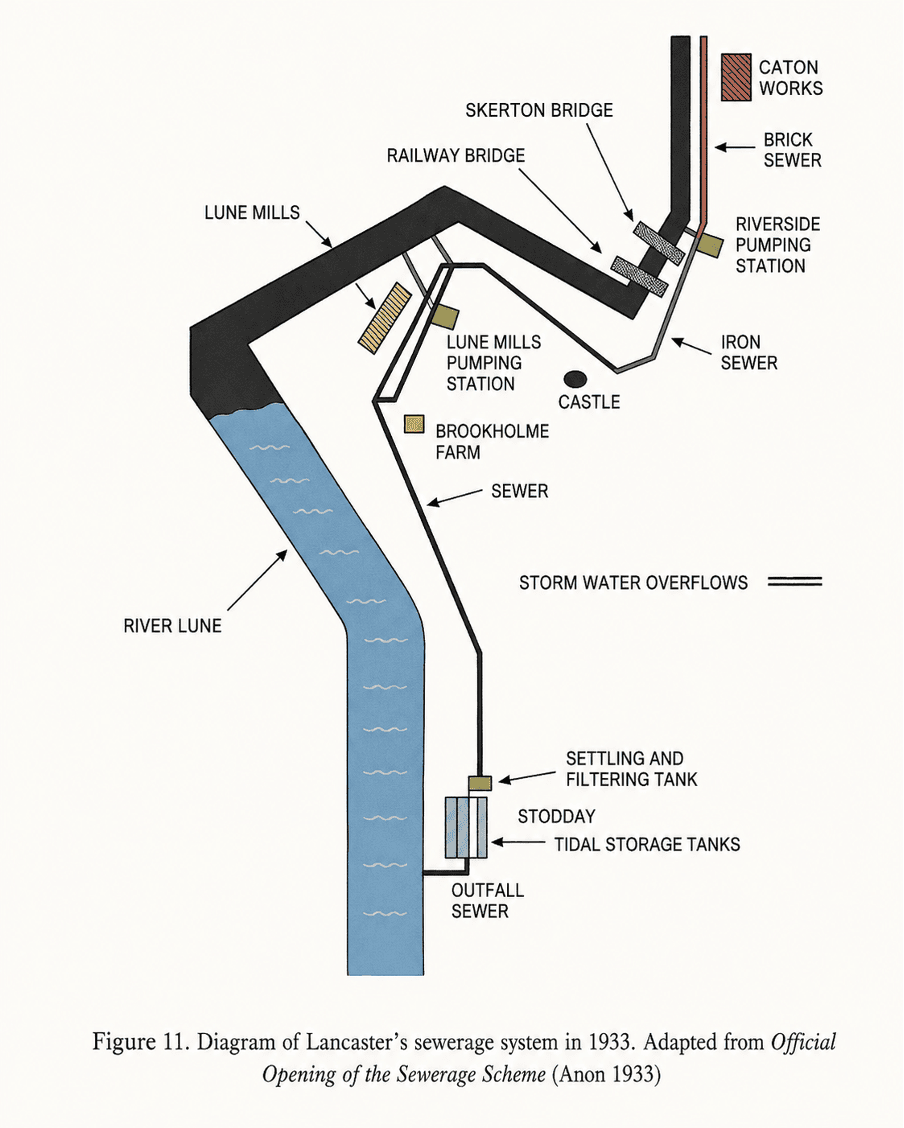
All the Lancaster South-side sewage would be pumped and collected at Stodday. During heavy rain, an emergency outflow still went into the river.
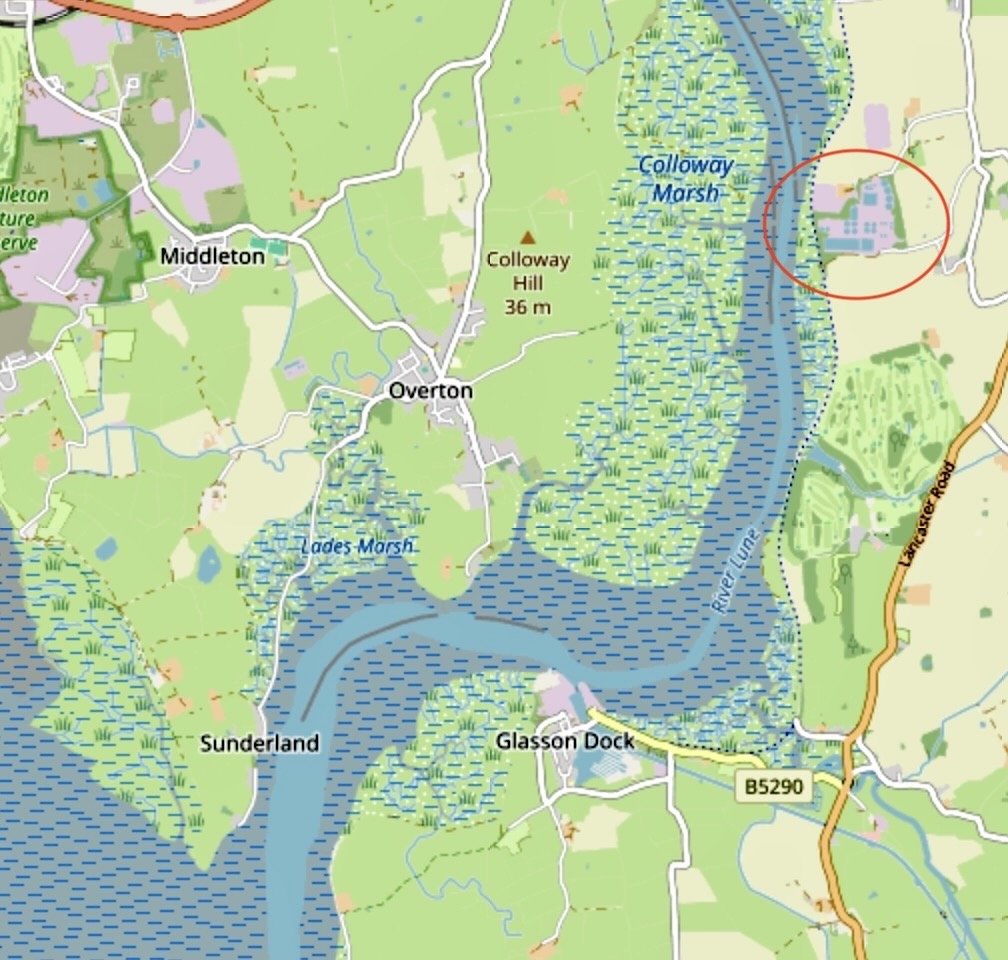
Stodday Wastewater Works in relation to the downstream towns and villagers. Open source maps.
At a cost of £77,000, the Stodday Wastewater Works was officially opened in 1937, with the Lancaster Guardian reporting:
‘Long discussion between the fishery board, local industrial firms, and the corporation ended in a new sewerage scheme to avoid future pollution of the river Lune’.
However, complaints continued - with feeling.
At the 1938 Fishery Board meeting, these comments of James W. Gardner of Sunderland Point were reported:
‘As far as his village was concerned, the sewage was 10 times worse since the new Lancaster sewage scheme was put in operation. It was killing the livelihoods of many fishermen because it destroyed insect life, and the fish went elsewhere for food.’
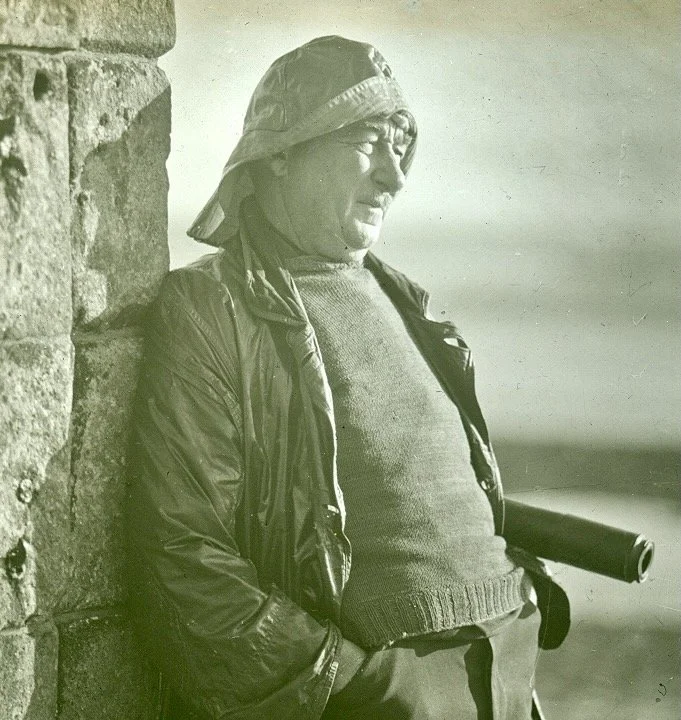
James W Gardner, c. 1935, in an award-winning photo by Sam Thompson. James, like his father, became harbourmaster: courtesy Lancashire Archives.
There was a truce of sorts during the war years, but it resumed immediately after. In 1946, the Fishery Board reported:
‘A very heavy mortality took place in the first few days of August; gulls again helped themselves to numbers of herring, both dead and in distress. In addition, 52 salmon were picked up by the board's water bailiffs, netsmen, and other individuals.’
In 1948, research found that inadequate pumping of effluent entering the river caused a considerable quantity to return to the river during the rising tide.
The Fishery Board decided to take the matter to court again. Mediation attempts failed, with the Corporation demanding more time to resolve the raw sewage issue.
Angry exchanges reached the newspapers, the Town Clerk arguing that an injunction to stop pollution would result in the immediate loss of 2,838 jobs at the Lansil, Standfast and Nelson factories on the riverside at Caton Road.
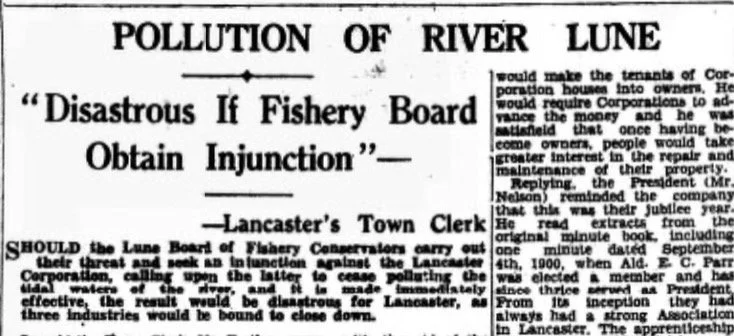
Lancaster Guardian January 21st, 1949
In response, the Fishery Board claimed this was ‘nothing more than a cry of despair from Lancaster Corporation designed to reach ill-informed ears and enlist on their side sympathy in their cause’.
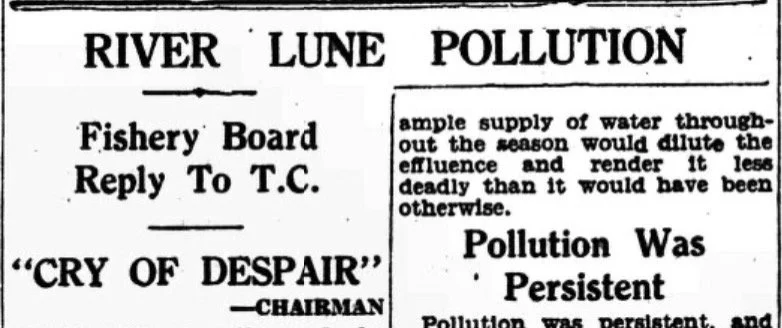
Lancaster Guardian February 12th, 1949
In 1951, the Lancashire Rivers Board assumed the responsibilities of the Lune Fishery Board. A new body, the Lune and Wyre Fisheries Association, was formed to continue representing those fishing on the rivers; in 1952, another ding-dong battle with the City.
Lancaster acted with improvements at Stodday, including the construction of a further 12 tidal storage tanks in 1955 and 1956, and the construction of main sewers to reduce the discharge of raw sewage during heavy rain.
In 1956, Councillor A Morris (a later resident of the village) announced that the city had, by just 3 days, escaped the effects of an injunction when confirming that all sewage and trade effluent was now going to Stodday.
Little changed in the water systems over the next 20 years, but far-reaching changes to the management of water resources took place: the transfer of responsibility for supply and waste management from Lancaster City to a regional body, which was eventually privatised in 1989 and is now known as United Utilities.
In 1965, the Lancashire River Authority took over from the Rivers Board. In 1974, it became the North West Water Authority - responsible for both operations and monitoring. The regulatory duty was eventually transferred to the National Rivers Authority in 1989 and, in 1996, merged into the wide-reaching Environment Agency.
Progressive upgrades took place at Stodday, but biological treatment for breaking down organic pollutants wasn’t introduced until the late 1990s. By 2005, Stodday had added ultraviolet treatment at the end of the sequence to destroy harmful bacteria such as E. coli.
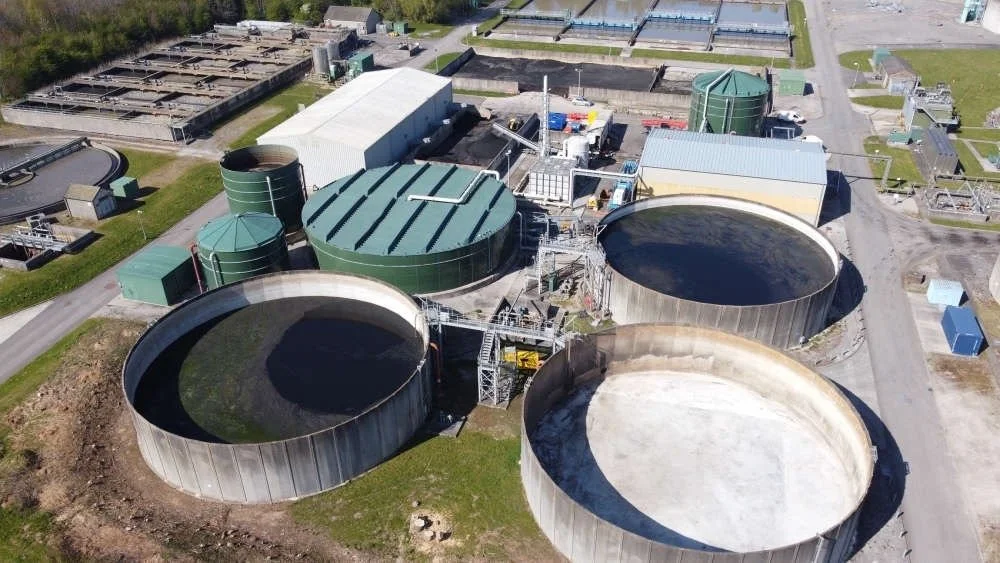
The Wastewater works at Stodday: courtesy United Utilities.
Finally
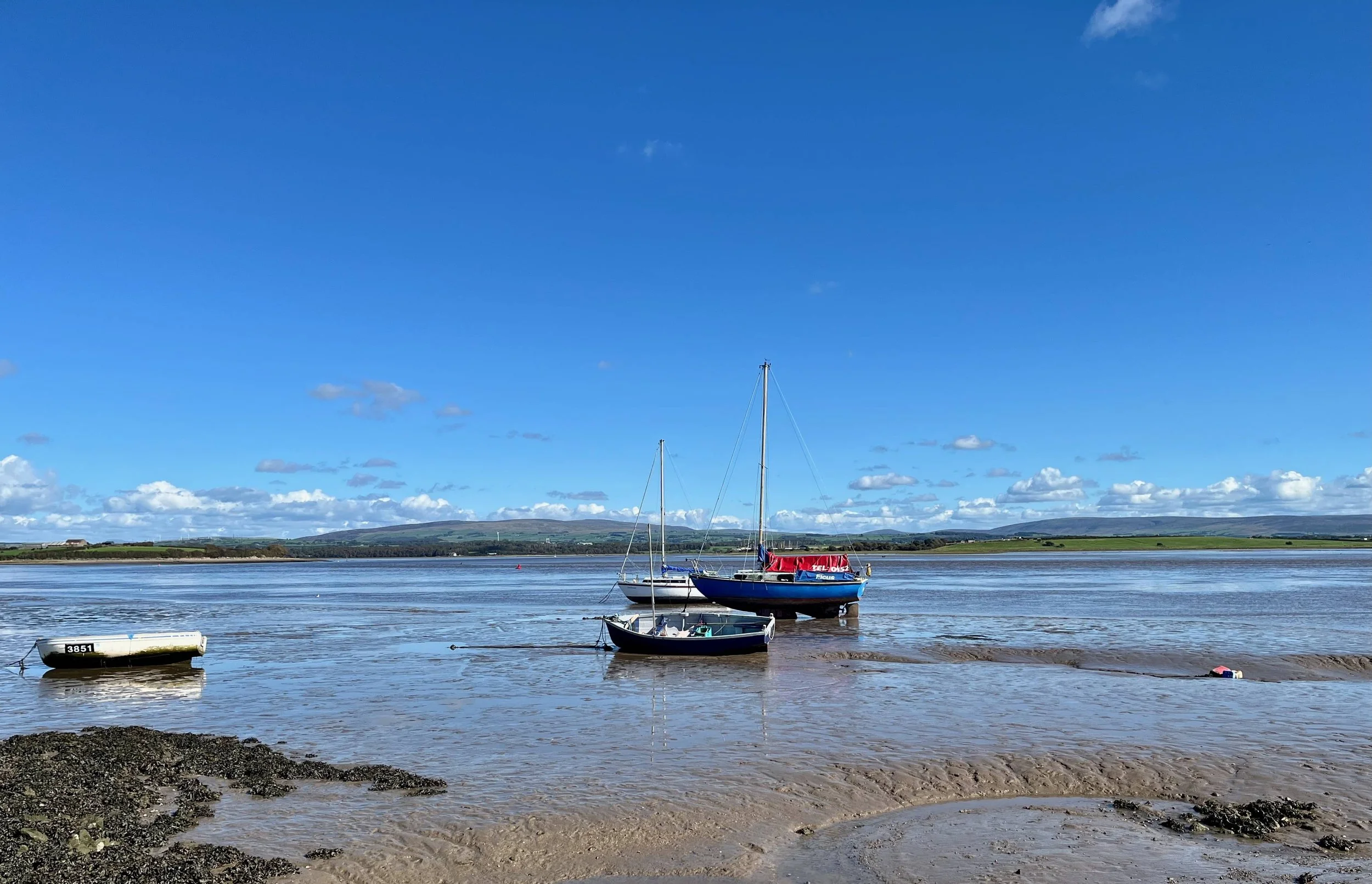
Boats by the river: website photo.
Today, a large independent company manages water and sewage and complies with the permit requirements. The regulator is a national organisation that is strong on data but weak on action. Commercial fishing on the river has ceased, and industry has just about disappeared.
No sightings of dead fish directly linked to pollution have been reported in recent years. No published Environment Agency dataset measures the quantity of plastic waste in the River Lune.
For the best of reasons, the river's water quality is now closely measured through chemical analysis, but this is largely impenetrable to the ordinary passenger on the Clapham omnibus.
Comparisons are difficult because of the data, but the Lune is no worse than other rivers with wastewater treatment plants along the river banks.
Next time, we'll take a closer look at this information and try to build a narrative. We did our best.
We also considered whether it's a good idea to go swimming at Sunderland Point.
Swmmers 1920s postcard: website collection
An important source is Keith Horsfield’s two articles on Lancaster’s Water and Sewerage System in Volume 30 of Contrebis, the magazine of the Lancaster Archaeological and Historical Society.
We've also had lots of help from the Environment Agency, United Utilities (including a visit to Stodday wastewater treatment works), and the Lune Rivers Trust.
Next time, pollution in the river today…