In this important new book, Peter Snape reminds us that Anne Gilchrist was a leading figure in the early folk song and folklore movement.
We are pleased to offer this review.
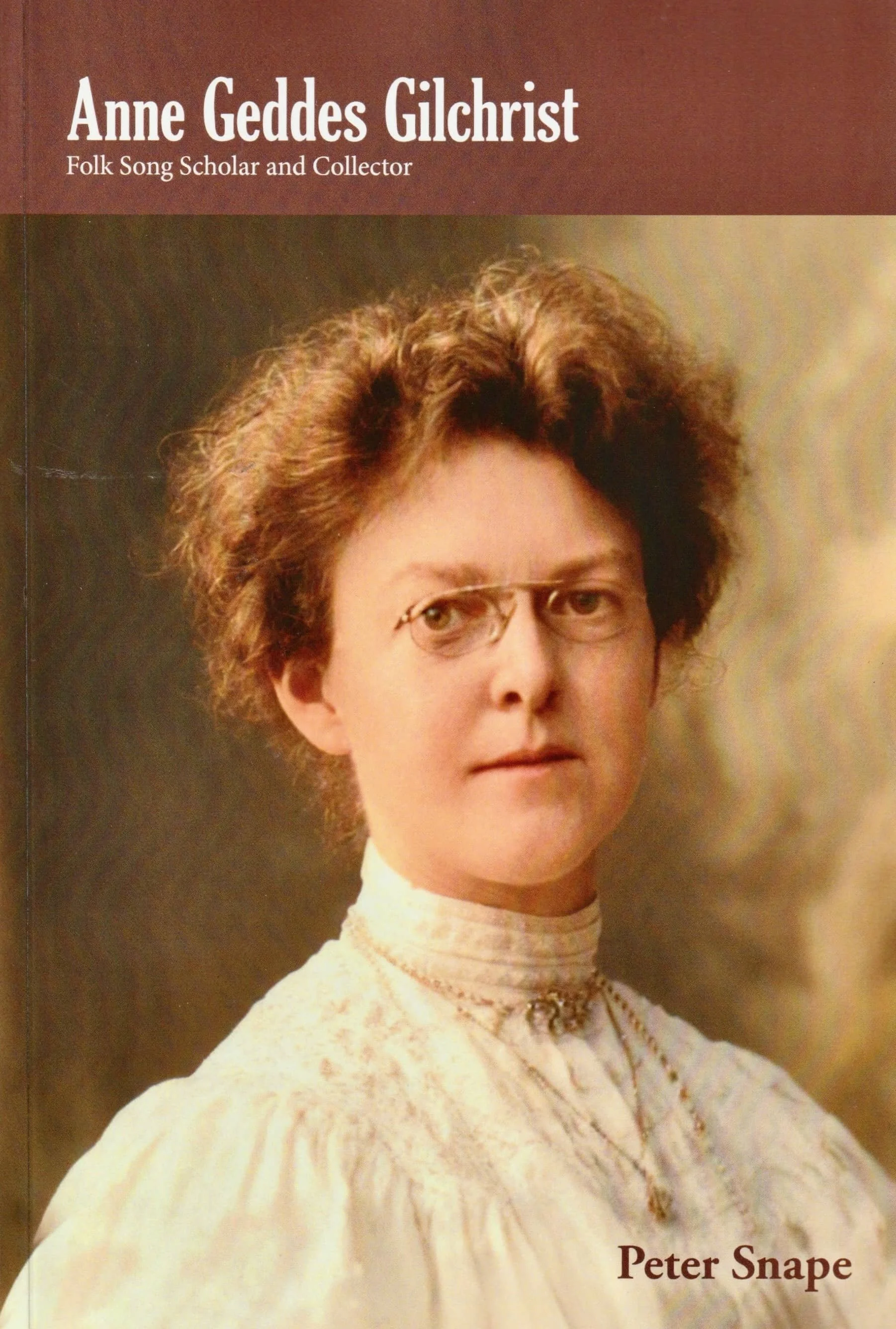
Peter is also a good friend of the website and has written articles for the magazine on Anne and the Sunderland Point Overture
Anne was closely connected to Sunderland Point for most of her life. The Gilchrist family had visited since the early 1870s, and later a brother and two of her sisters chose to live here. Ann and another sister, Helen, kept in close touch and lived nearby in Stodday.
Anne collected songs in the village and from Overton. She wrote and delivered spirited lectures on Sunderland Point and was a founding member of the Reading Room, keeping up the annual subscription to the end of her life.
She never lived here, but we consider her one of ours.
Achievements
Anne was best known as a meticulous collector and interpreter of folk songs, but she also pursued an astonishing range of other antiquarian interests.
In 1935, recognising her archaeological achievements as well as her song collecting, she was elected a Fellow of the Society of Antiquaries in London. In 1939, she was awarded the gold badge of the English Folk Dance and Song Society, and, to her great delight, an O.B.E. for ‘services to folk music and song’ in 1948.
On her death in 1954, The Times described her passing as: ‘an irreparable loss to musical antiquarian studies, for her knowledge of tunes was unique’.
Today, her achievements are less well known. Peter writes that she ‘is, to some degree, a neglected figure’.
Peter clearly sets out his book's objectives: to provide an overview of her life’s work and something of her personality, and to highlight the songs she collected during the first folk song revival.
An outstanding quality of the book is Peter’s use of other voices. We hear from people who knew Anne, those who have studied her since, and from contemporary obituaries and memorials.
Best of all, we hear Anne’s own voice, drawn from her personal papers, letters, journals, and articles. In this way, Peter lets us judge her personality while deftly avoiding unfounded assessments or conclusions about her private life.
Anne’s colourful writing style sometimes lacks full stops, but the chosen sections are always enjoyable and often amusing.
The first three-quarters of Peter’s book is narrative; the final quarter comprises songs, poems, and articles by Anne, along with a provisional list of the songs she collected. In addition to a bibliography and index, Peter achieves his second objective by selecting thirty songs, with music and words, from those Anne collected.
Anne’s early life
‘of independent mind, intelligent and articulate’
Peter describes her as having grown up in comfortable surroundings, with strongly supportive parents grounded in sound religious and moral values.
She received a broad education and passed all her art and music exams, but she was drawn to music, where she excelled. In 1886, she was awarded a gold medal for the highest achievement in the Royal Academy of Music examinations.
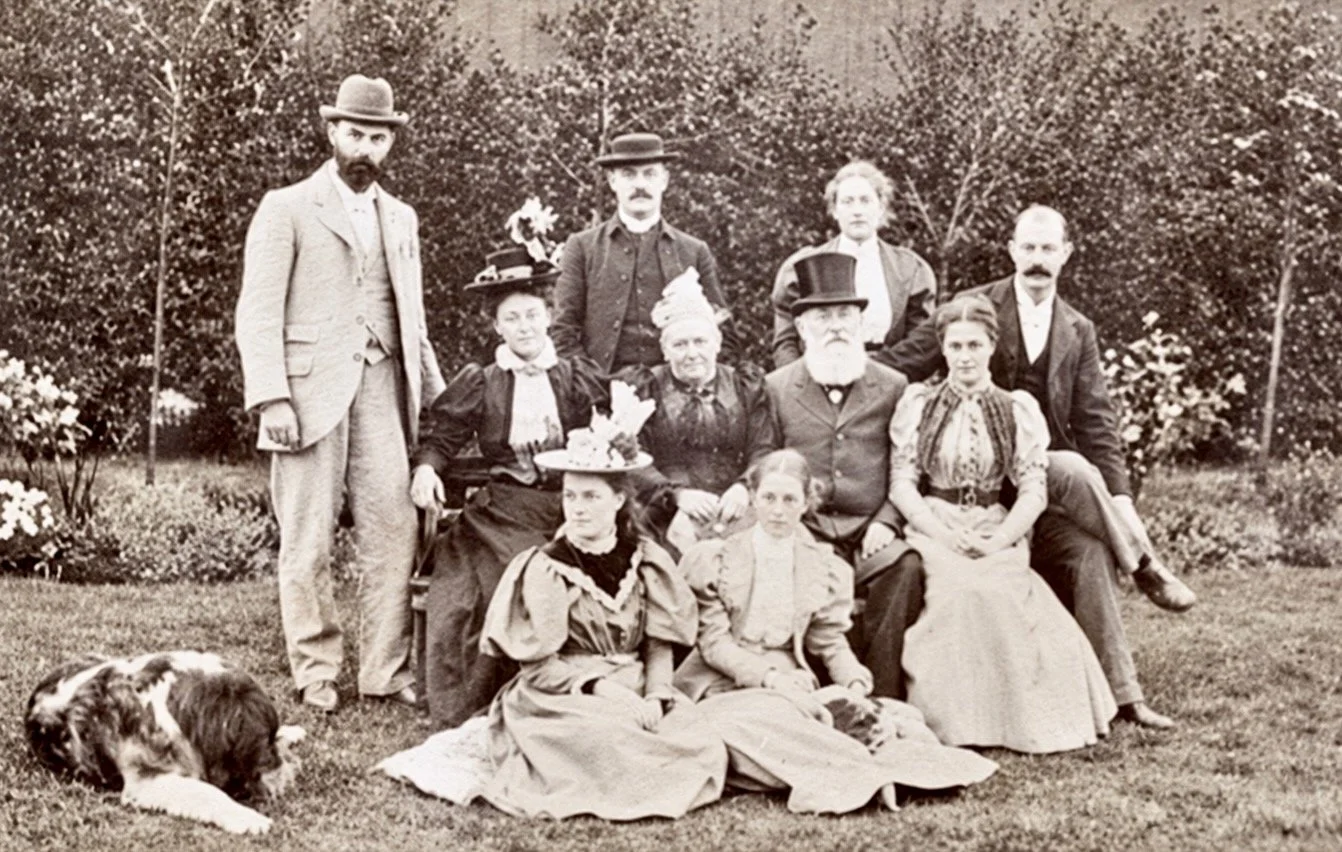
The Gilchrist family c1892, back row: Philip, William, Helen and George junior; middle row: Anne, her mother Jane and father George, and Theo; front row: Emily and Dora. Courtesy of the Gilchrist family
‘A quick ear for music and a love of tunes, but a level of determination and cognitive understanding beyond her years,’ writes Peter.
From her home in Southport, Anne takes a leading part in musical concerts as a director, singer and accompanist. She organised annual concerts at the Old Hall for the villagers at Sunderland Point. Through the Presbyterian Church Improvement Society and the Literary Society, Anne develops a talent for giving lectures on musical topics, which receive positive reviews in the local newspapers:
‘A large and appreciative audience assembled to hear Miss Gilchrist’s admirable lecture on ‘church modes and other obsolete scales.’
In 1891, when Anne was twenty-seven, she first heard a folk song sung in public on a visit to Oxford. She later wrote about the event and the singer, adding this vivid detail:
‘I recall his monocle, knee breeches and yellow kid gloves.’
Peter identifies the spark that began her collecting as being in 1895, when she purchased Sabine Baring-Gould's ‘Songs of the West’.
Some of the earliest songs Anne collected were passed to Frank Kidson, a Yorkshireman and much-admired song collector who became a major influence on her life. They were the only two collectors in northern England, and in 1905, Frank encouraged her to join the Folk Song Society, which introduced her to Lucy Broadwood, the society's secretary and intellectual driving force.
Recognising her exceptional talents, the society invited Anne to join the Folk Song Journal's editorial board in 1906.
Song Collecting
Peter expertly guides us through Anne’s early development as a song collector, beginning at home with her parents. From Sunderland Point, she collected several verses from Elizabeth Bowker at the farm and from the painter William Wells.
At her home in Southport, she met the colourful William Bolton, a former sailor with a wealth of songs.
When Mr Bolton sang of the female cabin boy, a familiar story about a girl who goes to sea disguised as a boy, he sang only two odd verses. Anne noted discreetly, ‘I gathered that the remainder of the ballad was not suitable for publication.’
As with William Bolton, and with most of Anne’s key contributors, Peter sketches valuable portraits of their lives and families.
He also adds this insight into Anne’s natural empathy: ‘A very charming bond of sympathy and equality is thus created between singer and collector, sittings usually conclude; that there ain't no songs like the old ones and they do sing such rubbishy things nowadays’
Early song collectors shared a sense of urgency and were musically skilled, highly disciplined, and academic in their recording practice. They collected folk music only from living singers and transcribed it without altering the song.
This is charmingly illustrated when Peter quotes Anne’s recollection of trying to correct a note sung by her father:
‘I lost for the time being my early innocence of ear, falling foul of the unsharpened 7th of my father's tune, and suggesting that the note should surely be sharp, not natural. “No, No, No,” he replied, with a vigorous shake of the head… adhering with conviction to his flattened note, so I conceded the flat 7th, and learned to note tunes as I heard them’
The Journal of the Folk Song Society.
The journal became the society's heartbeat. It published songs from collectors, often with variations, alongside notes from the editorial members. Peter shares the view that Lucy Broadwood, the editorial secretary, together with Frank Kidson and Anne, were the three key members of the early society and:
‘Between them held a vast store of historical and comparative knowledge’
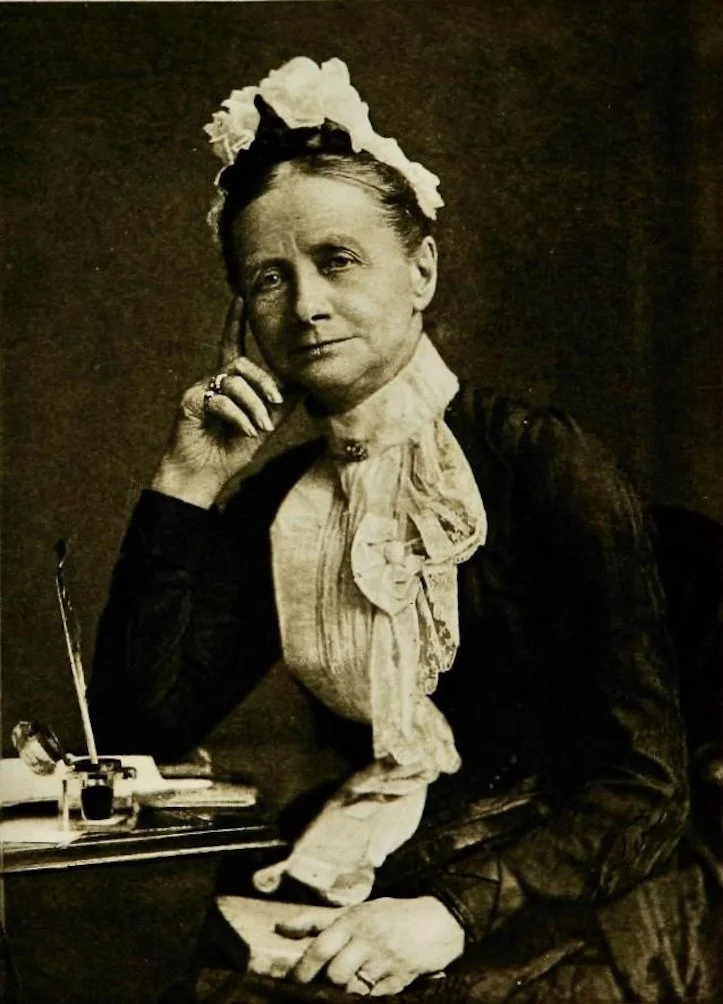
Lucy Broadwood c. 1901. National Portrait Gallery, London.
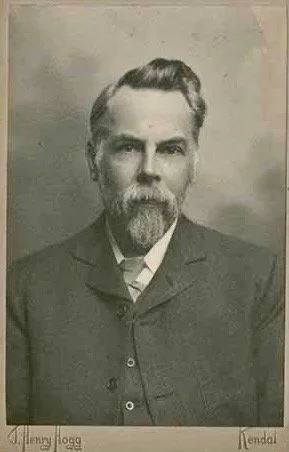
Frank Kidson, courtesy of the Mitchell Library, Glasgow.
Looking at the back issues today, the journal is beautifully produced, is an invaluable resource, and a fascinating read.
The editorial committee vetoed songs that did not meet the criteria for a true ‘folk song’: they had to be old, have evolved naturally from the ‘people’, and adhere to the musical modes. Occasionally, when a song included a verse of questionable morality, it was noted but omitted from publication.
Anne was a prolific researcher and writer, contributing over a hundred articles to the journals between 1906 and 1948.
Cecil Sharp
Today, Cecil Sharp is probably the most well-known of the early song collectors and has been described as ‘the man who single-handedly saved English folk music from oblivion’. However, many other members of the Folk Song Society at the time did not always share his view. He was ambitious, impatient and at times at odds with them.
Sharp believed that folk songs should be introduced into schools. In his view, children learning traditional English songs would reconnect with their national cultural heritage. But how that was to be done was a matter of great debate.
Peter describes the rift between Sharp and the Society from 1906 to his resignation in 1911, when Sharp formed the English Folk Dance Society.
Although Anne herself had reservations about Sharp, and she shared some of these with Lucy Broadwood, she maintained a cordial relationship with him. When he published his book‘English Folk-Song: Some Conclusions’, Anne dashed off a couple of supportive articles for Southport newspapers and sent copies to Sharp.
Lucy Broadwood though, held a very strong opinion:
‘Mr Cecil Sharp, unfortunately, took up old songs and old dance collecting as a profession, and not being a gentleman, he puffed and boomed and shoved and ousted and used the press to advertise himself… he came to believe himself to be king of the whole movement’.
Anne once wrote, ‘That of all forms of the collecting mania, there is surely none less tainted by greed, envy, and the desire to overreach than the hobby of collecting folk songs.’ Perhaps she had in mind Cecil Sharp
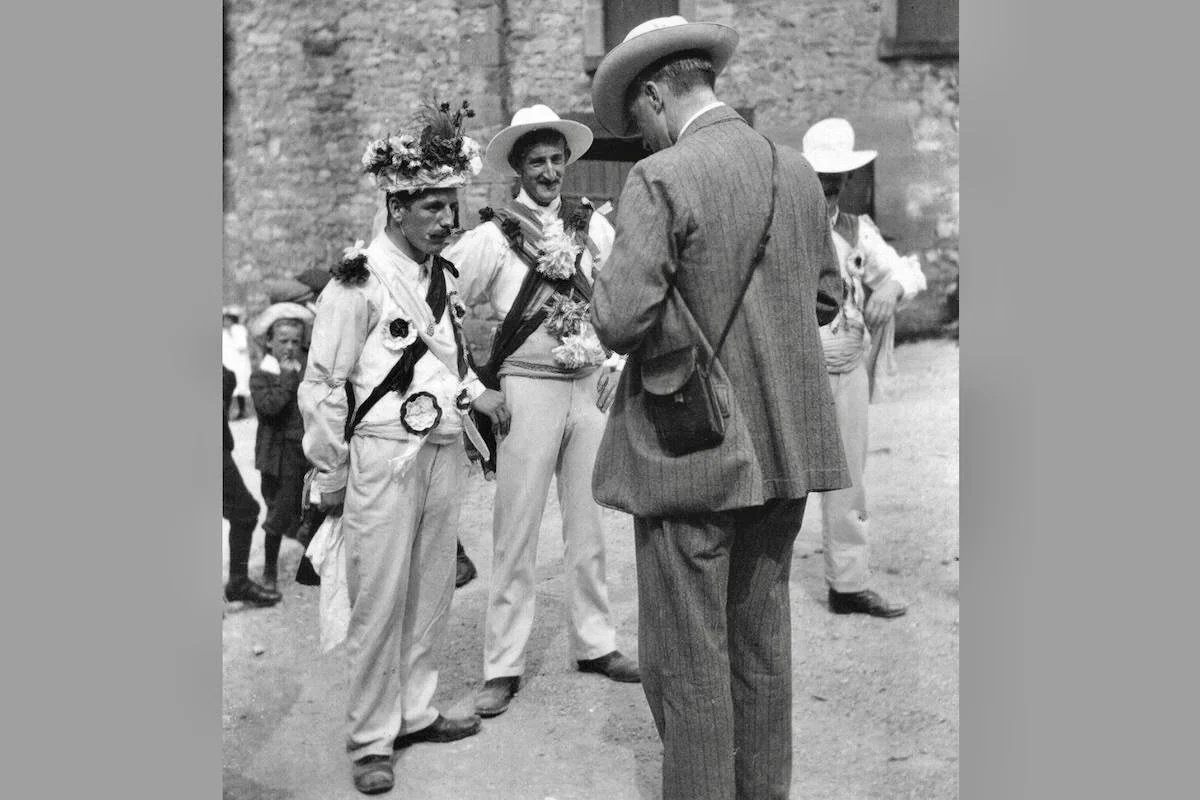
Cecil Sharp with the Winster Morris Dancers, Derbyshire, 1908: EFDSS/Heritage Images collections
Only after Sharp and Broadwood died did the societies merge in the 1930s to form the English Folk Dance and Song Society, which continues to this day.
Aunt Anne
By this time, the generation from whom the songs had been collected had disappeared, and the work shifted to comparative study and re-evaluation of the collections. Anne was interested in studying Celtic tunes from Wales and Scotland, and tunes collected on the Isle of Man.
She also devoted more time to her other interests and delighted in becoming ‘Aunt Anne’ to a group of ‘nephews and nieces’, with whom she kept regular contact, offering much-needed help and advice on the finer points of folk music, folklore, hymns and psalms, and a range of antiquarian interests.
The list of interests is extraordinary; as well as church and choir music, Anne joined the Cumberland and Westmorland Antiquarian and Archaeological Society. She was a foundation member of the Ancient Monuments Society and, for 20 years, was a co-opted member of the Lancaster City Library and Museum subcommittee!
Life at Stodday
There are glimpses of Anne’s domestic life with her sister Helen at Walnut Bank, Stodday.
They had at various times two maids and a cook, and their chauffeur, William Bowker, lived with his wife Doris in the nearby lodge. Both had grown up at Sunderland Point.
The postman at Stodday must have been busy delivering copies of various journals, correspondence, notices, meeting minutes, leaflets, pamphlets as well as books and manuscripts for her extensive library.
We imagine Anne researching in the library, opening letters, and drafting replies, planning trips while her more practical sister Helen found time to paint portraits with considerable skill.

Walnut Bank, Stodday, today: source Rightmove
Like her artist brother Philip, Anne valued public reputation as the admiration of her peers. Being elected a Fellow of the Royal Society of Antiquaries in London gave Anne the greatest pleasure. Peter quotes this opinion:
‘Gave her perhaps the most gratification in that both music and archaeology - unusual pair in the celestial consort - were honoured together’
In a telling passage, when receiving her OBE, Anne reacts not with solemn gratification for life-long service but with a childlike thrill, even composing this couplet:
‘I have now received so many congrats.
I feel like strutting about in spats.’
Restoring her reputation
Peter lists the extraordinary range of journals and other publications that published Anne’s letters, reviews, and articles. Yet often signed only as AGG.
Anne enjoyed researching, collaborating with other specialists and offering advice, but had no inclination for self-promotion.
More importantly, Peter argues that Anne is less well remembered today because she never published a book. This work fills that gap admirably.
Peter writes with great skill and impeccable research. We are swept almost breathlessly through Anne’s remarkable life, admiring her musical talents, her scholarship, and her inquisitive, enthusiastic mind.
This enjoyable book will naturally appeal to folk music performers and enthusiasts, especially those interested in the early days of song collecting. Through Anne’s work, it also offers insight into the serious academic side of comparative study and the roots of a surviving indigenous musical language.
For this reader, the one serious omission is the bit, usually on the inside of the cover, telling us something about the author himself.
So, we asked Peter, who kindly sent us this and a great photo:
Peter Snape is a lifelong Lancastrian, rather like Anne Geddes Gilchrist. His interest in her song collecting began when searching for the long lost folk songs of Lancashire. This inevitably grew into a much wider research project and with the publication of this book, a CD of a selection of the songs she collected by ‘The Gilchrist Collective’ and her life and legacy celebrated in the folk music show ‘Most Truly Yours, Aunt Anne’, Peter hopes that Anne Geddes Gilchrist is now a much more acknowledged figure, both nationally and here in the north-west.
Now retired from a career in the further education sector, Peter keeps busy researching traditional song with reference to the North West of England. It may have been Peter who put ‘pen to paper’ in the above publication but his wife Barbara, originally from the Wirral in Cheshire, is equally instrumental in all the research and performance projects they continue to be involved in.
Together they are staunch ambassadors for, and proud champions of song tradition. Sheena Wellington from the Wighton Heritage Centre, Dundee, commented, ‘The North West of England has a rich, and often undervalued song tradition and it has no finer or more knowledgeable champions’.
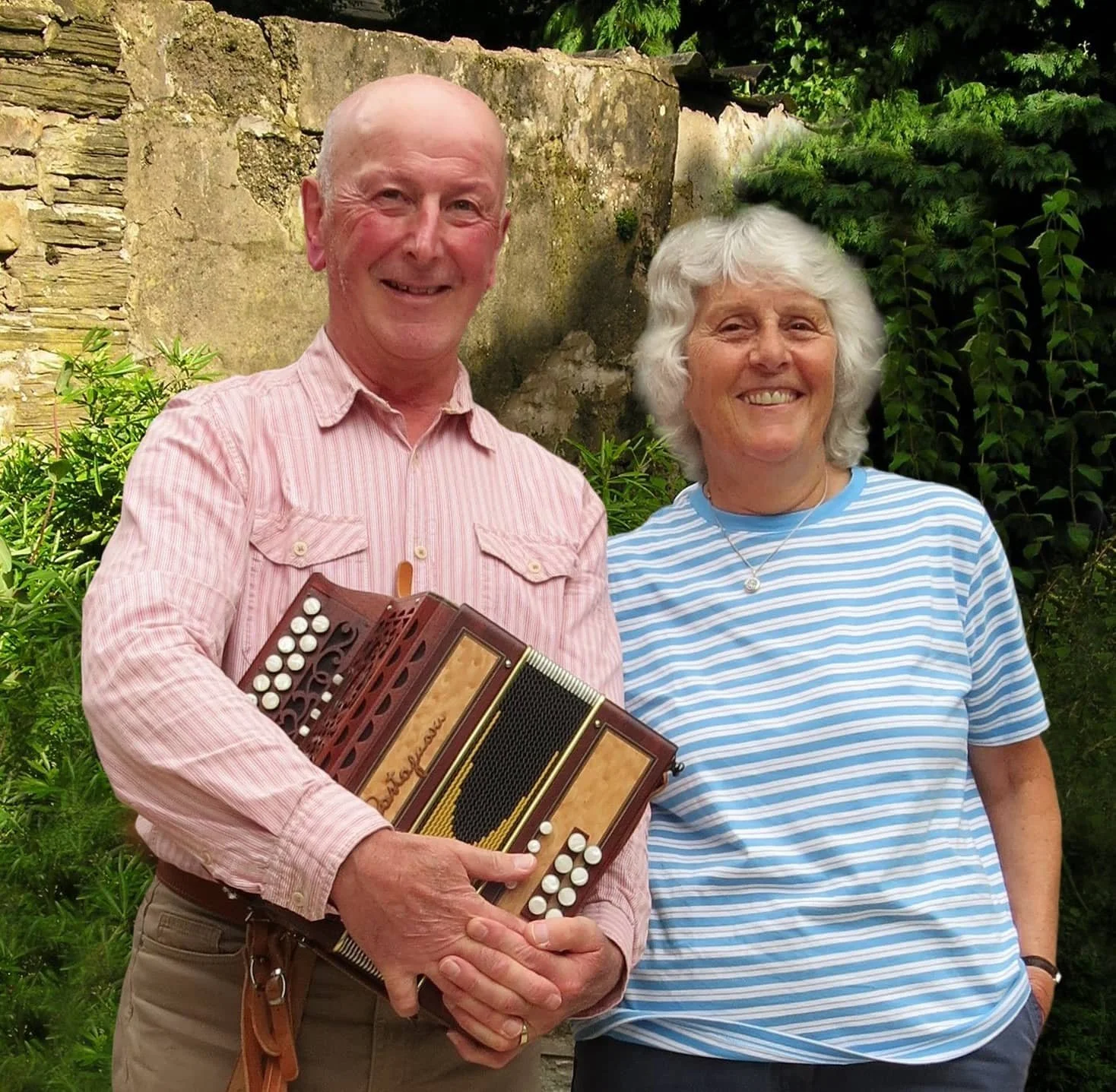
Peter and Barbara Snape: From the collection of Peter Snape
The paperback book "Anne Geddes Gilchrist: Folk Song Scholar and Collector" published in March 2026 by The Ballad Partners https://theballadpartners.co.uk/)can be ordered directly from them or from The Snapes Online Shop for £15.00.
Next time, an article on the flood of 1907, which the Lancaster Guardian dubbed “The Great Gale,” and may have been the most violent storm to hit SP so far…