August Heatwave
Moths at Dolphin House
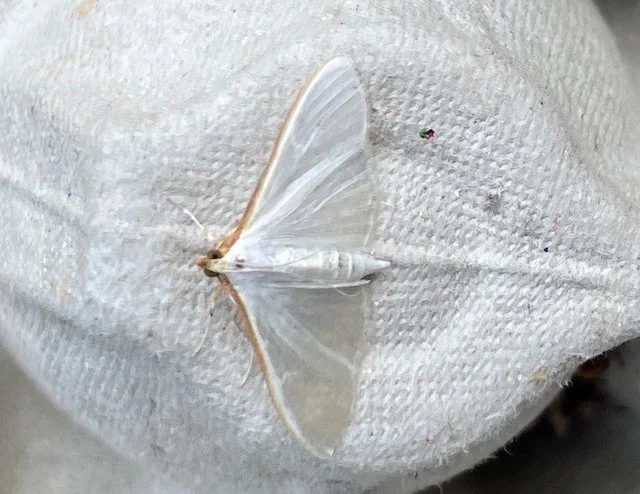
The beautiful Olive tree Pearl: Collection Pete Marsh
Early lush conditions for feeding caterpillars, for example in spring in Morocco, kick-started a large number of Painted Lady butterflies, many of which you will have seen recently on Buddleia and other nectar sources.
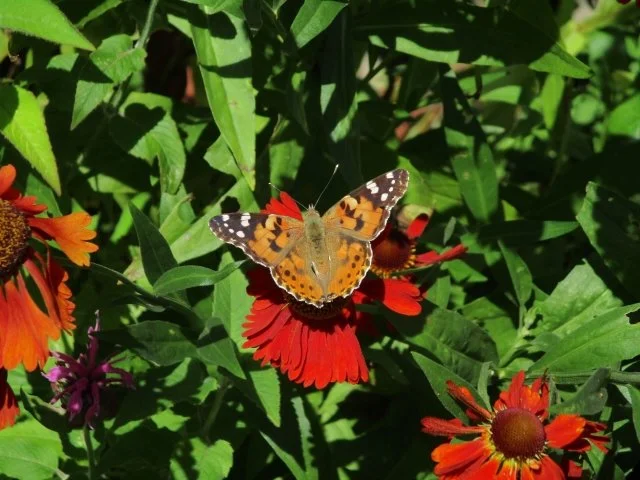
Painted Lady: photo Alan Smith
Record Numbers
These have been accompanied by record numbers of Hummingbird Hawk-moths, with social media flooded with pictures, including on many village websites. More recently, it has also included a number of Clouded Yellow butterflies, and this is one to look out for on any remaining flowering plants on open ground at Sunderland.
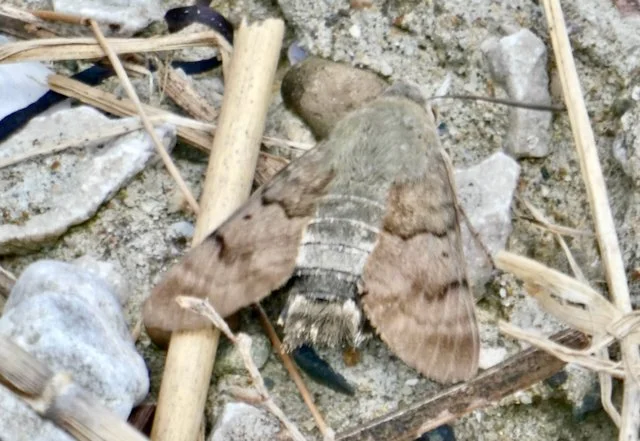
Hummingbird Hawkmoth: Collection Pete Marsh
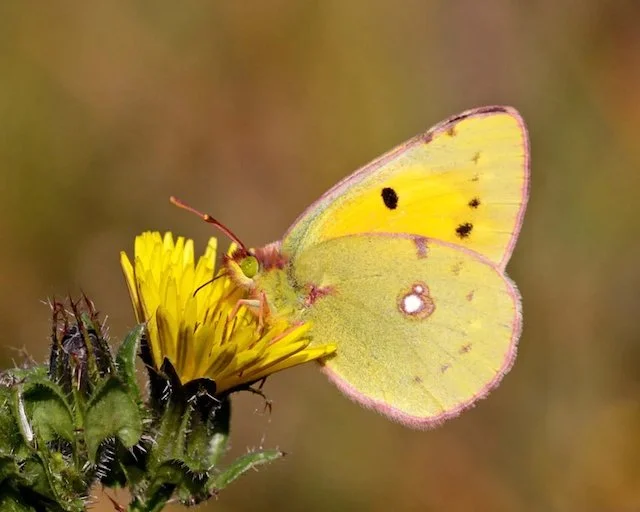
Clouded Yellow Butterfly: source: The Wildlife Trusts
Less visible and recorded only because of overnight moth-trap use, a significant arrival of rare migrant night-flying moths has occurred, including at Sunderland Point, in numbers and variety usually limited to the southern counties of England. The most spectacular was the Striped Hawkmoth, along with the colourful Vestal, Olive tree Pearl, and the more subtly distinctive Gem.
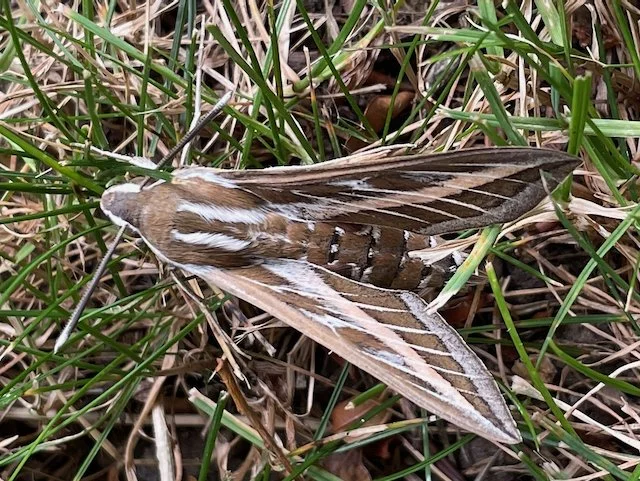
Striped Hawk-moth: Collection Pete Marsh
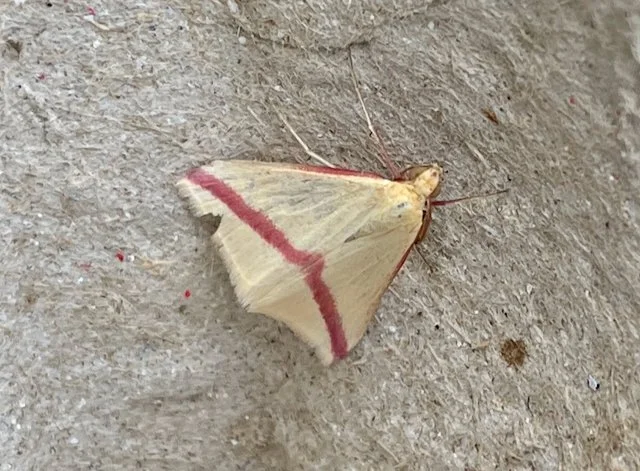
Vestal: Collection Pete Marsh
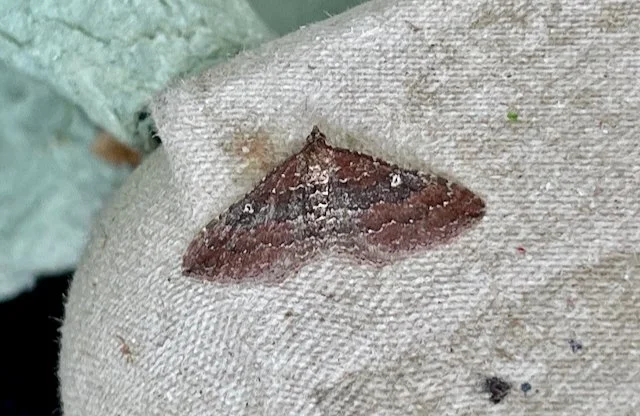
Gem: Collection Pete Marsh
Nuisance species
The more ominous element of this was the unprecedented numbers of the “Beet Armyworm”, Small Mottled Willow, with 778 recorded on the 14 August nights we observed at Dolphin House. So, if you have noticed any holes in your root vegetable crops, this may be the culprit! Normally, no stage of the lifecycle can withstand a northern English winter, but we have never seen so many before, and we will have to wait and see whether this invasion will make this species a permanent fixture.
Other nuisance species included a single specimen of the ultimate “army-worm”, the American Wainscot or White-speck. Another tiny moth, Scrobipalpa ocellatella (Beet Moth), was once limited to areas of Sea Beet on southern English saltmarshes but was also known as a sugar beet pest in southern Europe. This year it seems to have invaded the East Anglian sugar beet fields, and we had a few in our area, including at Sunderland Point. It may remain a harmless new colonist in this area if it finds Sea Beet on our local salt marshes, or we may be too far north for it to survive. We’ll see.
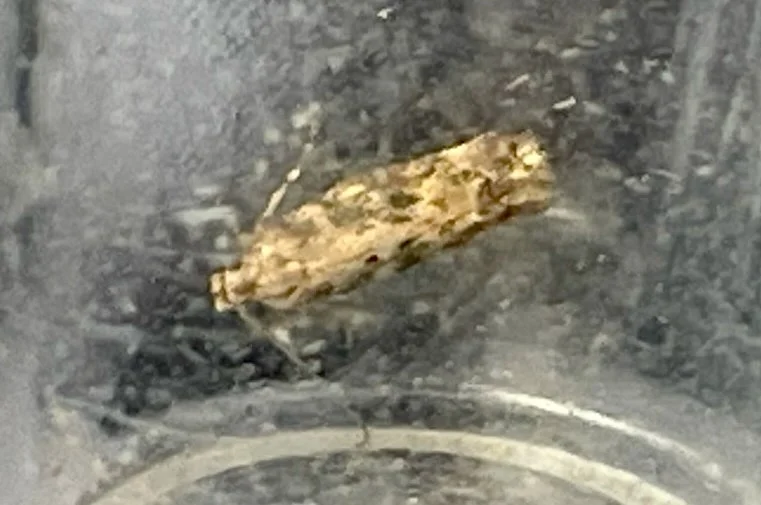
Scrobipalpa ocellatella or Beet Moth: Collection Pete Marsh
A first for Lancashire
The August catches at Dolphin House included some extreme rarities, facilitated by night after night of suitable warm flying conditions that allowed northerly movements.
This included a first for Lancashire, the Webb’s Wainscot, a species previously recorded only as far north as mid-Cheshire. Time will tell whether this is an isolated record or a new colonist; there are certainly plenty of the larval food plants in our local wetlands.
The fourth record for Lancashire of Banded Sable and White-point graced the trap during the month, and the rare Small Marbled was a first for the site. Other odds and ends, reflecting suitable flying conditions for wandering, included a Satin Beauty from a conifer plantation, wherever that may be!
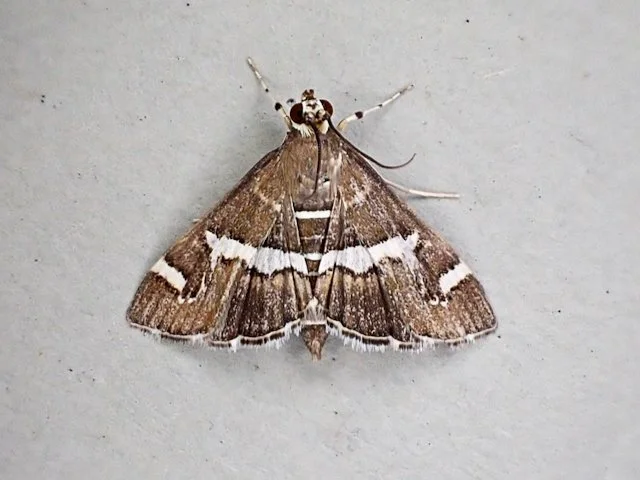
Spodalea recurvalis or Banded Sable: Collection Pete Marsh
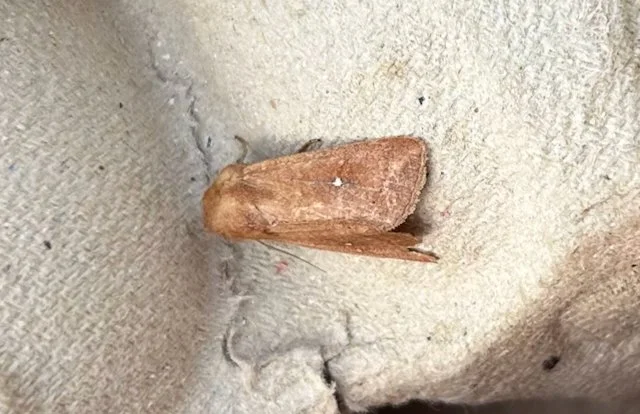
White-point: Collection Pete Marsh
We obviously haven’t got all the information to hand yet, but there is some evidence that the hot weather has predictably affected a number of species that have second broods, with midsummer larval feeding on unsuitable, withered ground vegetation.
This is perhaps a particular problem for the rare and localised limestone pavement species in the Silverdale area, rather than for anything at Sunderland Point, where our salt-marsh plant specialities continued to receive their welcome tidal doses of water.
For the full list of moths seen in August, here’s the spreadsheet. The website UKMoths is perhaps the best source for learning more about any species on the list.
Pete wishes to thank Katharine and Dom for facilitation and good company
In October 2024, Pete wrote a fascinating article with lots of photos for the website about the moths seen at Sunderland Point.
Next week, the House Histories