‘The Great Gale’
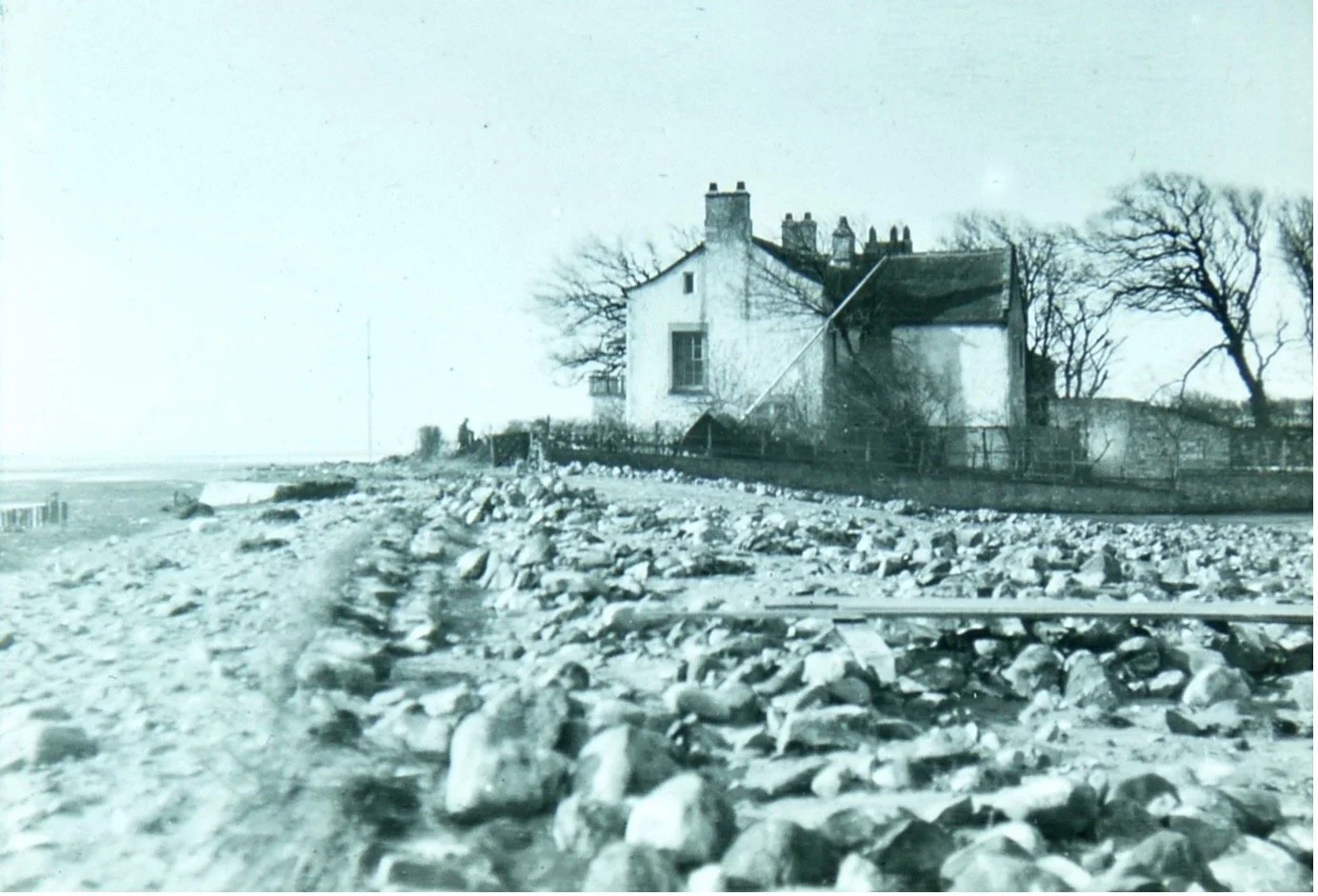
The wall between the fish house and the Old Hall was completely destroyed: A George Gilchrist Junior photo
On Saturday, March 16th, and into the early hours of Sunday, March 17th, 1907, a storm-force gale drove a rising spring tide into a flood that struck the Lancashire coast with devastating force.
The weather forecast for that weekend
The Meteorological Office provided daily weather reports detailing current conditions and a brief forecast. Early on Saturday morning, they released this chart.
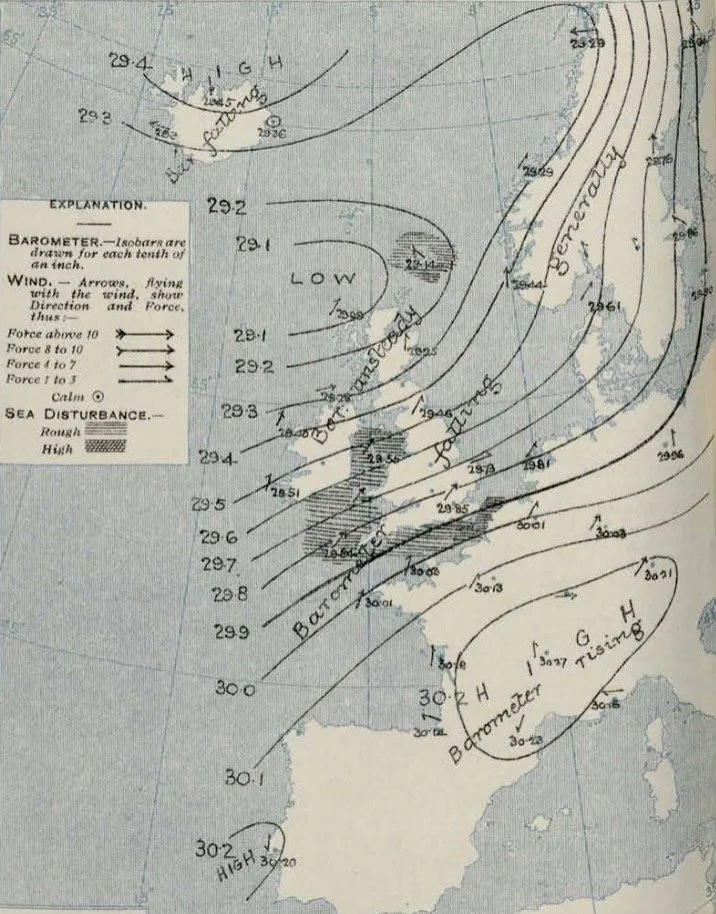
Daily Weather Report 8 am Saturday March 16: Source Met Office.
This chart is for 8 am and shows a depression between two highs, one above Iceland and the other over southern France. Winds are strong but not exceptional, and the shaded areas indicate rough seas with southwest winds.
The narrative said, ‘The weather is poor. It has been cold and wet, with strong winds’ and for Saturday evening forecast ‘southwest winds, strong to gale force, mild and cloudy with occasional rain’.
During the day, the low concentrates, and by 6 pm it is over Northern Ireland, with winds increasing in force. By late evening, the depression deepened further, and gale-force winds lashed northern England.
In Southport (the closest we can find), the wind speed hit 64 miles an hour, force 11 on the Beaufort scale, ‘a violent storm’.
The Lancaster Guardian called it ‘The Great Gale’.
By early Sunday morning, the low had moved towards Scandinavia, and wind strength was falling.
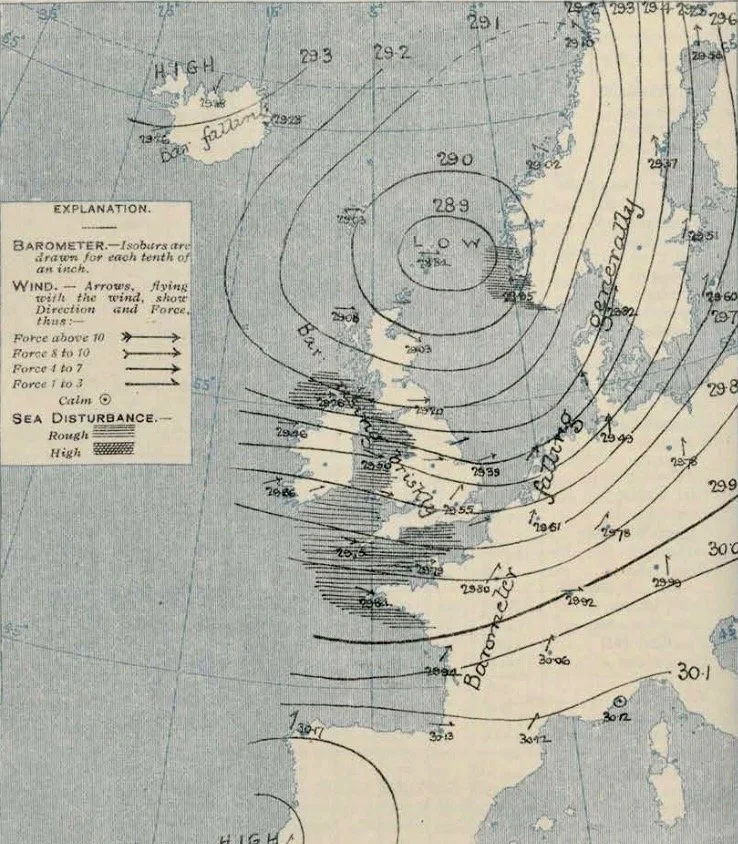
Daily Weather Report 8 am Sunday March 17th Source Met Office.
In a commentary, the Met Office recorded.
There was a combination of very low atmospheric pressure, high winds and heavy rain at the time of the equinoctial spring tides, and the result was considerable damage from high tides and flooding in Morecambe and on other parts of the Irish Sea coast.
And in a later report
A great storm of wind in the night raised the tide to a higher level than has been reached for 50 years. All the low-lying land adjoining the river Lune and Morecambe Bay was flooded, and great damage was done.
In Lancaster
The following Thursday, the Lancaster Guardian had a full-page account of the storm damage:
A Gale of such severity and destructive character that it has seldom, if ever, been equalled. The continuous rainfall on Saturday had swollen the rivers to an abnormal height, but in addition the spring tide of 22 feet 7 inches was one of the highest of the year and backed by the wind which raged with hurricane violence for several hours, it was estimated to reach fully 29 feet.
It’s not possible to equate the tide’s height in Lancaster with today’s measurements. However, the predicted high tide at Liverpool early Sunday morning was 9.31 metres (30 feet 6 inches). If the newspaper is correct, the storm surge may have added as much as an extra 2 metres.
It was the worst storm since 1853. Flood defences were breached, and low-lying fields around the town were submerged under several feet of water. Only the tops of walls and farm buildings were visible. Cattle, hundreds of sheep, and other livestock were drowned.
By the river, James Williamson’s St George’s factory on the quay was flooded, causing extensive damage to finished goods. Warehouses were swamped, corn millers’ stocks were lost, and local residences were damaged. The ballast under the railway lines was washed away, and iron railings and walls were demolished.
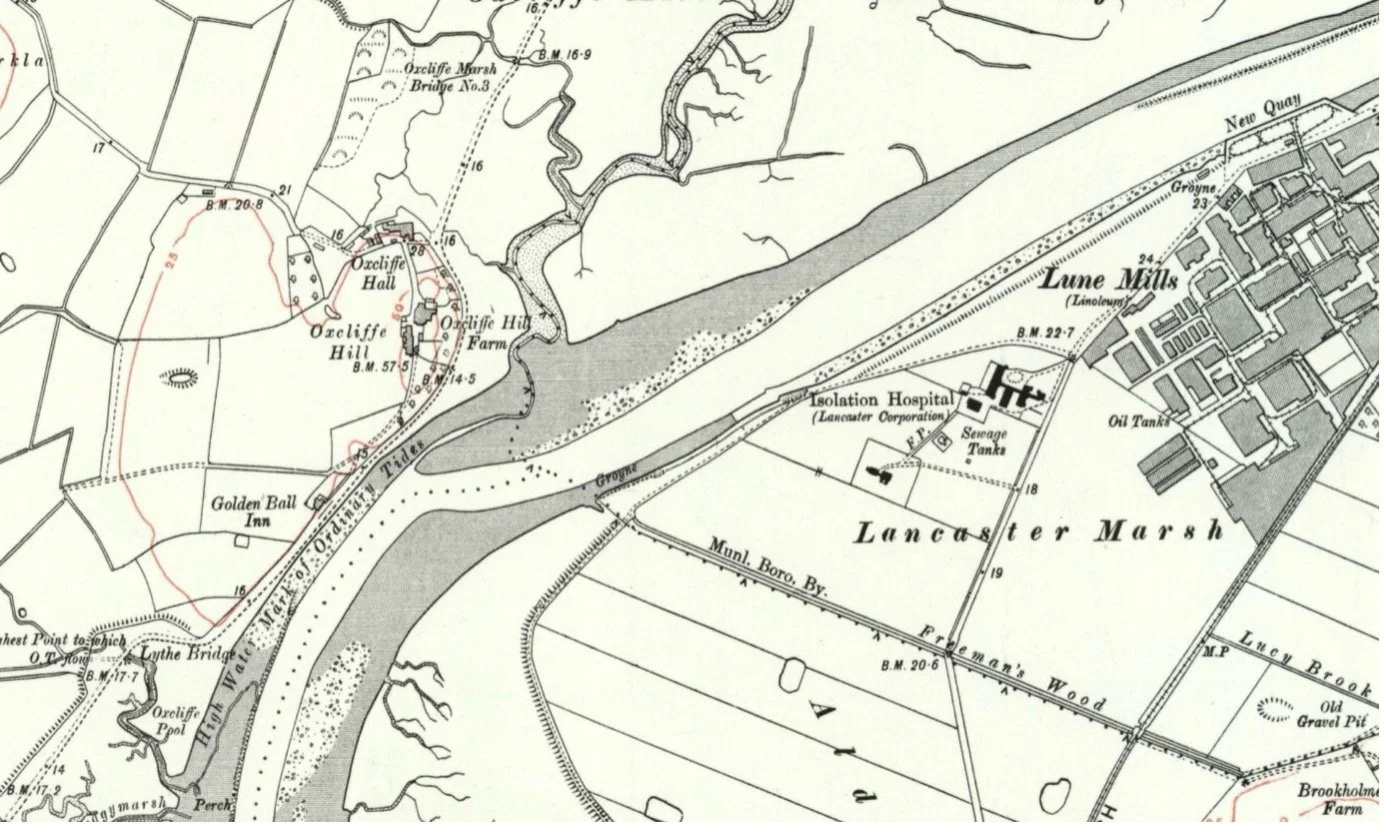
The Isolation Hospital next to Williamson’s Lune Mills: notice the Golden Ball on the opposite bank of the river: 1910 OS map courtesy of the National Libraries of Scotland.
The floodwater at the Isolation Hospital rose to seven feet and surrounded the building, causing great anxiety. Boats were readied to rescue patients and staff. Eventually, a large horse-drawn omnibus was chartered for the rescue. As it drew closer, the matron called out, “We are all right for the present,” and warned not to go nearer due to the depth of the water.
The Guardian later reported: ‘Fortunately, the number of inmates was smaller than usual, and in addition to the staff, there were only five children suffering from scarlet fever and a woman suffering from typhoid.’
In the 1927 flood, the hospital was busier, and tragically, three patients and the Matron were drowned.
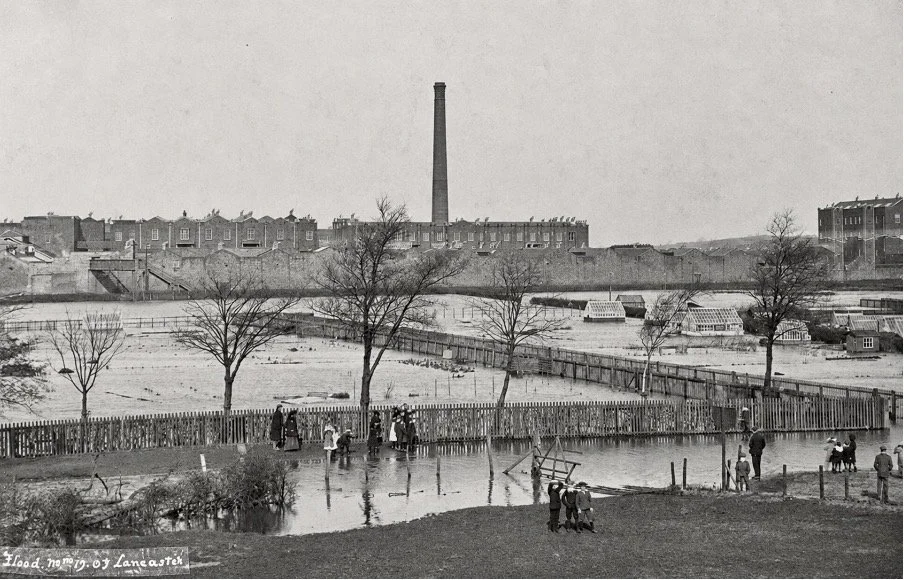
Looking over the river towards Williams’s mills at St Georges Quay, this is flooding at Willow Lane; the allotments are all submerged. Courtesy Red Rose Collection, Lancashire Archives.
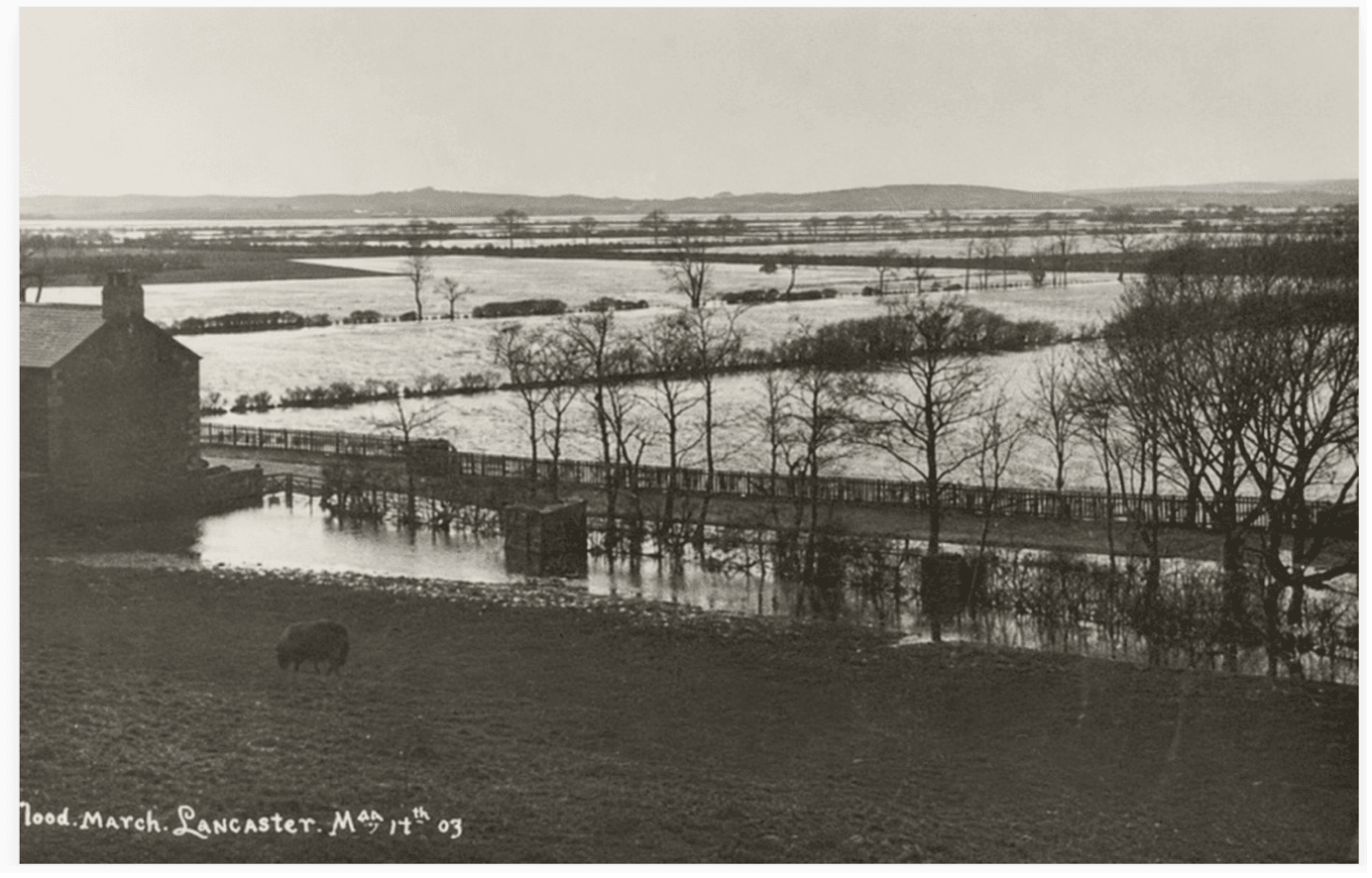
Flooded fields: Courtesy Red Rose Collection, Lancashire Archives.
In Morecambe
The Visitor led with this report:
‘Morecambe has experienced many violent storms, but the one which raged throughout Saturday night and in the early hours of Sunday morning was without doubt the fiercest and most destructive that had ever occurred in its history’.
There were strong winds and rain, and around 10 pm the winds veered towards the dangerous south-westerly direction.
‘Towards 1:00 the Gale, according to an eyewitness, reached its height. Above the deafening roar of The Tempest could be heard the weird creaking and groaning of the fishing craft which had broken from their moorings and were now fast driving before the cruel wind and through the big breakers towards the sea wall.’
Many boats were wrecked, and one belonging to a Mr Threlfall ploughed through railings and landed on the roadway, partly covering the tram tracks
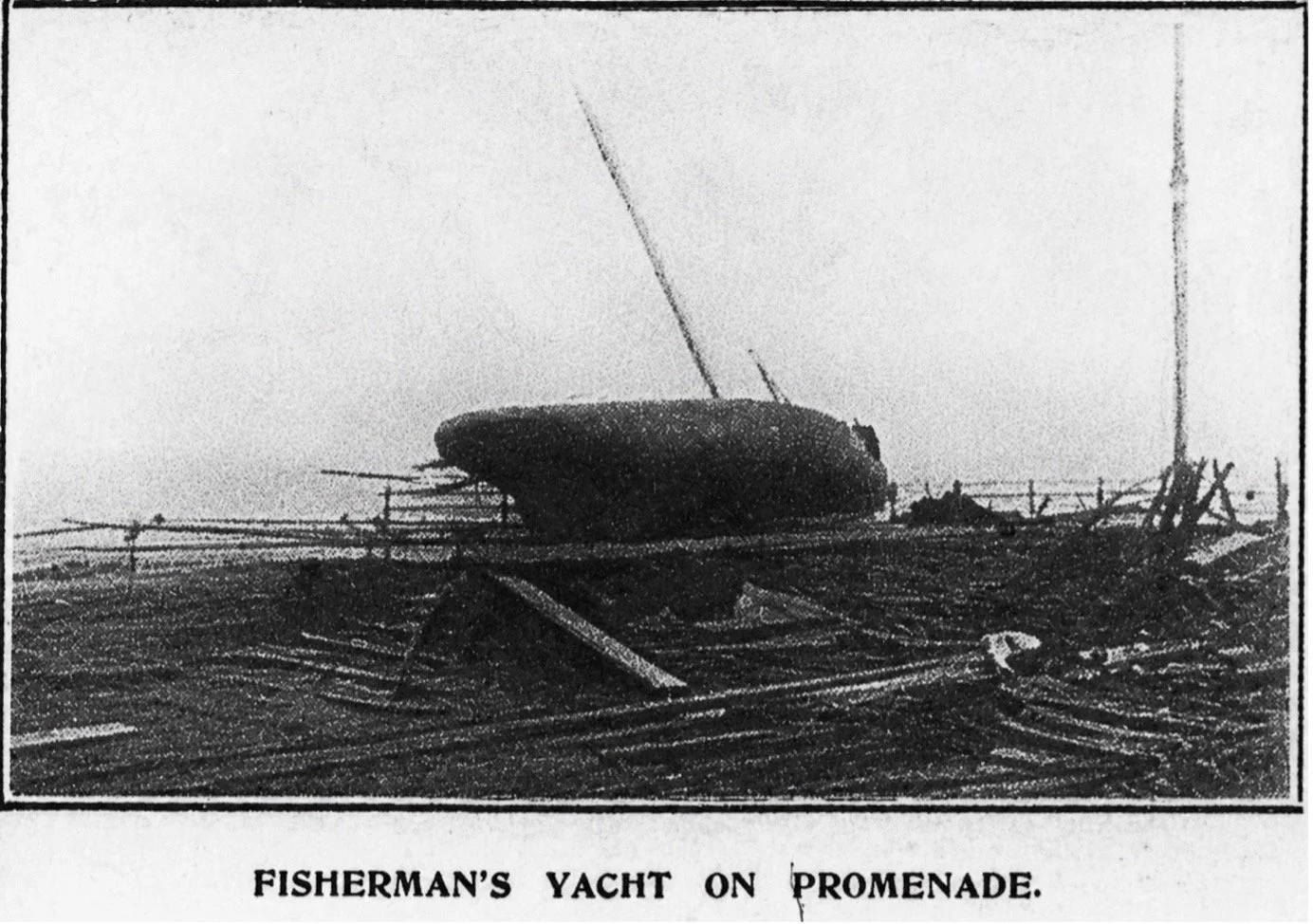
The Visitor, March 20th, 1907: courtesy Guardian newspapers
In another eyewitness account, the destruction began shortly after midnight:
‘The sea rushed through right across the roadway whirling up the promenade seats like so many corks all I could hear the dreadful crushing of falling masonry, and that mingled with the roaring and howling of the wind so thoroughly frightened me that I dashed back over the crossings, sought refuge in the side street, and got home as quickly as possible thanking God I was safe.’
The wall at the West End promenade collapsed ‘like a house of cards’, and nearly 60 yards of the West End Pier disintegrated. The woodwork was carried to the shore in ‘raging seas’ and left a tangled mess of iron when the tide receded.
Seawater flooded the streets, filled cellars, and entered shops. The waves crashed through the Clarendon Hotel's doors and windows, causing extensive damage.
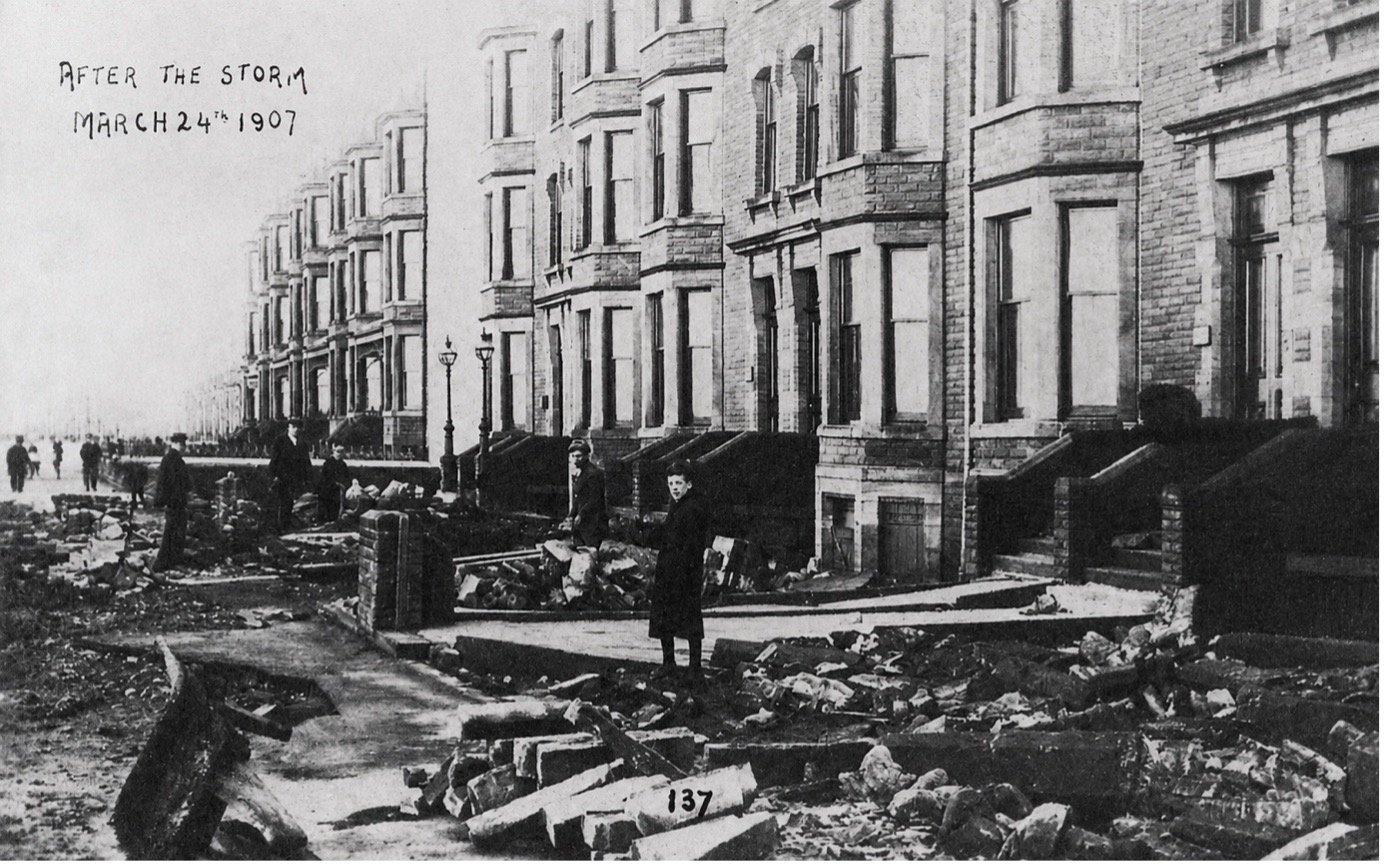
Damage to the fronts of houses in Sandylands. The date is incorrect unless the photo was taken a week after the flood: Red Rose collection, Lancashire Archives
The Stone Jetty
Parts of the Stone Jetty were lost in the storm. ‘The road between the jetty and the (old) Midland Hotel was blocked with boulders weighing many tons'.
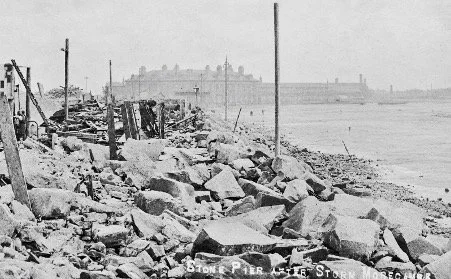
The Stone Jetty with the old Midland Hotel in the background after the storm of March 16/17th 1907: courtesy of Lancaster City Museums.
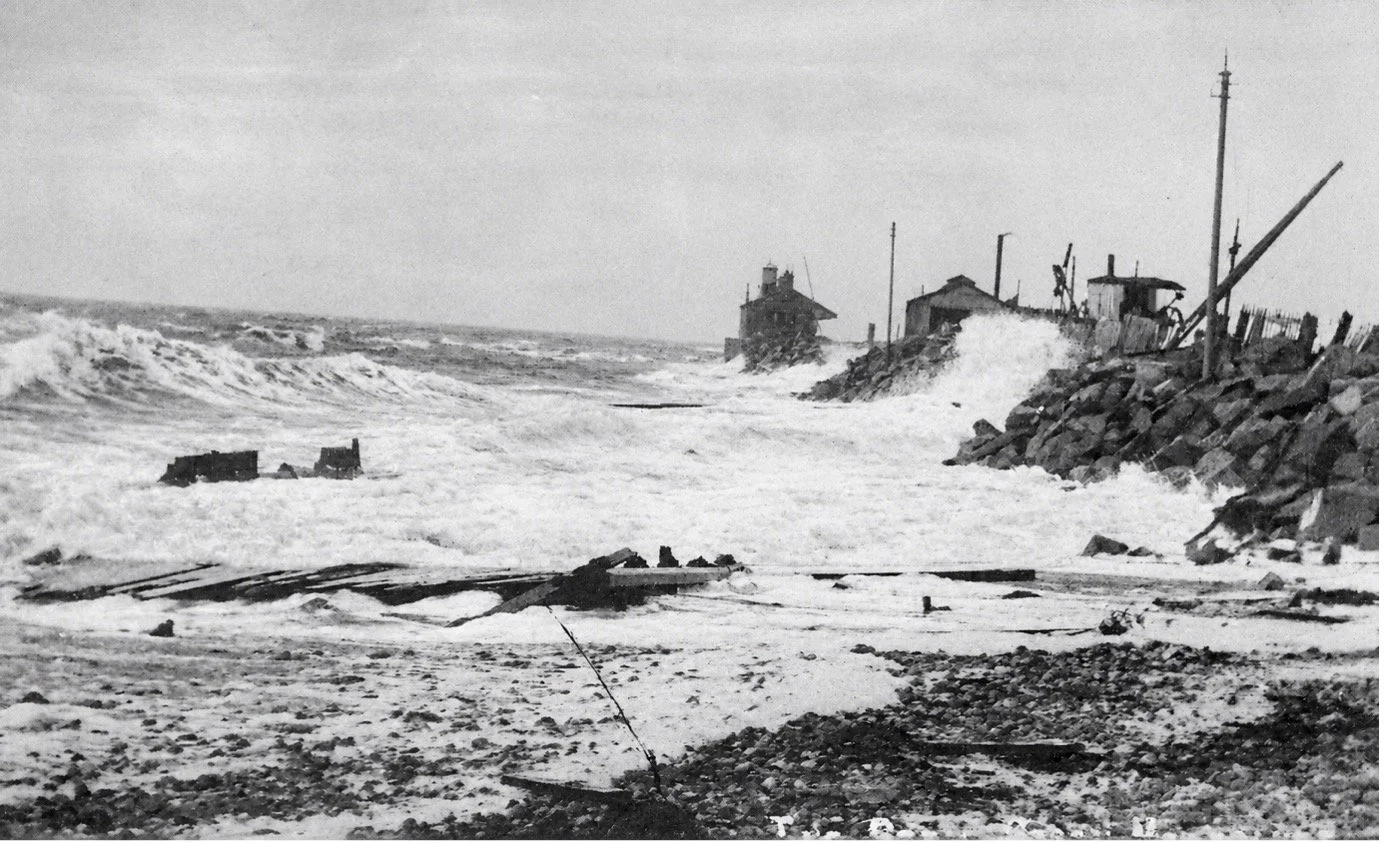
The Stone Jetty after the storm of March 16/17th 1907: courtesy Lancaster City Museums.
At Overton
All the lower-lying fields around Overton, Middleton and Ovangle were transformed into a vast lake, and:
‘Mr J Pearson of Overton has lost a large collection of prize poultry.’
A sea defence wall at Sunderland Brows burst, flooding the land. The Guardian reported:
‘One of Mr Hargreaves's men had a narrow escape on Sunday morning when conveying milk to Morecambe. Traversing one of the flooded roads, the wheels of the cart skidded into a ditch, and in a second, the horse cart and man were floundering practically overhead in the flood. Fortunately, the horse regained a footing and dragged the cart to the bank of the road, the only damage sustained being the loss of milk.’
Later, it was confirmed that the man was Luke Gardner, aged 16, who cared for the horses at the Brows farm. It was said that had he not been able to swim, he would have drowned.
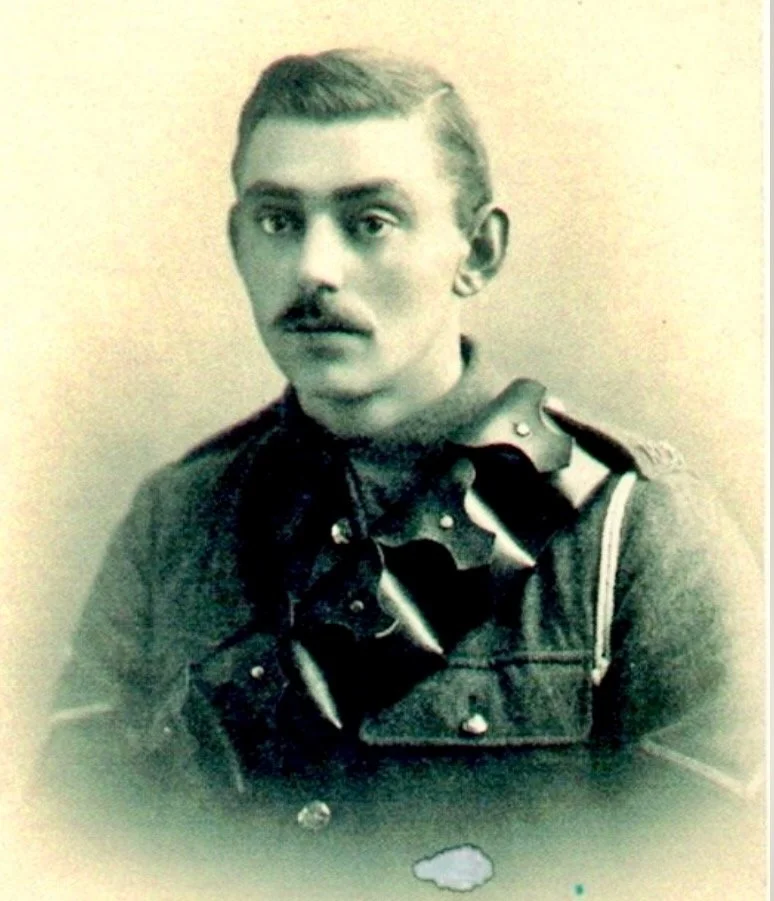
Luke Gardner, in his early 20s, wearing his First World War uniform: Collection Kris Needham
At Sunderland Point
Again, from the Guardian, ‘At Sunderland, the effects of the Gale almost baffled description. In the height of the storm, the houses rocked in a way that caused the residents to feel the greatest alarm’.
The account speaks of devastation. The sea walls on the West Shore were breached, and flood water submerged the fields. Second Terrace and the Hall End became an island.
Only the houses in the Lane seem to have avoided flooding. Front doors were smashed in, and the sea reached the first-floor windows of the lowest-lying houses. Furniture was washed out into the fields behind and onto the shore. After the tide receded, mud and debris left in some houses was more than a foot deep.
Boundary walls were demolished, and stones thrown up from the shore covered the greens and tracks in front of the houses.
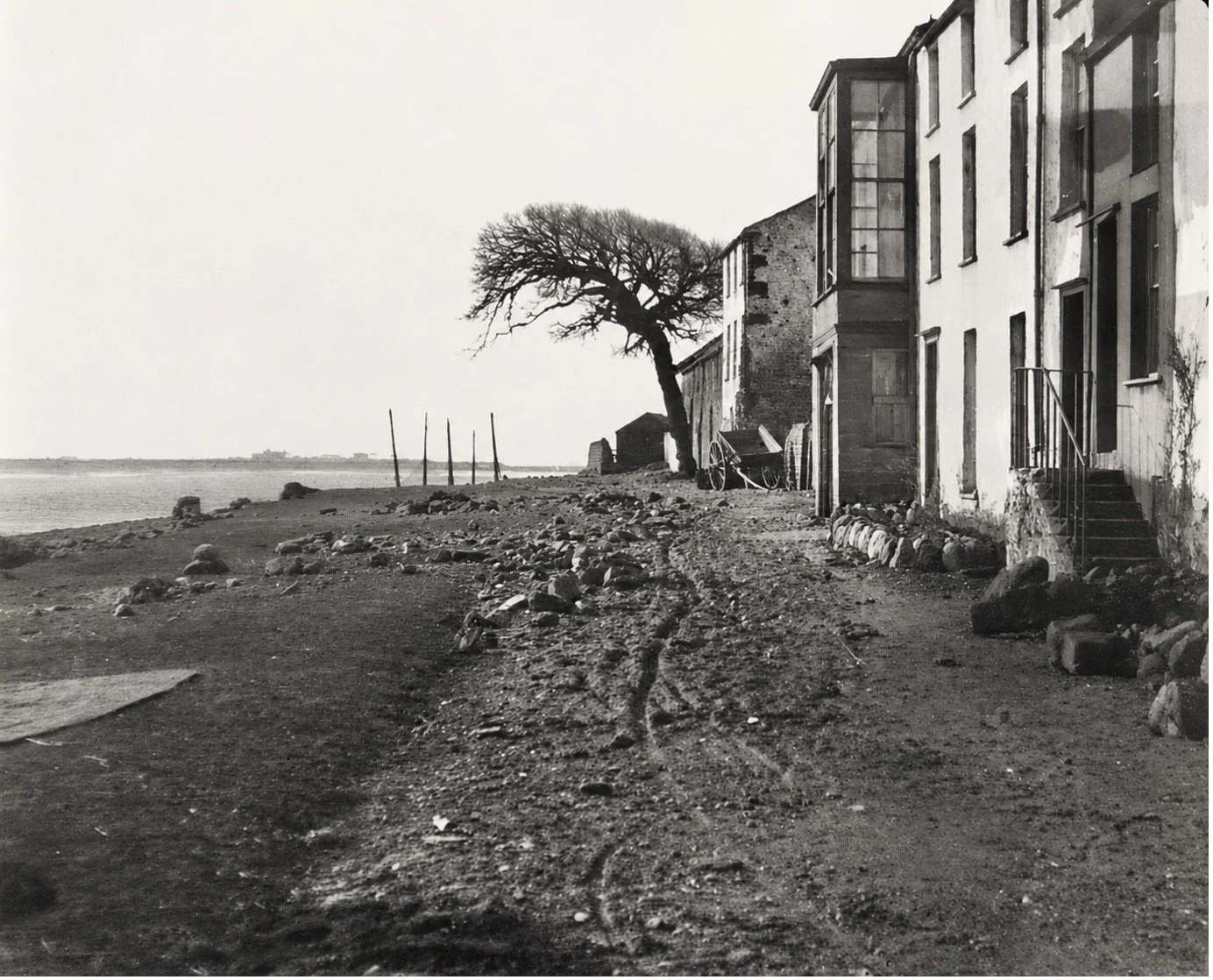
Second Terrace some days after the storm: A George Gilchrist Junior photo. At number 13, the water was said to have been three feet deep, famously washing away several paintings by the artist William Wells.
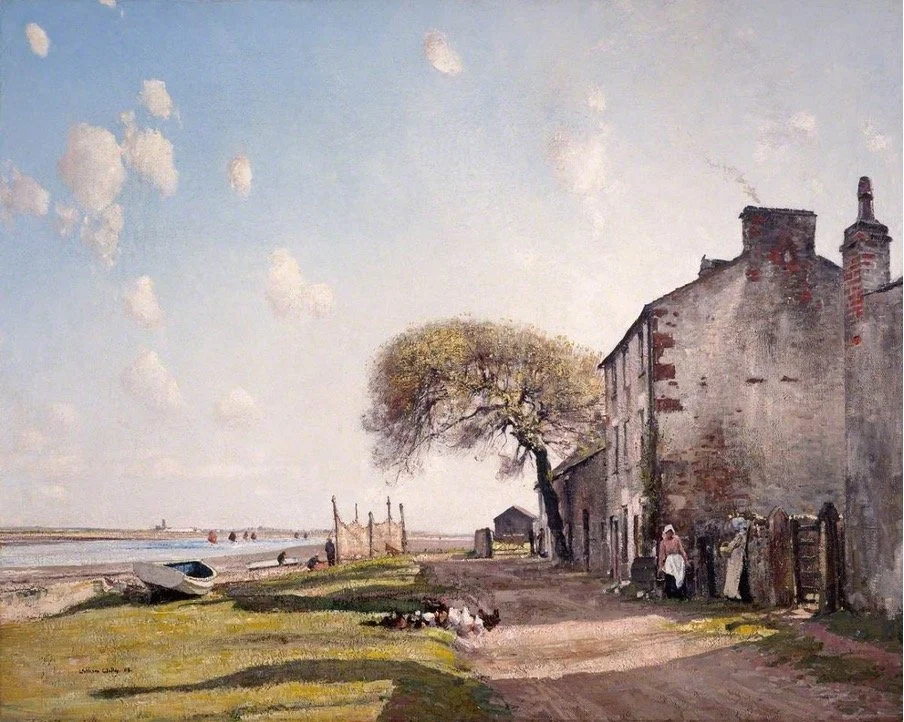
Second Terrace a year later in better times. A Lancashire Village 1908 by William Wells, courtesy of the Edinburgh Art Gallery.
A letter has survived that gives us a vivid, unforgettable account of the storm.
Sarah Townley
Sarah, aged 47, lived alone at number 23 (Hall End cottage). She was unmarried and had stayed at home to care for her parents, Margaret and William, nursing them through their final illnesses. Fortunately, her brothers, Arthur and William, both fishermen, lived elsewhere in the village.
Here she is with her parents.
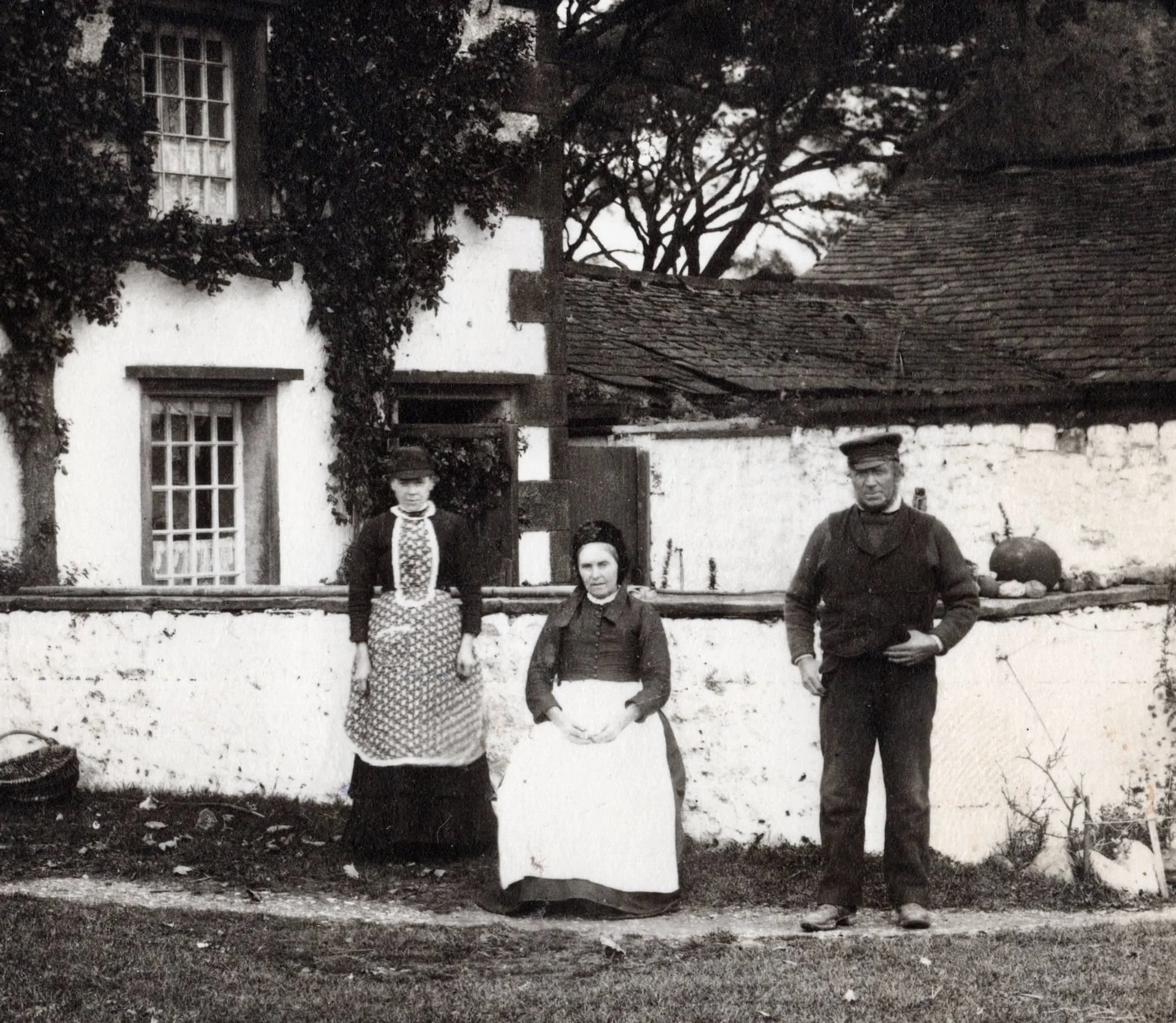
The photograph has been labelled as Ann Townley, left, with her mother Margaret and father William, c. 1893. But we think this is more likely to be Sarah. Ann was in domestic service in Preston from at least 1881. It’s possible that Ann returned to the family home after the Rev Steele died in 1908, where she had been housekeeper.
Sarah also helped with housework at the Old Hall. She had just finished preparations in the house - except for the kitchen - in readiness for what was likely to be the Gilchrist family’s first visit of the year, due the following weekend in time for Easter.
On the Sunday morning after the storm, shaken and still trembling, Sarah, following her brother Arthur's instructions, scribbled an urgent note to George Gilchrist Junior, the tenant of the Old Hall, describing the devastation and imploring him to visit.
The handwriting is shaky, and there are many mistakes. Here is the first page:
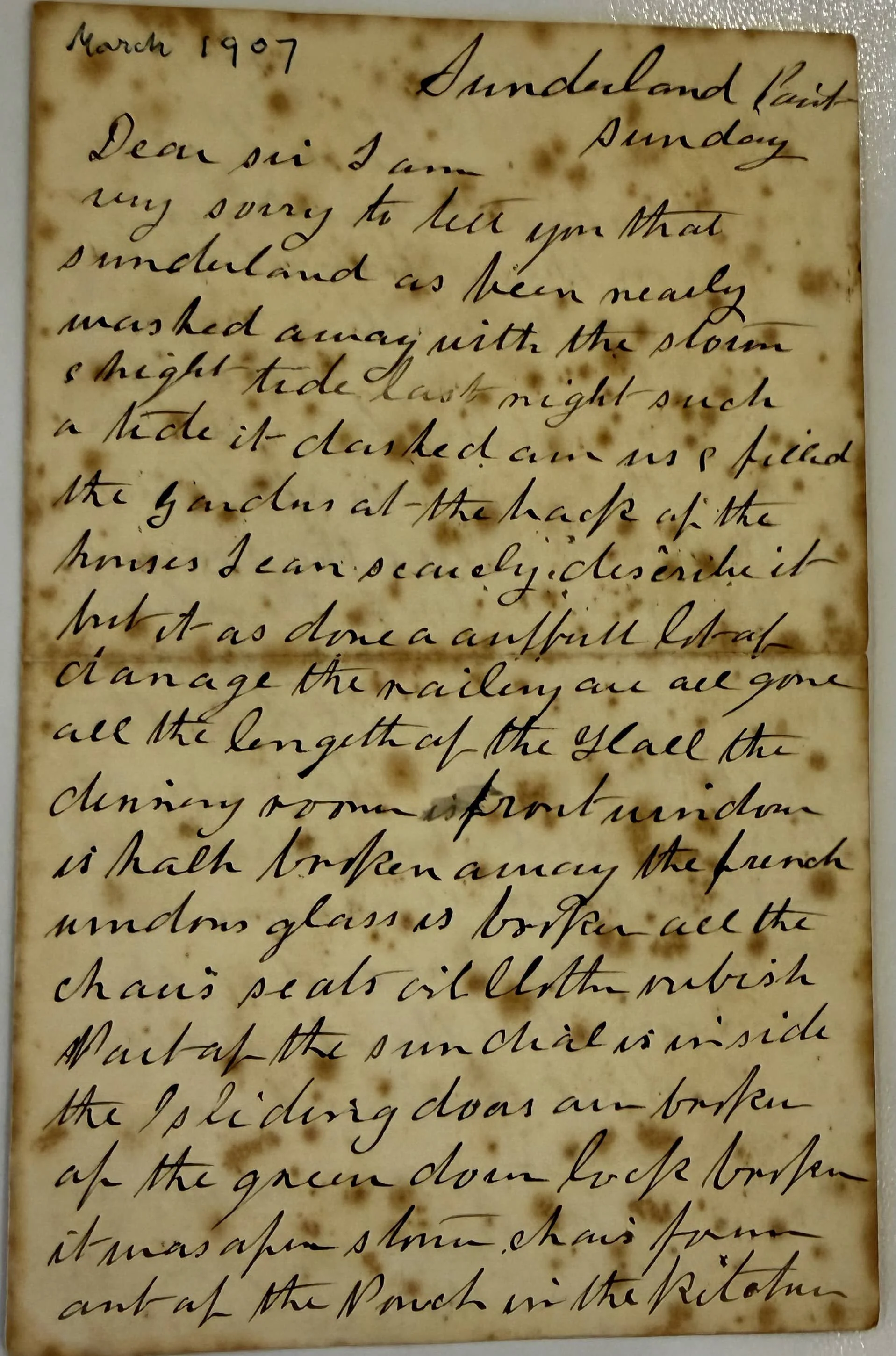
First page of Sarah Townley’s letter: Courtesy of the Gilchrist family.
At the beginning of the letter, Sarah writes:
(For clarity, we have made slight edits) ‘Dear Sir, I am very sorry to tell you that Sunderland has been nearly washed away with the storm and high tide last night, such a tide it dashed on us and filled the gardens at the back of the houses. I can scarcely describe it, but it has done an awful lot of damage’
She lists the terrible damage to the Hall: the railings washed away, windows broken, parts of the outdoor sundial and chairs washed into the house, and the sliding doors broken.
‘All chairs lying in a heap, your fine old clock lying on the floor, it is something cruel’
Sarah says most of the wall to Cotton Tree Cottage is down (see the opening photo), hedges have been ripped up, and parts of the green and the road in front of 23 have been washed away. She also says farm fields are underwater. Boats were lost, and one was taken to the other side of the river.
‘My house was full of water and mud stuff; I have been washing it nearly all day’
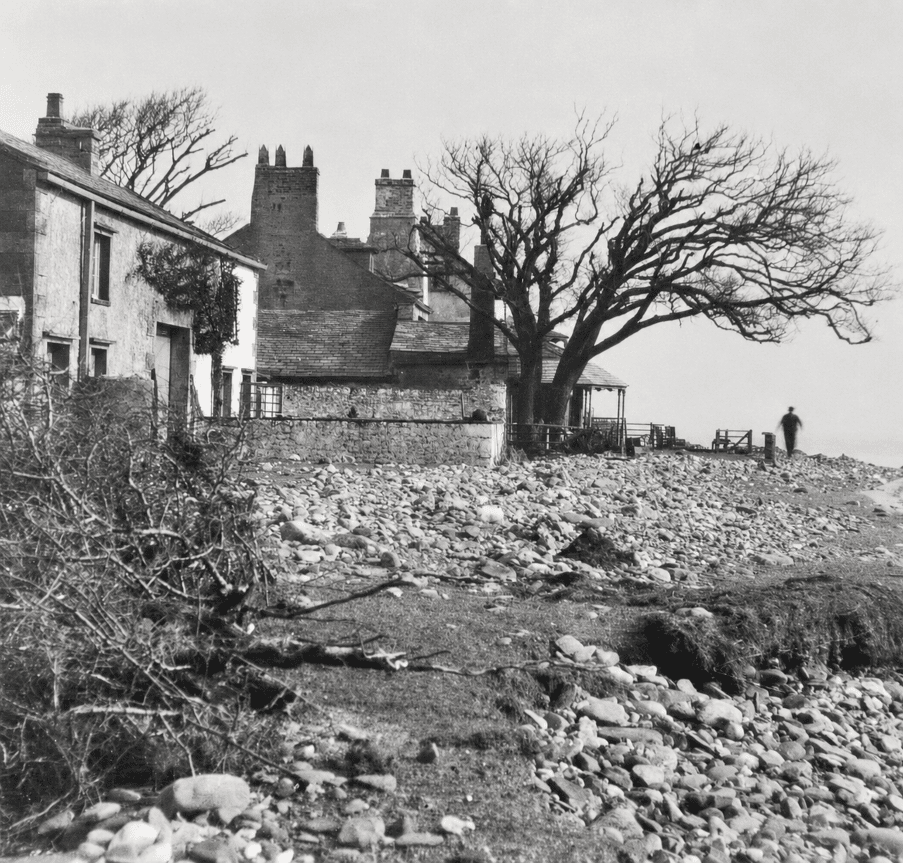
Stones on the remaining green in front of number 23. A George Gilchrist Junior photo
At number 14, farmer’s wife Mrs Bowker ‘is in a state, half the front door gone, the parlour door and furniture washed into the cellar’.
Sarah says she has been up all night and that ‘We were so thankful Mr John (Swainson) was with Miss Swainson (at Hall End house number 22) it was such a relief when he called out at 2 o’clock in the morning, “are you all right”? ’
Later, her brothers, Arthur and William, came to check on her and the people at 22. At 5 am, Arthur returned to ensure she was safe and described the damage to the Old Hall.
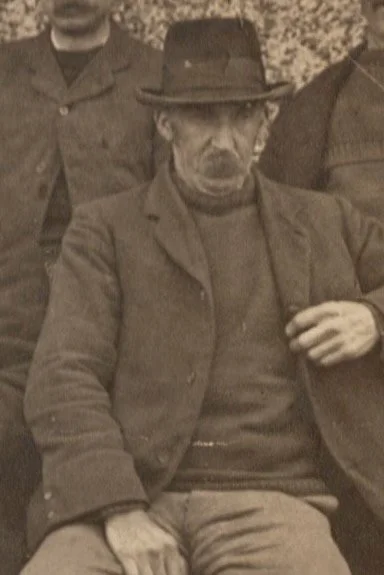
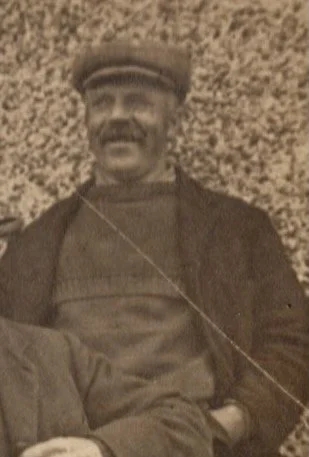
Arthur Townley, left and his younger brother William in 1908: Collection of Harold Gardner
‘I was wading up and down trying to get a fire for a cup of tea, Arthur says you had better come, someone must please’
Sarah also writes that the Bagots at number 4, Sarah’s own house number 5 and her brother William at number 6 were all ‘broken in’
She ends the letter saying
‘Please excuse the bad letter as I am upset, yet I wish you had been in the Hall, perhaps something might have been done, with kind regards to you and yours’
There is an unclear postscript where she says the ‘lifeboat is alright’ (George’s boat, the ex-lifeboat ‘Child of Hale’) and that she will light fires in the dining room and bedrooms.
George Gilchrist Junior
George, a bank manager living in Southport, reacted instantly and drove to the village. In 1907, although cars were established, they were rare, and roads were poor; the drive would have been long and difficult. He had to dodge flooded roads several times but managed to arrive on the Monday.
That evening, he started a letter to his wife, Edith (Edie), but stopped to wait until daylight to assess the full extent of the damage, finishing it on Tuesday. The letter begins
‘Edie dear, it is simply awful to see the havoc here. I don't know where to begin.’
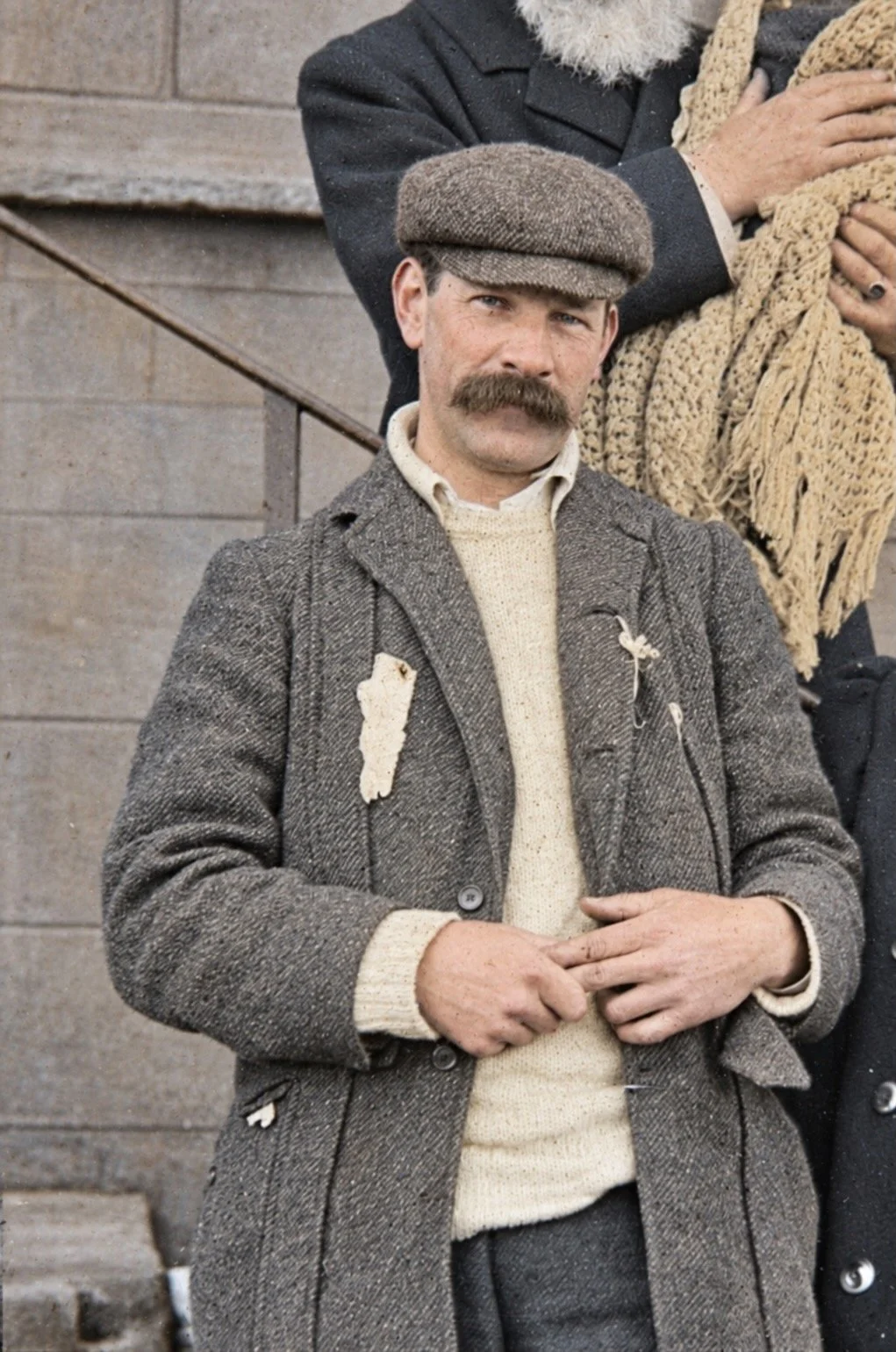
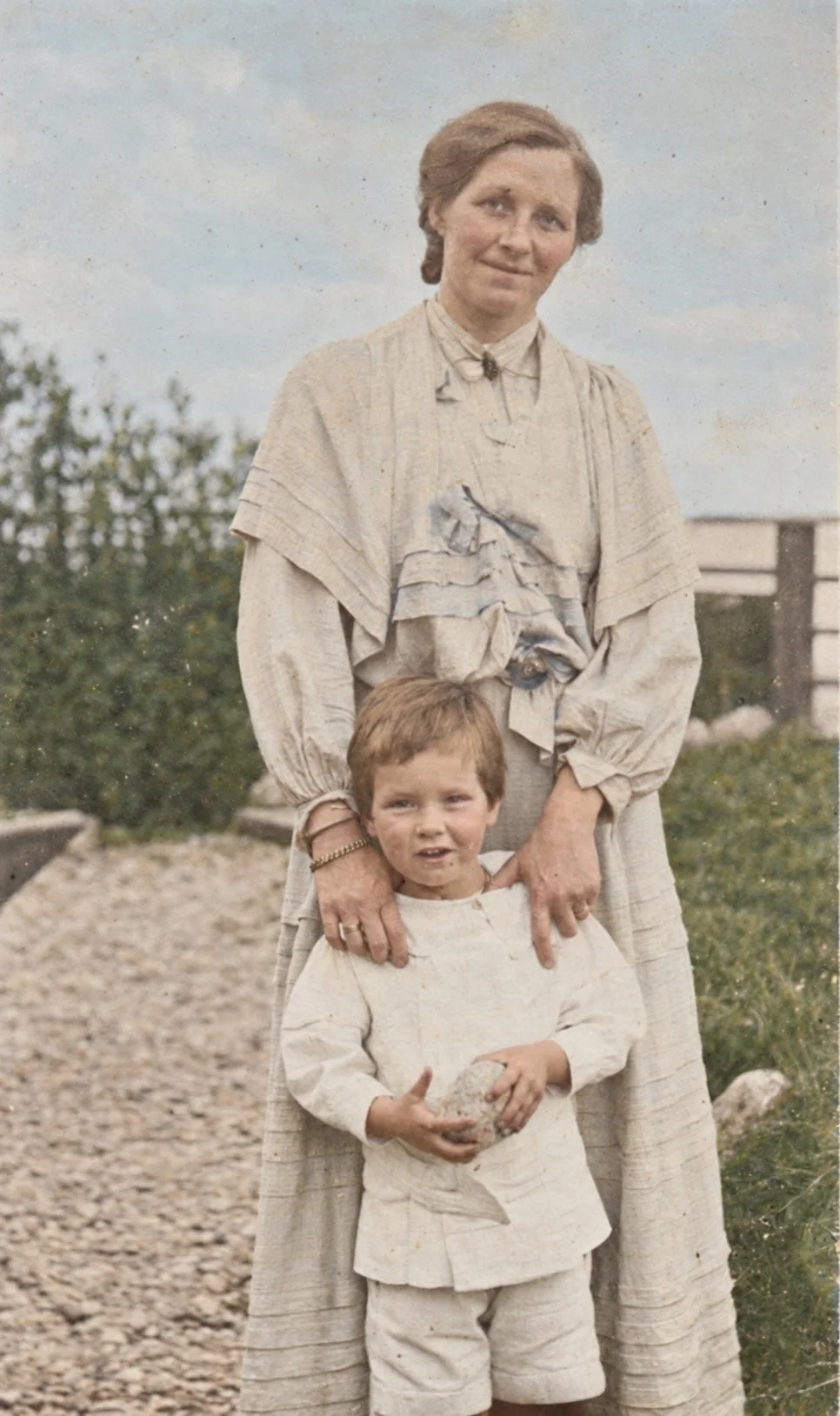
Left George Gilchrist Junior, and right Edith (nee Swainson) Gilchrist, with son Philip: Courtesy the Gilchrist family.
George adds a vivid description of his own. He tells Edie of the broken front doors, that a bag of William Townley’s mussels had been found under a sofa at number 5, that the Pad had been wrecked and Second Terrace had been awash, and that Mr Bowker’s horse would have drowned had it not broken loose.
In number 14, ‘the water has reached almost to the ceiling in Bowker's rooms’
He writes that at the Old Hall, the dining room is full of sludge, furniture ‘jammed up and down’, and his old clock, mentioned by Sarah, is ‘absolutely ruined, I fear ‘. George describes Rhododendron bushes in the dining room and the sundial covered with stones in the porch.
‘The well is full of salt water and rocks, so rainwater is being used for tea etc. Sarah gave me tea, and is to give me breakfast in her own house as the kitchen here is not yet usable’
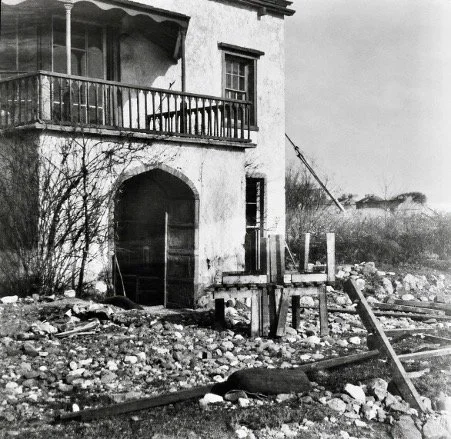
The storm damage at the front of the Old Hall: A George Gilchrist junior photo
The resourceful George turns his attention to cleaning up to get ready for the family visit the following Saturday. He has enlisted seven helpers, including Sarah (in command), her brother William, and village youngsters.
By Tuesday, George can report that the rooms are ‘now clear of sludge’, the water in the cellar is receding, the porch doors have been found under stones, the window frames in the dining room are being repaired and will be ready by Thursday. He is confident that the house will be ready.
‘We will manage all right on Saturday, but of course the garden will be in a bad state’
We imagine that under Sarah’s firm direction, they have the house ready for the family. We have photos of William and the five young helpers.
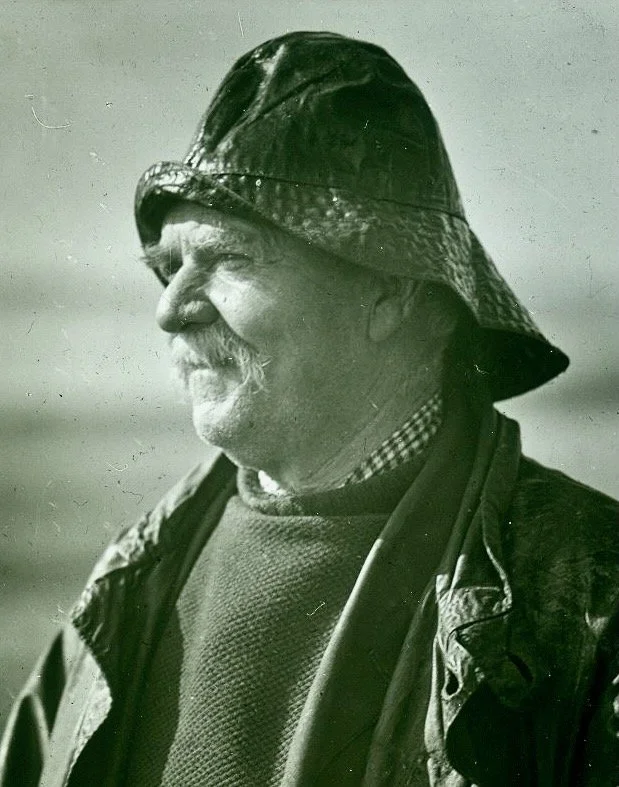
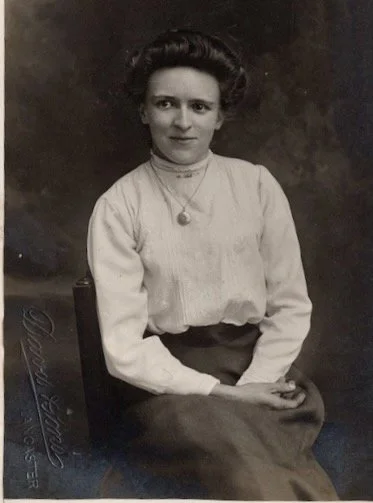
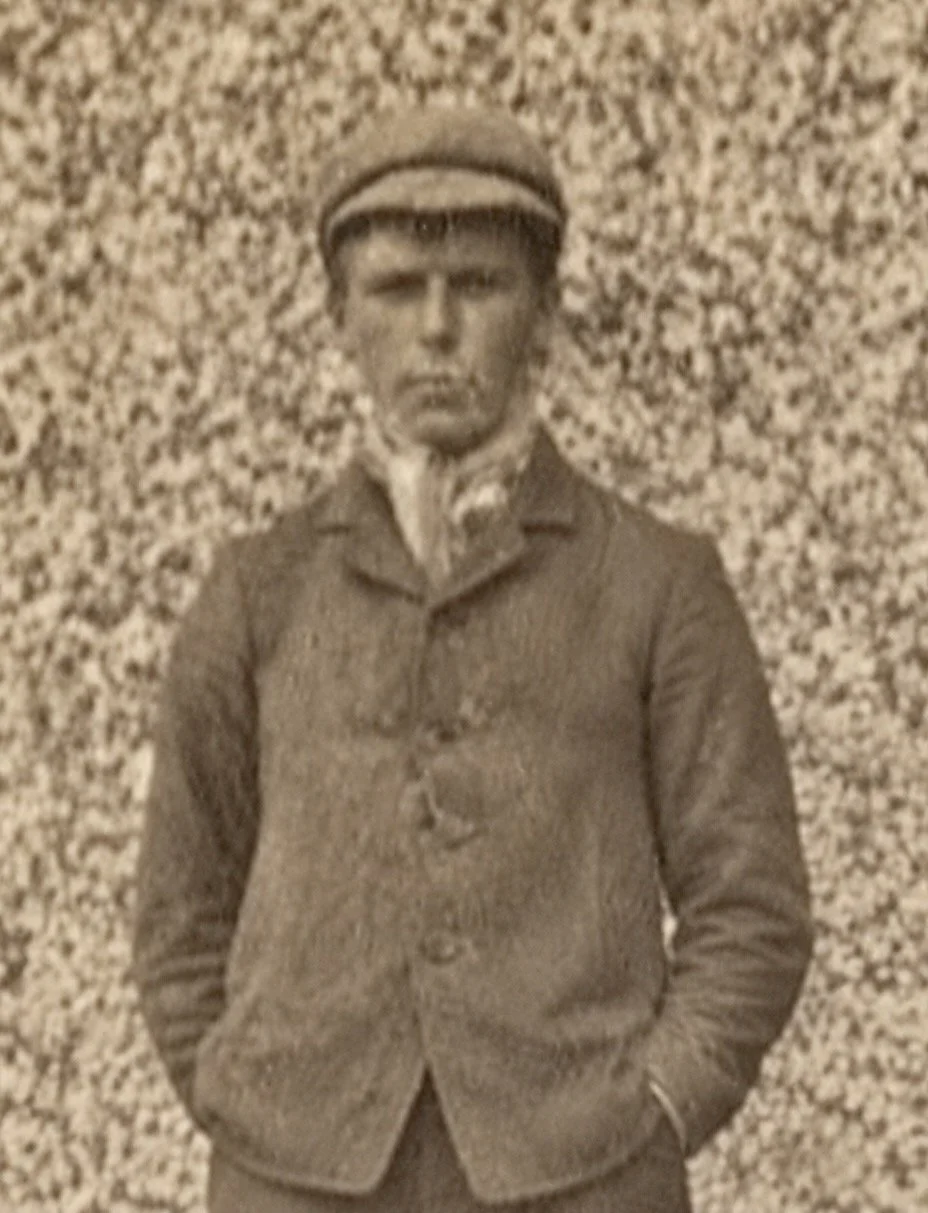
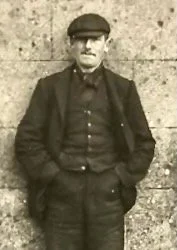
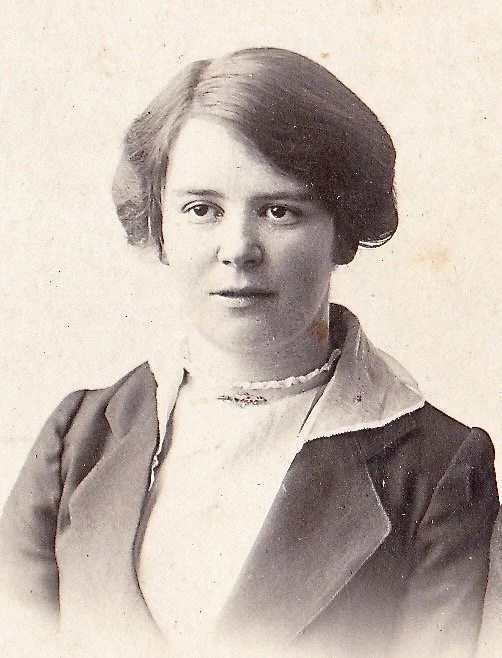
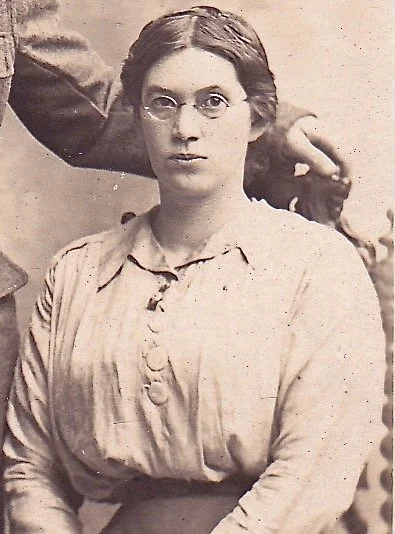
They are left to right: Top Tier: A photo of an older William Townley and Phoebe Townley. Second Tier Hubert Townley and Gerrard Bagot. Third Tier Clarice Gardner and Margret Bowker. Phoebe, Hubert and Clarice were all William’s children.
The worst storm?
It is tempting to suggest this was the worst storm of the 20th century at SP, but we can’t confirm that. In both the 1927 and 1977 storms, there were also spring tides, gale-force southwesterly winds, and low barometric pressure, but the data isn't robust enough for a close comparison. However, based on George’s photographs and Sarah’s graphic description, it would have been a terrifying experience if, as the Guardian said, ‘The houses rocked’.
For our stories on the floods, follow these links: 1977, 1927
Thanks to Morecambe Library staff for photos and good copies of the Visitor and Guardian newspapers from 1907.
Also, Mark Beswick of the Met Office National Meteorological Archive, who gave directions on how to find the records for March 1907
Next time, Alan’s story about a Wren…