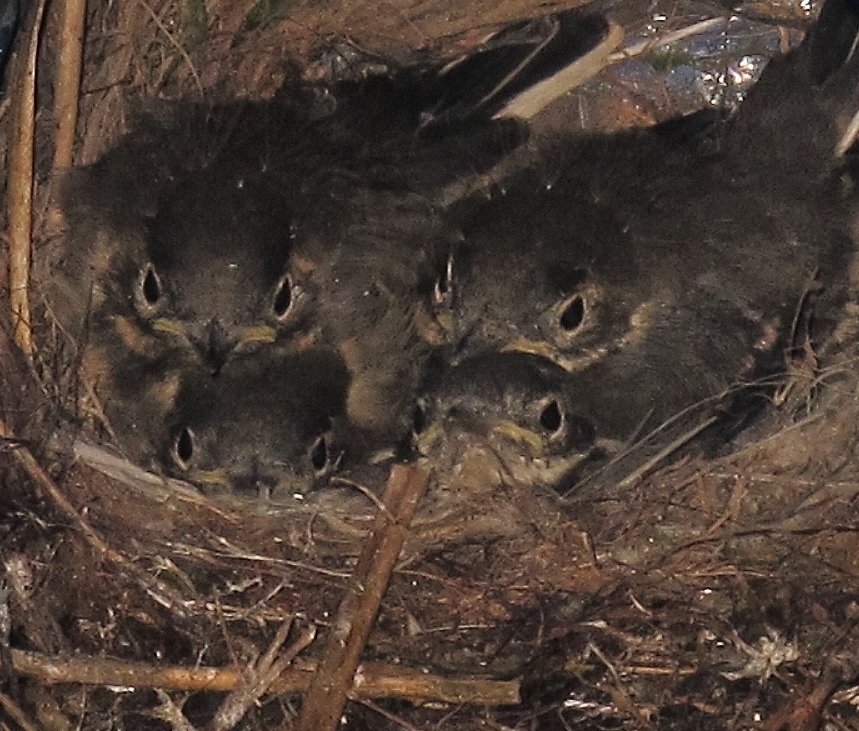
Newly hatched Pied Wagtail: Photo Alan Smith
Alan has kindly updated us on his swallows' nest and other visiting migrants in the village. Some great photos. For 2025 notes here and 2024 here
The Swallows returned to the same nest site used in previous years on 14 April and immediately began refurbishing it for the forthcoming nesting events. Mud pellets were gathered from the edge of the mudflats at the bottom of the shore and placed on the nest, where it was worn away from the activities of 2025. Small pieces of dried grass and feathers were used to reline the nest.
The first eggs were laid shortly after, and five new Swallows eventually started their new precarious lives. I am happy to report that all five survived and fledged.
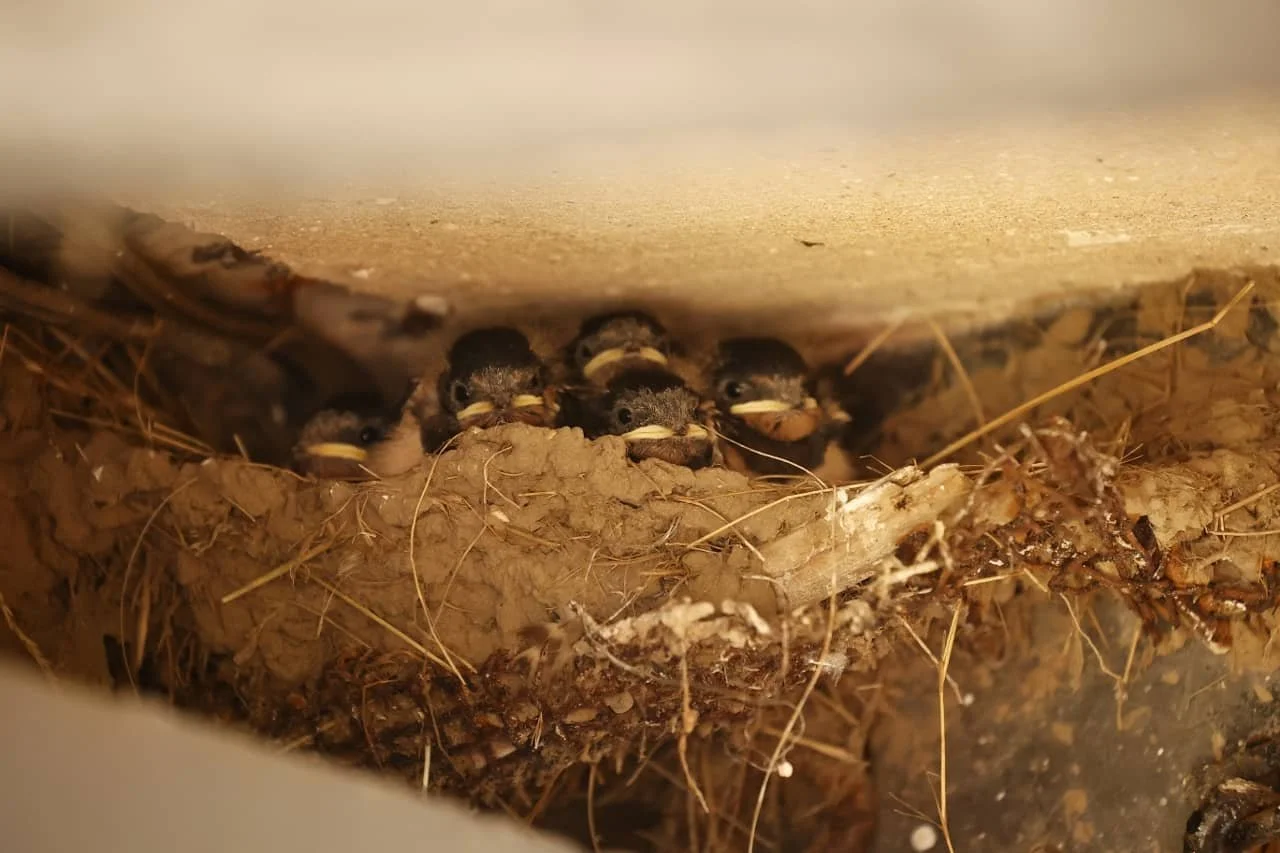
Waiting for parents, newly hatched Swallows: Photo Alan Smith
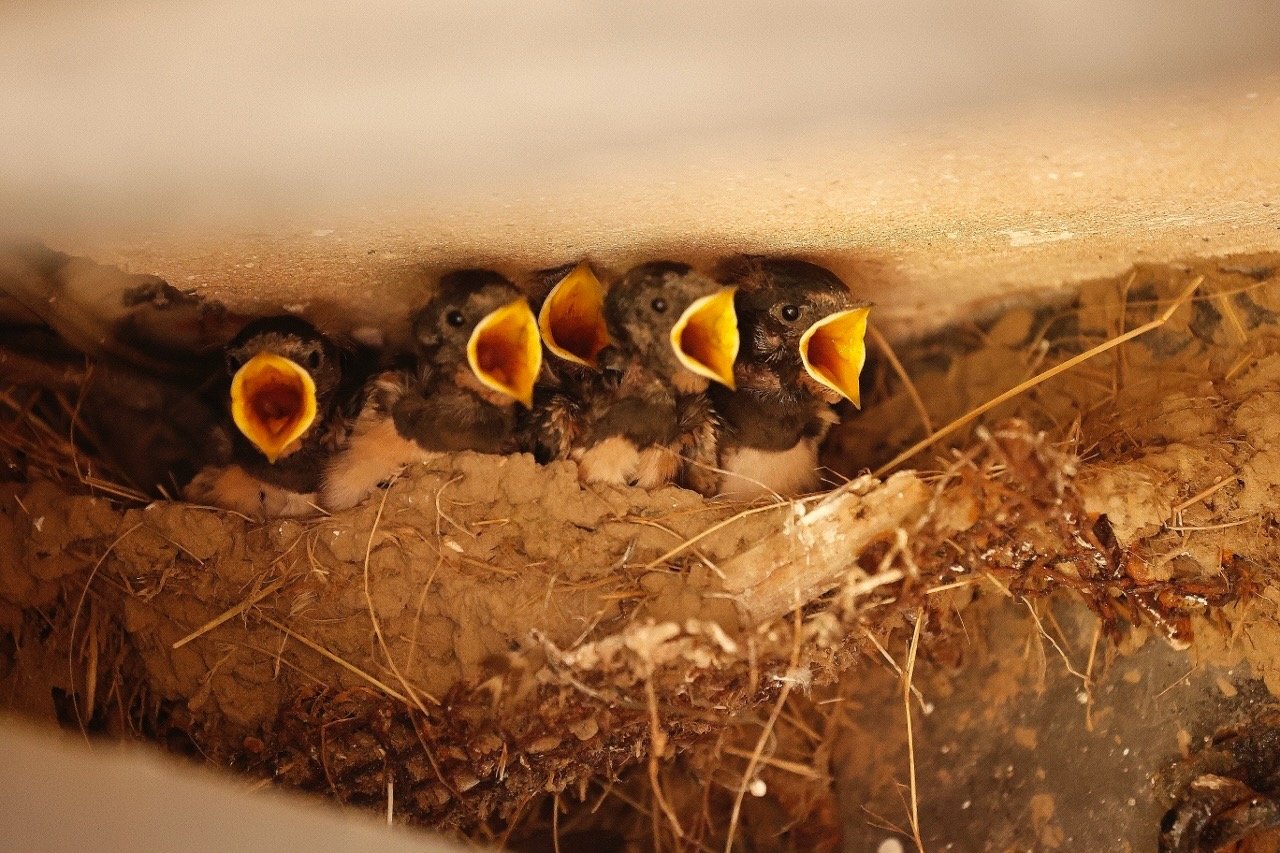
Demanding to be fed: Photo Alan Smith
After further nest refurbishment, needed after five boisterous young, a second clutch of five eggs was laid and hatched on the 15th of July. After another very busy period of feeding insects to the second brood, all five survived and fledged on the 7th of August.
Approximately fifty Swallows have now fledged successfully from this one nest. It would be very interesting indeed to know of the survival rate over the years.
It appears to have been a highly successful breeding season for Swallows here at Sunderland Point. I recorded approximately 60 young Swallows from seven nests (in some nests, the contents could not be checked).
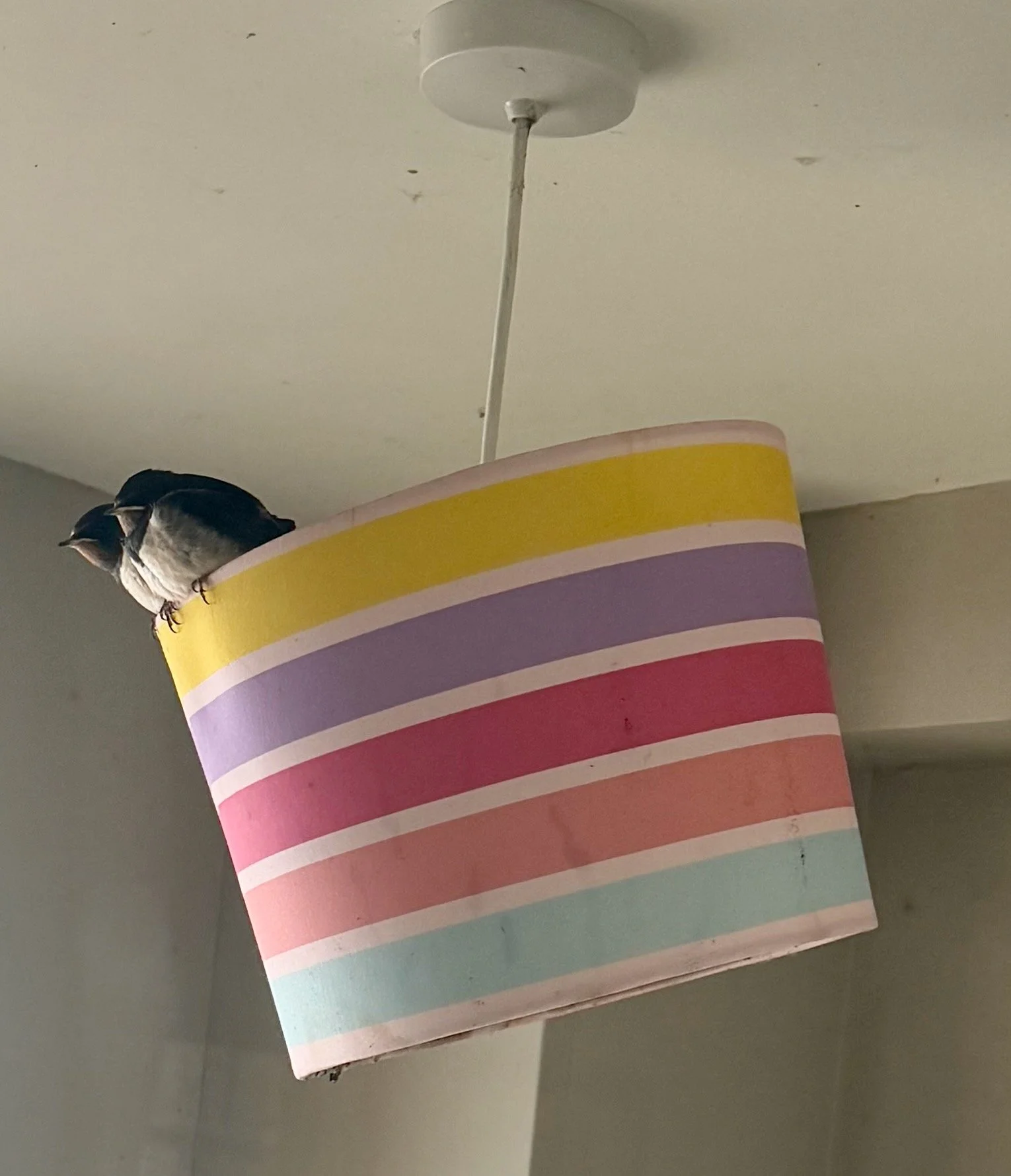
A pair of fledgling Swallows at number 11: Website photo
Also, the abundance of Swallows flying along the Terrace and elsewhere appeared to be above normal numbers, with their endless chittering to each other when gathered on window ledges, etc.
They are an extremely entertaining summer visitor.
Together with the nesting Swallows at No. 7, we have had Pied Wagtails nesting in the wood heap, rearing two broods of four.
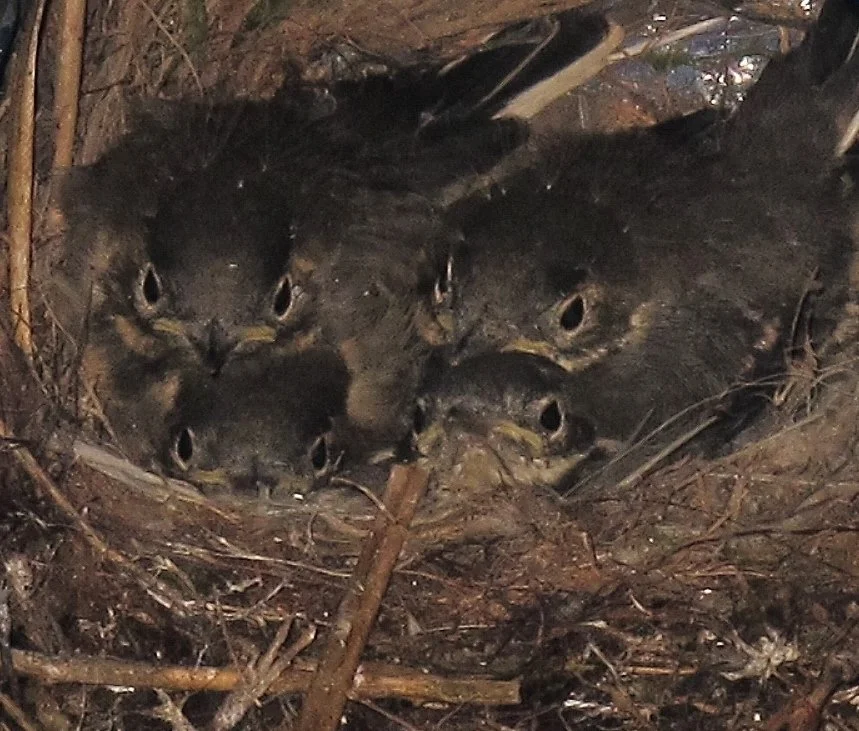
Four young Pied Wagtails in the nest in the woodheap: Photo Alan Smith
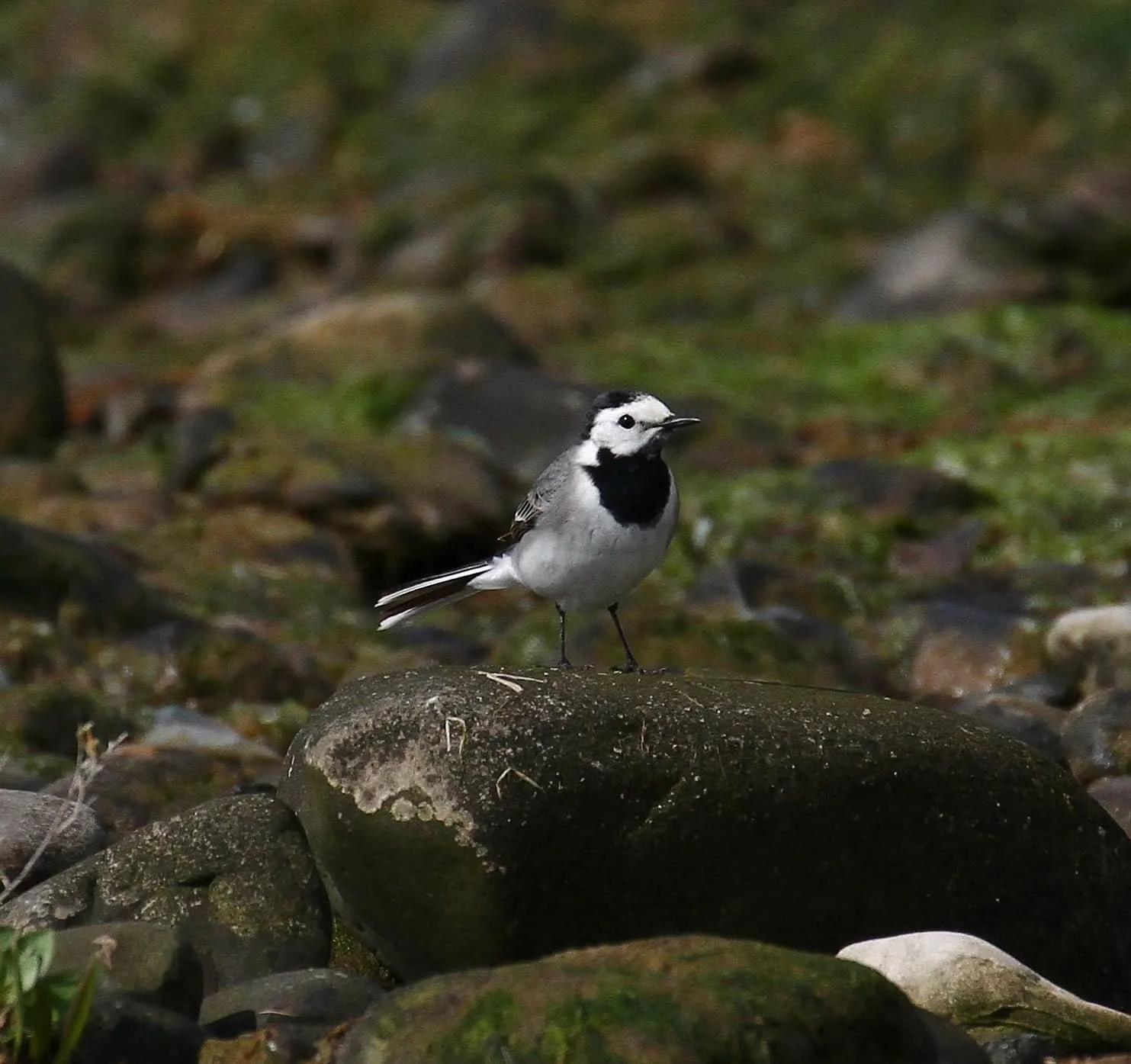
A Pied Wagtail on the shore: Photo Alan Smith
A Robin nesting in an alcove next to the BBQ (no, we did not have Robin kebabs!), all the young fledged.
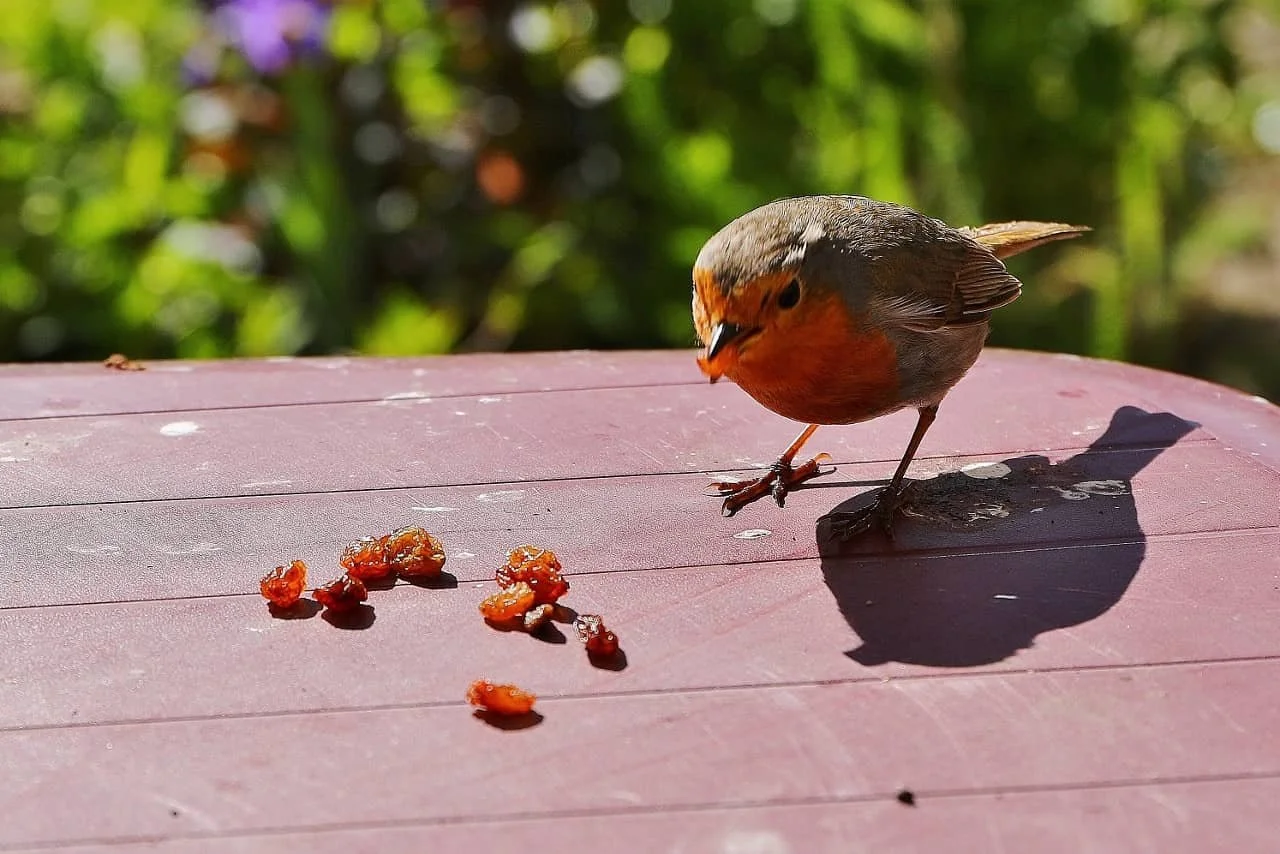
A robin in the garden at number 7: Photo Alan Smith
The wonderful thing about Sunderland Point regarding the bird life is the fact that when all our summer visitors depart, they are replaced with winter visitors, with waders such as Knot, Dunlin, Bar-tailed and Black-tailed Godwit, Redshank and others, together with the wildfowl such as Wigeon ducks.
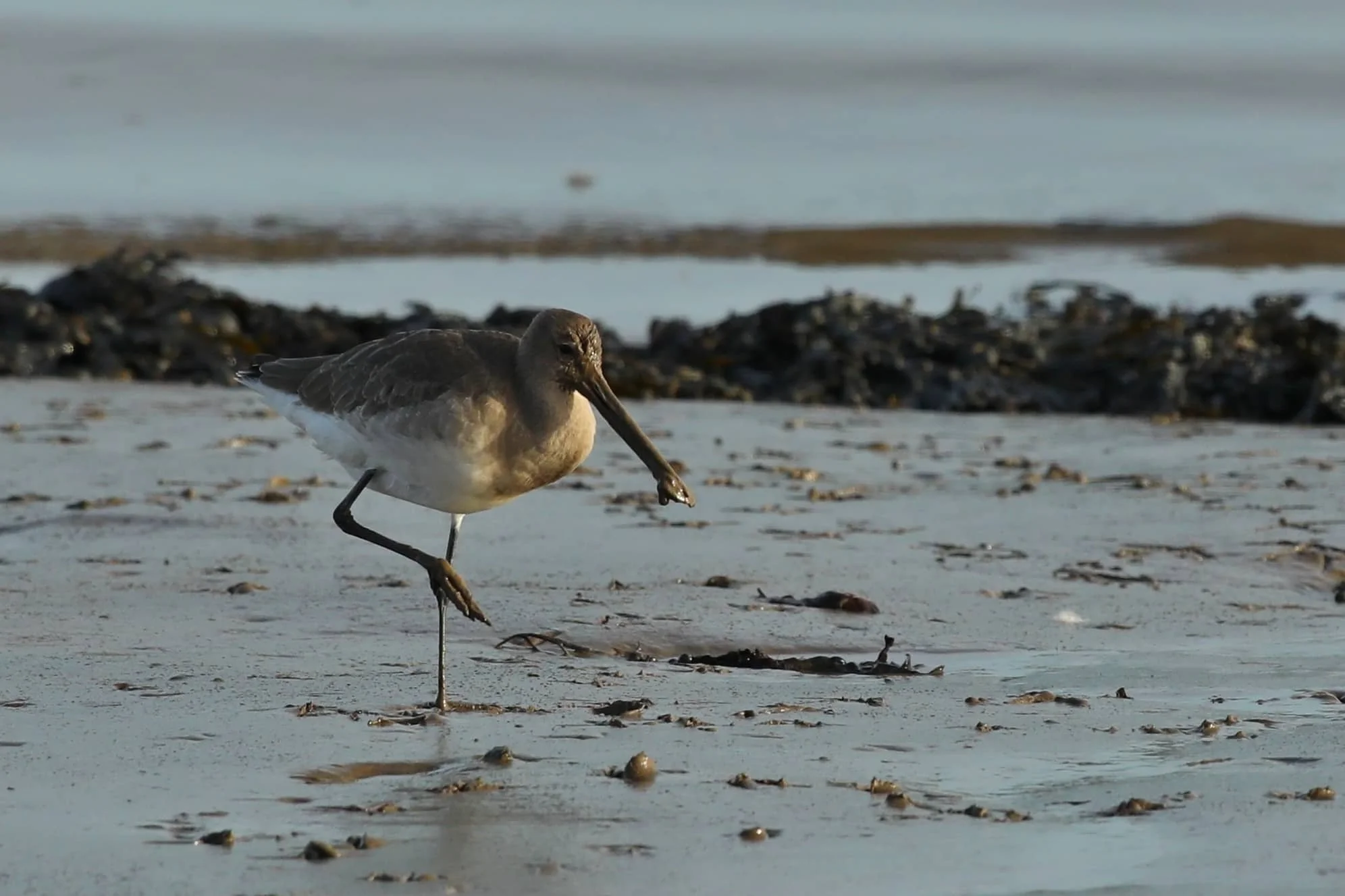
Black-tailed Godwit. It has a clam in its beak, which it will rinse in a pool before consuming. Photo Alan Smith
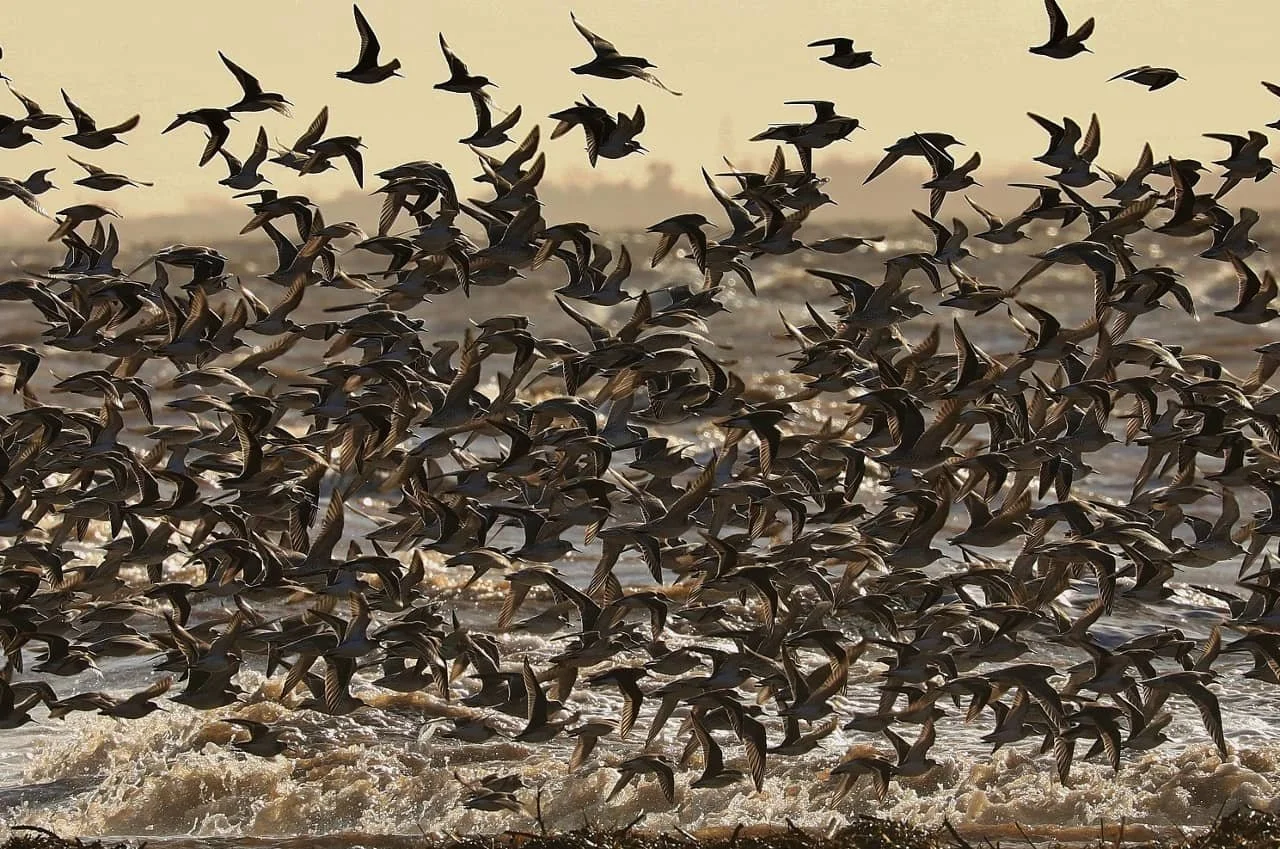
Knott: Photo Alan Smith
And the wonderful sight and sound of thousands of Pink-footed Geese, with many skeins flying overhead in the familiar V formation, just arriving from Iceland.
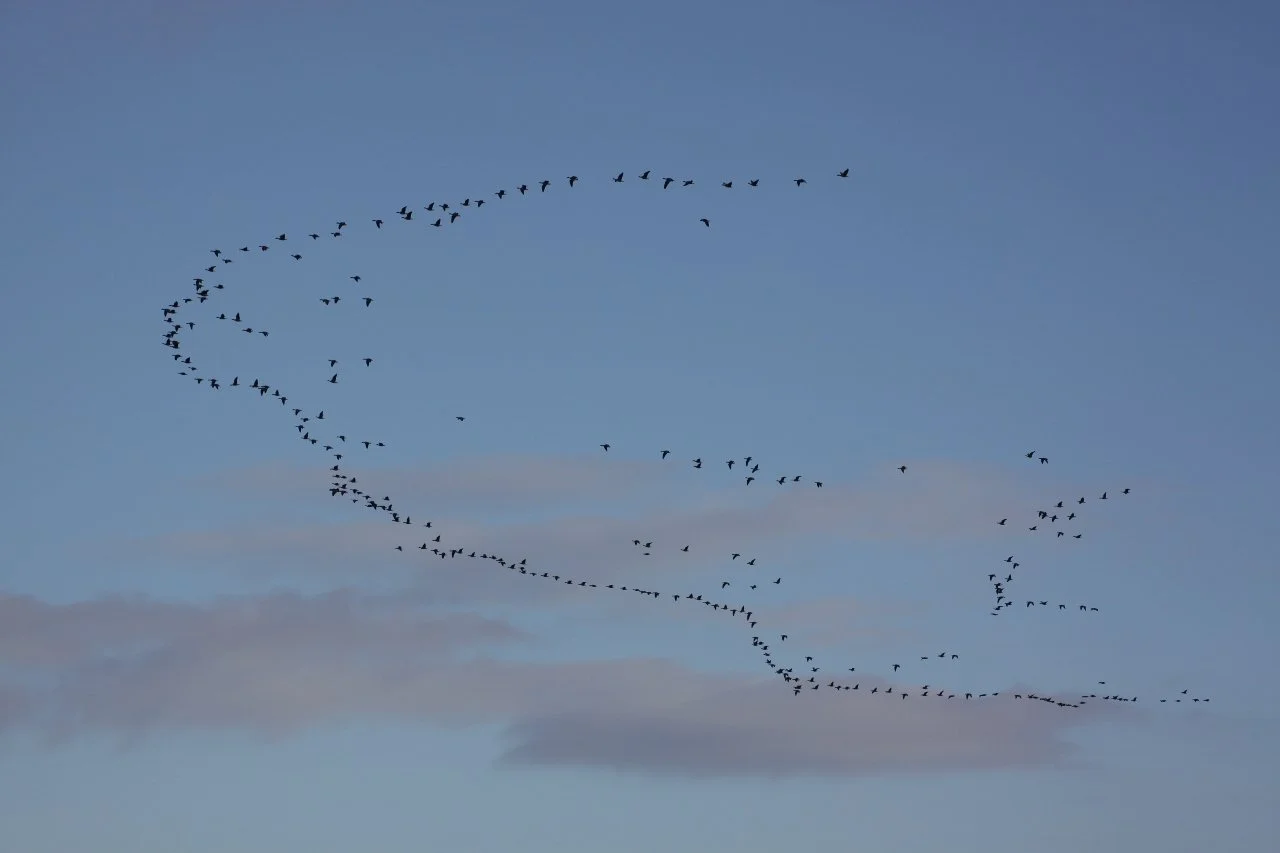
Pink-footed Geese: Photo Alan Smith
If anyone has difficulty naming any of our winter birds, or think you might have seen an unusual species, please call No. 7, and I will endeavour to help. Alan.
Next week, a review of Peter Snape’s recently published book, ‘Anne Geddes Gilchrist - Folk Song Scholar and Collector’.