The Ship Inn
With the famous stone pillar in front, it's one of the most painted and photographed buildings at SP. Having a long history as an Inn and a Hotel, it is also the best-documented. This extract includes the latest research and recent photographs.
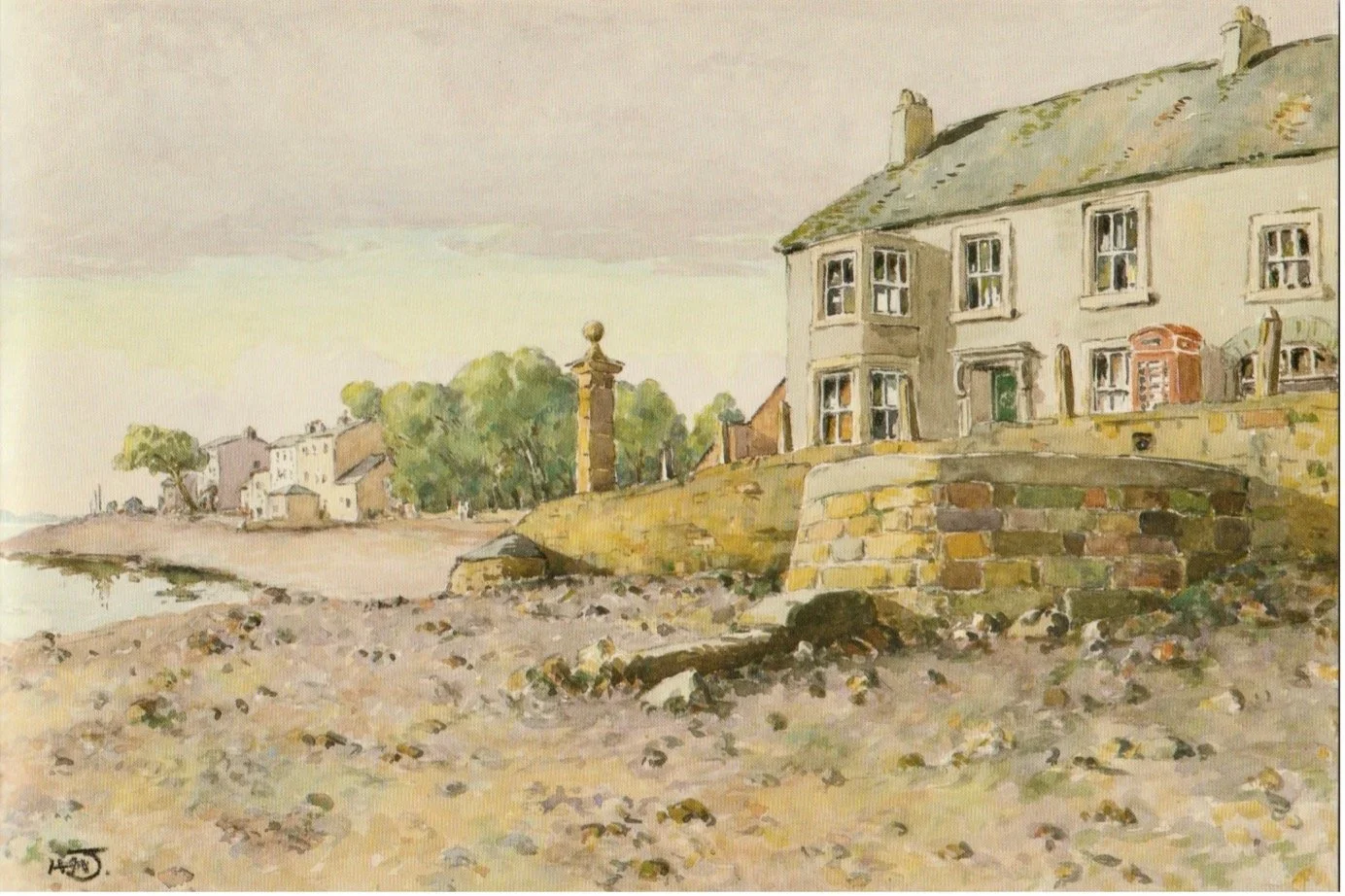
Number 11, First Terrace, c1970 by Harry H Johnson: Courtesy of the estate of the artist
Once owned by Robert Lawson and other Lancaster merchants, it reflects the village’s maritime era and sea-bathing spa days. It is closely linked to the story of the gravesite, a hero, temperance, the triple drowning of 1863, and the long occupation of the Mason family.
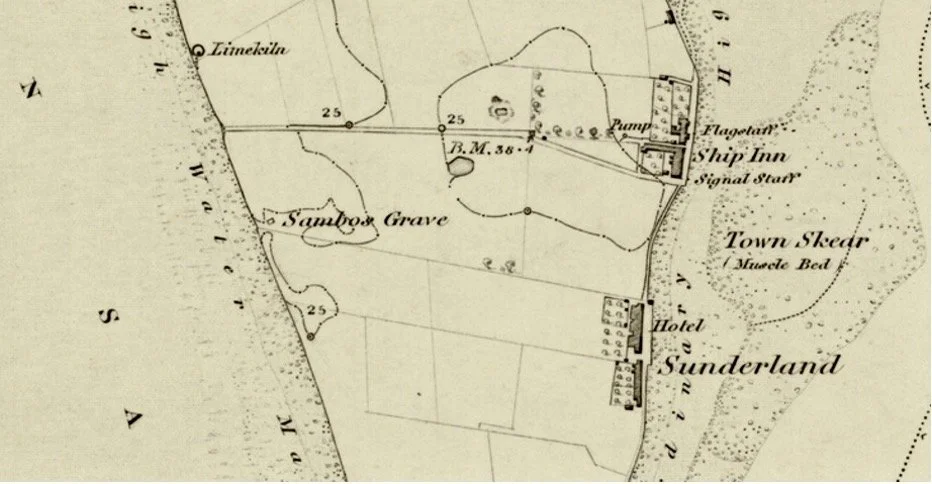
The Ship Inn on the 1840s OS map: courtesy National Library of Scotland.
Listed Grade 2 by Historic England, which says: ‘House, late C18th’.
We know it was built earlier, perhaps as early as the 1720s, during the Lawson family's development of the village.
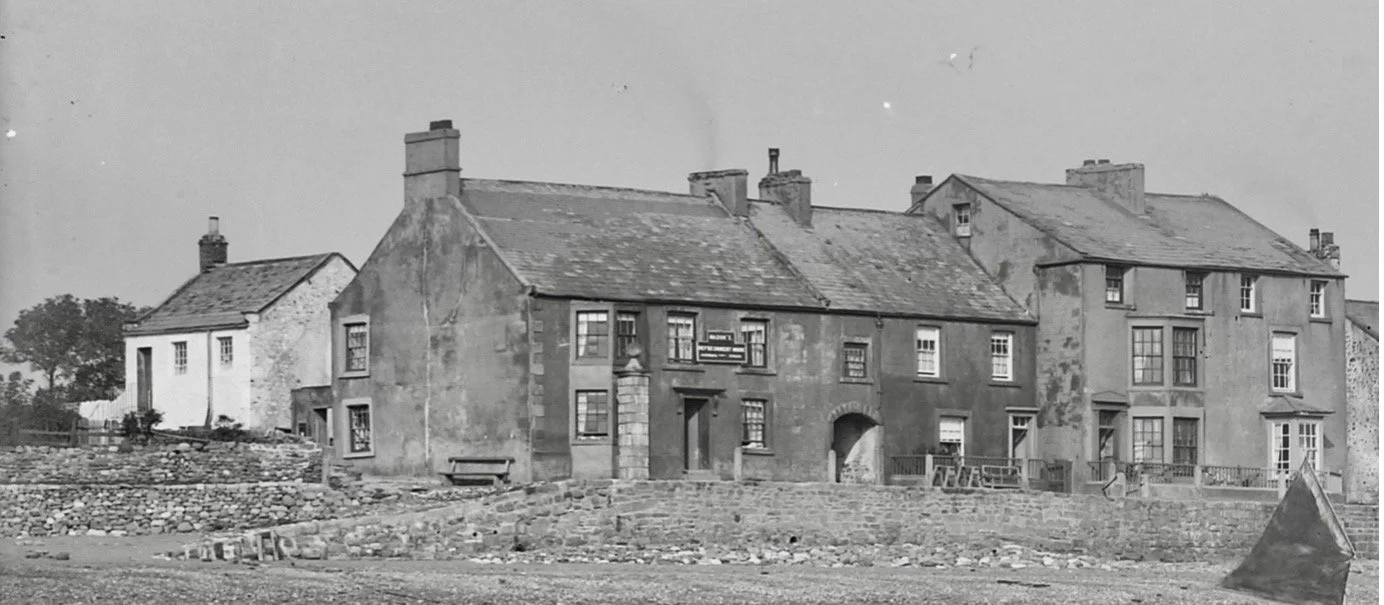
The corner of First Terrace: a John Walker photo, courtesy of Lancaster City Museums.
This 1890s photo shows number 11 at the corner and Upsteps Cottage (in white) on the left. Number 10, with the open passageway between, is to the right.
It was first known as the King’s Arms, and Upsteps Cottage was certainly used as a brew house for ale for ships and locals.
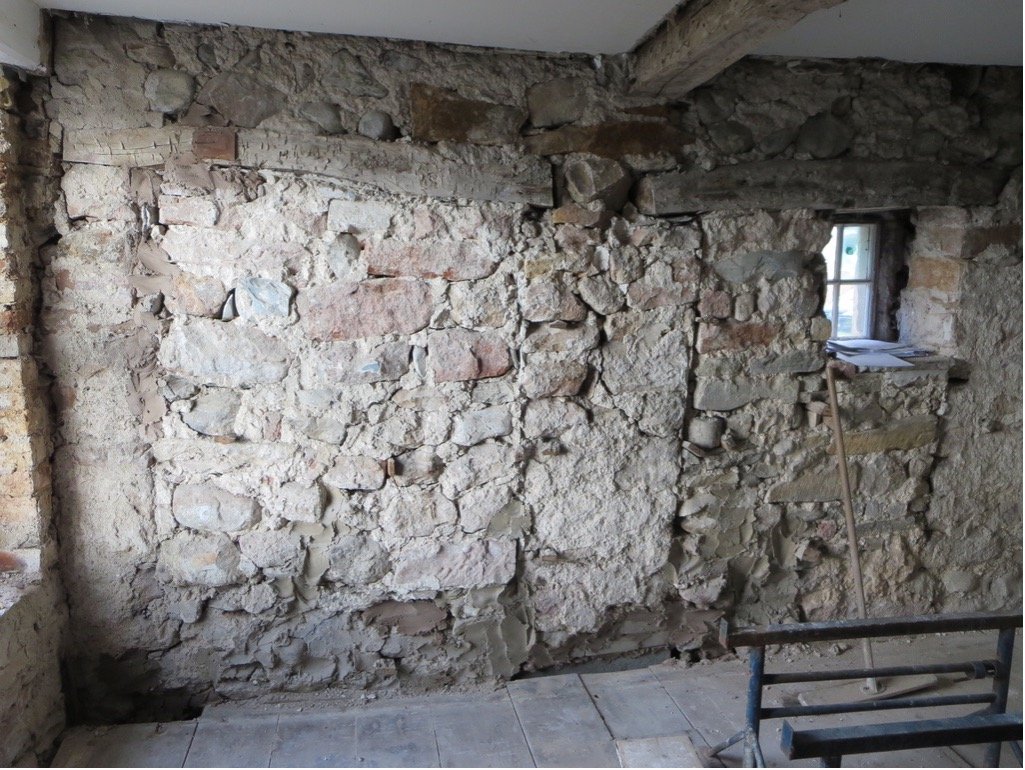
Website photo
A section of wall from the 2020 renovation shows what was once a large opening. It faces Upsteps Cottage and may have been used for bringing in barrels of ale.
Early History
On 28 November 1725, Roger Mashiter was baptised at St Helen’s in Overton, the son of Robert Mashiter, recorded as an innkeeper in Sunderland. It may not have been the King’s Arms, but it is strongly suggestive….
The King’s Arms did exist in 1740, when Robert Lawson sold it, together with the brew house and several fields, to Abraham Rawlinson and others. The buyers, mainly Lancaster merchants, acquired it possibly as an investment, but as a safe home for wealth. John Woodhouse was the tenant.
Abraham Rawlinson (1709 – 1780)
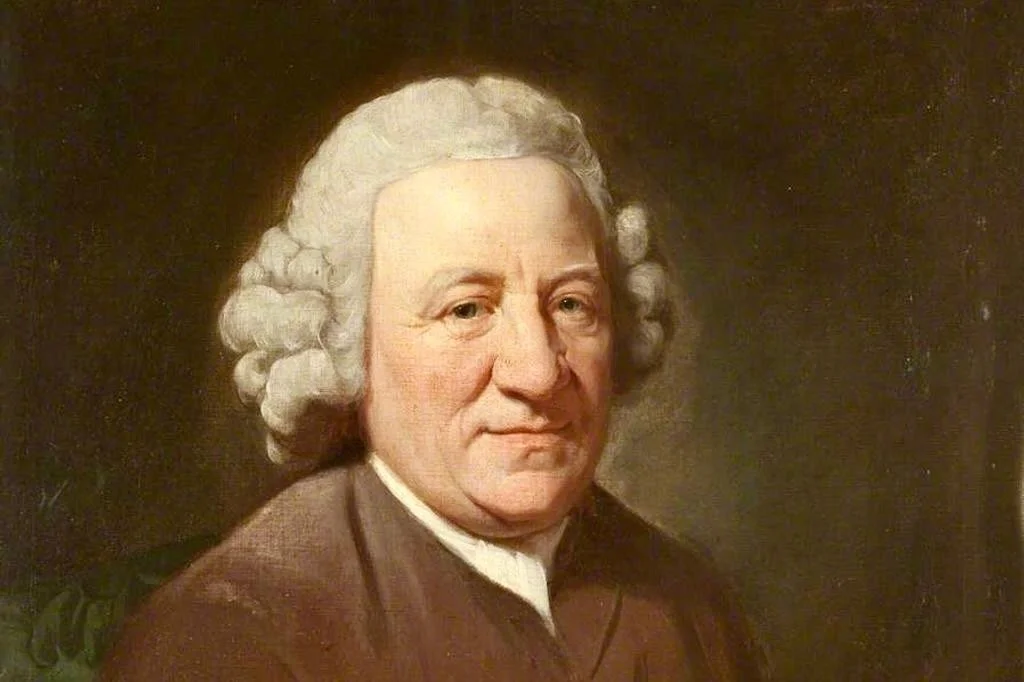
Abraham Rawlinson, painted by George Romney, c. 1771: Courtesy of Lancaster City Museums
Abraham Rawlinson was one of the most successful merchants in 18th-century Lancaster. A leading member of the powerful network of Quaker merchant families, including the Lawsons, Satterthwaits and Dilworths, that dominated the town's overseas trade. He had interests in West Indies plantations, importing goods such as sugar, rum and mahogany. He was also involved in the transatlantic slave trade.
In 1744, when Robert Lawson sold other property, the tenants at the King’s Arms and fields were named as John Tomlinson and Ann Williams.
In 1755, the property was sold for £384 (about £110,000 in today’s money) to Thomas Dilworth. The tenants looking after the Inn and fields were named as John Woodburne and William West.
Thomas Dilworth (1713 – 1786)
Thomas was the son of leading Quaker merchant John Dilworth. The family had become one of Lancaster's leading merchants, bankers, and shipowners during the transatlantic plantation trade.
His sister Mary Dilworth married Thomas Hutton Rawlinson, the son of Abraham Rawlinson above.
In 1767, Thomas provided a loan to help the then tenant farmer and locally born Richard Jackson purchase the King’s Arms and lands for £500. We think it was Richard who changed the name of the Inn to ‘The Ship’
After his death in December 1772, the properties were inherited by his son, George Jackson
George Jackson
George was born in 1742 and married Ellen Plaice at the church in Overton in 1770, and they had five children, three boys and two girls. He would have been thirty when his father died.
This is the first known advertisement for the Ship Inn
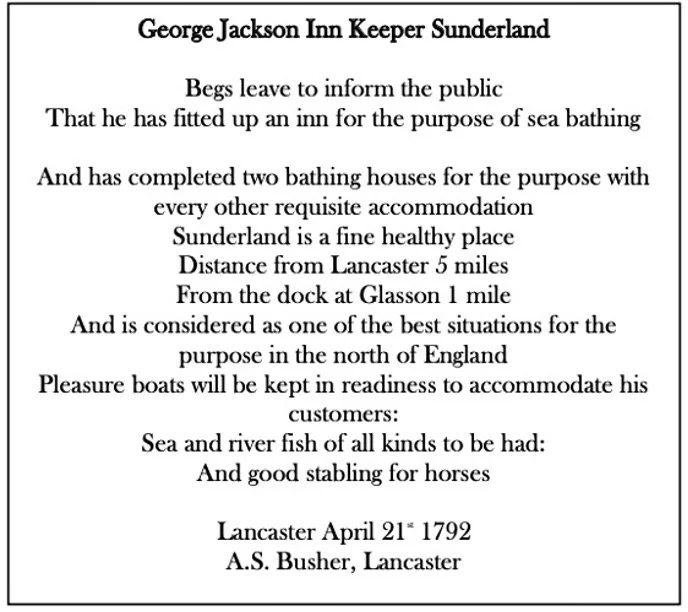
Courtesy N Dalziel, Lancaster City Museums
By the 1790s, the maritime era had ended, and the village had been reinvented as a seaside spa to attract visitors (see the article Little Brighton on the Sea).
Reading the advert, it’s clear that he has made alterations to equip the Inn for the emerging venture and has ‘completed two bathing houses’, which must be number 10 and perhaps the upper floor of Upsteps Cottage
It’s George who recounts the story of The Grave to the Rev. James Watson and reserves a corner of the land for the memorial. (For the traditional story - this link. For the alternative appraisal (this link)
In 1807, George decided to put the properties up for auction. Here’s the notice.
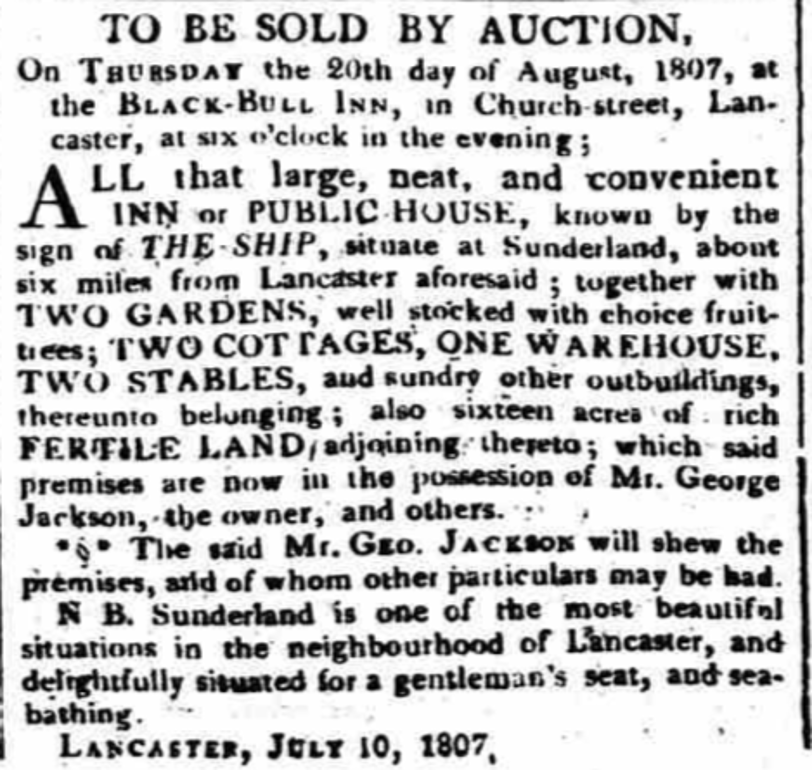
Courtesy Guardian Newspapers
The two cottages may be number 10 and Upsteps Cottage. The warehouse, which George had bought in 1779, would later become Gravel Cottage (number 2).
It was bought by local landowner Robert Whiteside of Middleton Hall, in partnership with Thomas Caton of Middleton Brows and John Edmondson of Trumley. They paid £1510 for the properties. In 1808, ‘John Smith’ is the tenant and Innkeeper, who advertises:
‘Sea Bathing’ John Smith respectfully informs those ladies and gentlemen who wish to enjoy the salubrious air of Sunderland – that he has taken and entered the Ship Inn which is newly let for the accommodation of bathers and who may rely upon every exertion being made for their comfort. Good stabling and grass for horses. Sunderland is delightfully situated about seven miles from Lancaster and much frequented in the bathing season”.
A fortnight later, the notice was repeated with the addition of “N.B. Dinners dressed at the shortest notice”.
James Birkett
Only four years later, in 1812, James Birkett of Lancaster became the owner. He paid £1500, and the tenant at the time of the sale was George Houghton.
James advertises delightfully in 1813.
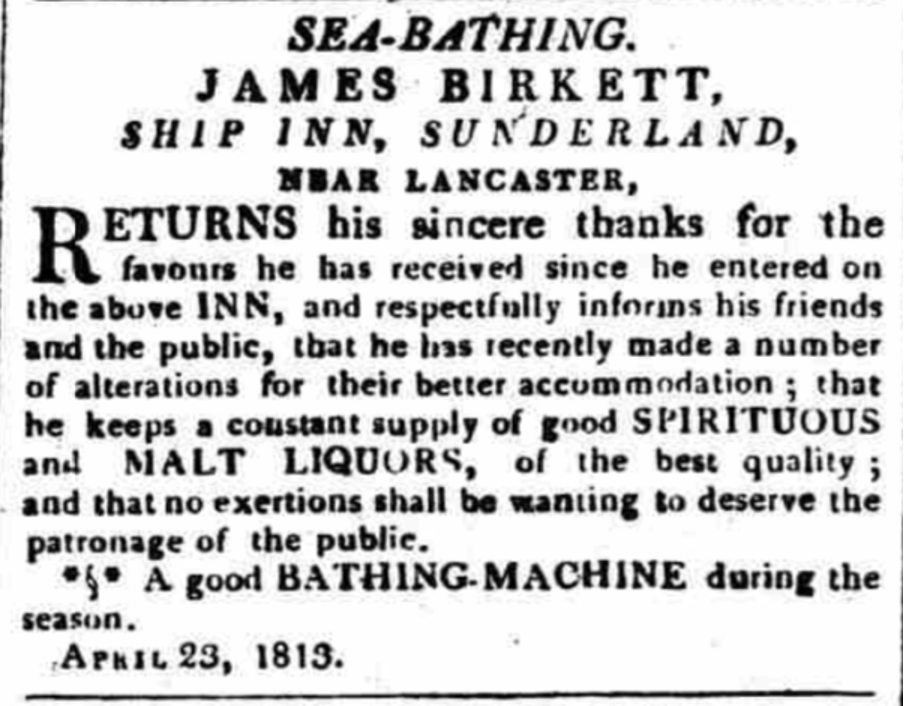
Courtesy Guardian Newspapers
In 1814, James advertises a further innovation to the Inn, that:
He has made some alterations to the house, by throwing out two Bow-Windows, &c. &c. which he trusts will make the inn more convenient and pleasant…. Those who favour him with their commands may rely upon well aired beds and every attention being paid to their comforts – Sunderland is considered one of the most healthy villages in the county.’’
In 1823, he invests further, ‘PLEASURE BOATS’ and importantly ‘J. B. has fitted up a convenient SHOWER-BATH, with neat and commodious Hot and Cold SALT-WATER BATHS, in his premises, which can be furnished at all times, on very short notice.’
This refers to the lower half of the Upsteps Cottage for hot and cold saltwater baths and showers. This may be a catch-up on ‘The Hotel’, Second Terrace, which had advertised seawater bathing three years previously.
The heyday of the seawater spa is soon over, and James struggles to find tenants. For two years in the early 1830s, it may even have been closed.
In 1834, James tried to sell.
Houses 8 and 9, First Terrace
As well as advertising the Inn and the land, he refers to ‘three substantial dwelling houses, adjoining and fronting the River Lune’. This must be 8 and 9, together with number 10.
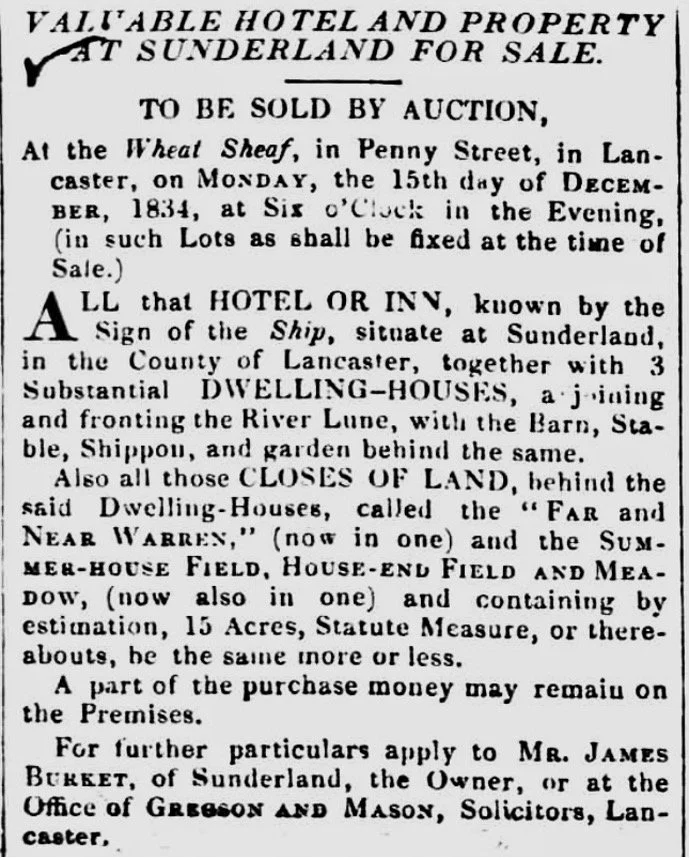
Courtesy Guardian Newspapers
It’s known that numbers 8 and 9 were once a warehouse owned by Robert Lawson. Sometime between 1812 and 1834, it seems to have been acquired by James and renovated into lodging houses.
It’s not sold. On his death in 1840, James left the Inn, Upsteps Cottage, and 8, 9, and 10, as well as farmland, to his nephew by marriage, John B. Mansergh.
A Hero?
In the 1841 census, the innkeeper is Mary Sumner, aged 35, with four children. Her husband, William, a mariner, is not mentioned and may have been at sea.
It’s possible William was the hero of a rescue. In the Lancaster Gazette, of December 1838, this appeared: (much edited)
‘The Brig Eliza Jane of Appledore, Devonshire, put into Sunderland harbour near this town in great distress, being driven off course by stormy weather into the River Lune, where the captain was a complete stranger. The unfortunate vessel grounded on Bernard’s Wharf (a sandbank offshore from Pilling). When she floated off, she had over six feet of water in her hold. Approaching Sunderland, Mr William Sumner, an assistant branch pilot, saw the vessel was in distress and in great danger, and he rowed his boat to board her and bring her to safety at Glasson Dock.
Too much praise cannot be given to Sumner for his commendable efforts, and it is hoped he will receive the reward he truly deserves, as a strong representation of his conduct has been made by the officer best able to advocate for him.
The Tithe Map
In 1844, the Tithe Commissioners completed their work, and the ownership of the land, including the names of the current tenant and the fields, was published.
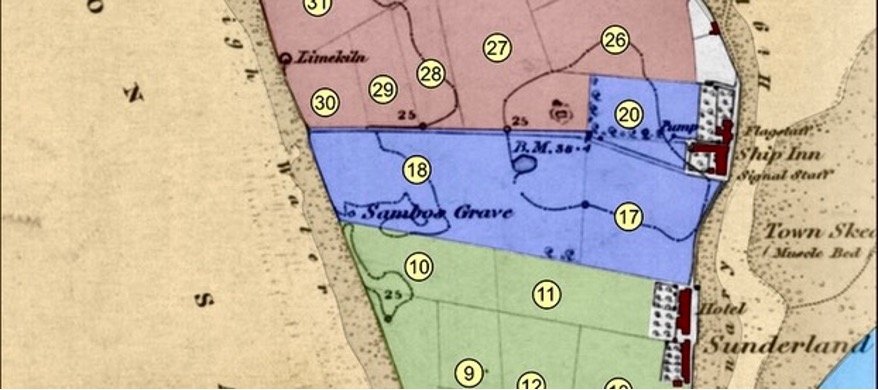
Courtesy Lancashire Archives
Section of the tithe map showing in blue the fields attached to the Ship Inn in 1840. John B. Mansergh is the owner, Ralph Gerrard the tenant.
Ralph is one of the sons of John Gerrard, also a brother of John, who was the tenant at ‘The Hotel’ in the 1820s. Another brother, Richard, a fisherman, owned several properties in the village
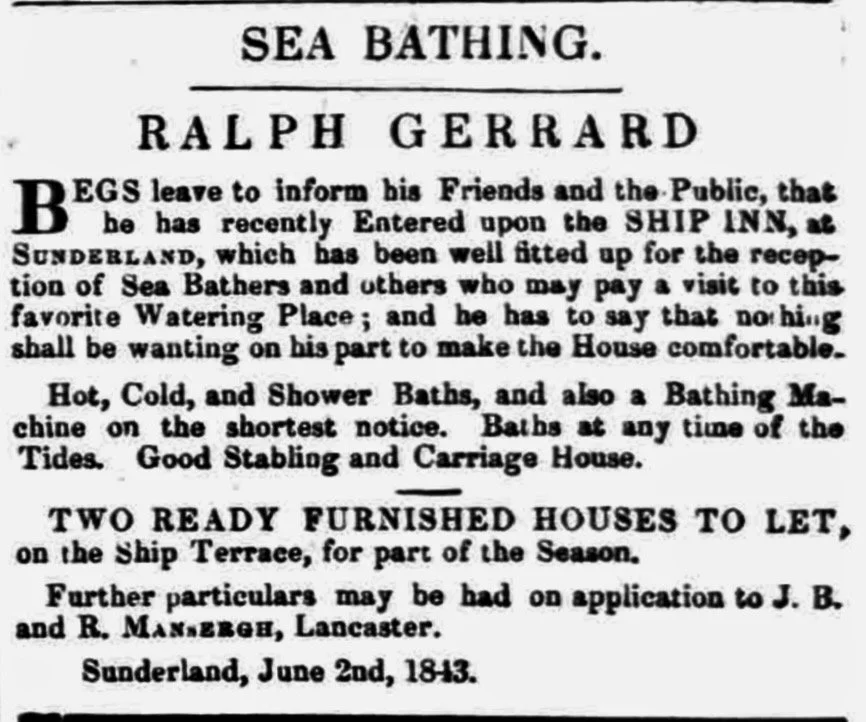
Courtesy Guardian Newspapers
Here we see numbers 8 and 9, the TWO READY FURNISHED HOUSES TO LET’, Upsteps Cottage being used for the seawater showers and baths. Number 10 is now being let separately on an all-year tenancy.
Porpoises
In June 1844, this was published in the Gazette.
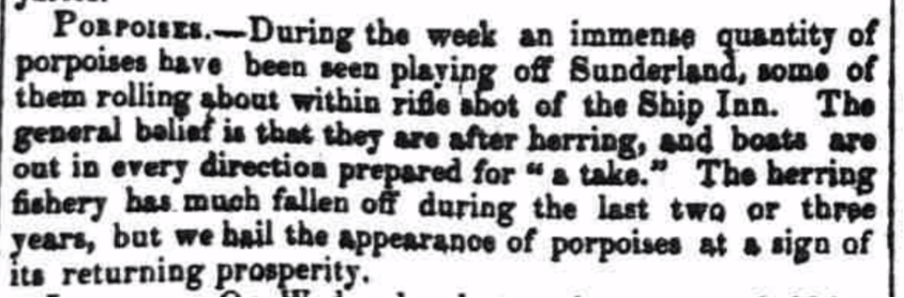
Courtesy Guardian Newspapers
Of course, we hope they weren’t shooting at the Porpoises. Unfortunately, they may have been; they ate considerable quantities of salmon as well as herring, so to protect the fishing, maybe…
Ralph doesn’t stay long - by 1848, he is in Skerton, Lancaster. The next tenant is Thomas Wilson.
Thomas Wilson
Thomas was one of the three who drowned in 1863. It’s a sad story, and we give a full account of the melancholy incident in our article.
In the 1851 census, the family comprises Thomas, an Innkeeper aged 37, his wife Ann, aged 32, Isabella, aged 5, and Nancy, aged 3.
The following year, Ann dies, and the daughters go to their grandparents. The heartwarming story of the two sisters, particularly Isabella, is presented in our article linked here.
In 1858, Thomas, now 45, marries Margaret Pennington, aged 22. Margaret was born at Sunderland Point to Miles and Elizabeth Pennington, one of six children (four girls and two boys) who lived at 7a.
In September 1860, in a chilling portent of what was to come, Thomas had a narrow escape returning to Sunderland after having ‘enjoyed himself’ with friends. (At the Globe Hotel)
‘In consequence of his faculties being clouded,’ he drove his horse and cart off the road and into a pool. The horse, cart, and Tom were trapped. A cask of ale and a sack of flour were washed away. The next morning, a fisherman found the ale, the wreck of the cart, and the dead horse, but no sign of Tom.
‘He concluded that Mr Wilson had drowned, and conveyed, as he supposed, the mournful intelligence to Sunderland, but was rejoiced to find that Mr Wilson had arrived a short time before and had gone to bed. The horse was an old favourite, a gift from his late father. (!)
In 1862, in response to the unruly behaviour of people on day trips by river from Lancaster, the char-a-banc tourists from Morecambe, and, importantly, the growing temperance movement, John B. Mansergh, the owner of the Ship Inn and a Justice of the Peace, successfully opposed the granting of continuation alcohol licences at the Ship and the Hotel.
In June 1862, the first reference to the Temperance Hotel appears.
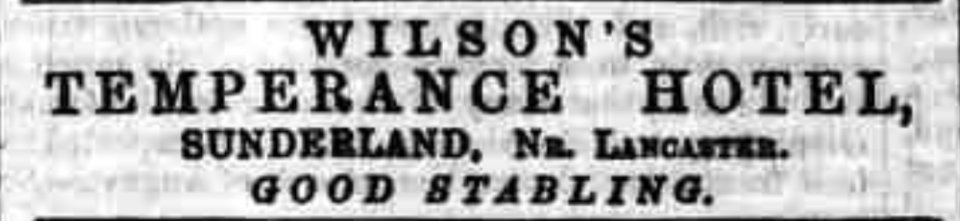
Courtesy Guardian Newspapers.
In October, an annual dinner took place:
‘The Dinner was held at the Ship Inn, Sunderland, and was provided by Mr Thos. Wilson, who, we need scarcely add, exerted himself with complete success in providing a repast worthy of the occasion. About 50 sat down.’
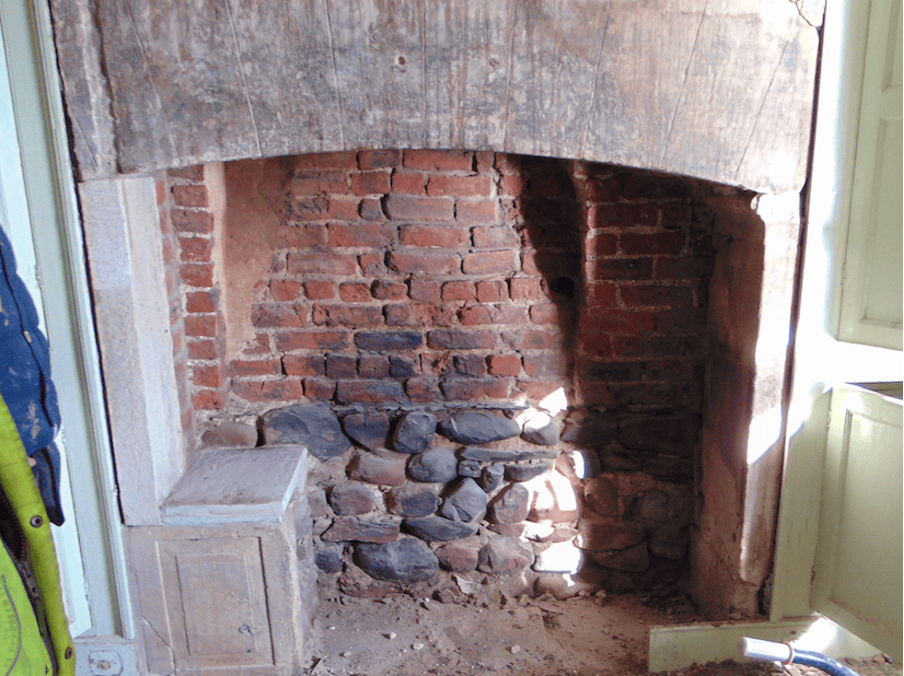
The original fireplace was revealed during the 2020 renovation (website photo).
It’s hard to believe that the Ship could host 50 – 60 for dinner!
The Drowning
The following year, 1863, on October 1st, Thomas Wilson, with Thomas Pennington and William Curwen, drowned while returning from a pleasure trip to Piel Island when their boat, the ‘Fishermen’s Friend’, capsized. Thomas Pennington is Margaret’s eldest brother.
A letter was sent to the Gazette suggesting a fund to support the families. The writer, John B Mansergh:
Now, Sir, if only a small sum could be raised for the aged and infirm Mr and Mrs Pennington, it would at least brighten the cloud which overhangs the prospect of a dreary winter, and in some degree soothe their sorrows by receiving a token of Christian sympathy.
Margaret Wilson, now 31, has lost both her husband and brother, with two young children aged five and two. The body of her husband is still missing. She is made of strong stuff.
Less than a month after the tragedy, at the end of October, the Annual Dinner took place. There is one brief, almost dismissive, reference to the incident
‘A most excellent and substantial dinner was provided by Mrs Wilson (an unfortunate sufferer by the recent boat accident) and was served up in good style’
Three months after the drowning, the body of Thomas Wilson was found on Tully Bank, Fleetwood. The body, described as being in good condition of preservation, was identified by his brother,
In 1873, shortly before his death, John B. Mansergh sold the Temperance Hotel, Upsteps cottage, and the farmland to Lancaster land agent Michael M. Harrison. The other houses adjacent to the Hotel (numbers 8, 9, and 10) and the garden land in the Lane were sold at auction.
Innkeepers/Farmers from Tom Wilson to George Mason
In the 1871 census, the farmer and innkeeper is Joseph Iveson, aged 62, and his wife, Elizabeth. She is the daughter of Thomas Kitchen, who was briefly the tenant at The Hotel and farm during the 1840s.
Joseph appears to have few qualifications for the job and doesn't stay long. He had been a gardener and, after leaving the Inn, moved to a 9-acre market farm in Middleton.
In October 1875, the Temperance Hotel was again the venue for an Inquest.
On Friday forenoon, Mr Holden held an inquest on the body of a man unknown, which had been found by John Gerrard, a pilot, of Sunderland, at half-past six o’clock the previous morning. The body…was in a very decomposed state, as though it had been in the water two or three weeks. It was dressed in a blue pilot jacket and vest, a woollen scarf, a red-and-white striped shirt, a leather belt around the waist, and elastic side boots. The Jury returned a verdict of “Found drowned”.
In the 1881 census, the innkeeper is Agnes Seddon and a widow - her husband, William, drowned on the causeway in 1877. See our article for the grim details
Agnes left in 1883, but left behind two of her daughters, who had married into local fishing families.
By 1891, John Birkett and his family lived in the house and on the farm. John was the fourth son of Henry Birkett, the tenant at Middleton Hall farm
Staying at the hotel in 1891 are Jesse Theodora (Theo) and Jane Gilchrist, 19 and 17, (sisters of the painter Philip T. Gilchrist and the folk-song collector Anne G. Gilchrist). Their cousin Margaret White, 19, is also at the Hotel. The large Gilchrist family and friends will be staying at the Old Hall, and the Temperance Hotel has been used for overflow.
George Mason and family
The next tenant was George Mason, who arrived with his family around 1894 and lived in the house for more than 50 years. George was born in Ellel, and his wife, Elizabeth, was born at Kitchen Grounds Farm, just half a mile from the Mason family farm.
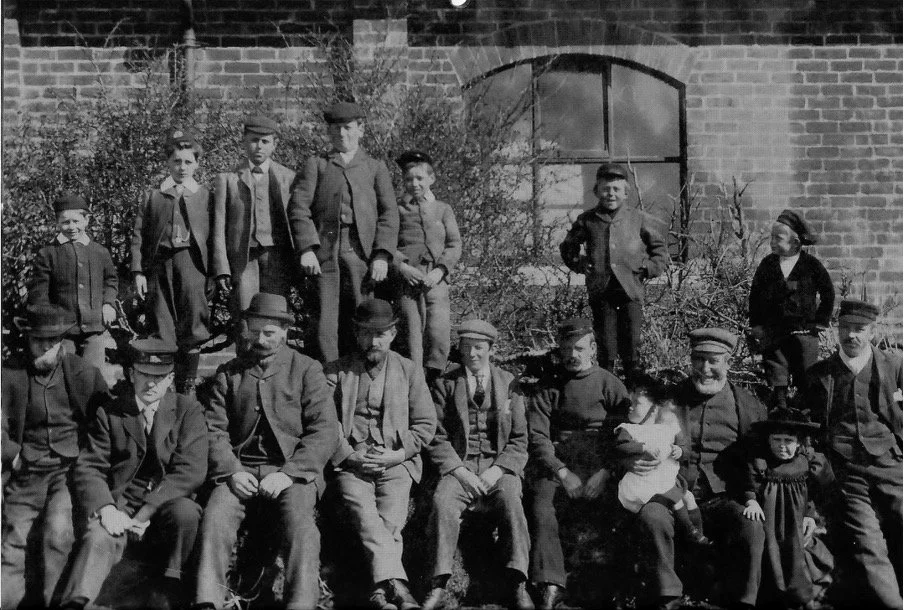
The Mission Church photo, autumn 1894: From the collection of Wilton Atkinson
George is in the centre, fourth from the left (between big Richard Bagot and young James W. Gardner).
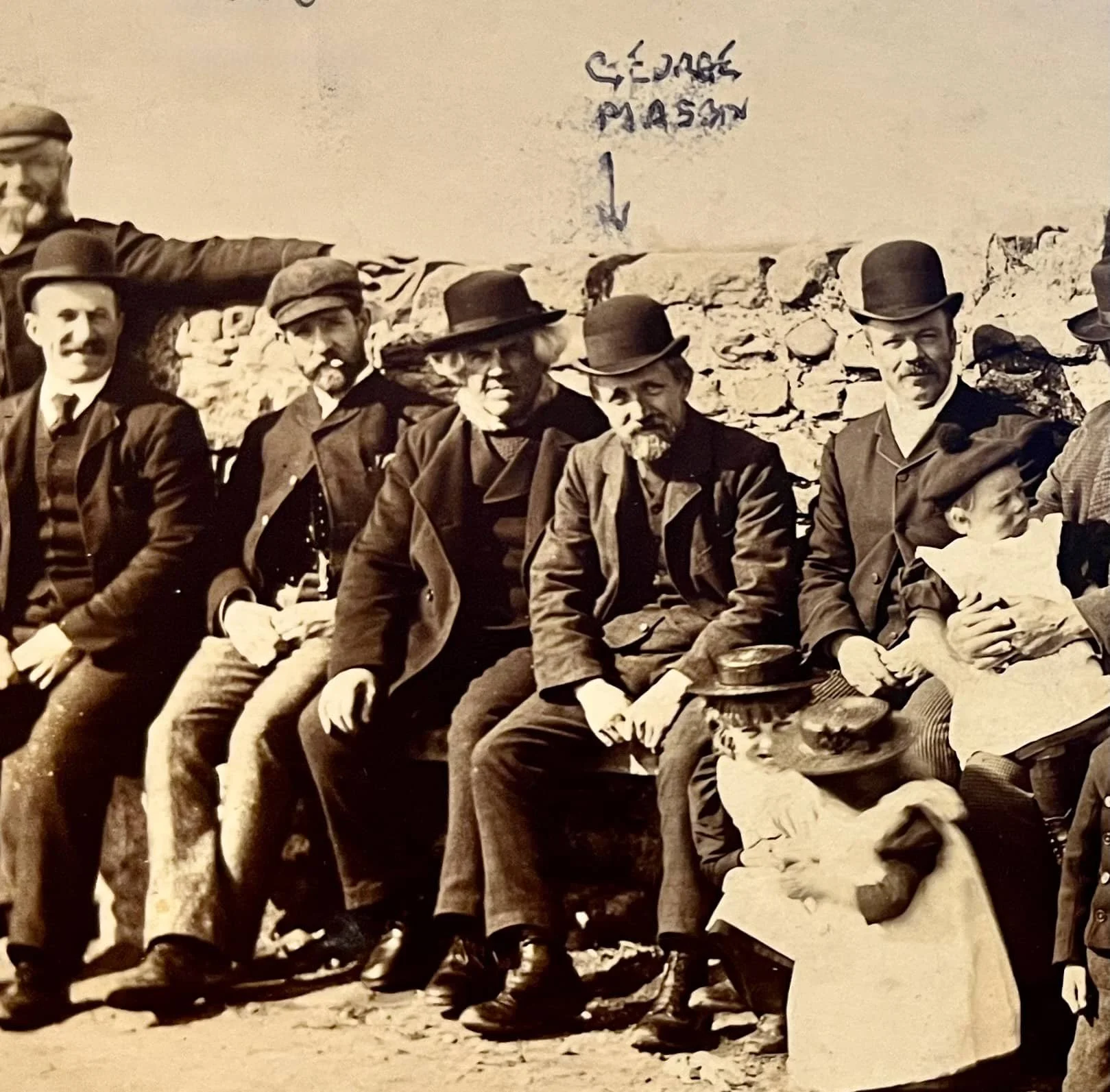
George Mason, a little later in the centre between Thomas Jackson and William Townley (junior), from the collection of Wilton Atkinson
George is at the centre of a huge commotion when the land agent Michael M. Harrison, owner of the house and farmland, submits a proposal to the Magistrates in Lancaster to replace the Temperance Hotel with a new hotel that would serve alcohol (see our article A New Hotel for SP).
A memorial (petition) opposing the proposal is created and signed by most of his neighbours.
Your memorialists think such an establishment and a drinking licence are not desired by the inhabitants and are not required at all.
After some delays, it appeared in August 1900 at the Brewster Sessions (alcohol licensing) and was firmly rejected.
Elizabeth Mason died on the 26th of March 1929, aged 67.
The two daughters were unmarried. In Hugh Cunliff’s book, he describes Susie (Susannah) as ‘bright and cheerful’, while Nellie (Ellen) usually looked ‘severe and gloomy’.
Hugh tells us, ‘Milk and butter were served from the back door of Number 11 with cream from the ‘dairy’ under Upsteps Cottage.
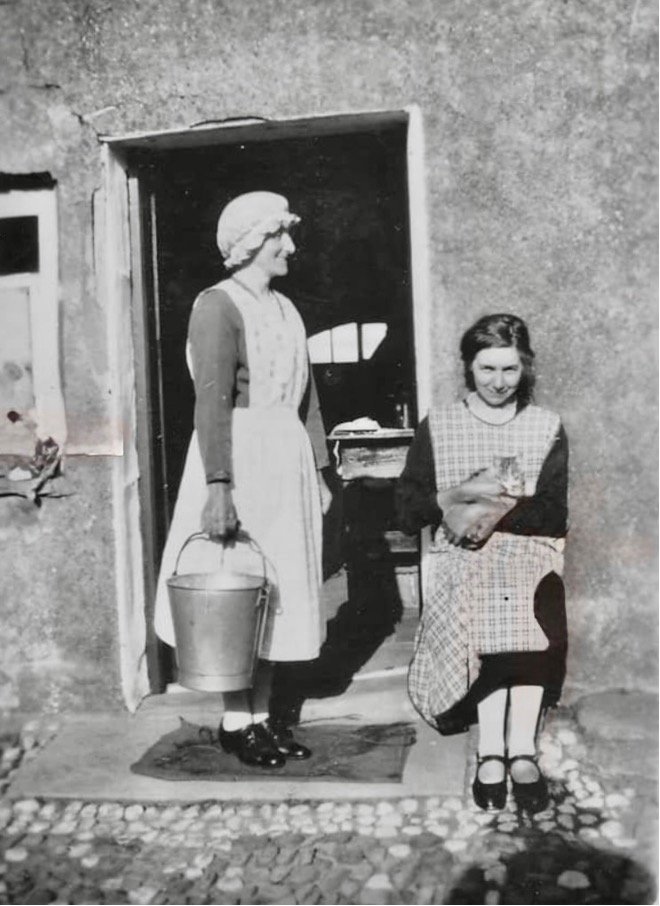
The two daughters, Susie, standing, and Nellie, seated, at the back door of the Temperance Hotel (no. 11), c1935. the collection of Alan Smith
In 1938, seven shillings a day was the charge for board during the summer, with two families able to stay at the same time, each with a large sitting room overlooking the river. Susie, ‘using an oil-fired stove, was an excellent cook, providing generous meals.’
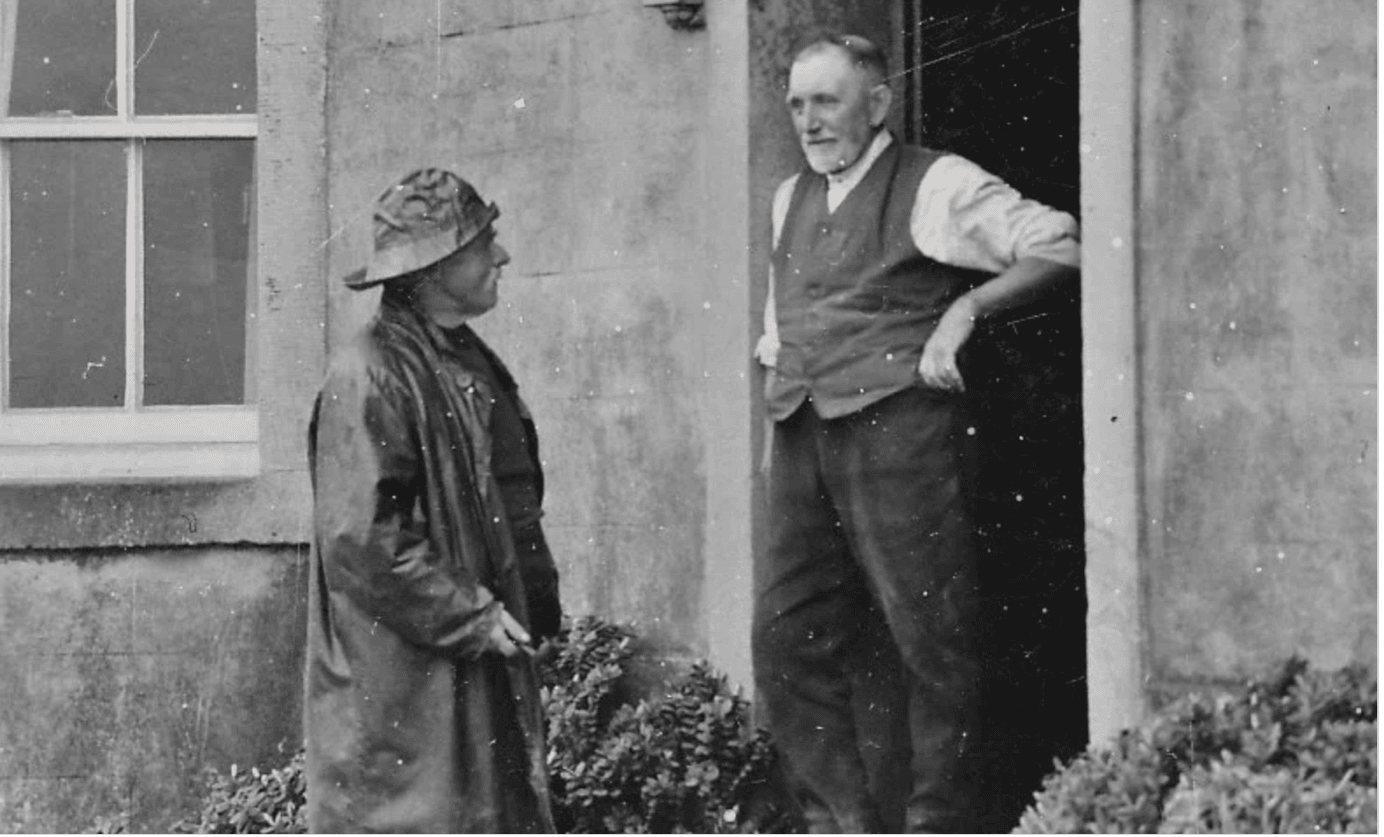
A Sam Thompson photo: courtesy Lancashire Archives
Here is George in the mid-1930s on the front step of the house; again, he is with William Townley Junior, both now much older.
When electricity came to the village in the 1930s, George allowed the installation downstairs but not upstairs, thinking it unnecessary.
George died in 1952, when returning from a whist drive at the Reading Room on a winter's night with his daughters. He fell off the pad and died shortly afterwards. As a result, Susie and Nellie left the Hotel and moved into Upsteps Cottage. They did not outlive their father for long. Susie died in 1953, and Nellie in 1955, both at the age of 66.
After the Mason family, the farm tenancy was briefly held by Chris Hargreaves of Sunderland Brows Farm, who lived there with his wife Connie and their young family.
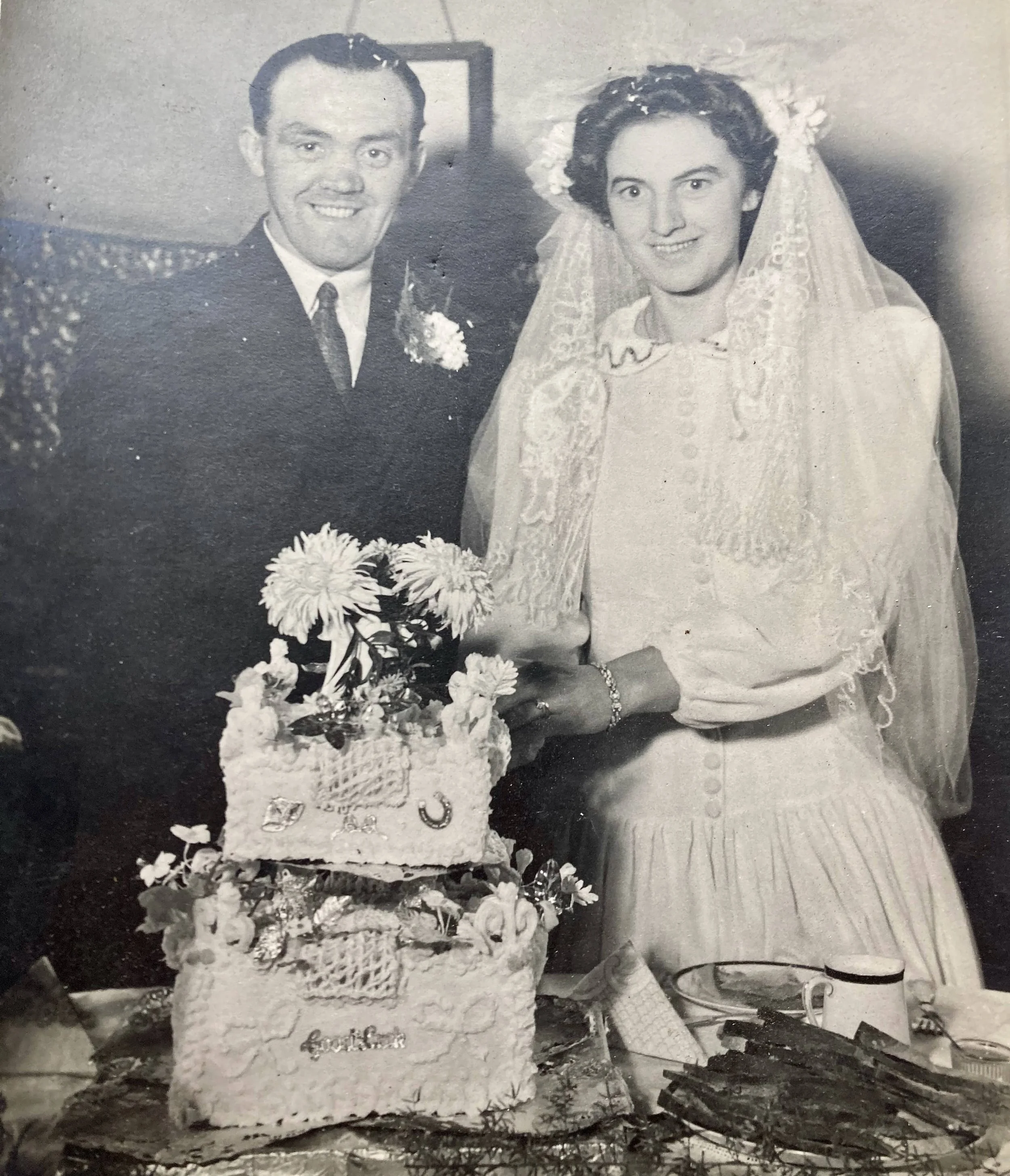
Wedding photo of Chris and Connie Hargreaves: From the collection of the Hargreaves family.
They were followed by William (Billy) Wilson and his family.
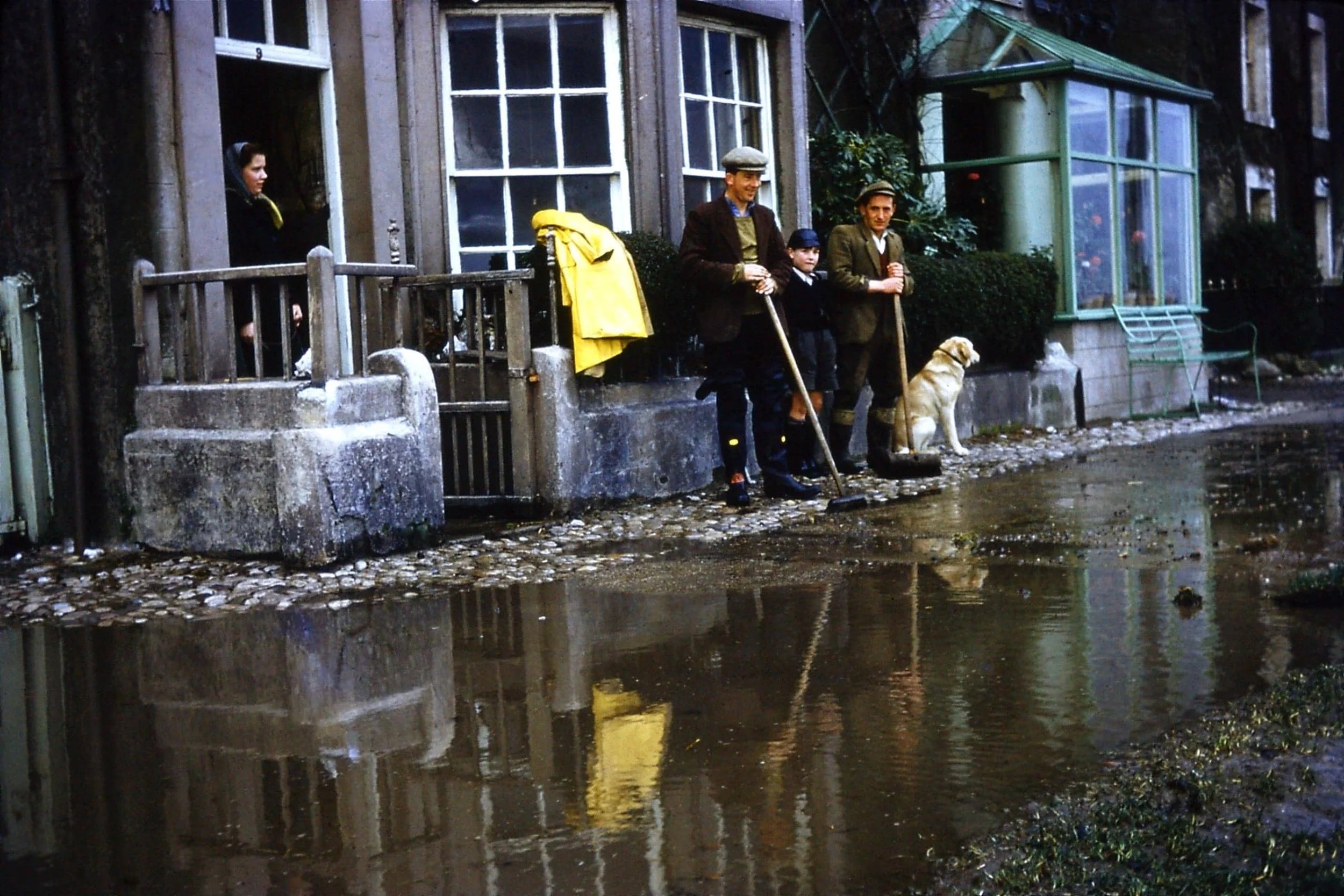
A Peter Hall photograph
Billy Wilson is standing on the right with his dog. He is helping Tom Gardner brush away the stones and mud washed onto the track by a big tide in 1957.
Into modern times
By the 1960s, financial and other pressures forced the Wilsons to leave. In 1964, farming ended, and the fields were absorbed into Hall Farm, managed from the Second Terrace by Harry Burkitt. The house was renovated and became the home of Alfred Morris and his family.
He often spoke of his long-standing connection to the village and said that his first stay in the house in 1915 was when he was eight months old.
Alfred was a member of Lancaster City Council for many years and later served as a County Councillor. He was elected Mayor of Lancaster in 1964. Here he is on the day he was confirmed as Mayor, with his wife Barbara and three sons.
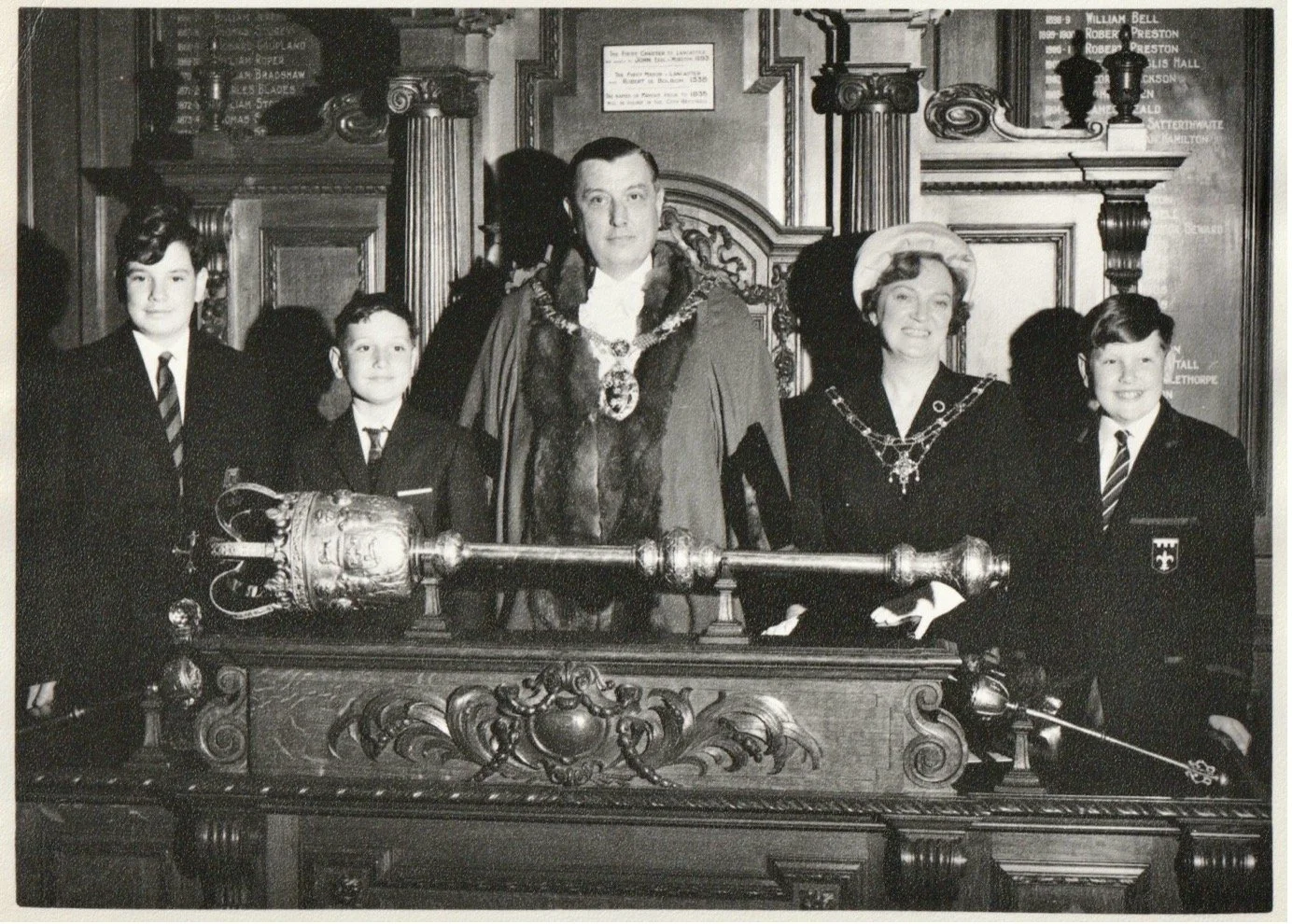
A Lancaster Guardian photo: Website collection.
The family is still present at the house, just.