On Plover Scar
The Lighthouse and the Ancient Fish Trap
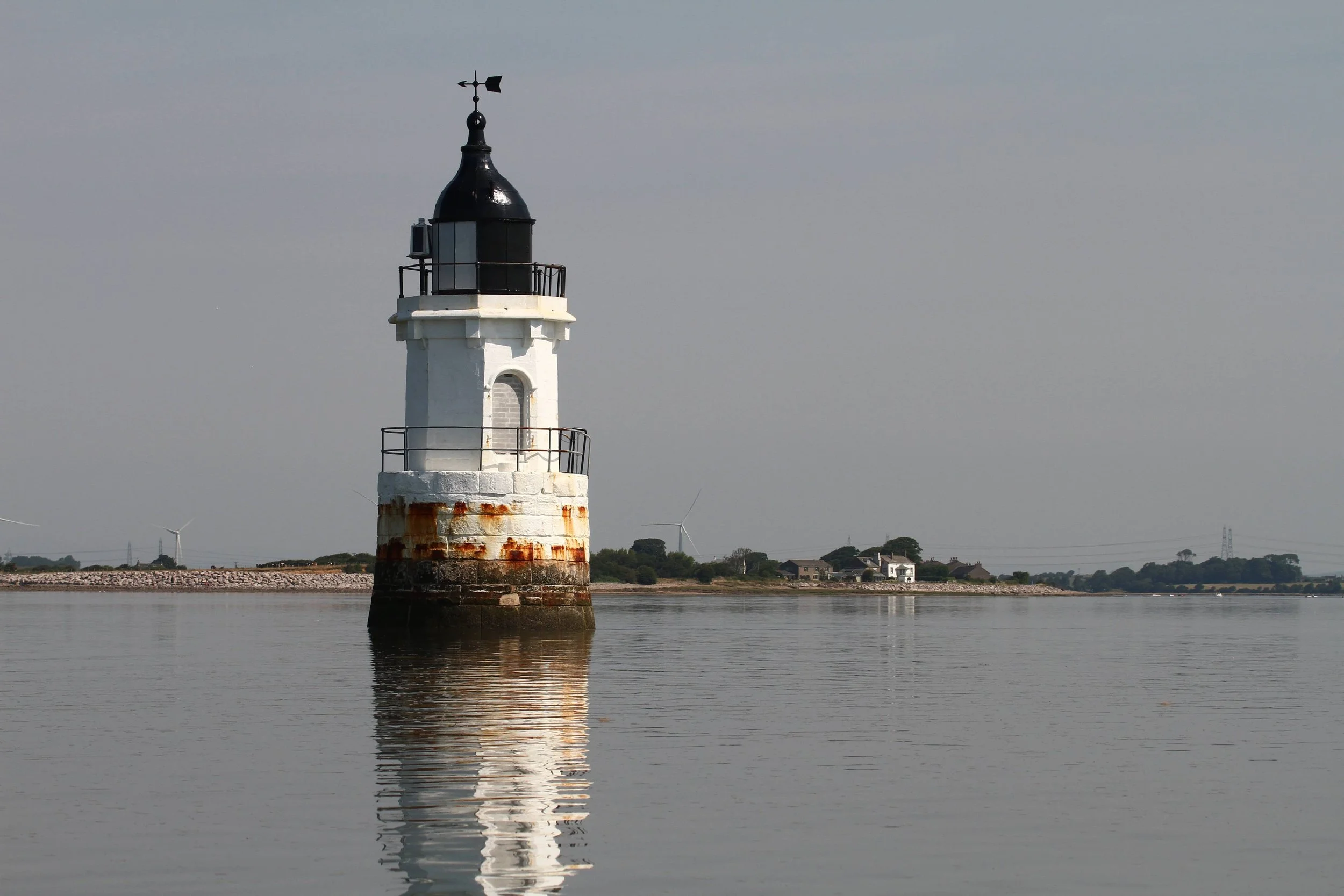
Plover Scar Lighthouse: Photo Alan Smith
Alan’s great photo of the Lighthouse in a placid river, and the Old Hall and Sunderland Point in the background, suggests a timeless landscape. Yet beneath that stillness lies a story of legal battles, survival, continuity, and an ancient fish trap that endured for centuries.
The Two Lighthouses
In March 2003, Paul Hatton wrote a splendid article for us titled ‘Leading Lights’, in which he described the navigational significance of what were originally two lighthouses and the two famous women lighthouse keepers
Here is the other: the land lighthouse, located farther up the shore, also on the Cockersands side of the river, decommissioned in the late 1950s.
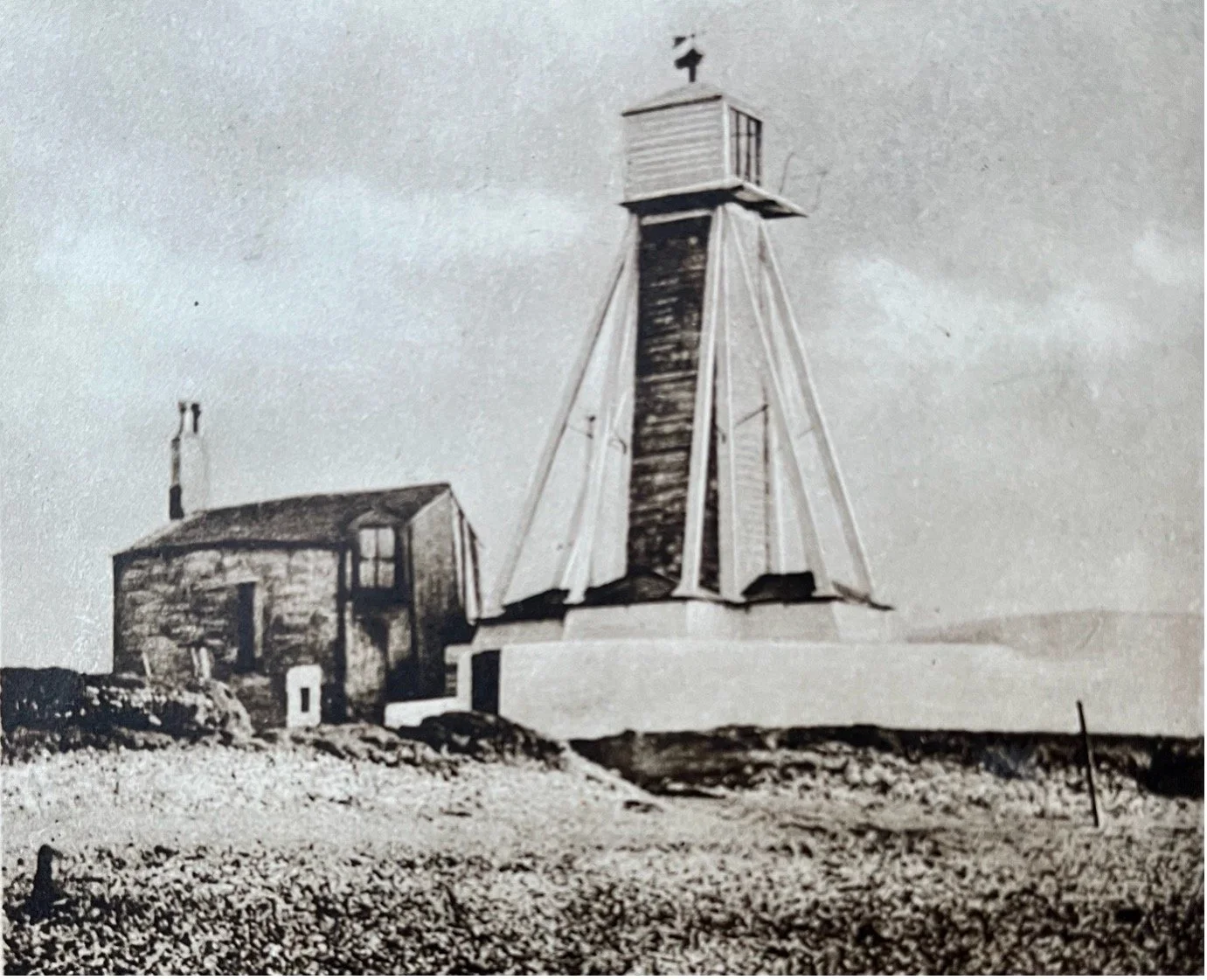
The land light and keepers’ cottage, extract from a postcard, c1900: Source internet.
This time, we are looking at the location, the early years of the lighthouse, and the fish trap
The Location
Plover Scar lighthouse is part of our folklore, but it’s located some distance from the Point End.
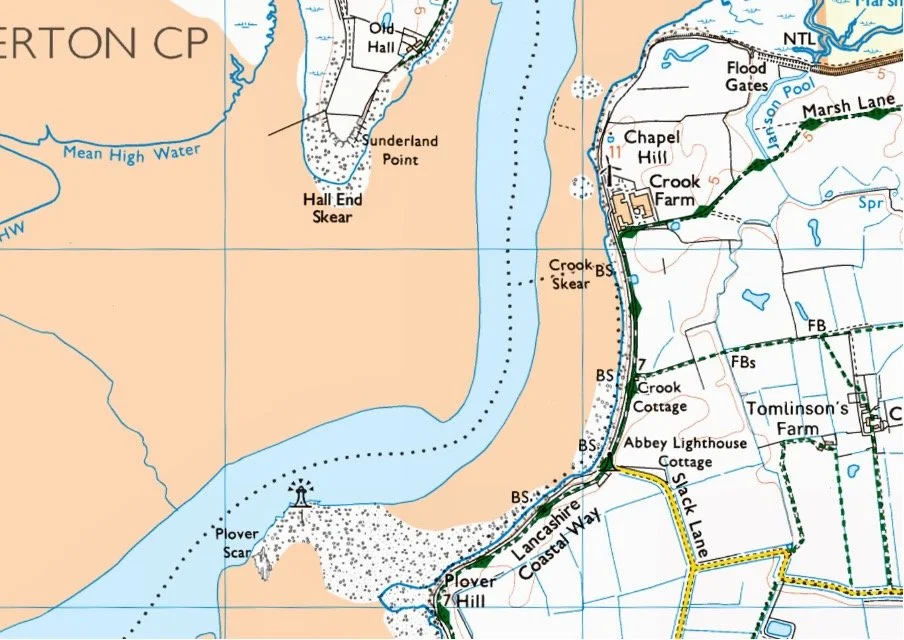
Extract from OS map: Courtesy and copyright Ordnance Survey.
On the map, we see the existing lighthouse on Plover Scar. To the right, the symbol for the old land light is just visible. It’s next to the Abbey Lighthouse cottage.
It’s said Francis Raby built the cottage in the 1850s, the first keeper of the two lighthouses. The Raby family lived in the house for three generations, ending with Janet Raby in the early 1940s.
Not only were they keepers of the lighthouses, they were also a fishing family and had the right to collect fish from the ancient fish trap.
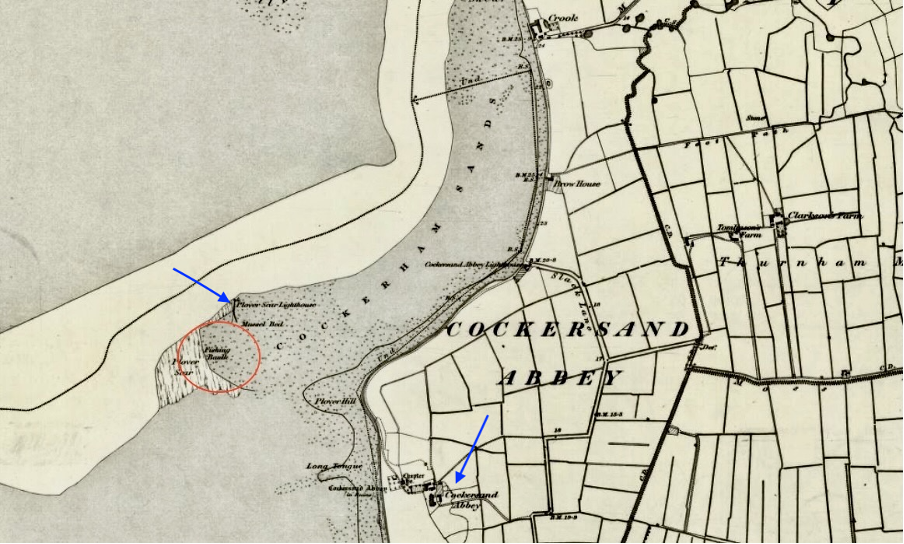
Extract from 1890s OS map, courtesy National Library of Scotland
In this extract from the 1890s map, we see the Lighthouse (blue arrow) and, circled in red, the ‘Fishing Baulk’ (fish trap) next to Plover Scar. Notice its proximity to the ruins of Cockersands Abbey (blue arrow). Founded in 1180, the inhabitants built the trap. Fish was an important part of the diet and of religious observance.
After the dissolution of the monasteries, the lands around Cockerham were bought by John Calvert in 1602, who became the Lord of the Manor of Cockerham and owner of the fish trap. By the 1800s, the right to fish the trap was let on an annual rental to local fisherfolk.
When the Plover Scar lighthouse was built in 1847, it destroyed part of the fish trap. It was repaired by Francis Raby and was fished by the Raby family for the next 100 years, despite determined attempts to have it declared illegal.
The Fish Trap - it was big.
The trap was a V-shaped structure, approximately 450 yards long, with a wall about 4 feet high, surmounted by stakes with lengths of brushwood interwoven as ‘wattle’, some 3 to 5 feet in height. As the tide ebbed, fish of all ages were guided into the ever-narrowing V and trapped at the end in a series of ‘holes’. When the tide receded, the fisher would stand to the side of the hole and, using a hand-held net, take the captured fish, which would be sold locally in Cockerham and Glasson Dock.
Some later photographs of the trap
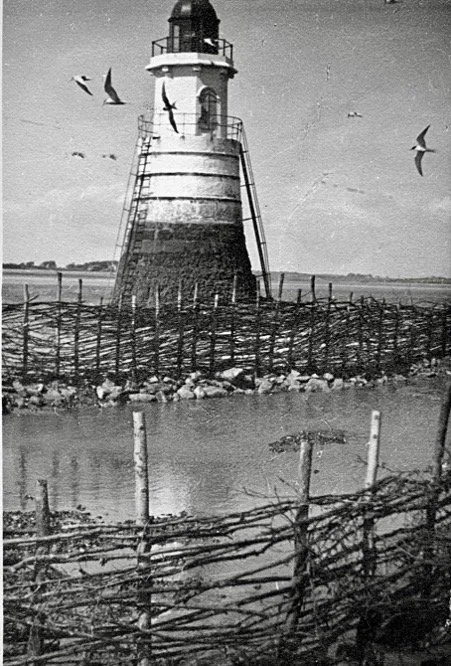
The lighthouse and the remains of the fish trap: Source internet.
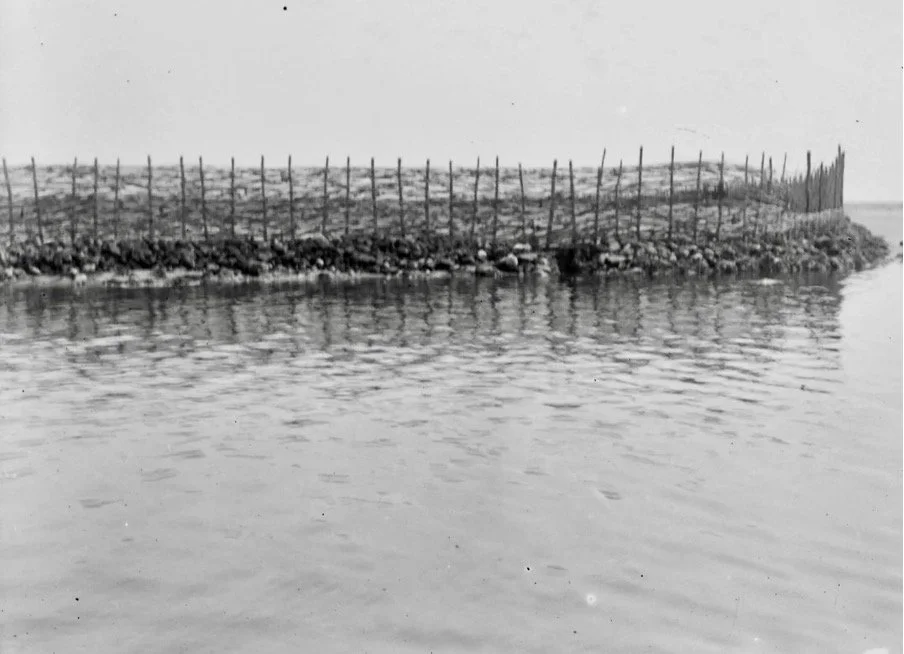
Part of the fish trap, a John Walker photo c1900: Courtesy Lancaster City Museums
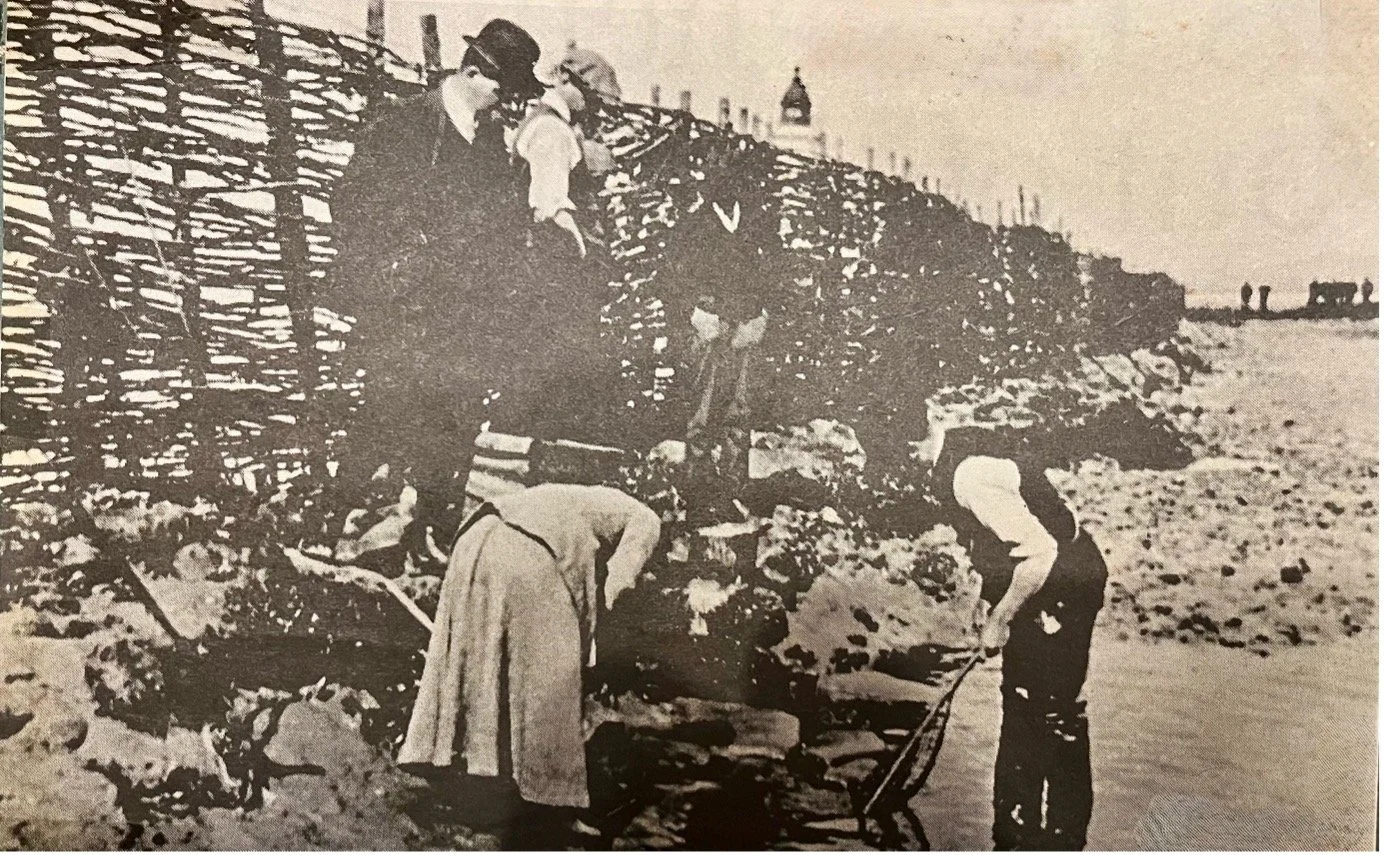
Newspaper cutting from the collection of Harold Gardner.
This one shows one of the traps within the Plover Scar fish trap being checked. Notice the hand net. You can see the tip of the lighthouse above the wattle ‘fence’.
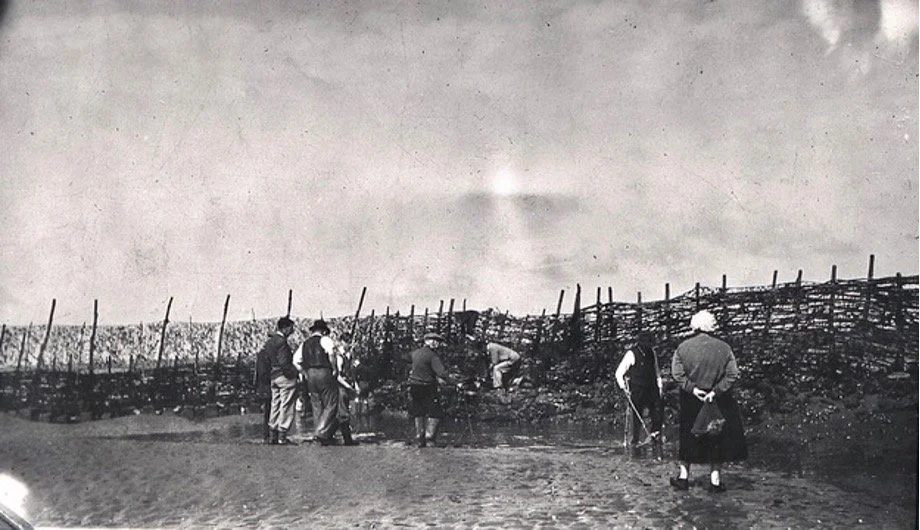
Source: Facebook
Inspecting the traps from another angle.
Francis Raby
Francis, the first keeper, was part of the gang building the lighthouses in 1847. He later said that part of his payment for the building work was the right to collect from the trap if he could restore it. For a family with limited means, the rebuilding took three years, but Francis completed the work so that it functioned as it had before.
As the rebuilding had been at his expense, Francis paid no rent until 1864, when the Lord of the Manor reasserted his rights, and an annual payment was agreed.
The Law and Salmon Fishing
With the rise of industrialisation and river pollution, there was great concern that salmon stocks were declining. In 1860, a Royal Commission was appointed ‘to enquire into the salmon fisheries of England and Wales with the view of increasing the supply of a valuable article of food for the benefit of the public.’
The Salmon Fishing Act of Parliament followed in 1861, introducing strict close seasons, regulating fishing methods, and prohibiting the pollution of salmon rivers. It was supplemented by an act in 1861 that established local Boards of Conservators, introduced fishing licences to fund water bailiffs, and provided clear penalties for poaching.
In our area, the ‘Board of Conservators for the Lune, Keer, Wyre and Coker District’, generally known as the ‘Lune Fisheries Board’, was established. Its members included representatives of the fisherfolk.
In the 1850s, salmon fishing on the Lune was done with a Haaf net, in which the fisher stood in the river with a net attached to a beam.
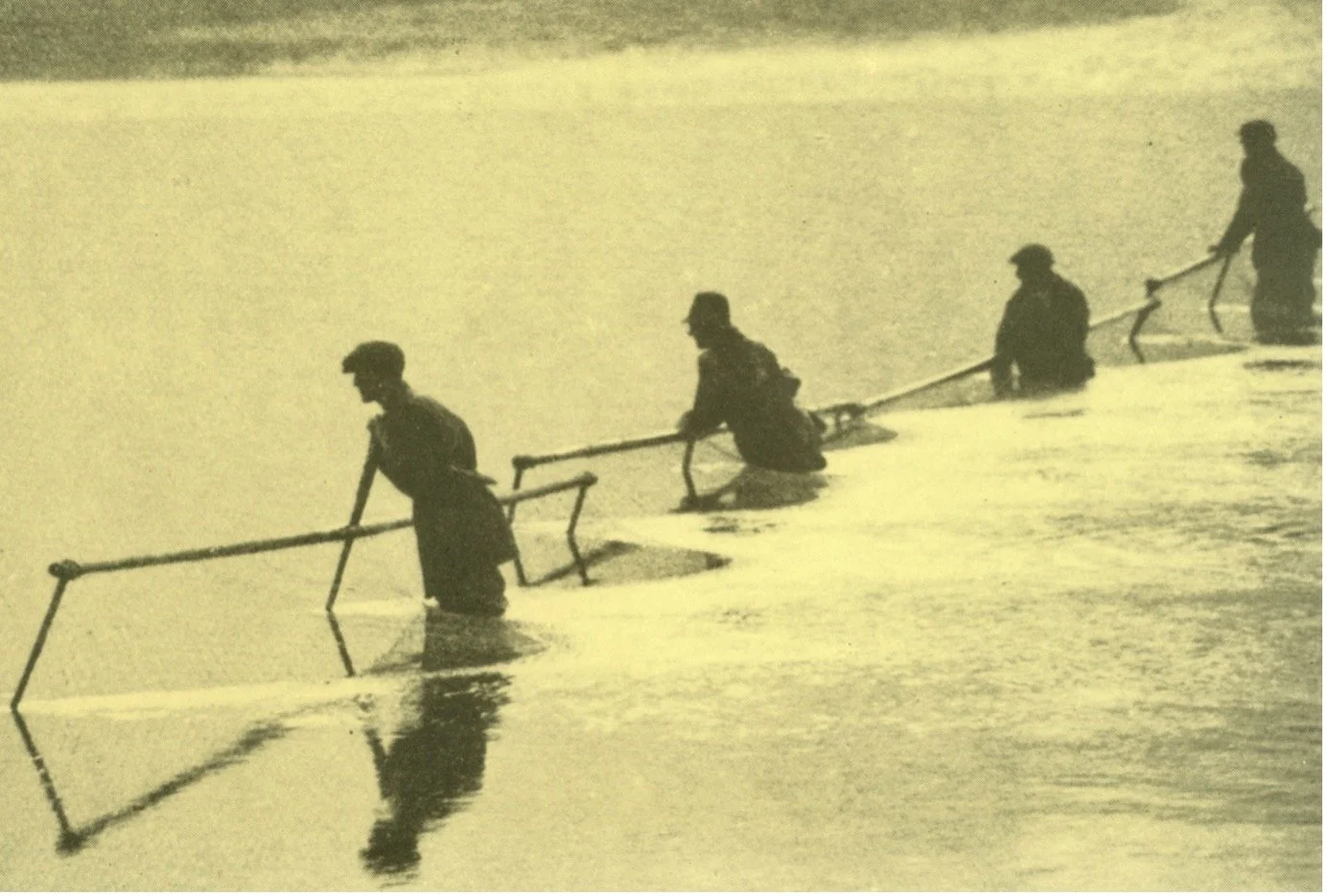
Haaf Netters in the River Lune, Lancaster, c1935. A Sam Thompson photograph: From the Red Rose Collection of Lancashire County Council
By draw netting, a team of fisherfolk set a net into the river from the bank by boat, then manually pulled the net back to shore, hoping to have trapped fish.
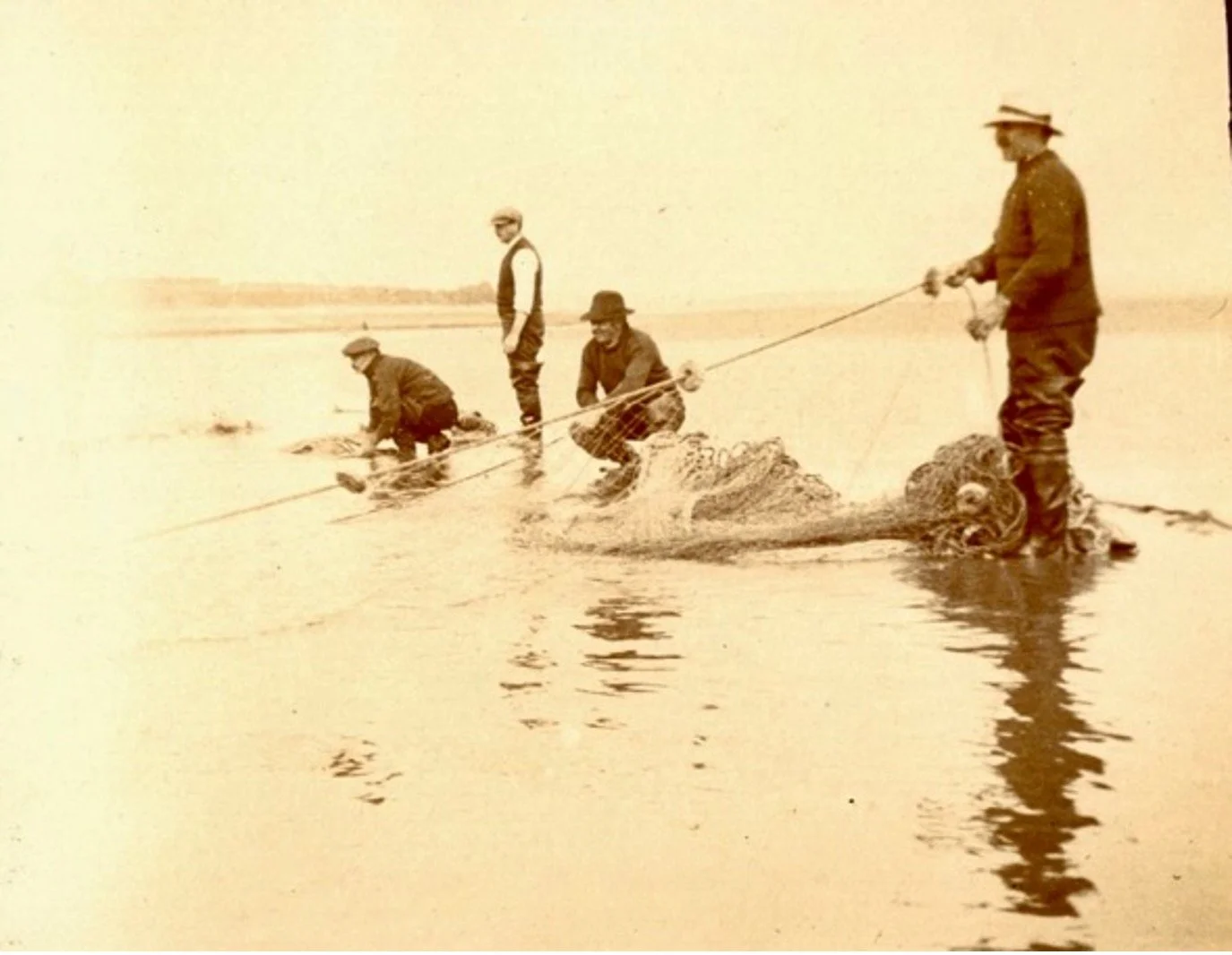
Draw netting: From the collection of Harold Gardner.
But the main method was by fixed traps on the shore, the oldest and perhaps the biggest was the one on Plover Scar.
Drift netting for salmon came later.
The detested ‘Fixed Engines’
In the crosshairs of the Salmon protection legislation were the fish traps, described as ‘Fixed Engines’. They had proliferated on Britain’s rivers to meet the food demands of a growing population.
It was believed that they caught excessive numbers of fish and indiscriminately killed young fish.
Soon after the Act was passed, legal action was taken against the operators of a ‘fixed engine’ in the Lune - including Francis Raby.
Into the Courts
On September 3, 1864, the Lancaster Guardian reported.
Mr Frances Raby was brought before the police after being caught operating an illegal ‘fishing engine’ on the River Lune at Cockersands. He was found guilty and fined £5 with costs of around 19 shillings.
It was a severe shock: Francis had submitted to the court ‘bona fide’ documents regarding the ancient rights, but the magistrate ignored them.
The case was quickly appealed to the Queen's Bench, which, in early December, found in favour of Francis, and the fine was annulled with no costs to pay.
The conservators demanded a full review. They insisted the new Acts of Parliament superseded the ancient rights.
The Commission
In 1866, a special commission investigated the legality of fishing with fixed engines on the Rivers Lune and Wyre. At the top of the list was the right of the Lords of the Manor of Cockerham to catch fish in the trap at Plover Scar
The Lune Conservators mounted a strong challenge demanding that it be declared illegal. Mr Clark, their solicitor, said ‘The fishery at Plover Scar was one of the most destructive kinds, and thousands of young fish were destroyed.
They argued that it had not been in continuous use and that the ancient rights were forfeit.
John Sharp, solicitor for the Lord of the Manor, summoned many witnesses to confirm the age-long working of the trap and to refute the claim on the number of young fish killed.
In the morass of legal points and counterclaims, it was the ancient right, conferred by Henry IV in the early 1500s, that the Lord of the Manor had the right to fish in the river “with any engine whatsoever” that carried most weight with the Commissioners. With that, formal permission was given to continue fishing
Other fisherfolk were not so fortunate. Richard Gerrard, of Sunderland Point, grumbled bitterly when he lost his rights to a trap set on the sands at the Point End, ‘it’s alright for some but not for others’
(There is a full page on the proceedings in the Lancaster Guardian, October 18th, 1866.)
Francis and the ‘Fishery Board’
While the conservationists remained deeply frustrated that fishing at the trap continued, there was great respect for Francis Raby for his knowledge of the river and the condition of salmon stocks.
He was re-elected several times to the ‘Fishery Board’, responsible for regulating the legality and licensing of salmon fishing on the river. In 1871, Francis was chosen to represent the fishermen of Sunderland Point. Thomas Swainson, Lancaster’s long-standing Town Clerk and owner of Hall End House (number 22) at Sunderland Point, also served on the board. Later, Robert Mansergh (number 3) and Richard Bagot (number 4) would be members.
When Richard Kitchen, who lived at Sunderland Point with his large family at number 13, tragically lost his life, we see Francis as one of the four who collected the donations.
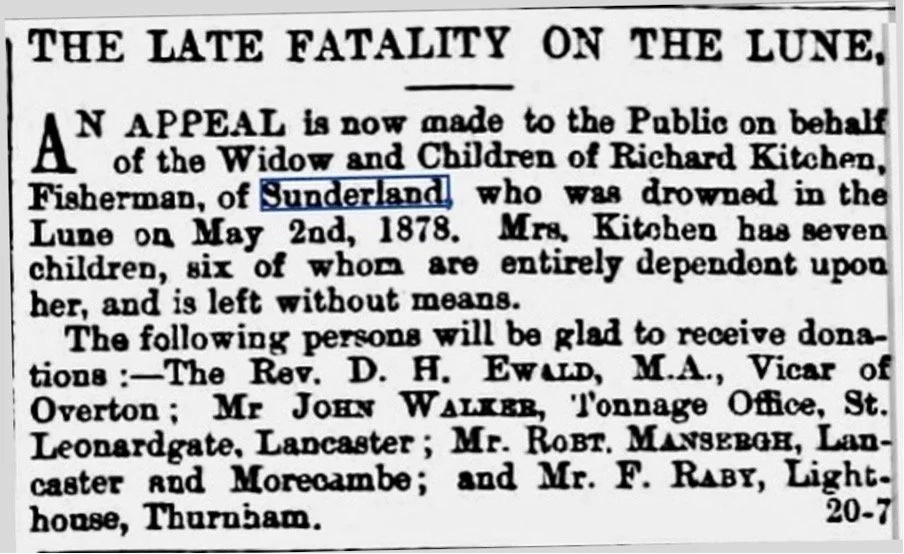
Courtesy Guardian Newspapers
In his 60s, Francis retired from the lighthouses and returned to Overton, where he had lived as a child and ran the main grocery shop in the village. When Francis died in 1895 his funeral notice praised his wide local and political knowledge, and for his playing the bassoon and later the violoncello in the Church.
His son, Henry, followed at the lighthouses, and was also for many years a valuable member of the fishery Board.
When he died in 1908, the newspaper reported, ‘Mr Raby, who was 64 years of age, had been 23 years at the lighthouse in the occupation of which he succeeded his father. He took an interest in all matters affecting the river and the district and was one of the best-known figures up to the time his health gave way.
Henry was succeeded by his son James (Jim), who fished the trap and served as lighthouse keeper for 20 years until his death in November 1927.
It then fell to his sister Janet to take over the lighthouses. She was assisted by another brother, Dick, who also looked after the fish trap. When Janet retired in 1944, Beatrice Parkinson and her husband Thomas became keepers of the Lighthouses, while Dick Raby continued the fish trap
Lancaster photographer Sam Thompson took this special photo of Janet.
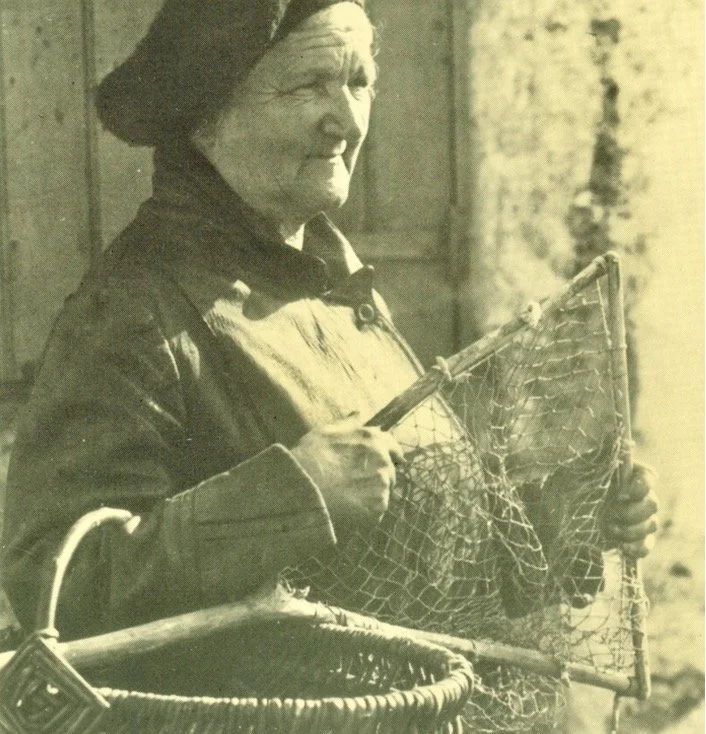
Janet Raby: a Sam Thompson photo in the Red Rose collection of the Lancashire County Council.
Janet is holding a locally made ‘tiernal’ basket and a triangular fish net, used for catching flatfish on the sands and for scooping up fish caught in a fish trap.
This is Janet’s brother Dick.
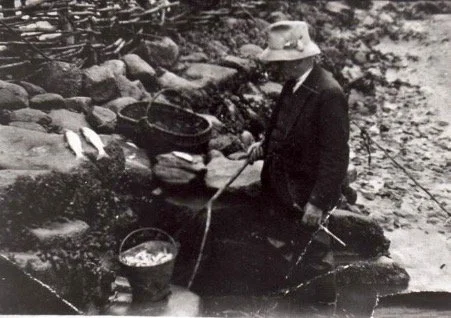
Dick Raby at the Plover Scar fish trap: Photo Internet
Notice the triangular net, the two young salmon on the nearby stone, and what look like sprats (a type of herring) in the bucket.
Eventually, in the late 1950s, the Lancashire River Board acquired the rights to fish at the Plover Scar fish trap and closed it down.
Interview with Janet Raby
In 1953, when the wooden land light was replaced with a metal structure, a newspaper reporter visited Beatrice and met Janet, who was then 75 but looked 20 years younger. She was busy among the shingle.
“I came to the lighthouse when I was 2 years old and left it when I was 68”.
When she retired, she wanted to live in nearby Cockerham but was unable to find a cottage, so she bought a caravan and set it up immediately behind the lighthouse. And every day, as she did when she was an official, she watches the ships as they pass on their way.
She said, “One thing I do know is that whatever changes they make, the light will be kept burning. Never in the history of the lighthouse, under the Rabys or since their day under Parkinson's, has the light faltered, and no vessel has come to harm because of the light. It is in good hands now. Beatrice Parkinson does a grand job, and I should know.”
Here is a lesser-known splendid photo of Beatrice from Harold Gardner's collection.
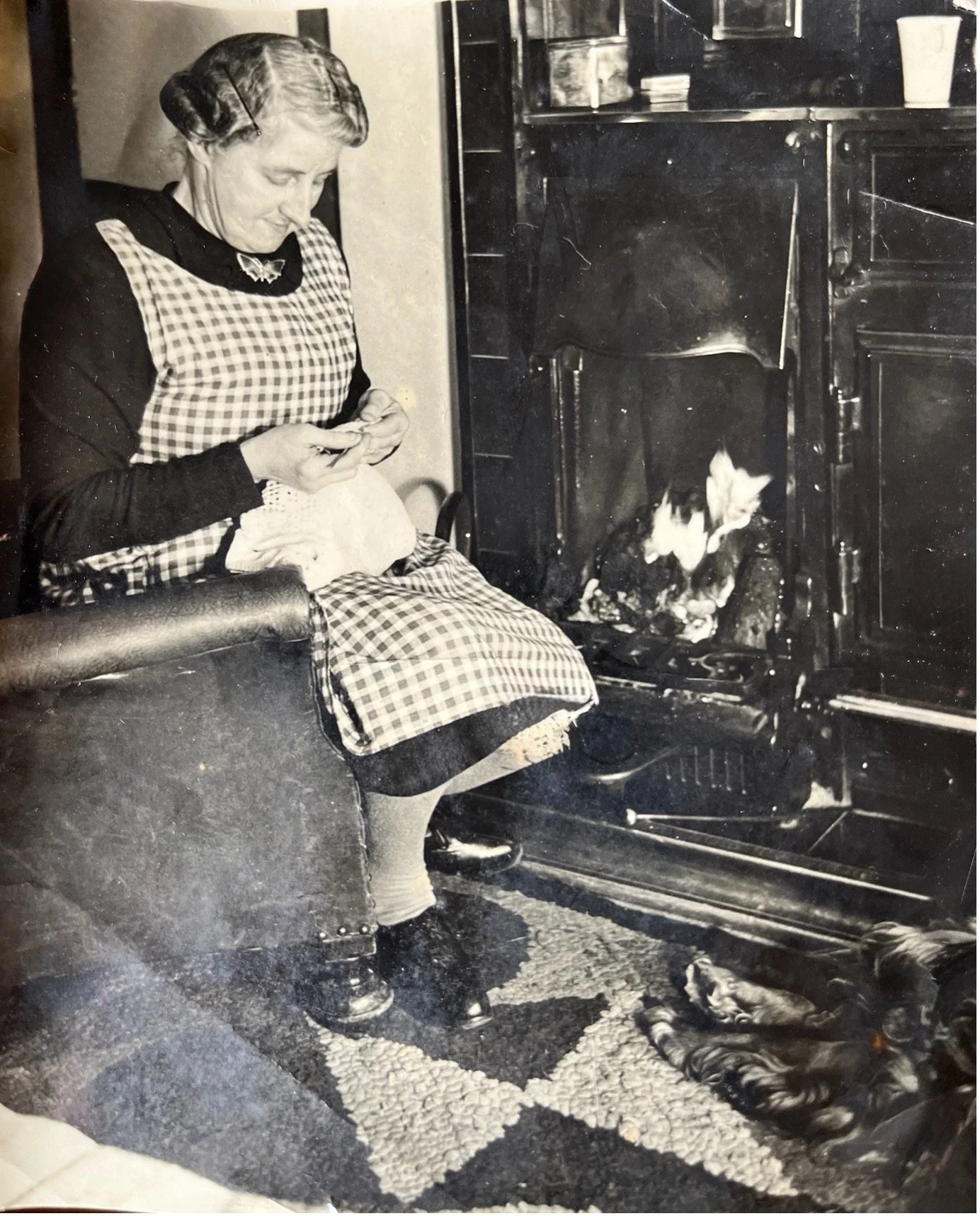
Beatrice Parkinson in the lighthouse keepers’ cottage, 1950: from the collection of Harold Gardner
Some Photographs
The Photos of Sam Thompson
Sam is well known for his photos of SP fishermen in the mid-1930s (link to gallery), some of which won awards in exhibitions. He also photographed Janet and Dick.
In September 1938, the Lancaster Guardian reported:
‘Another photographic success for Mr Sam Thompson. In the pictorial print section of the Royal Photographic Society of Great Britain's 83rd annual exhibition at Russell Square, London, is a work of Mr Sam Thompson of Lancaster. It is a print, 14 1/2 inches by 11 1/2 inches, of Miss Janet Raby, the keeper of Cockersands lighthouse.’
In the same exhibition, Sam had a photographic slide selected, titled ‘A Seafaring Man’, a portrait of Dick.
Here they are side by side. Sam has them in identical poses, looking to the side with one eye half-closed. They are wearing almost identical Tam O’Shanter hats, which Janet must have knitted.
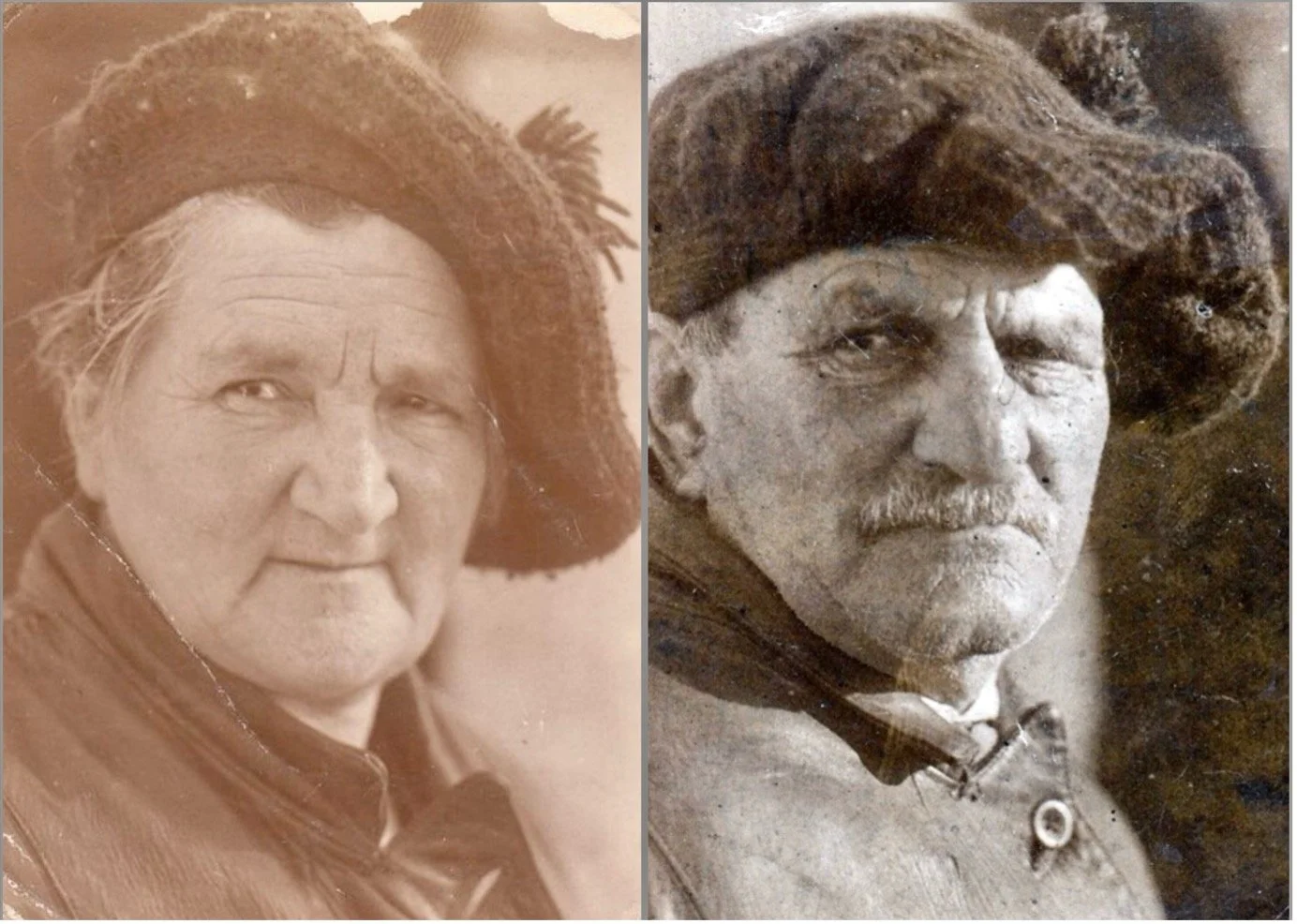
Janet and Dick Raby, photos by Sam Thompson, 1938: Source: Website/Internet.
Another photo Sam exhibited was titled “A Cockersands fisherman”. This is likely Francis Raby, Dick’s son, living as a fisherman in the Cockerham area; he would have been 47.
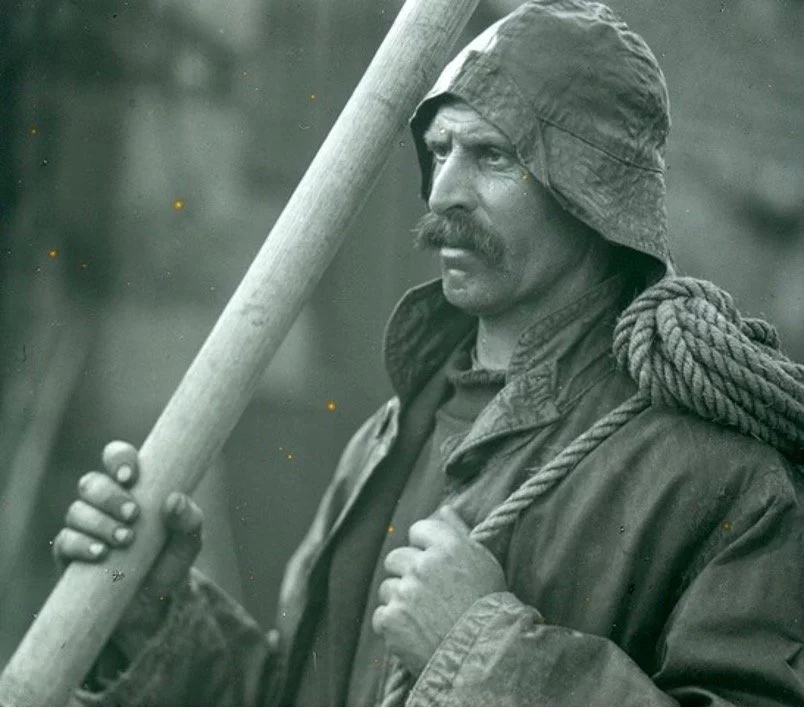
‘A Cockersands fisherman’, a Sam Thompson photo; Courtesy Lancashire Archives.
The Grocers Shop in Overton
and sheep.
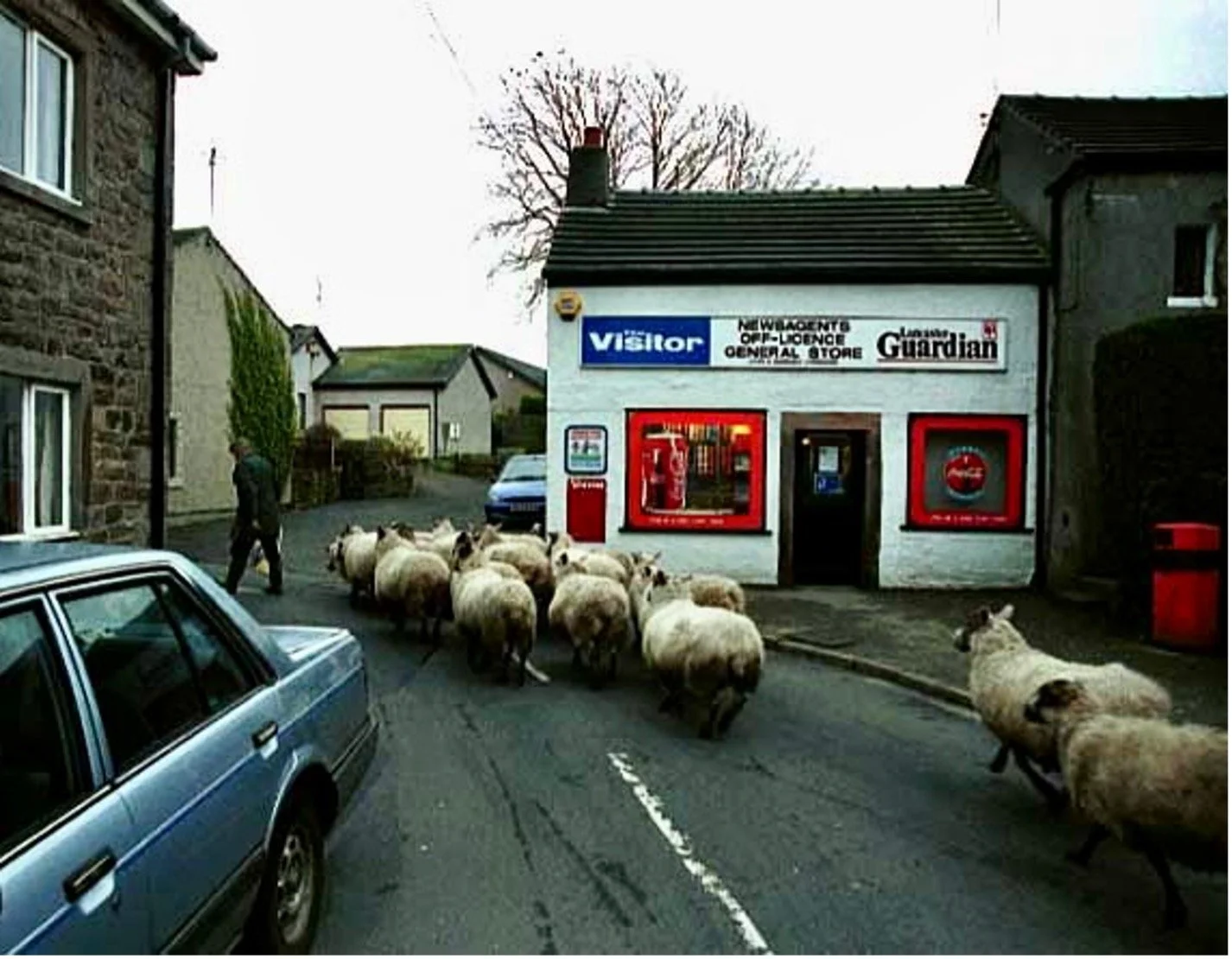
Photo by the Byrne family, c2000: From the collection of Jackie Parkinson-Winter Brown
A more recent photo of the grocers’ shop in Overton, when it was a Spar run by Roger Byrnes and his wife. In the 1880s, it was run by Francis Raby, the first lighthouse keeper and repairer of the Plover Scar fish trap
The Photos of Philip Smith
To finish a couple of modern photos of the Plover Scar Lighthouse by Philip.
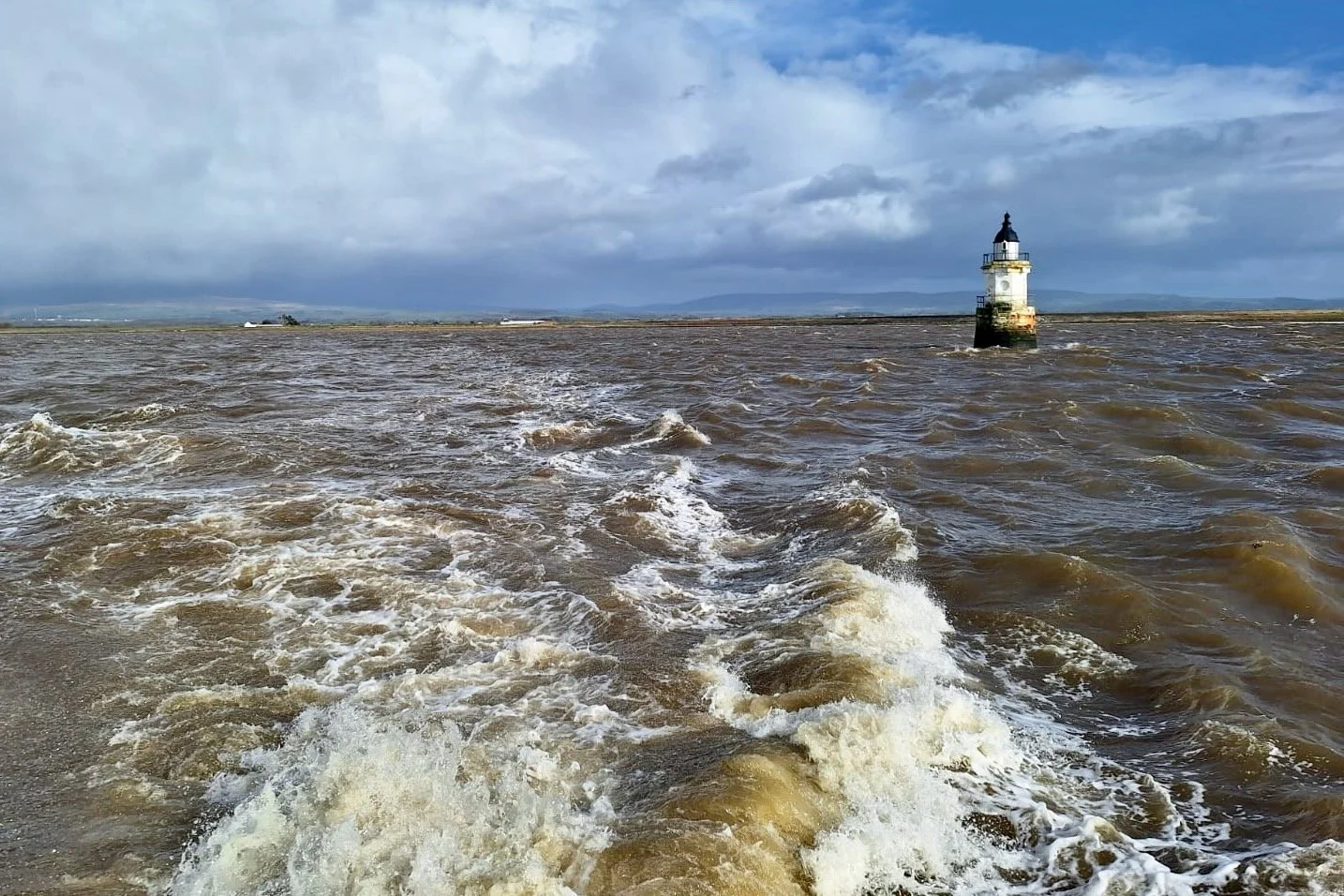
The wake from the Pilot boat and the Lighthouse
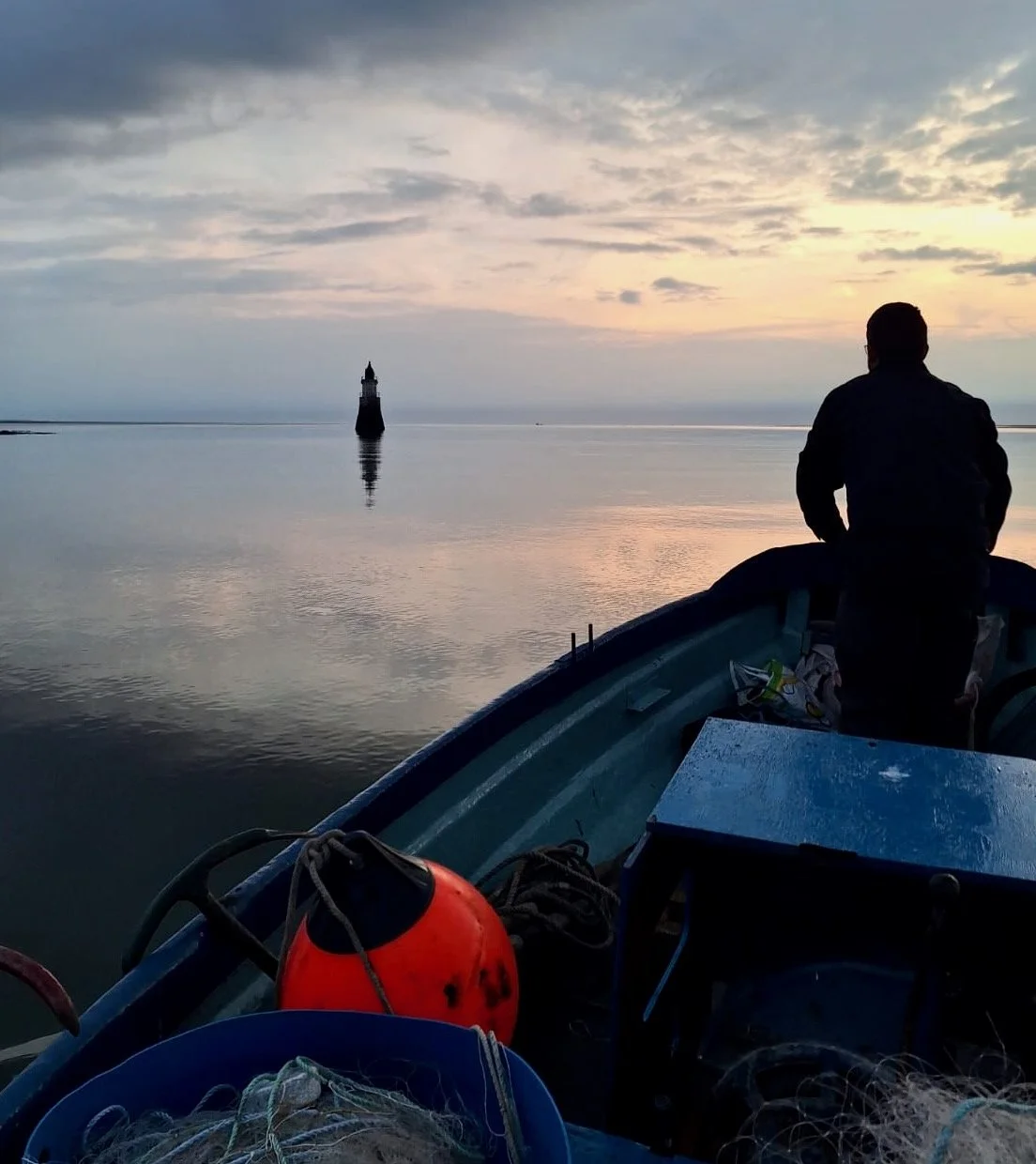
A special photo: it’s James Walker at the tiller, and they are out fishing. The nets in the boat are to catch Bass and Mullet.
Thanks to ‘A History of Plover Scarr and Cockersand Lighthouses’ by Rose Parkinson in ‘Wyre Archaeology,’ which provided good information.
Next time perhaps the story of the Ship Inn with new research.