or
The Enumerator’s Path
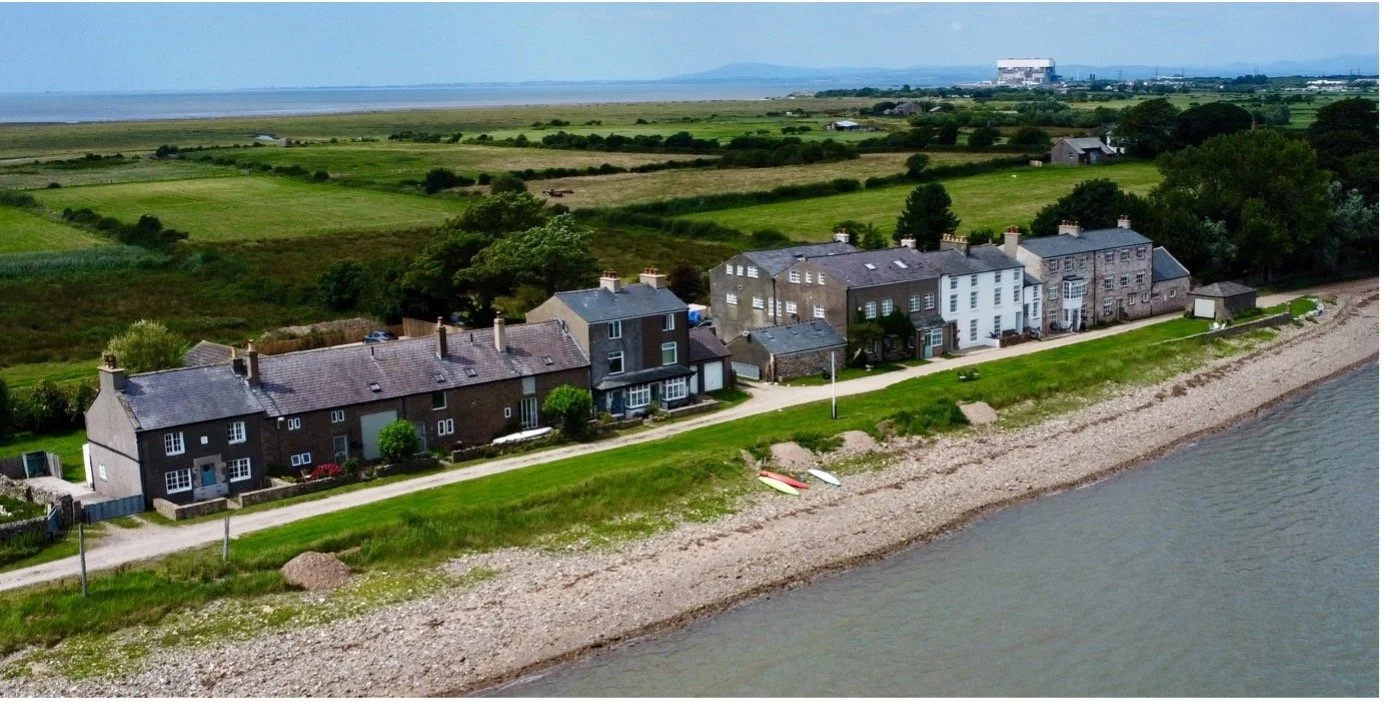
Second Terrace at Sunderland Point: A Mark Fletcher Photo
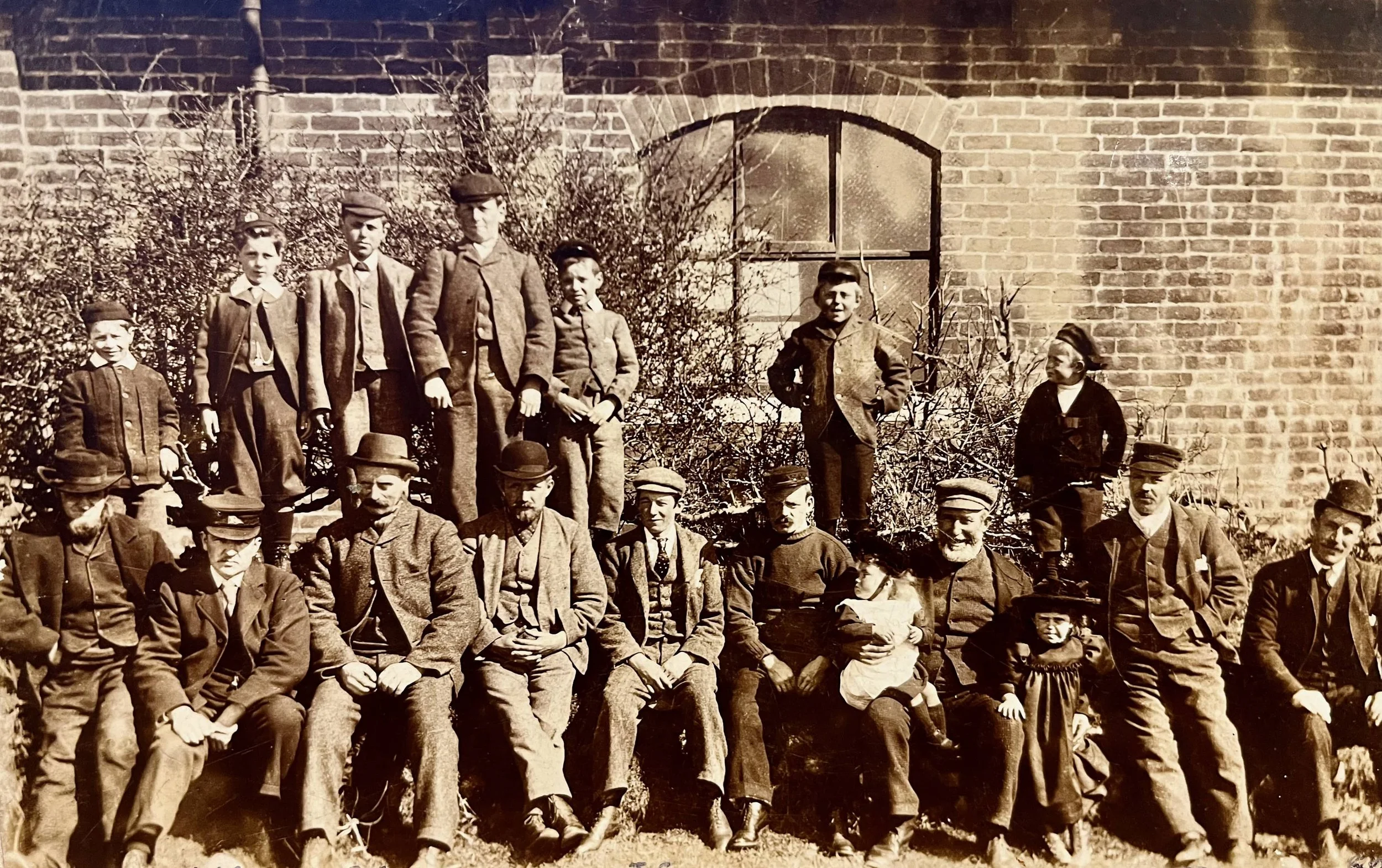
Villagers at the Mission Church, autumn 1894: From the collection of Wilton Atkinson
Today, we are adding a link to a spreadsheet that lists, by house and by year, who lived where at the time of the censuses from 1841 to the partial census of 1939. This is one of the key sources for our project to write the history of each house at Sunderland Point.
It has not been easy. The early censuses are simply lists of families, with very few houses named. It was not until 1953 that the village buildings were officially numbered. Assigning families to modern addresses has been a tricky problem that we have done our best to solve.
Fortunately, there is a code which unlocks the puzzle. Each house, whether occupied or not, was placed in a location sequence. Unfortunately, the sequence is not always clear, at times misleading, and the records are riddled with mistakes.
As we dug deeper, the names became familiar and generational changes could be identified. The village has been populated by close-knit fishing and farming families and by empty houses used only in the summer or as second homes.
There’s plenty of evidence of hard lives, infants lost in early years, eldest sons and husbands drowned and of widows on poor relief.
A Smidgen of Background
The population census began in 1801 to record the workforce available for the Napoleonic Wars and to determine whether the population was rising or falling. Further censuses were completed in 1811, 1821 and 1831, which were incomplete headcounts of the population. We have no records of these existing for SP.
The modernising zeal of the early Victorians led them to pass an Act of Parliament to begin the first modern census in 1841. England and Wales were divided into districts, forms would be sent to homes to be filled out, and every individual had to be listed. This was then collected by a special officer, the enumerator, who would record and send it to London for compilation into a full report.
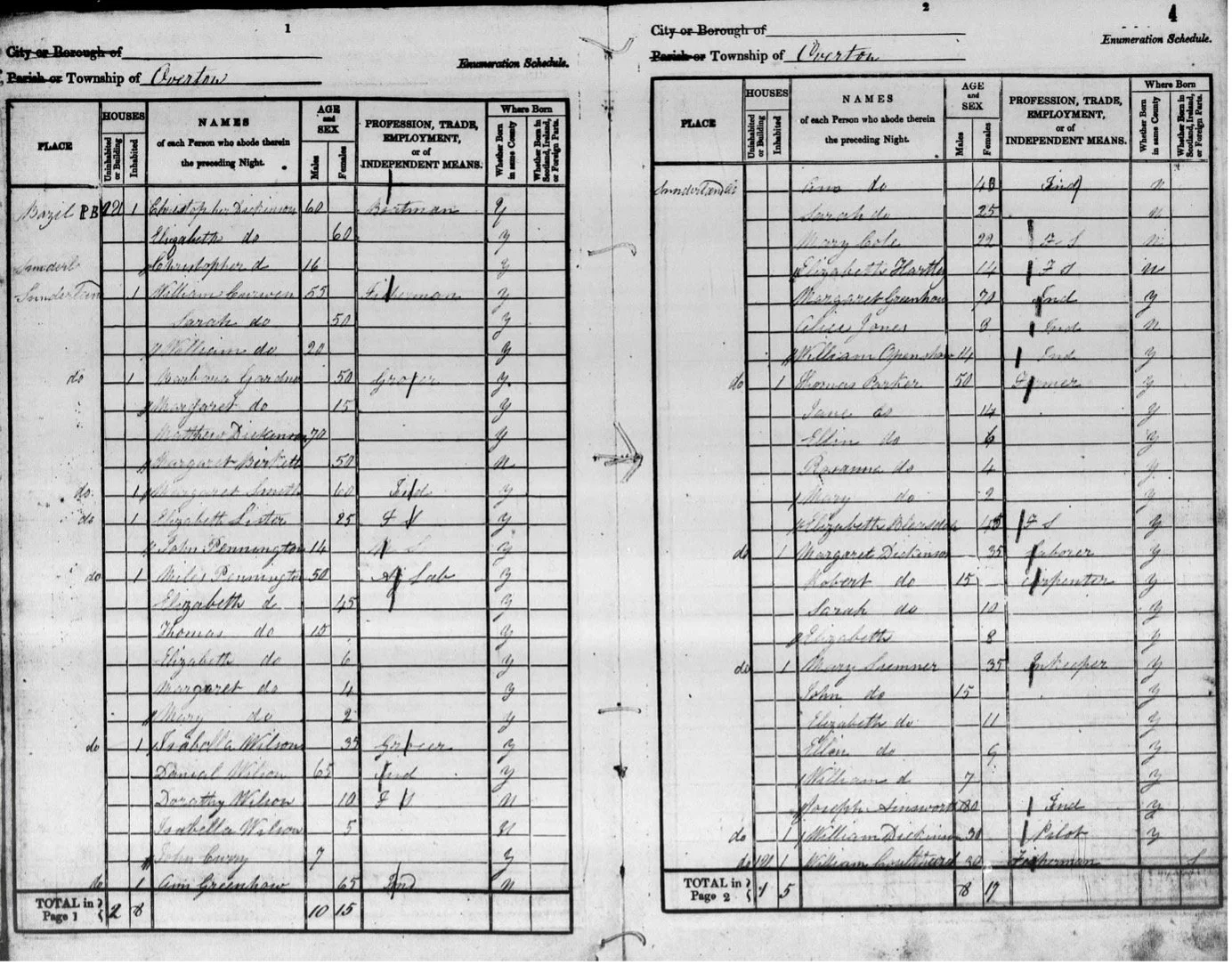
Page from the 1841 census: Courtesy National Archives
This is the first page covering Sunderland Point in 1841. It is a sequence of unnamed houses, indicating whether each is occupied, the residents' names, followed by their ages, divided by sex, and then their occupations - categorised as Profession, Trade, Employment, or of independent means.
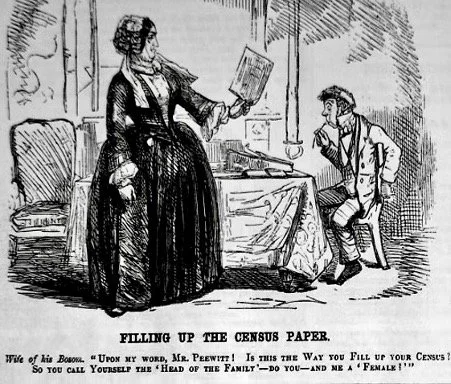
Punch Cartoon: Source Internet
The enumerator (left) has arrived, discovered multiple families, and found the forms incomplete. Overcrowding was a common issue in the towns. Many people were suspicious of the census, and a significant number could not read or write. Very often, neighbours or the enumerator filled out the forms.
The 10-year cycle and format were established, and the census was scheduled for a designated date to capture the population at a specific moment.
More information
There were innovations in 1851: a more precise place of birth was required, as well as marital status, exact ages, and relationship to the head of the household.
This seemed perfectly sensible to the Victorians, but it is unacceptable today and was ridiculed even then.
Punch Cartoon: Source internet
The censuses of 1861, 1871 and 1881 were little changed, except for the addition of a column on infirmity. Added due to the rising interest and concern over public health (see last column heading)
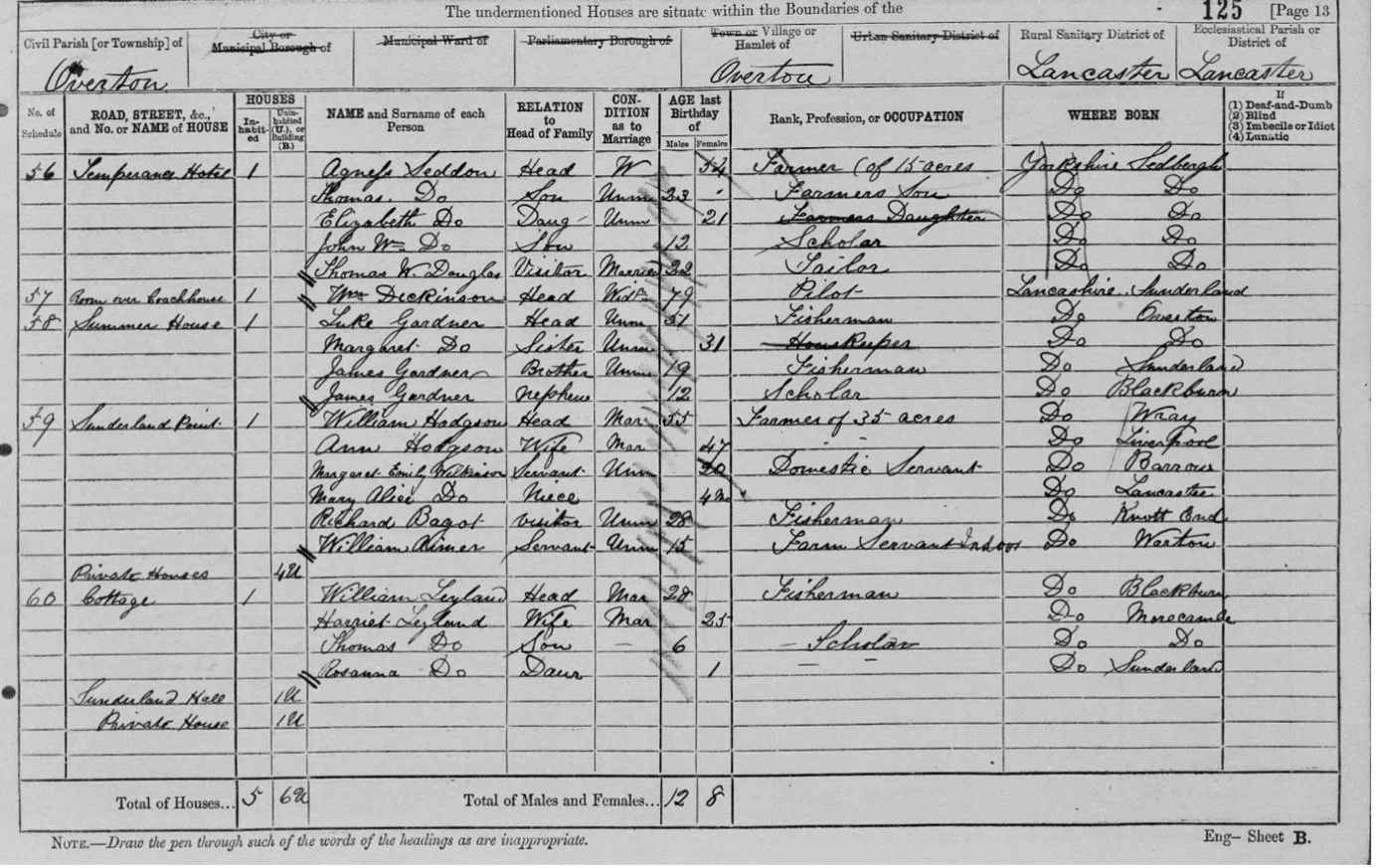
Page from the Sunderland Point 1881 census: Courtesy National Archives
This is a page from the village census of 1881. The Temperance Hotel, the Summer House, and Sunderland Hall are named, but others are listed only as "Cottage" or "private houses".
The census of 1911 marked a significant change. The original form completed by the household was preserved rather than a summarised list, but were still kept in an organised sequence.
The rising influence of women in society was reflected in questions about their occupations and years married. Many in the suffragette movement submitted spoiled returns, protesting against a government that still denied most women the vote, and partly because of the new questions on marriage and children.
What is interesting for us is seeing the villagers' personalised returns in their own handwriting.
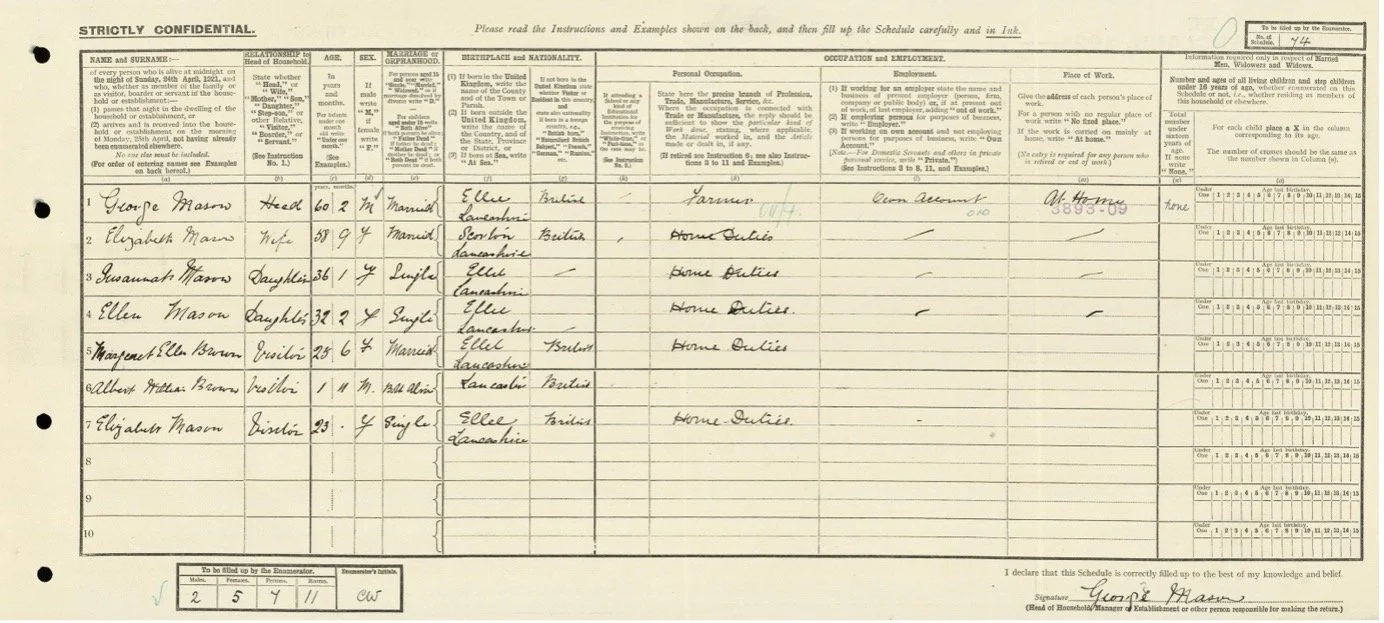
Census return 1911: courtesy National Archives.
This is the return completed by George Mason, the tenant of the Temperance farm and hotel. He lists himself, his wife, Elizabeth, and their two daughters, Susannah and Ellen, and three visitors.
To complete our spreadsheet, we had to understand the sequence of the houses in the census list. This was recorded by the enumerator who was supposed to be (from the Office of National Statistics -edited by us):
He must be a person of intelligence and activity. He must not be infirm or of such weak health as may render him unable to undergo the requisite exertion. He must be temperate, orderly, and respectable, and be such a person as is likely to conduct himself with strict propriety and to deserve the goodwill of the inhabitants of his district.
Rates of pay were not encouraging.
It was almost universally agreed that these rates of pay were insufficient in themselves to attract high-quality staff or to encourage the greatest diligence.
The Enumerator’s Path
From 1841 to 1911, a few days after the census date, the enumerator arrived in the village to collect the forms.
He visits the houses one by one, but it’s unclear where he begins; we don’t know for certain which houses existed in the early years—were there two families at Meadow House Farm and two families at Gravel Cottage, were there two cottages in the Wynt? Most importantly, what route did the enumerator take?
In 1841, he walked along First Terrace, then up the Lane, then around the Point – we suppose, checking to see if there were other houses- and then back along Second Terrace. But folks weren’t at home, family names were misspelt (Robert Orr was Robert Eve), and mistakes later corrected placed homes out of sequence.
Luckily, we can cross-reference.
From the Tithe survey of the early 1840s, we know who was on the farms: the Kellets were in 3A, and we are given the names of the occupants for 4, 5, and 6 on First Terrace.
There are also notices in the newspapers.
Lancaster Gazette 22nd June 1839
SUNDERLAND HOTEL - BATHING John Kitchen Begs to inform his Friends and the Public generally that he has recently entered upon the above well-accustomed Establishment and made it convenient in every respect for the accommodation of Bathers and Visitors to this delightful Summer retreat. Sunderland, near Lancaster, 21st June 1839
From this, we know John Kitchen and family are at The Hotel on Second Terrace (number 14).
And from an earlier for-sale notice, Miles Pennington and his family were in 7A, and we believe they were still there in 1841.
So, looking again at the 1841 census sheet.
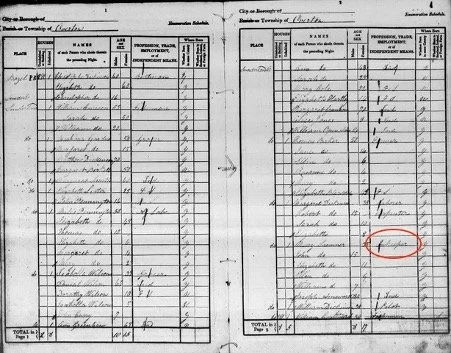
Page from the 1841 census: Courtesy National Archives
We have highlighted the profession ‘Innkeeper’, the name alongside is Mary Sumner. As John Kitchen is at The Hotel, this must be the Ship Inn (number 11). Knowing who is in 3A (Kellets), 7A (Penningtons), and a good guess at 4, 5, and 6, we have ‘landmarks’ around which we can group the sequence of families. And it works – just about.
For example, as Margaret Dickinson (with others) appears immediately before Mary Sumner, with no unoccupied houses between them, we can place her at number 10.
The later censuses are much more helpful, noting the key houses. With practice, the process becomes easier, but there are so many mistakes.
Let’s look at 1901
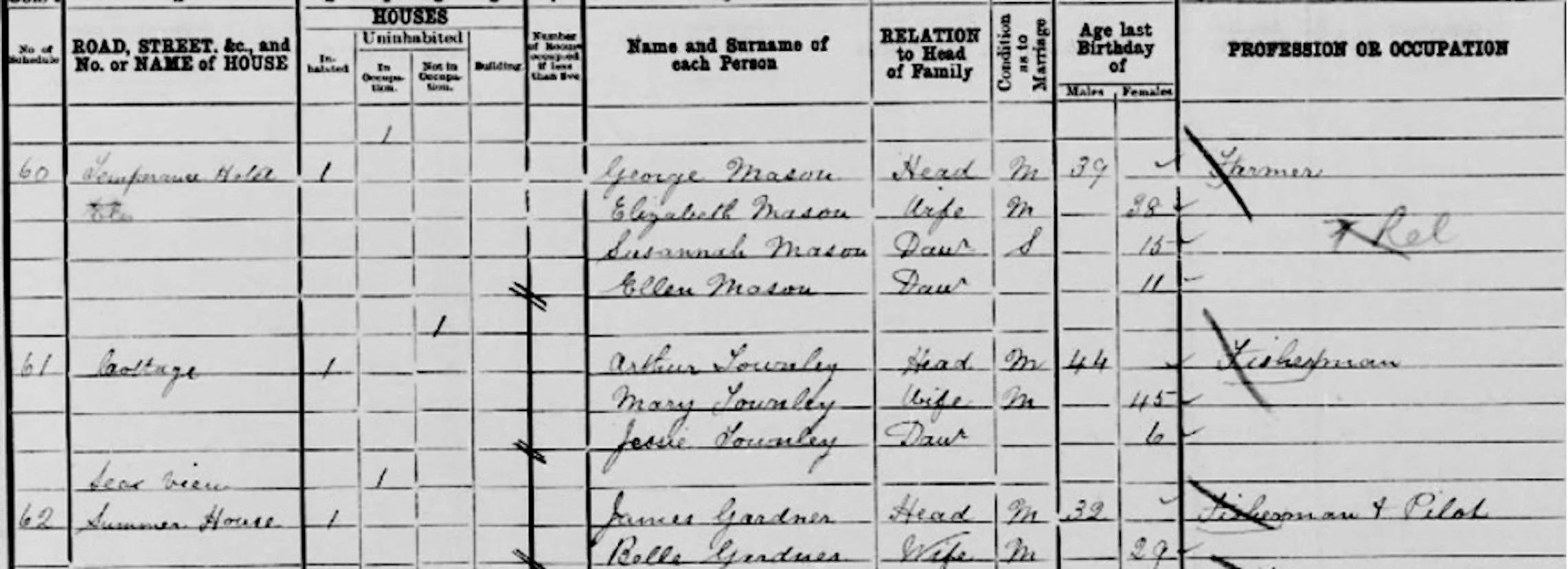
Page extract from the 1901 census: Courtesy National Archives
At the top is the Temperance Hotel, followed by a cottage, then Lune View, which is marked as uninhabited, and finally the Summer House. This must be the Lane, but there is no mention of numbers 2 and 3, built in the 1880s, which we know were occupied by the families of Tom Spencer and William Townley. Where are they? Listed elsewhere out of sequence.
In 1871, the Enumerator must have started with some refreshments at the Globe Hotel in Overton before setting out for Sunderland Point. He lists the Globe as being in the village!
With practice, we see families are living in the same houses, and there are legal documents, letters, postcards, and more evidence that help pinpoint who is where.
Another later source is the photograph of villagers outside their homes.
This one from the 1890s shows Ann Townley on the left with her parents, Margaret and William Townley.
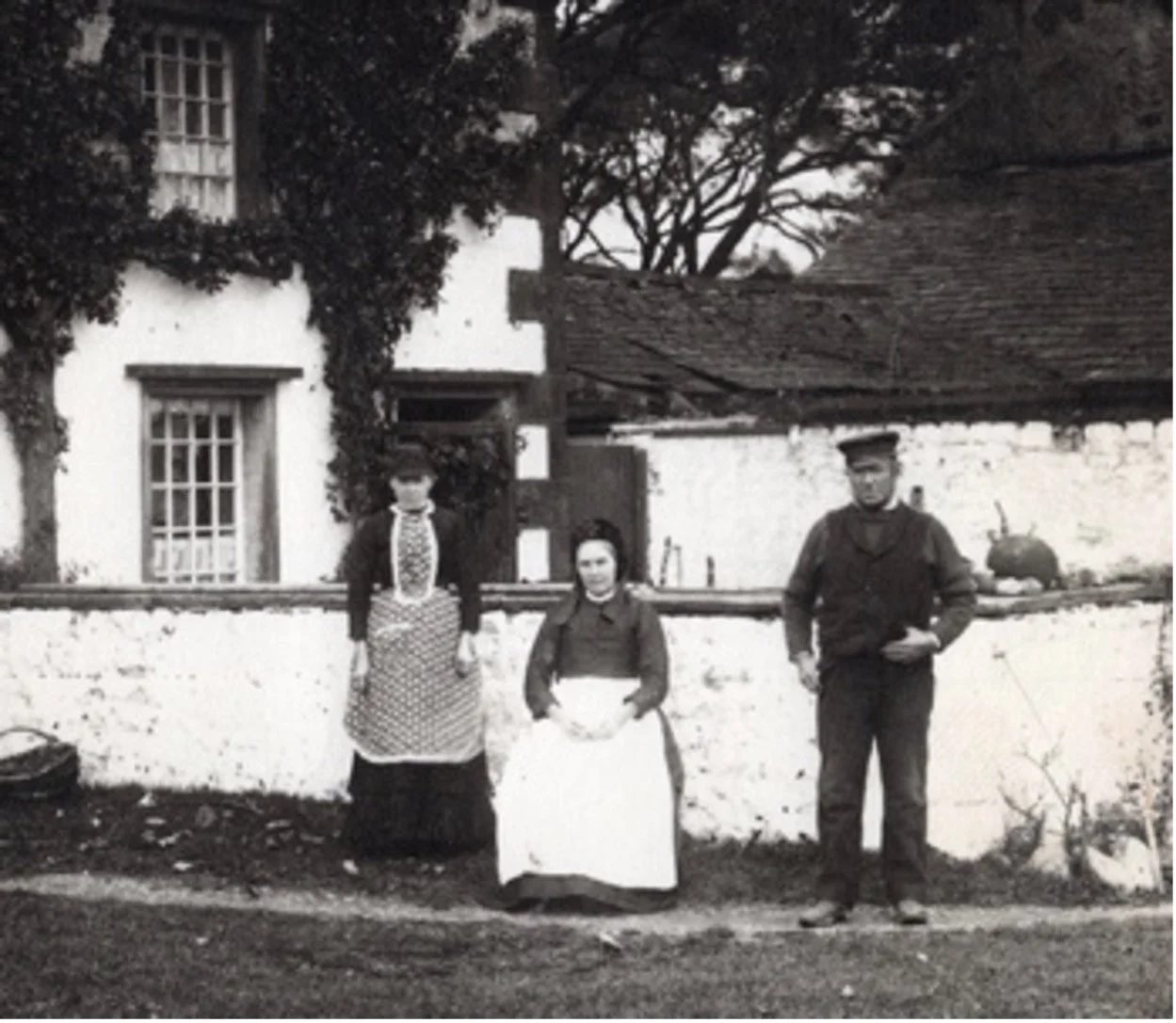
From the collection of Wilton Atkinson
This next one solved a problem.
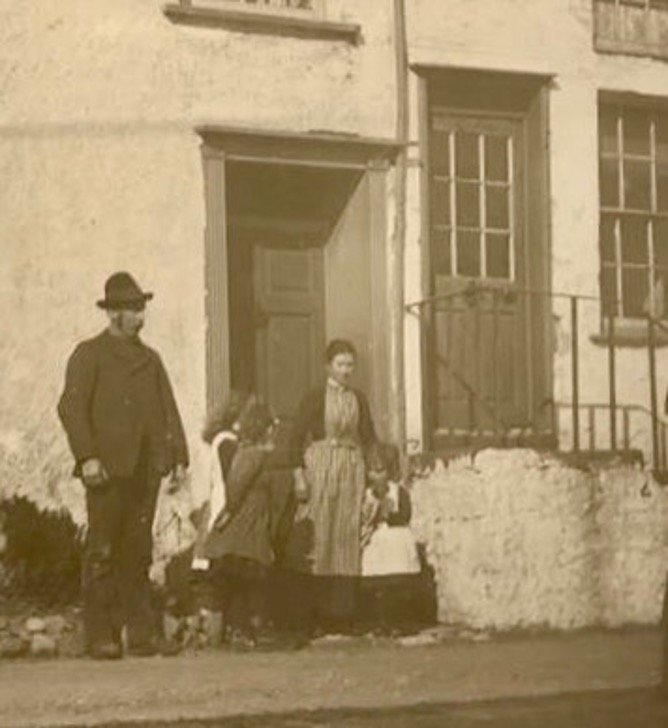
A George Gilchrist (junior) photo: Courtesy of the Gilchrist family
This is Arthur and Mary Townley outside number 16 in the 1890s. We knew he had left number 23 when they married, but the census list was unclear about where they had gone.
The House List of James W. Gardner.
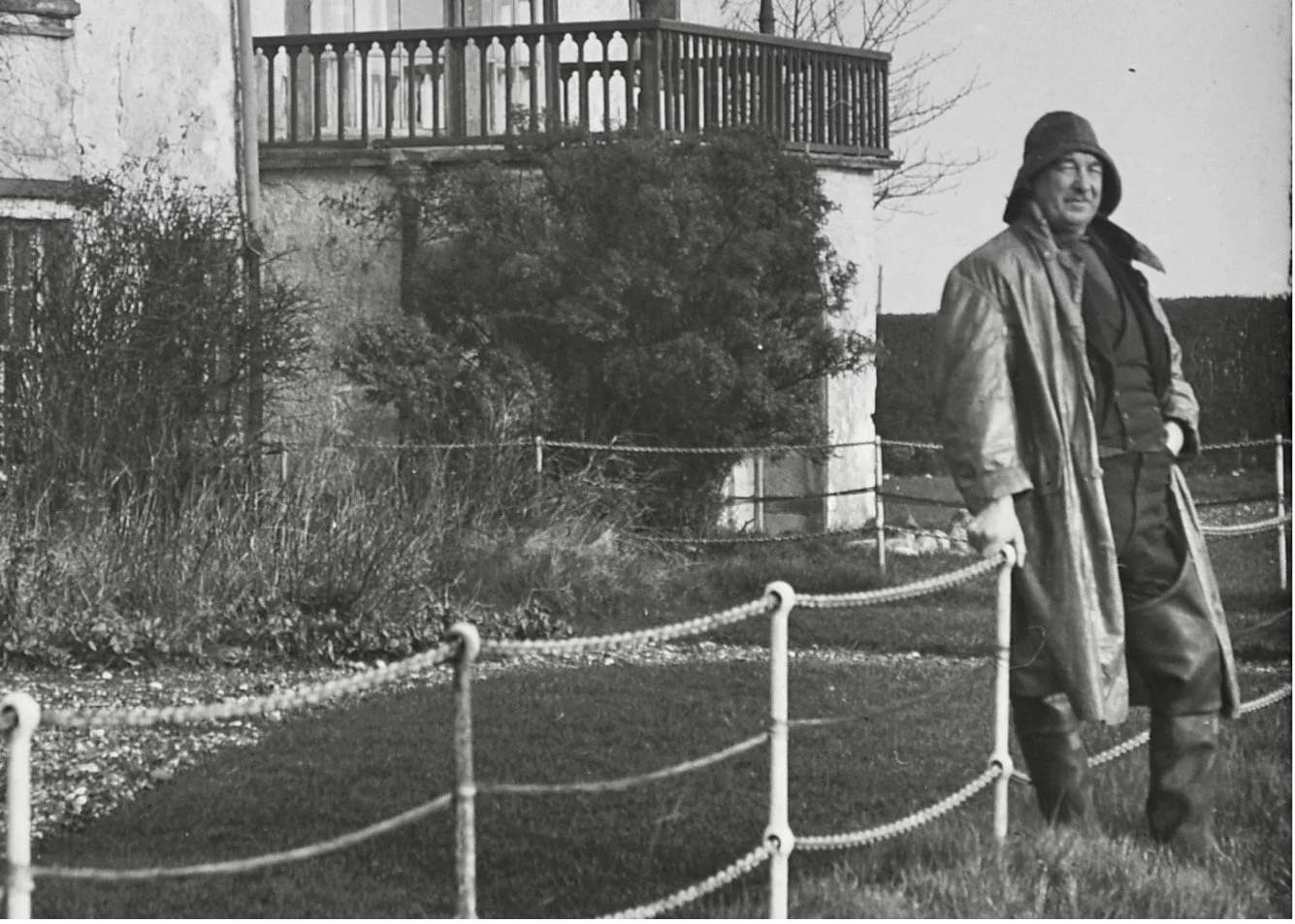
James W Gardner by the old hall c 1935: A Sam Thompson photo, courtesy of the Lancashire Archives.
James W Gardner was the eldest son of Richard and Ann Gardner, who first came to the Point in the jubilee year of 1887. He spent a large part of his life in the village and was Harbourmaster at Glasson Dock.
He produced a nearly complete list of all the houses with comments on who lived where and many amusing anecdotes.
Again, we need to decipher, as James knew the houses by the local names. We were never imaginative about naming houses. There have been several Marine Cottages, three Little Houses, two End Houses, a Large house, a Big house and so on.
James remembers people from the 1890s up to the 1950s.
End house (is number 8). James tells us Robert Kirkham owned it, then William Townley, who let the house furnished, and that Canon Boncy and family were regular visitors. James writes, ‘I had my first bicycle given to me by Canon Boncy, and I used to go to Lancaster to fetch water for them, as the doctor wouldn't allow them to drink the water available at Sunderland Point.’
Cottage, Pollits (is number 10). James says Bought by James Spencer, pilot, who was a short, stiff man with a face like the rising sun. He was a cantankerous, short-tempered man.
The Cottage in the Field (is the old Customs House, number 3A). James tells us it was used by the coachmen for the Moorings, and ‘A second coachman was appointed; his name was Dick Smith, and he came from Blackpool. Smith was very handy with his tongue—a real yarn spinner and an inveterate prevaricator.
In the Summer House (number 5 in the Lane), James says, ‘An old chap from Liverpool, an ex-horse cab driver on the docks there, came to live at Summer House. He had a parrot that used to shout, 'We, whoa the wagon, Polly wants a ride'. We think this is William Hall, listed in the Summer House in 1891.
The Spreadsheet
We are grateful for the research of Beth Hampson, which provides much useful material in her books. Thanks also to the descendants of SP families and to current residents who sent us family trees and lent us copies of legal documents and title deeds. Special thanks go to Kris Needham, who unravelled the Dickinson family, understood the story of the Kellet/Gardner families, and found William Hall. Kris also provided astute guidance on the enumerator's route.
We are especially grateful to Ann Hatton, who created the Excel spreadsheet, entered much of the information, and researched families. Inevitably, there were several versions, and in the final stages, Ann checked for errors both of fact and grammar.
Using the completed sheets, Mike Morris skillfully adjusted the entries to create a drop-down menu that allows users to select which house they want to view. The result displays who we believe inhabited the house at the time of each census since 1841. There are three tabs: the User Guide, Census Data (for the drop-down box), and New Summary, which lists only the family names by year. Go to the user guide first!
We have uploaded the Excel sheet to Google OneDrive so it can be accessed as a webpage by various platforms. It’s best looked at on a desktop or tablet. It works on a mobile phone, but it’s unhappy there.
We encourage comments and will value mistakes spotted so they can be corrected.
For those unfamiliar with the houses in the village, here is a guide with modern-day house numbers and some of the names used in the past.
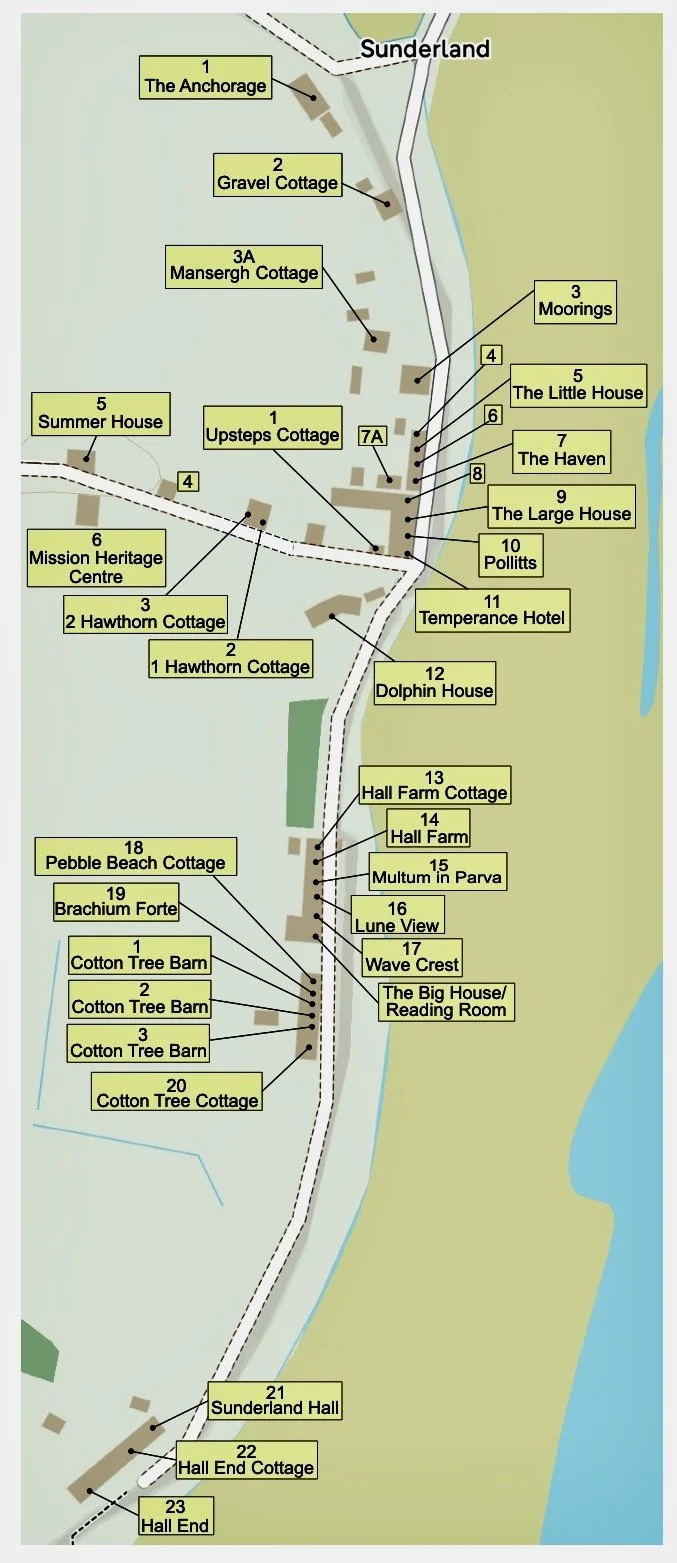
Map drawn and annotated by Paul Hatton
Note for your diary: the artist Chris Macauley will be presenting an exhibition of paintings of the surrounding area, inspired by the artists Philip T. Gilchrist and William Page Atkinson Wells, at the Sunderland Point Heritage Centre from 13 June to 28 June 2026.
We have improved the Gallery of William Wells paintings. It’s worth a look.