Moby Dick
aka Ryelands
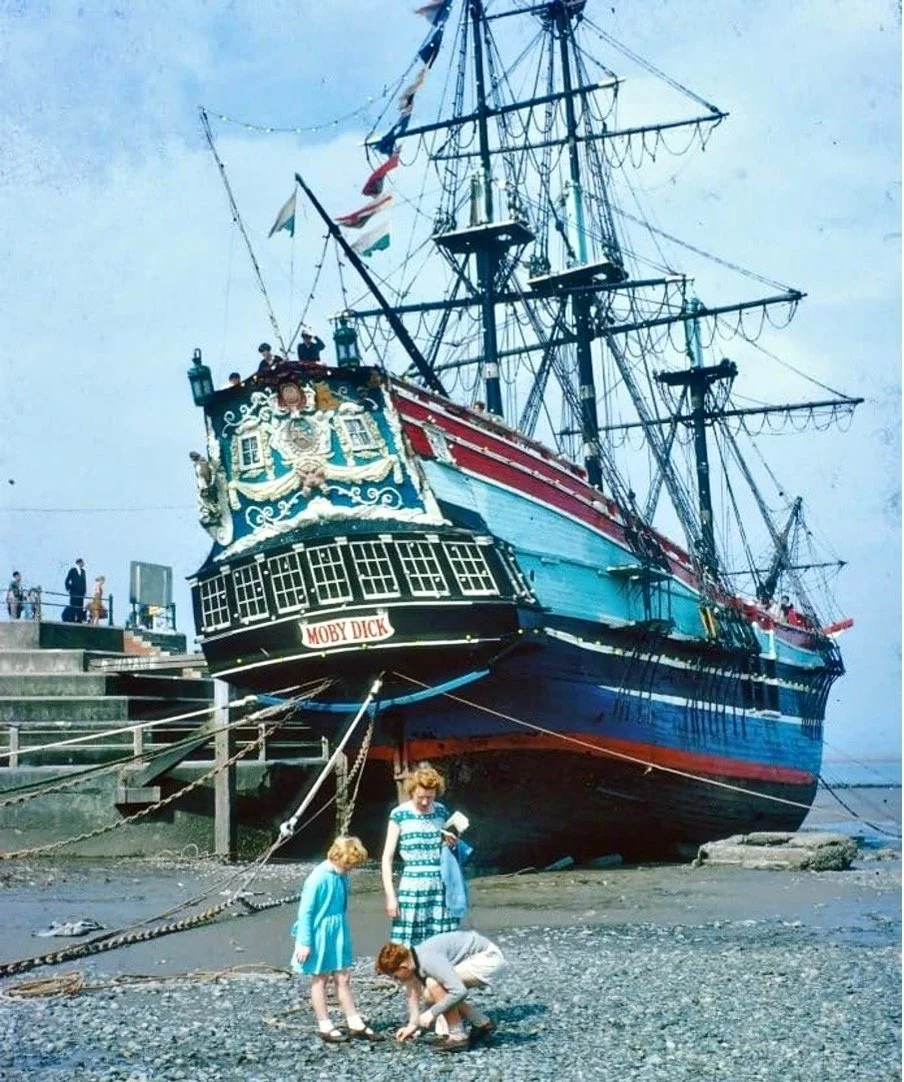
The Moby Dick moored at Morecambe Old Jetty in the 1960s: Lancaster City Museums.
‘Disastrous Day of Fire’
(Headline in the Morecambe Visitor)
On Wednesday, 17th June 1970, devastating fires swept through two of Morecambe's key tourist attractions. The first, noticed by a box office attendant who raised the alarm, was at the Alhambra Theatre. Soon after, smoke and flames appeared from the Moby Dick.
The fire brigade arrived swiftly at the scene, but the severity of the fires at two locations required additional support. Over 20 fire appliances and 100 fire officers from as far as Preston, Blackpool, Kirkby Lonsdale, and the West Riding of Yorkshire were called to the infernos.
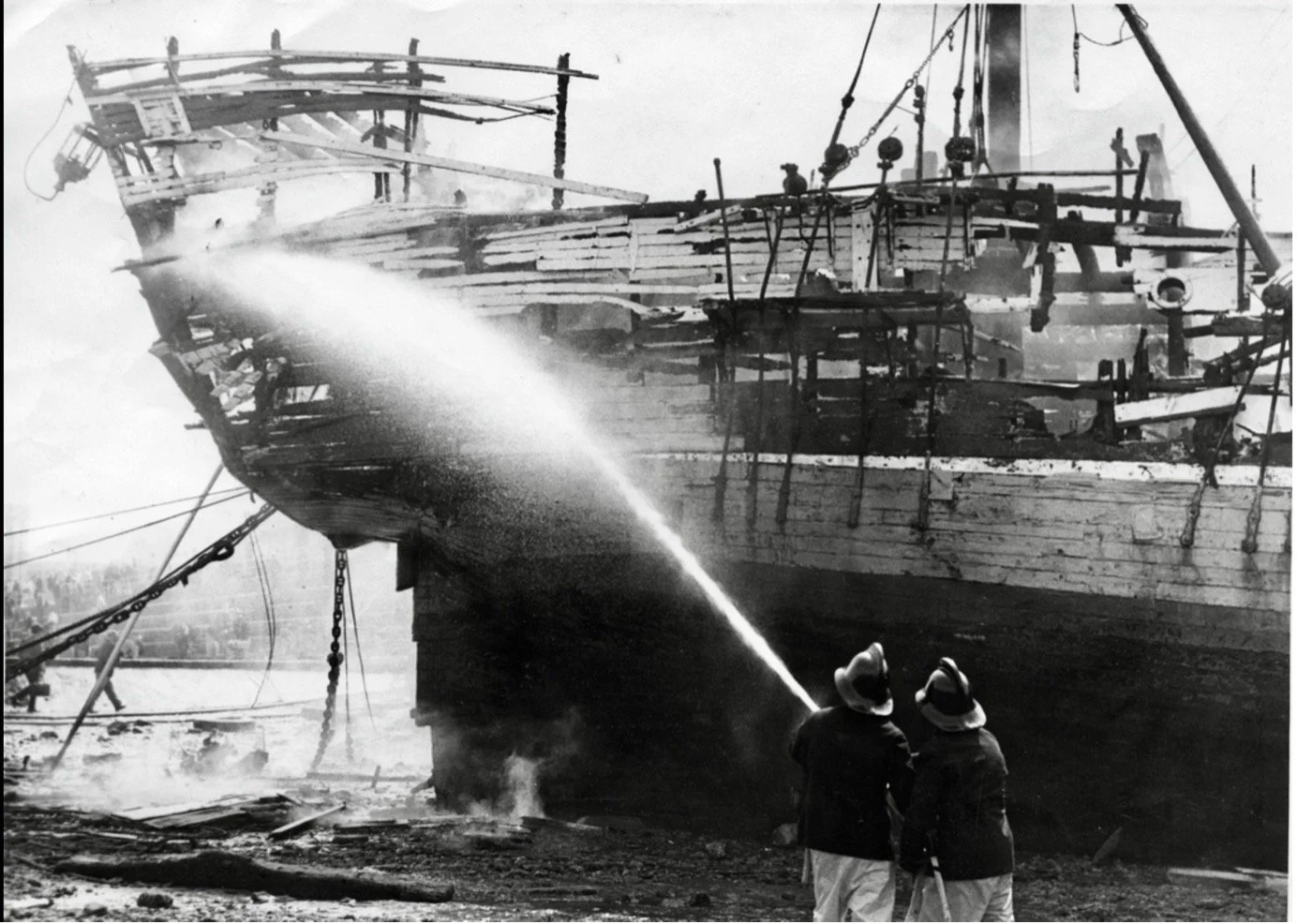
Fire Crews at the Ship: Morecambe Visitor June 24th 1970
On a day when a Miss Great Britain beauty contest was scheduled to be held at the Super Swimming Stadium, the air was filled with the acrid smell of burning and billowing smoke.
A day-long battle with blazes finally ended with the fires extinguished. After an extensive inquiry, arson was ruled out, but no definite cause for the fire was found.
The Alhambra was reduced to a shell, and the Moby Dick was destroyed.
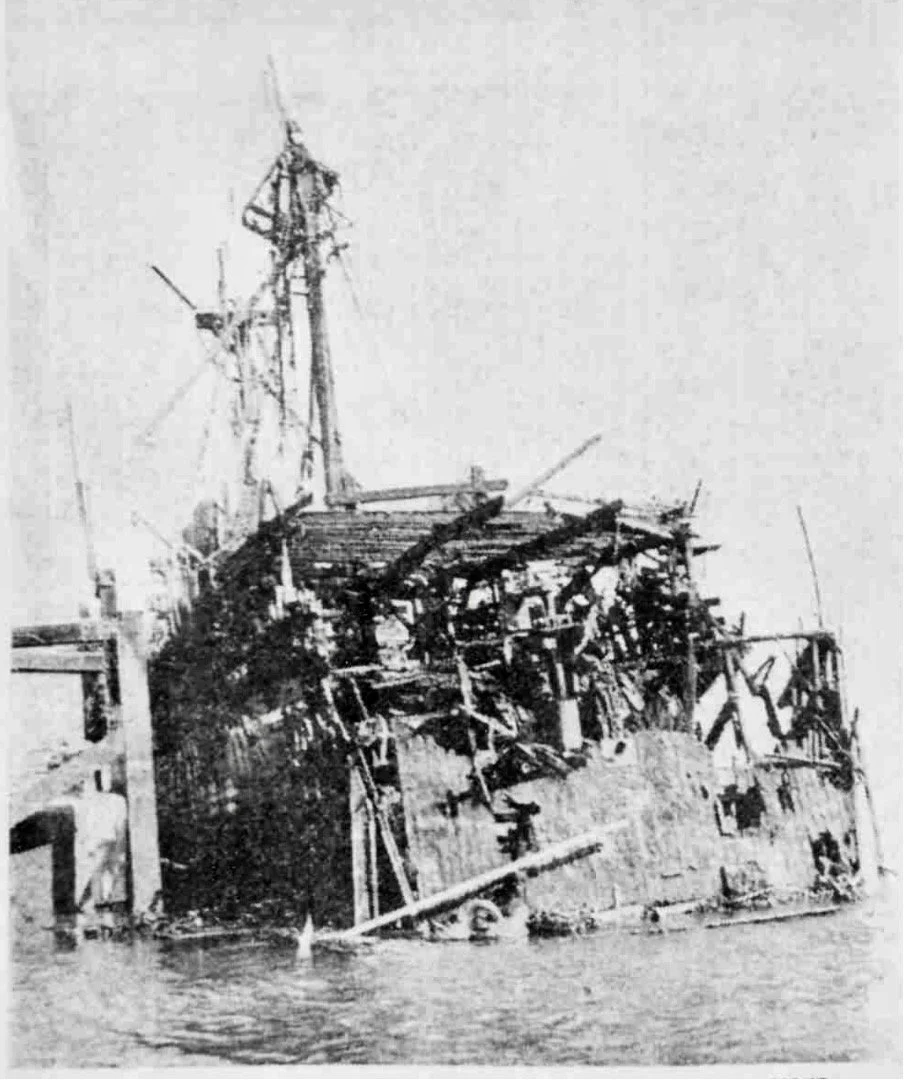
The wreck of the Moby Dick, Morecambe Visitor, June 24th, 1970
A Local Celebrity
Since its arrival in Morecambe in 1962, hundreds of thousands of holidaymakers had visited the ship, making it one of the top attractions in the town.
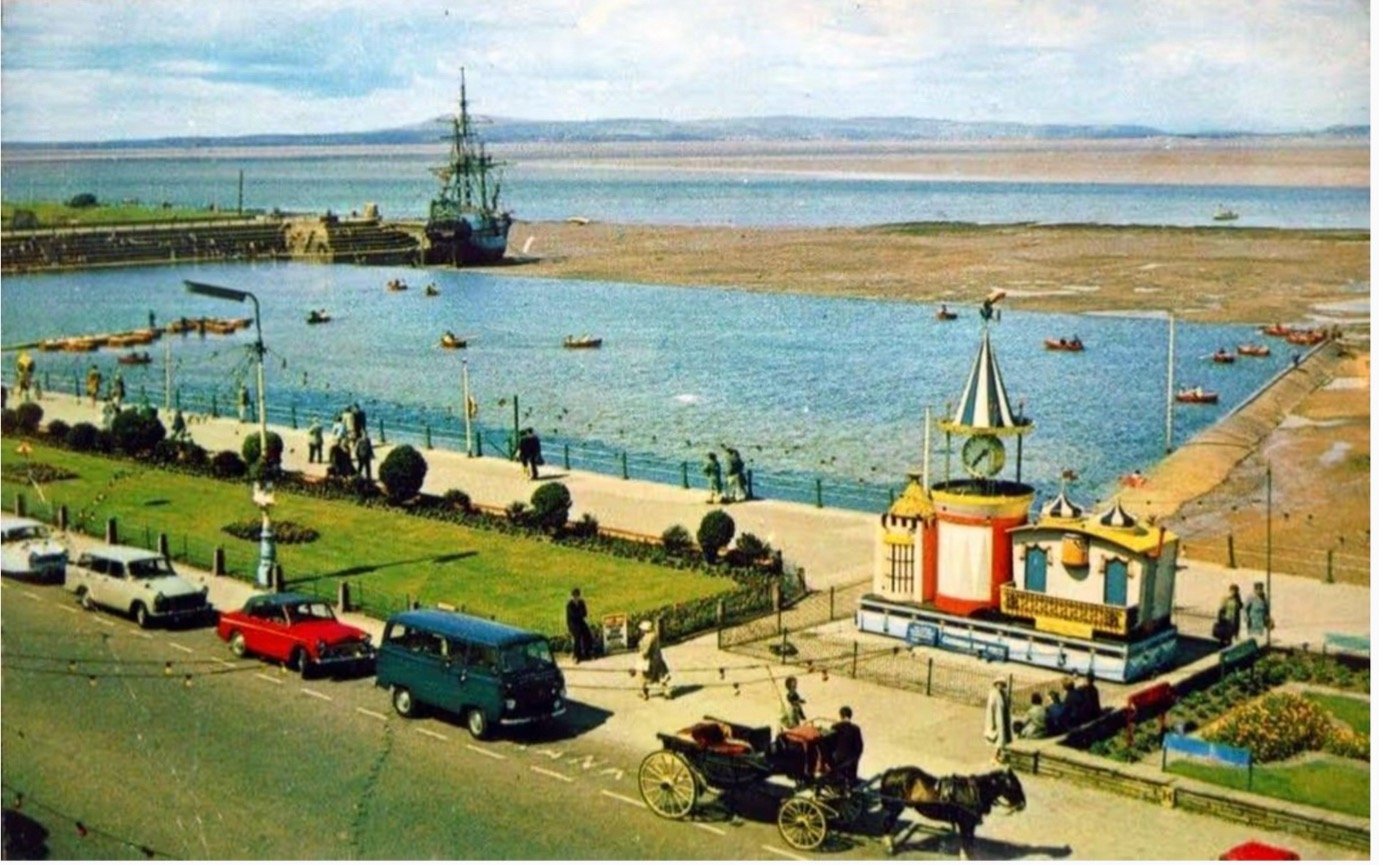
The Moby Dick in Morecambe, 1960s, the much-loved Guinness Clock in the foreground: Source internet
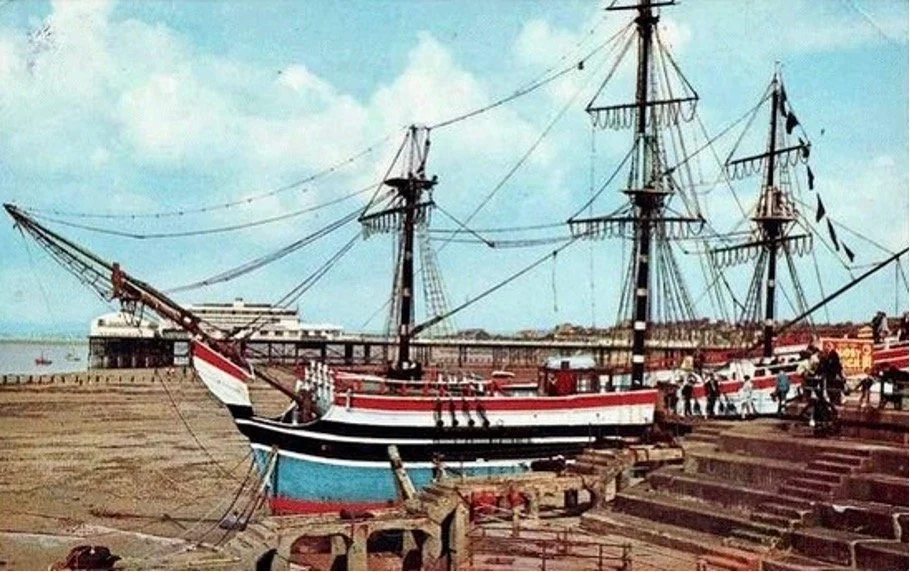
Moby Dick at the Old Jetty, with the West End Pier, behind, 1960s: Source Internet.
In its day, it was a (sort of) top Hollywood star and appeared in several box-office hits, playing the Hispaniola in ‘Treasure Island’ and the Pequod in ‘Moby Dick.
This is a biography of the boat and (the question you have been asking) its connection to Sunderland Point.
The beginning – Glasson Dock
In the jubilee year of 1887, the three-masted schooner Ryelands was launched at Glasson Dock. The keel had been laid almost exactly two years earlier, in the boatyard of Nicolson and Marsh, a small but experienced company.
The launch was not promising. The signs were ominous. (Extracts from Lancaster Gazette, 15 January 1887)
The weather was terrible. Reports say that it was very cold with a strong gale blowing, and that those who braved the conditions were ‘feeling anxious about the success of the operation’.
The Gazette then says:
‘The builders, however, had confidence in their vessel. And preparations for the launch went on as though it was one of the calmest days in summer instead of being one of the wildest in winter.’
Then, around ten minutes past midday, word was given to remove the last supports, and the ship glided gracefully into the water, ‘amid the hurrahs of the spectators on the pier and those who were on board her.’
Miss Lily Smith, the young daughter of William Smith, a Lancaster corn merchant, named her Ryelands. (Believed to refer to the area in Lancaster called Ryelands). And then:
‘The traditional bottle of wine used at the christening of a vessel was suspended over the bow by a red silk ribbon, and the moment the Rylands began to move, the bottle was hurled at her and struck the bow, but the juvenile hands failed to send it with sufficient force to break it.’
A sailor from the ship grabbed the bottle and tried to break it, but he failed, and it slipped from his hand. The bottle remained unbroken, and one of the bystanders picked it up and threw it into the water after the vessel.
An ill omen fell upon the ship (but fortunately not taking effect until June 1970).
The Ryelands was registered to James Helme of Church Street, Lancaster, one of a consortium of owners that included William Smith and the master of the vessel, William G. Marrow, of Connah's Quay (on the River Dee, Flintshire, near Chester).
This was the last days for all-wooden sailing boats, as steel hulls and steam power were gaining ascendancy. The Ryelands measured 102 feet long, 23 feet wide, and had a depth of nearly 11 feet. I would take a full load of 220 tons.
It was a low-cost workhorse, built for bulk trade along the country’s coast.
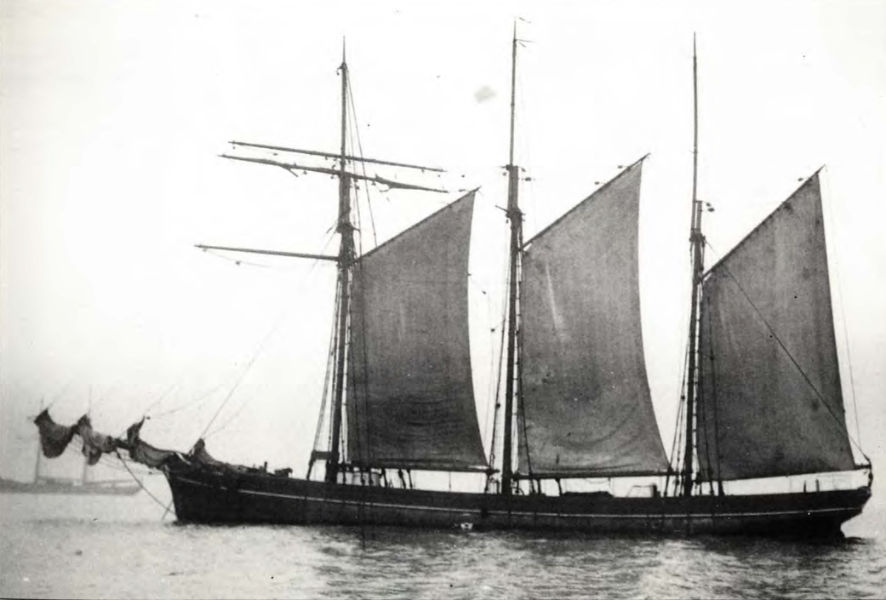
The Ryelands, a later photograph, c1920s: Courtesy of the Gardner family
The Dinner after the Launch
After the launch, a celebratory dinner was held for a few friends and the owners at the Pier Hotel. The Gazette reports the toasts and speeches at length.
In his toast celebrating the Ryelands' success, Mr T. Ball remarked that the unbroken wine bottle was in fact a good omen. This was because he was a teetotaller, and he had recently learned the Ship’s master was also an abstainer, as was one of the shareholders and leading civic figure, Robert Mansergh.
Robert Mansergh is well known to us. In 1887, he had just acquired the parcel of land at Sunderland Point, around where the Old Customs House stands, and would soon commence construction of the Moorings, the large red-brick house.
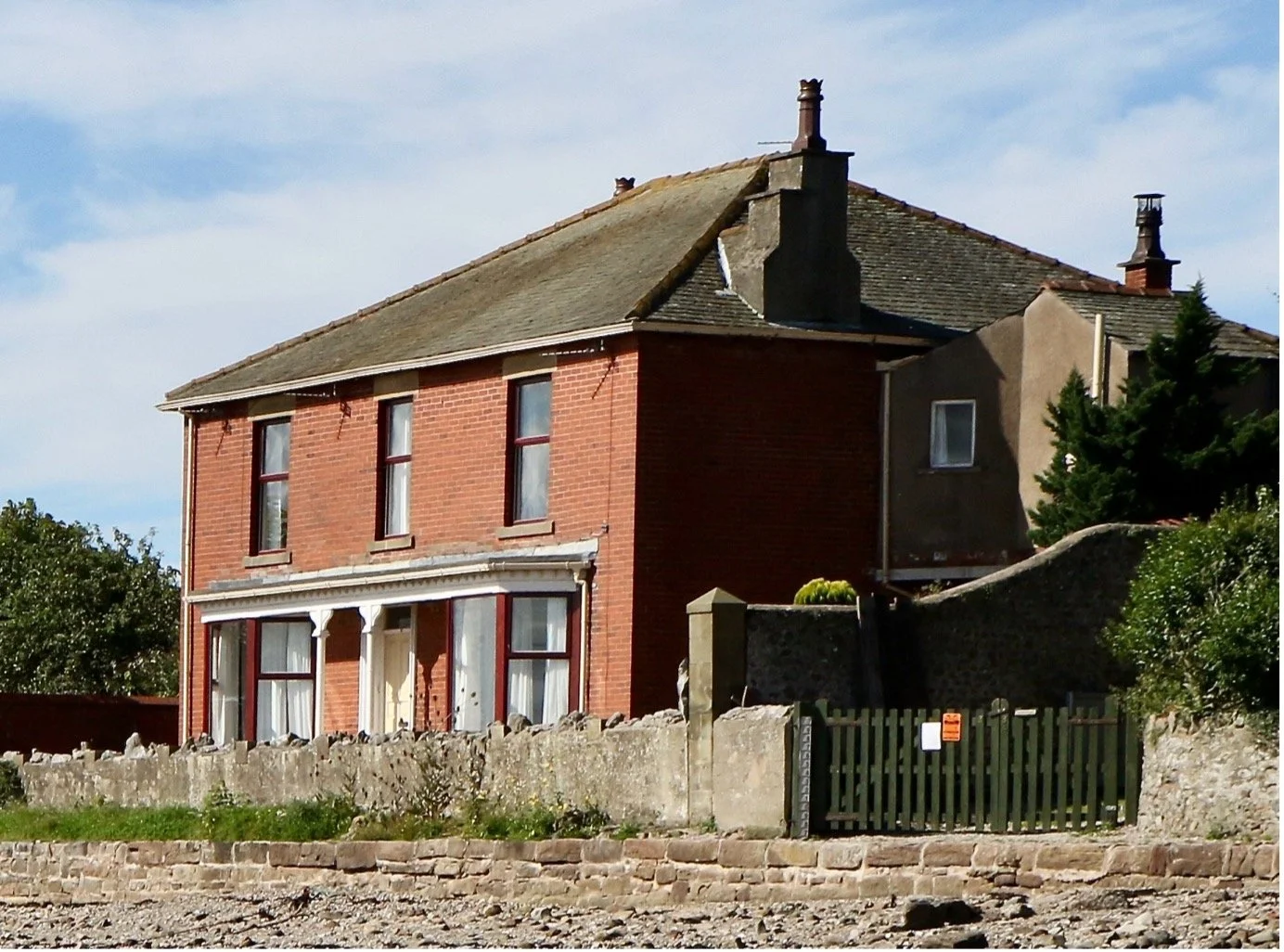
A much later image of The Moorings (number 3 First Terrace): An Alan Smith photograph.
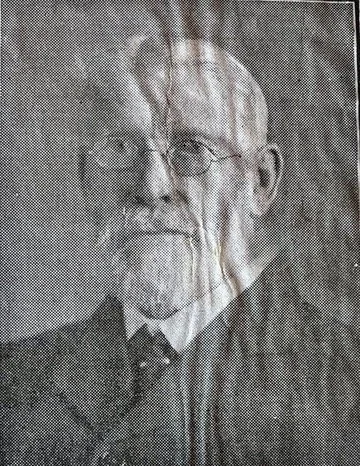
Robert Mansergh c1890: Courtesy Rosemary Lawn
When it was his turn to speak, Robert, in a typically robust manner, aimed barbed arrows at the Lancaster Port Commissioners, criticising them for not being present and their lack of investment in port facilities. He gave as examples the need for new lighters and a more powerful tug boat. He was emphatic on their failure to dredge the river, to keep it open for larger ships.
‘They have in the Lune a good river and good water, but what is wanted was a good channel to Lancaster.’
At Sea
It appears the Ryelands set out on its maiden voyage on the same day as the launch.
It remained registered in Lancaster, but the ship docked at most ports across the country, typically carrying loads of coal, wood, tar, and cement. It occasionally made trips abroad to Antwerp, Hamburg, and Drammen (in Norway).
James Helme continued as owner until 1905, when it was bought by the ship's master William G. Marrow. And then:
Robert Gardner
In 1929, Robert Gardner bought the Ryelands and the slightly smaller schooner, the Rambler (also built by Nicolson and Marsh), from William Marrow.
This is the main connection with Sunderland Point. Robert was born in 1888, in Upsteps Cottage, the year after Ryelands was launched, and spent his early life in the village. His father, Richard Gardner, had piloted Rylands into Lancaster in June 1896.
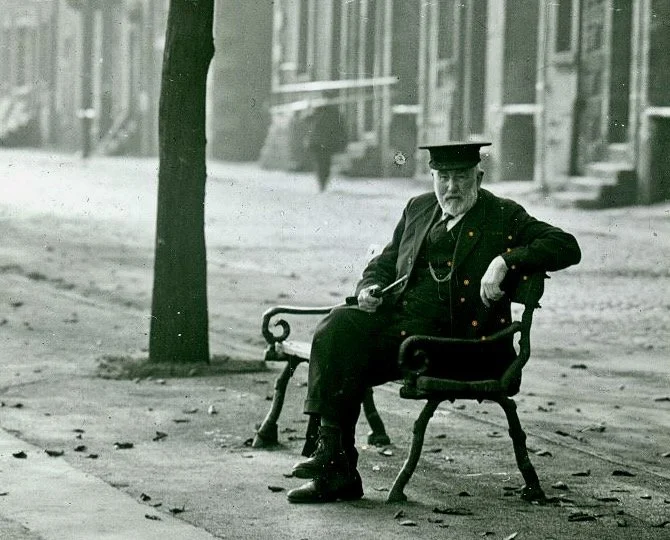
R.W.B. Gardner in later life when Harbour Master in Lancaster. A Sam Thompson photo c1935: Courtesy Lancashire Archives
Since taking over Harry Dingle’s shipbroking business in 1920, Robert had significantly expanded the business in several directions, including establishing a fleet of coasters as a shipowner. (See our article on the Anchorage and Gardner family for more on Robert)
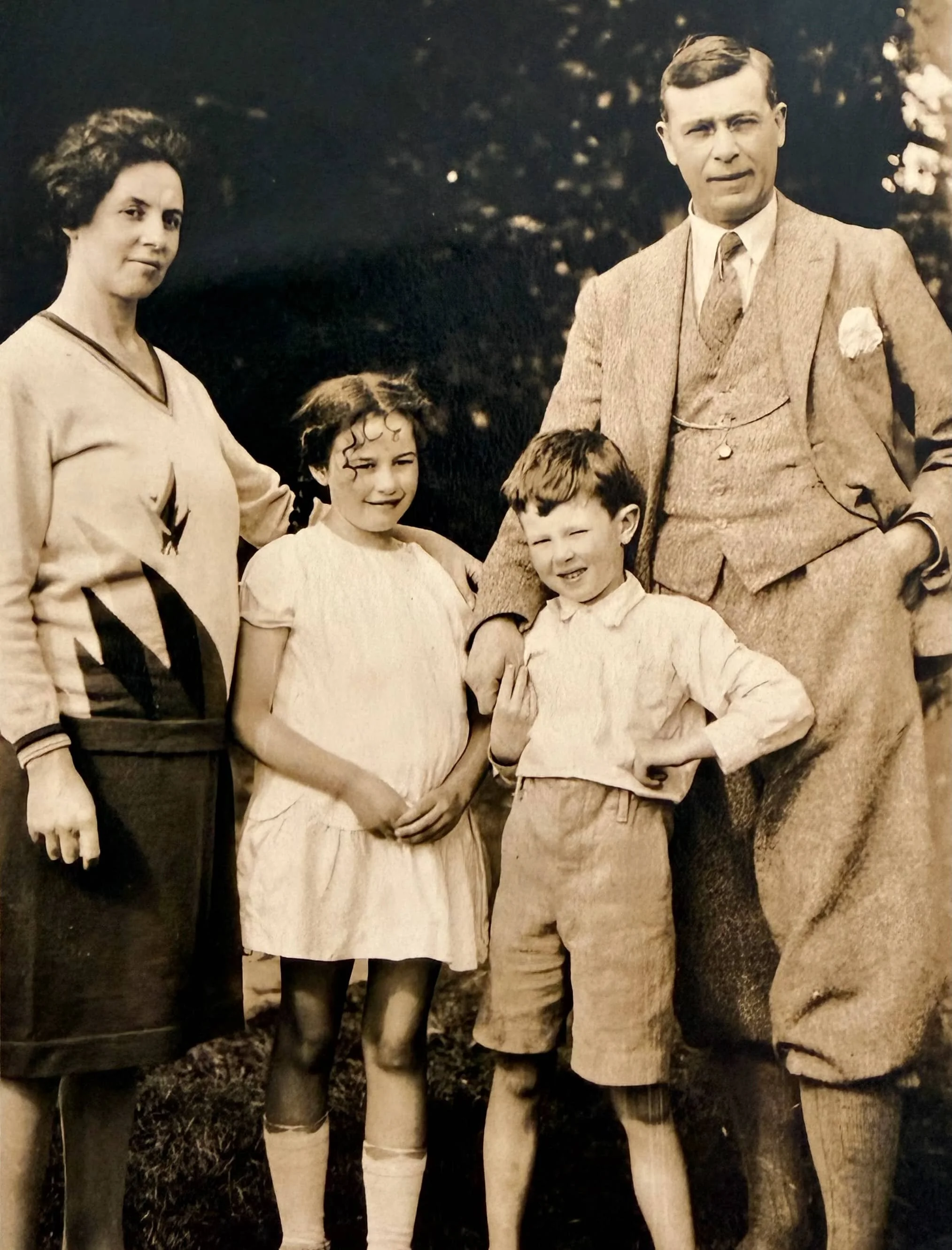
Robert in the 1930s with his wife Gertie and children Nora and Cyril: Photo courtesy the Gardner family
Recognising the imminent obsolescence of sail-powered boats, Robert immediately had an oil-fired 2-cylinder engine fitted to Ryelands. It was his third-largest ship, carrying bulk cargoes such as grain, sand, stone, and coal, mostly between west coast ports.
It was also a shrewd business move. Robert had become deeply engaged in transporting china clay (as kaolin), an essential component of linoleum, to Glasson Dock. The Ryelands had been involved in this trade under previous ownership, enabling Robert to secure a significant share of the business.
Now at its peak, James Williamson's Lune Mills was one of the country's (if not the world’s) largest producers of linoleum (‘Lino’ flooring), and Lancaster's leading employer.
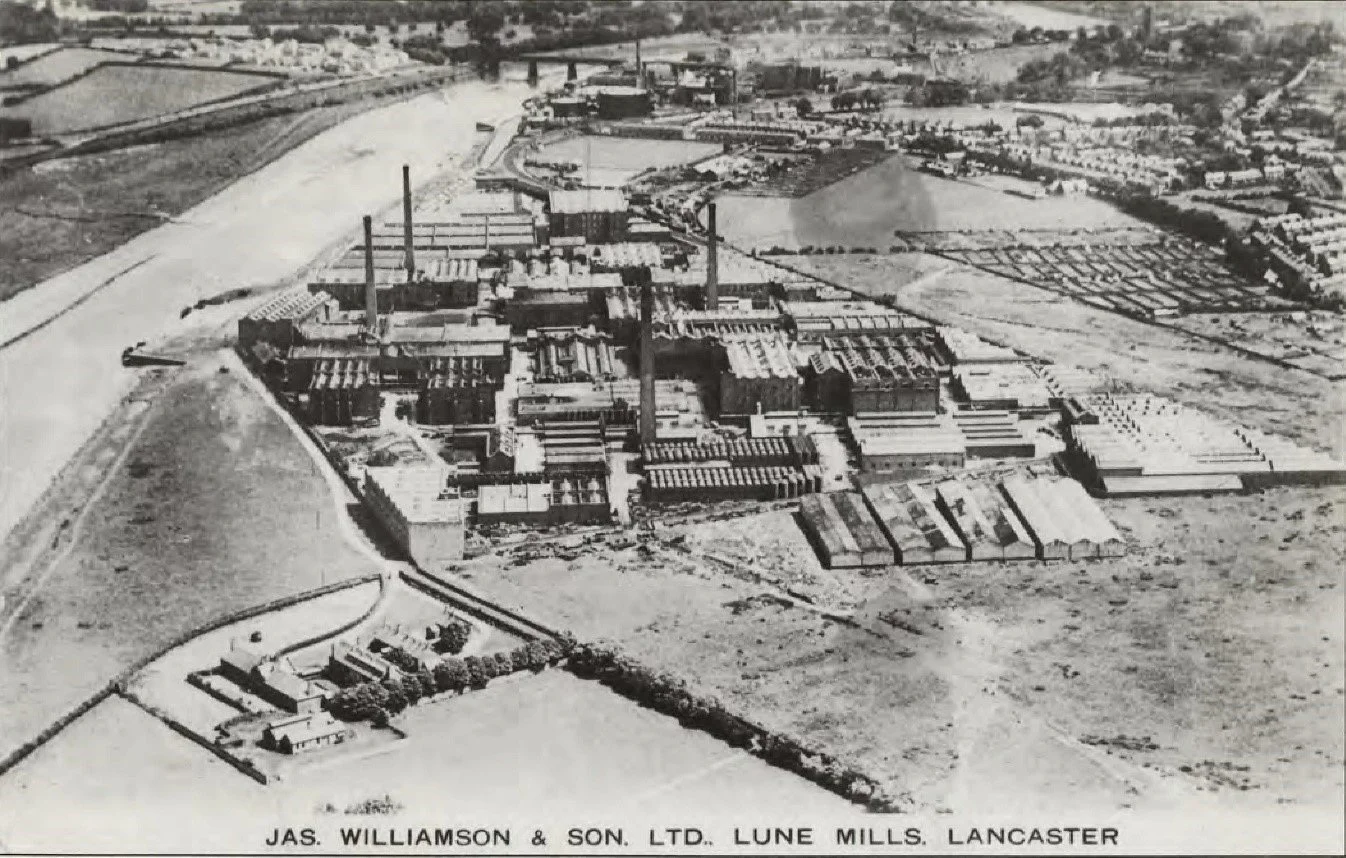
Lune Mills, Linoleum works of James Williamson, 1930s: Courtesy the Gardner family. The works are downstream of Skerton Railway Bridge, which is visible at the top of the photo.
Mined near St Austell in Cornwall, which had the country’s largest deposits, the ‘china clay’ was separated from the stone and settled into a cake of fine white powder called kaolin. After being transported to Lancaster, it was crushed and mixed with linseed oil, cork dust, resins, and pigments. This ‘cement’ was coated onto a fabric backing and dried, creating a smooth, durable white surface that made it easy to print exquisite patterns.
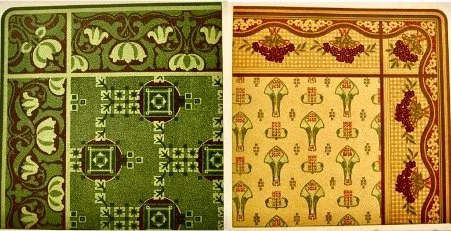
Print samples for the French market produced at Lune Mills: Courtesy of the Smithsonian Museum, USA.
Transport in large sacks by ship was cheapest, from Charlestown in Cornwall to Glasson Dock, then by the dedicated railway into Lune Mills.
Robert’s brothers, James and Thomas, who by the 1930s were qualified pilots living in the village, would have guided the Ryelands in and out of the Lune estuary.
With the decline of the trade, in 1942, the schooner was sold to Hugh Shaw, who, together with his son Kenneth, operated the ship in the general cargo trade around the Bristol Channel.
The Step into Stardom - Hispaniola
In 1948, after a long search for the right ship, RKO Studios acquired the Ryelands. After suitable modifications, it was renamed the Hispaniola and was cast as the famous ship in the highly successful Disney film ‘Treasure Island’.
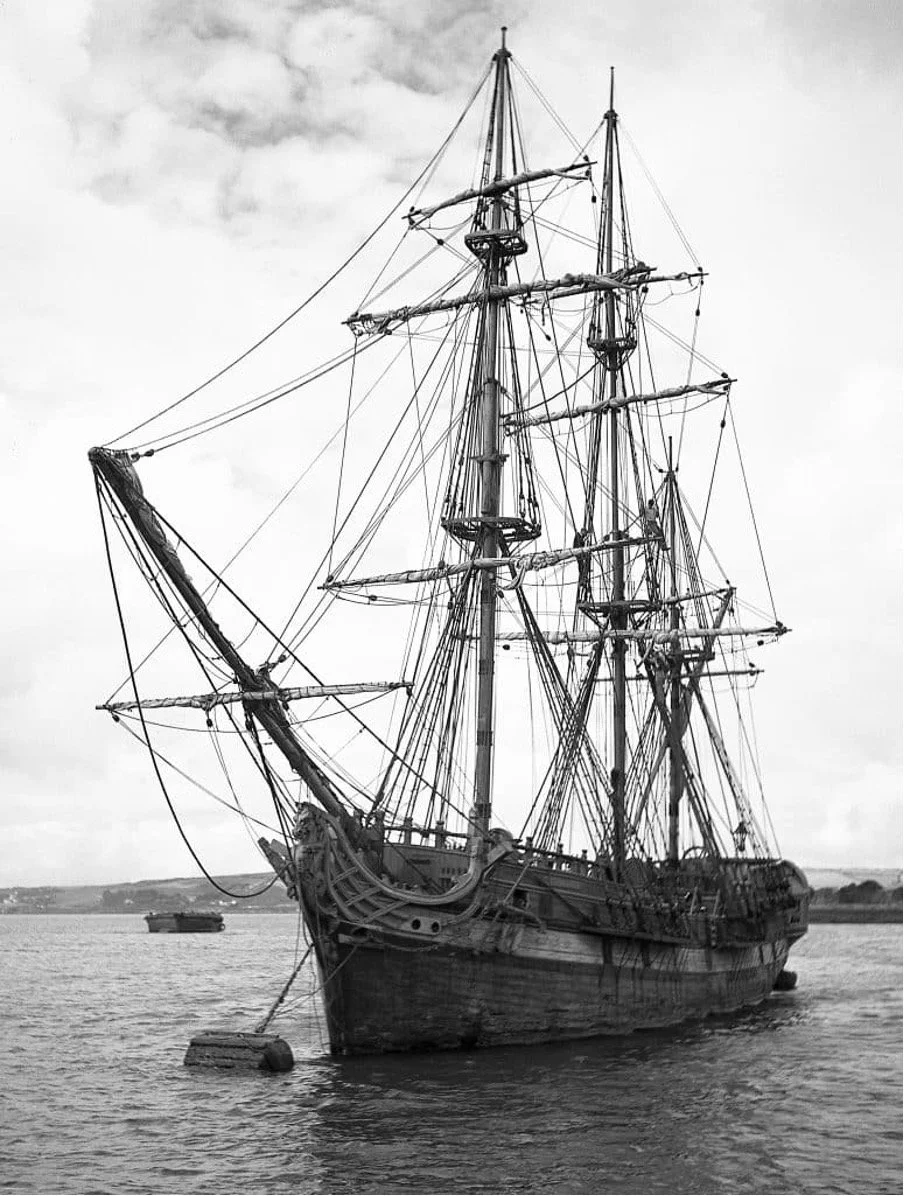
Hispaniola at anchor off Falmouth. The David Weller Collection © NMMC.
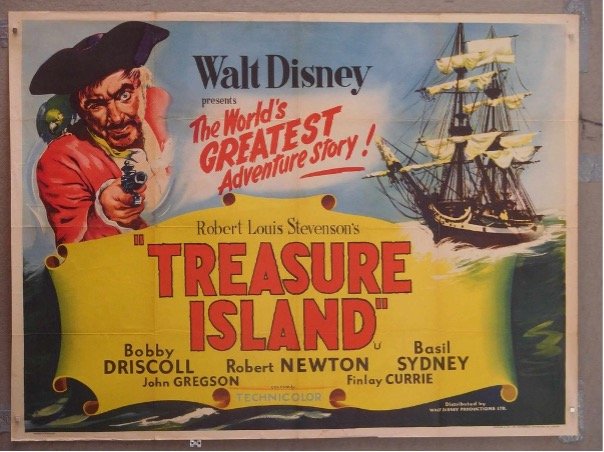
Poster for the film, including the ship: Source internet
The co-star was Robert Newton, forever remembered as Long John Silver, thereby setting the future stereotype for pirates. “Ahr, Jim Lad”
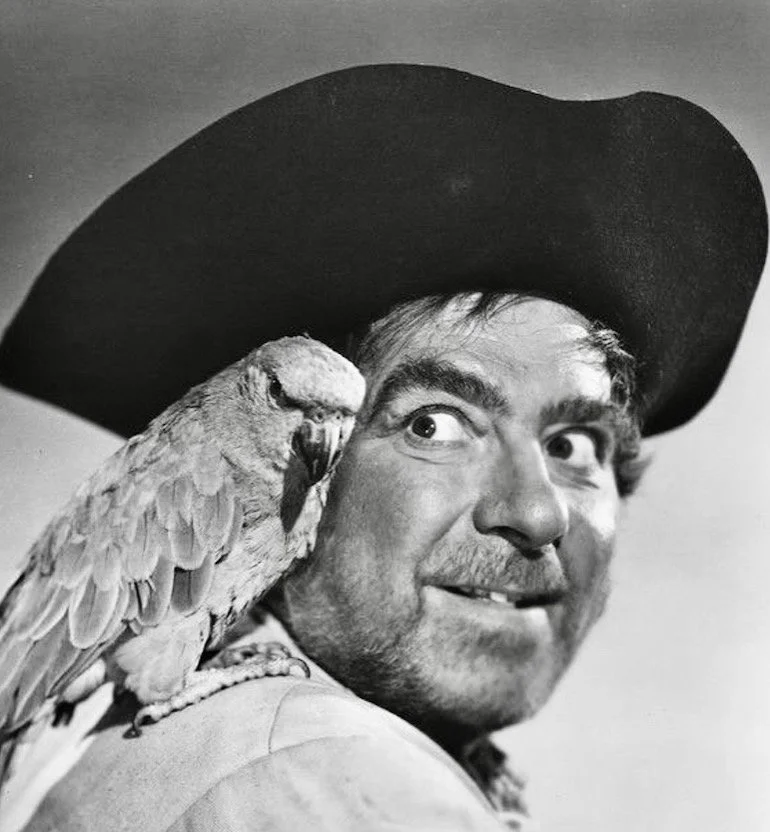
Robert Newton with ‘pieces of eight’ parrot, publicity photo for the film: source internet.
A short stay in Scarborough
In 1952, in a pause in her film career, she was sold to Scarborough Corporation, which used her as a floating aquarium (!) and tourist attraction.
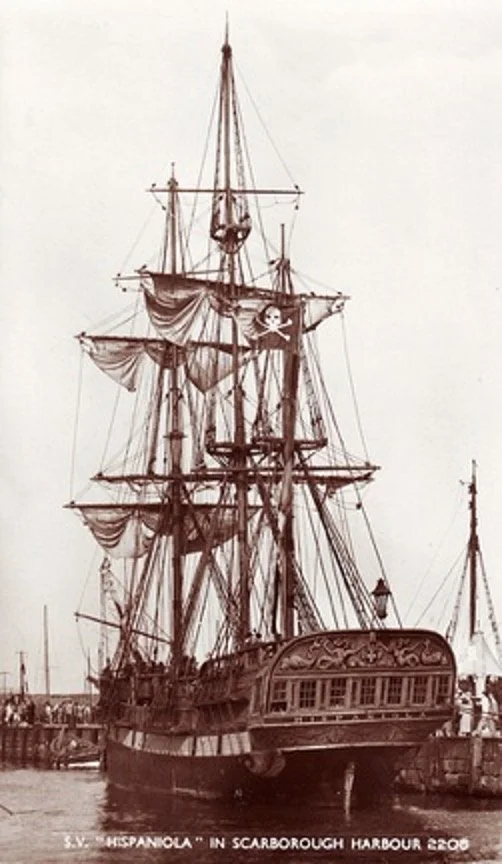
Two years later, in 1954, she returned to the limelight when she was sold to Elstree Studios for the film ‘Moby Dick’.
The Whaling Schooner Pequod

Ryelands as the Pequod: Source internet
Gregory Peck, who plays Captain Ahab, is famously memorable as the grimly determined captain of the Pequod, pursuing the great white whale Moby Dick, who, in their first encounter, had taken his left leg.
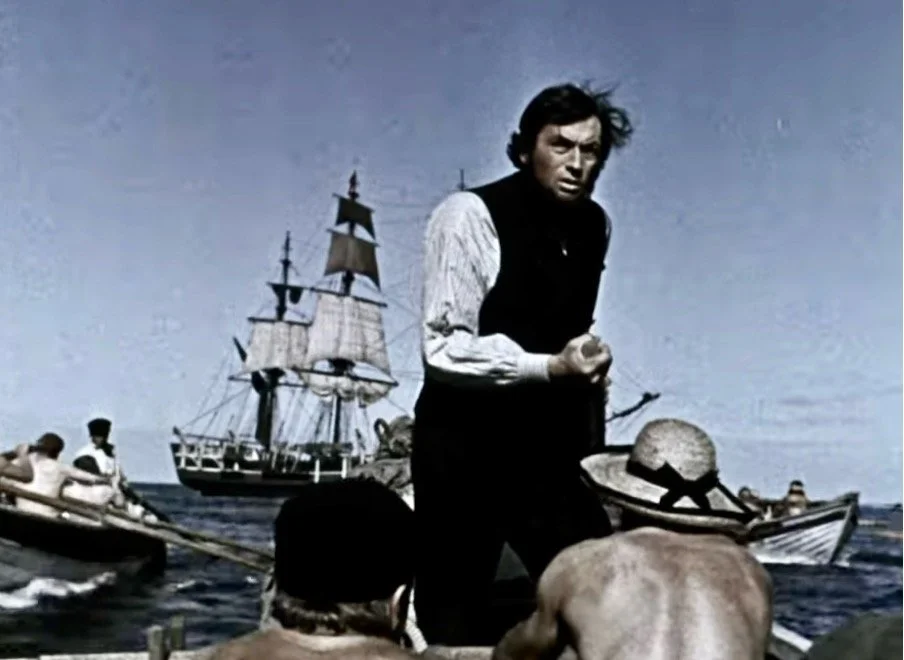
Still from the film, Gregory Peck as Captain Ahab, with Ryelands as Pequod behind: Source Internet.
Retirement in Morecambe
In 1960, after further film roles, including ‘Frenchman’s Creek’, she was sold to the Morecambe businessman Peter Latham, who returned the ship to her place of birth, Glasson Dock, for a much-needed overhaul and renamed her the Moby Dick.
Here she is after leaving Glasson Dock, after restoration, on her way downriver to Morecambe, as seen from the front of the Anchorage.
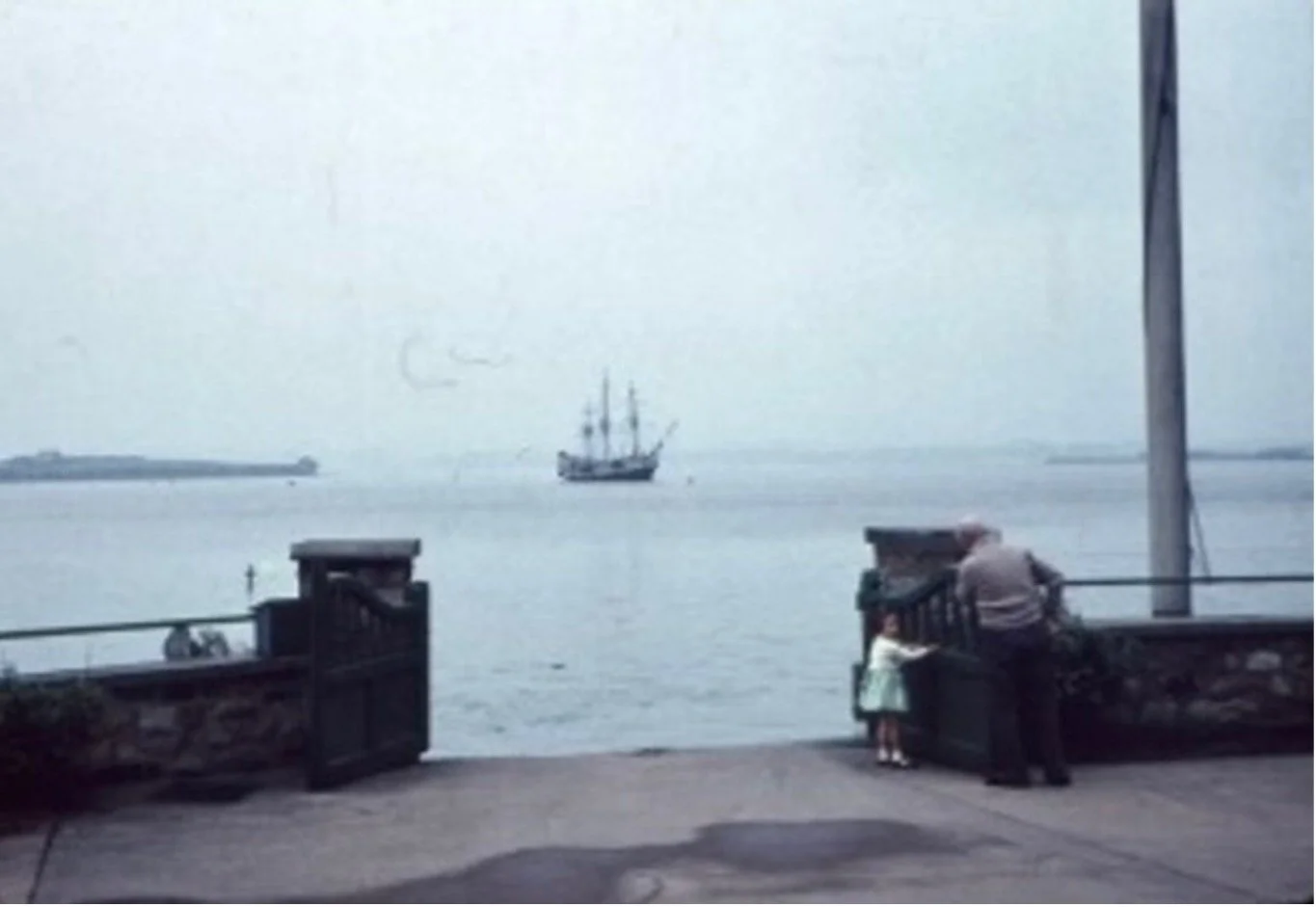
The Moby Dick from the Anchorage, watched by 4-year-old Christine Loxam with her great-uncle Albert: collection Gardner family.
Spruced up and rejuvenated, it arrived in Morecambe, where it became a well-known landmark and popular tourist attraction until that fateful day in June 1970.
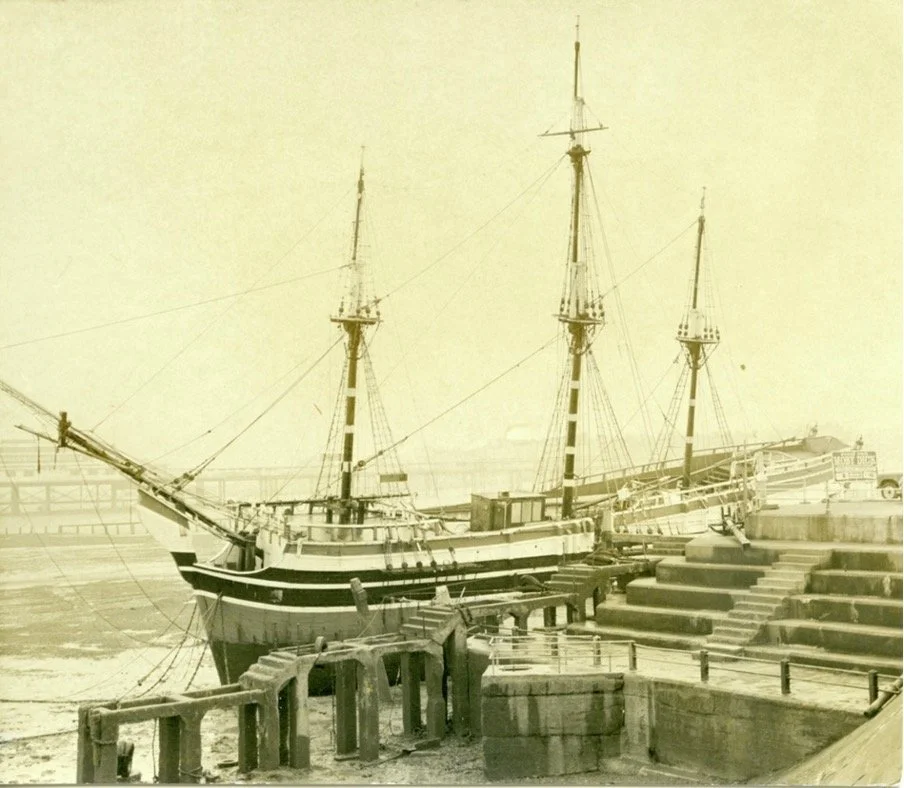
Ryelands, now Moby Dick, in the last years of her life in Morecambe: Red Rose collection of Lancashire County Council.
An Unhappy Ending
For a well-built, hardworking boat that gained international fame, it’s disappointing that its 90-year lifespan ended in flames. Several ideas were proposed for an appropriate farewell. The most favoured was to sink the hulk on top of a wrecked submarine, a relic of the Great War, marked by a special buoy, near the Morecambe Bay lightship off Fleetwood.
Unfortunately, this sound idea for a watery grave fell through, and in early 1971, she was broken up, her parts burned, and the rest taken for scrap and the waste dump.
We couldn’t end on such a sour note. We looked through the many photos John Walker took of ships passing Sunderland Point, and found this. It is almost certainly the Ryelands nearly at full sail in about 1900, just over 10 years old and in her prime.
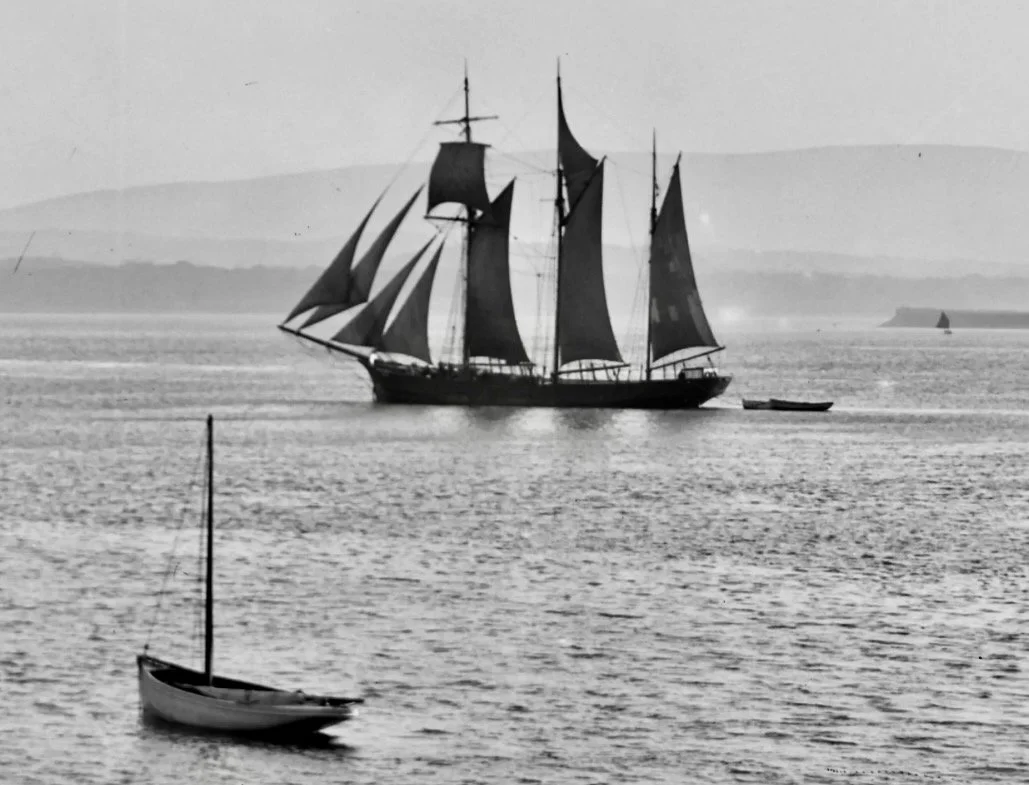
Ryelands c1900, a john Walker photo courtesy Lancaster City Museums.
Next time, the spreadsheet showing who at SP lived where at the time of the censuses from 1841 to the partial census of 1939. Probably.