‘A grand day out’
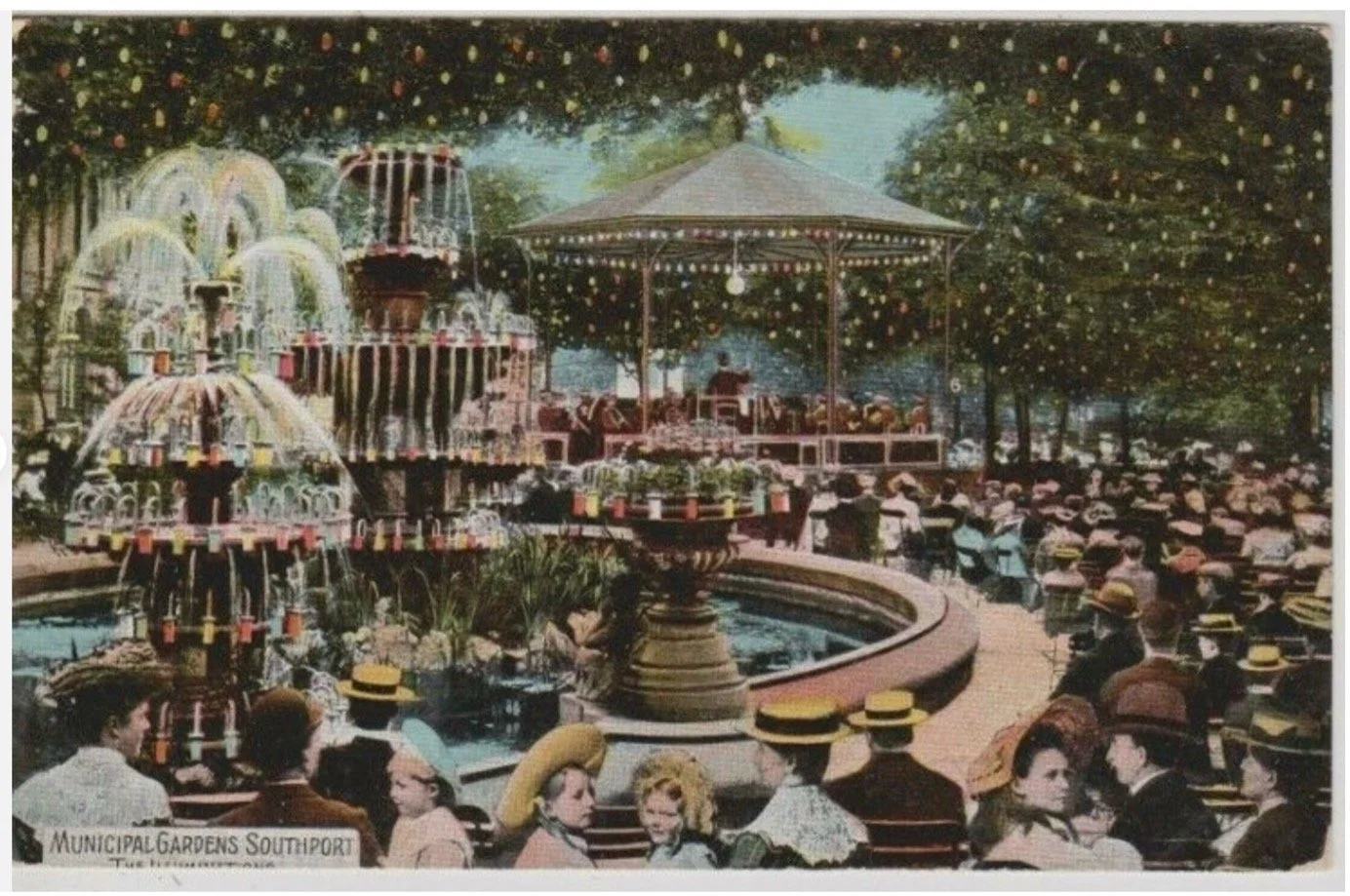
Postcard dated to the period. The Municipal Gardens in Southport, lit up with coloured lights for an evening performance on the bandstand.
A Sunday School outing
This wonderful, recently discovered photograph, dated May 1908, shows mostly teenage girls from Sunderland Point on a day trip to Southport. A copy of the photograph, printed as a postcard, was given to each girl as a keepsake of the visit.
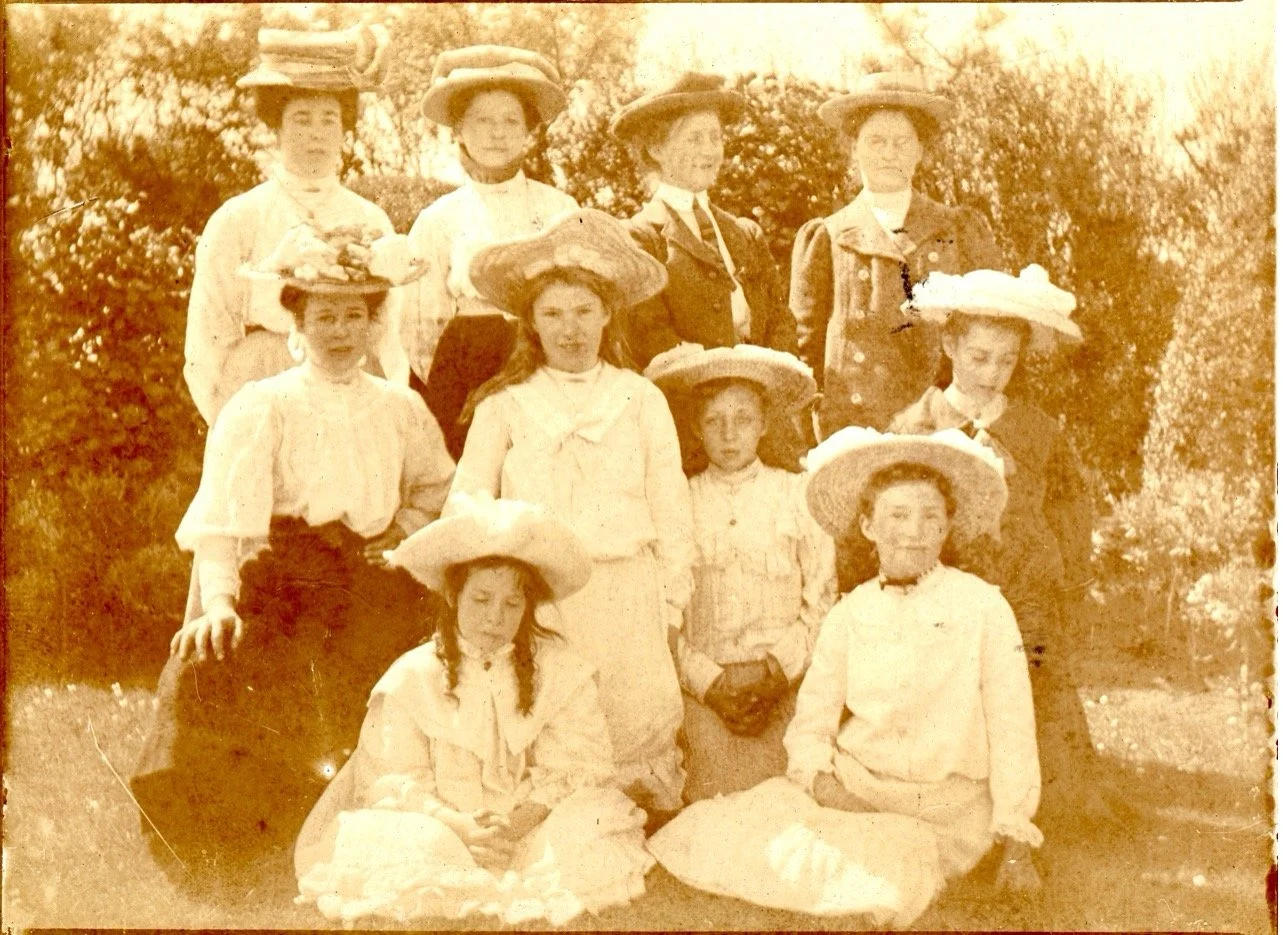
The Trip to Southport: Collection Alan Smith
It is unique - no other group images of only women from any date, not just in these years, have yet been seen. It signals that changing times have reached even Sunderland Point, with women beginning to enjoy greater independence, enter higher education and lead successful professional careers.
It is significant - all these girls are daughters of fisherfolk from backgrounds where such a visit would have been unthinkable a generation earlier. It is still surprising not to see a father or older brother taking part.
The two at the top right of the photograph are their chaperones and guides for the visit. It would seem likely that this has been organised for female members of the Mission Church Sunday School at the Point.
By astonishing luck, everyone’s name is written on the back in a sequence that lets us identify who is who.
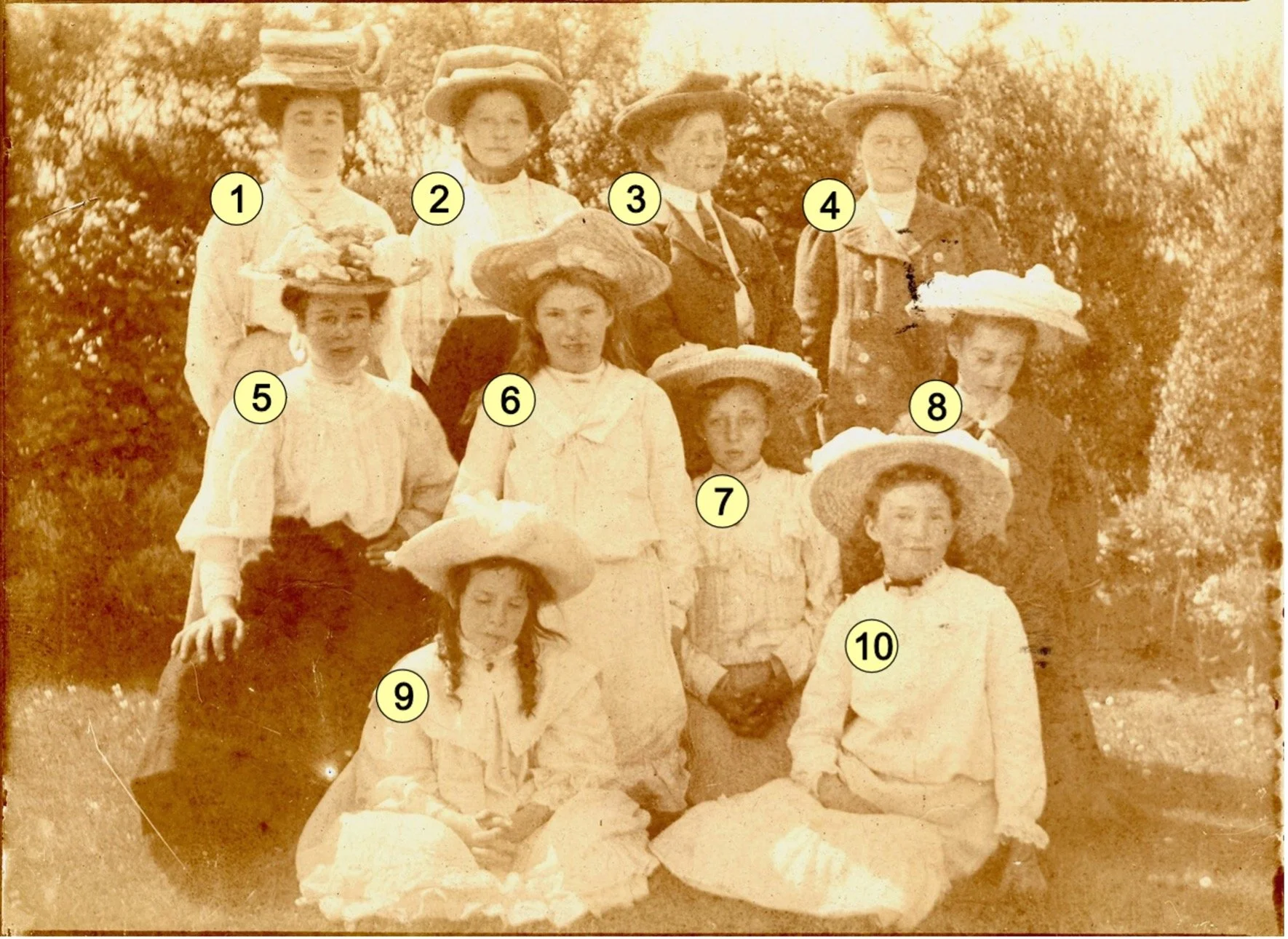
They are: 1. Eliza Gardner, 2. Floria (Florence) Spencer, 3. Ella Anderson, 4. Emily Gilchrist, 5. Bertha Gardner, 6. Jessie Townley, 7. Doris Smith, 8. Polly (Mary Ann) Gardner, 9. Emily Gardner, and 10. May Spencer.
In the photo, the older girls appear happy and confident. Of the younger ones, Emily Gardner (number 9) looks tired, and Doris Smith (number 7) seems a bit overawed. They all look smart in their Sunday best, most likely made by themselves or their mothers.
The Girls and their parents
Eliza, aged 24, Bertha, 16, Polly, 14, and Emily, 10, are all sisters. They are four of the six daughters of Richard W. B. Gardner and his wife, Ann. They also have four sons, by now well known to readers of our articles. They lived at the Big House (number 9) on First Terrace. Here are mum and dad.
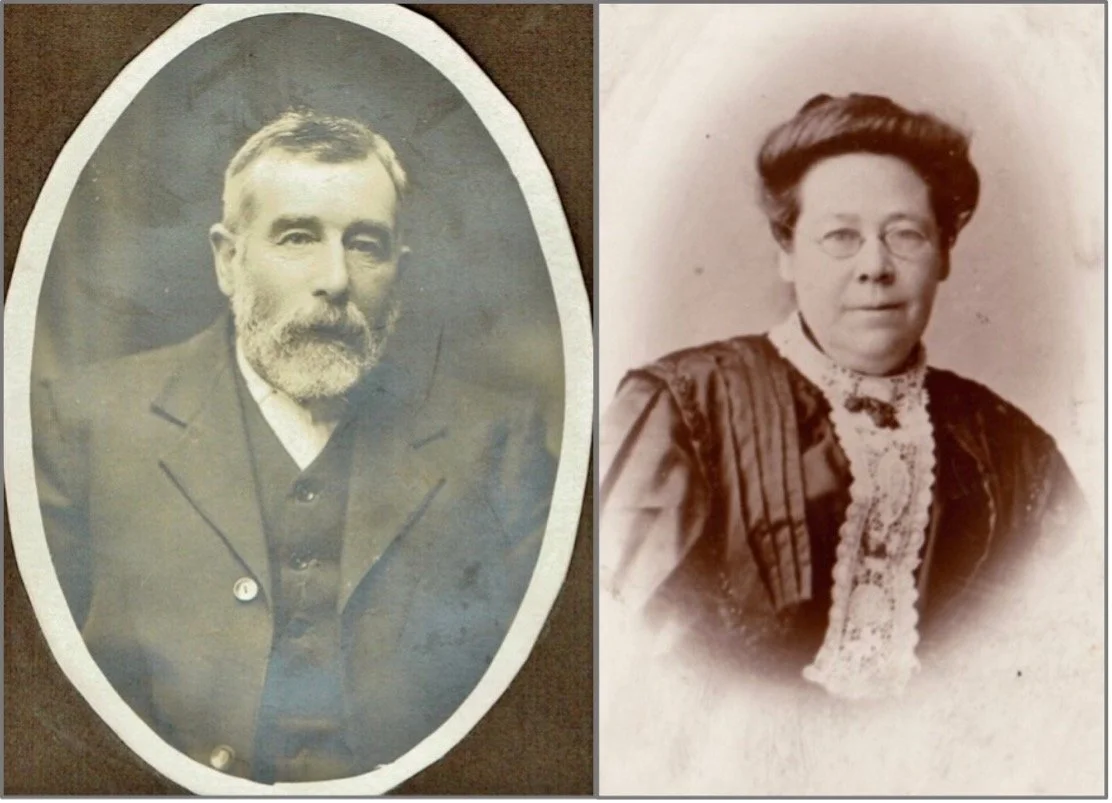
Parents Richard and Ann Gardner: Courtesy of the Gardner family
May, aged 18, and Floria, 12, are the children of Tom and Elizabeth Spencer, who lived in one of the Hawthorne semi-detached cottages in the Lane (Number 3). We see them here in the mid 1890s with three of their children. There would be six altogether.
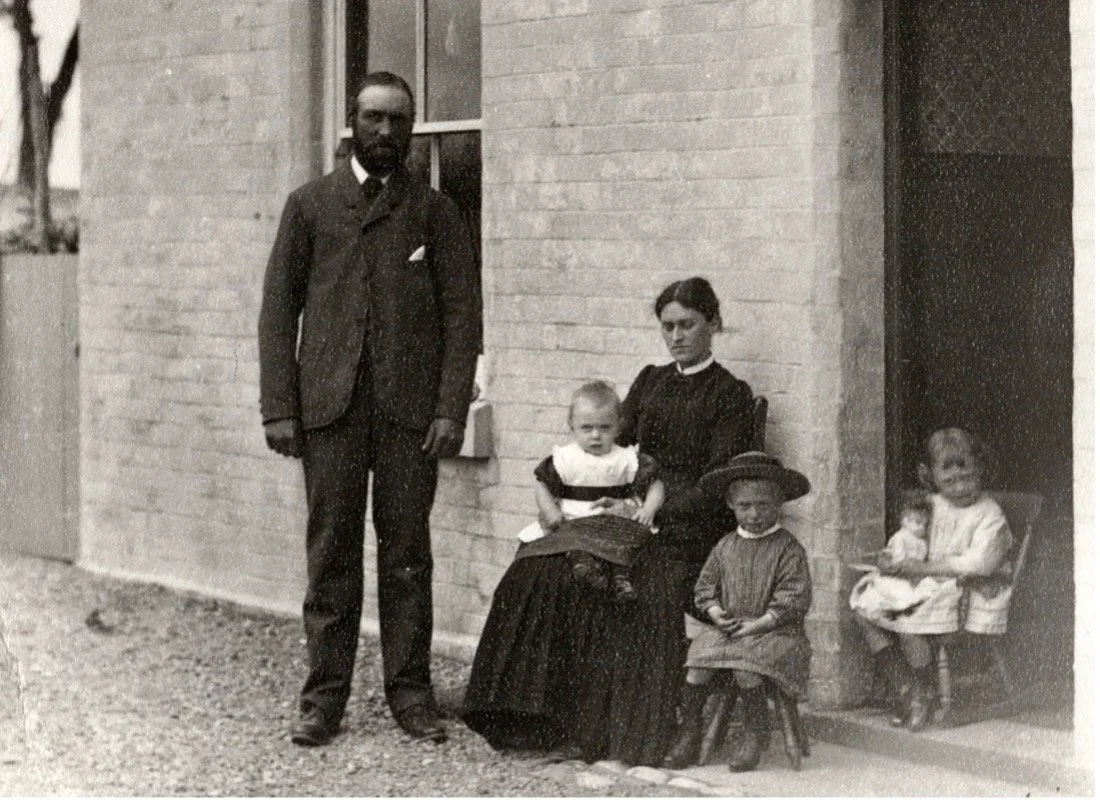
Tom and Elizabeth Spencer with family c1895: Collection Wilton Atkinson
Jessie Townley, aged 14, is the daughter of Arthur and Mary Townley, who in 1908 were living in the next house up the Lane (number 4)
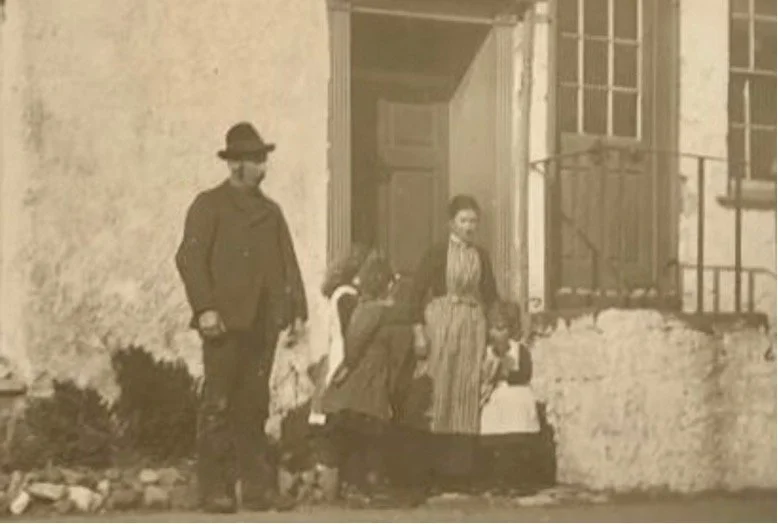
Arthur and Mary Townley with their children when living at number 16 on Second Terrace, c1895
Doris Smith, aged 11, was born in Glasson Dock but moved to the village in early childhood. She is the daughter of Thomas and Isabella Smith. They lived in Cotton Tree Cottage (number 20) on Second Terrace.
Here are her parents.
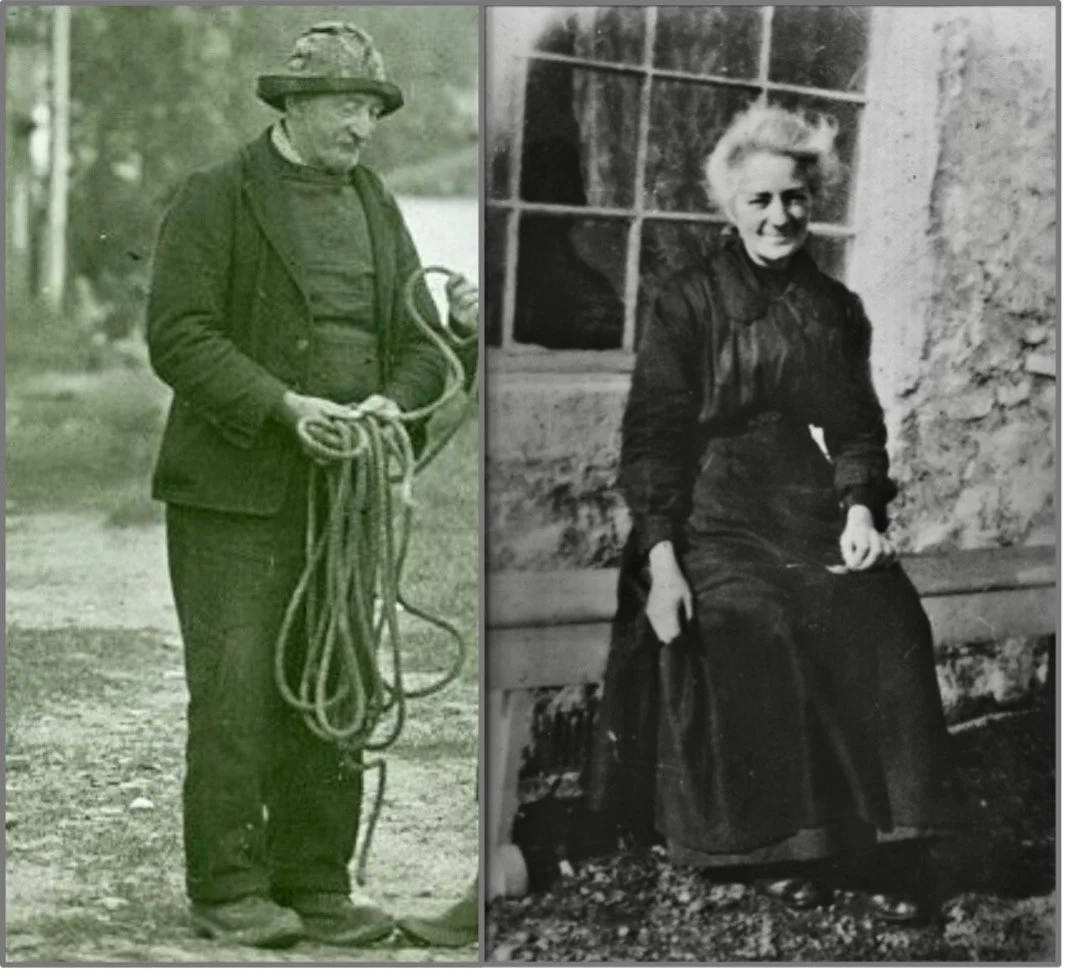
Thomas Smith, seen here with ropes and his wife Isabella: Courtesy Lancashire Archives for Thomas and Alan Smith for Isabella.
Doris Smith features in another favourite SP photograph.
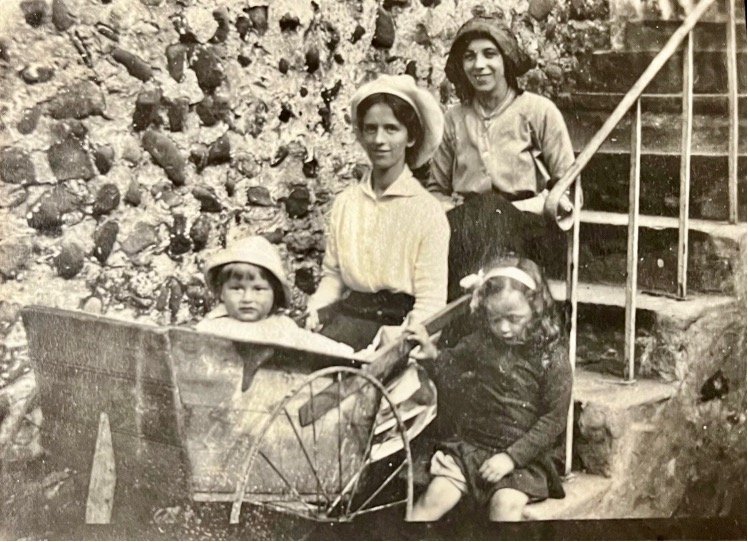
From the collection of Hugh Cunliffe
Here she is, ten years later, aged 21, in 1918, sitting on the steps of Upsteps Cottage, behind Mrs Eleanor Cunliffe and her two children. It’s local historian Hugh sitting in the pram, and his sister Barbara.
The Organiser
The trip was organised by Emily Gilchrist, aged 24, who was the youngest child of George and Helen Gilchrist. She lived in Southport but spent long summer holidays with her large family at the Old Hall. She is the sister of Anne G. Gilchrist, the nationally known folk song collector, and the highly respected painter Philip T. Gilchrist.
It is possible that the photograph was taken in the Garden of ‘Bazil Point’, the Gilchrist family home in Southport.
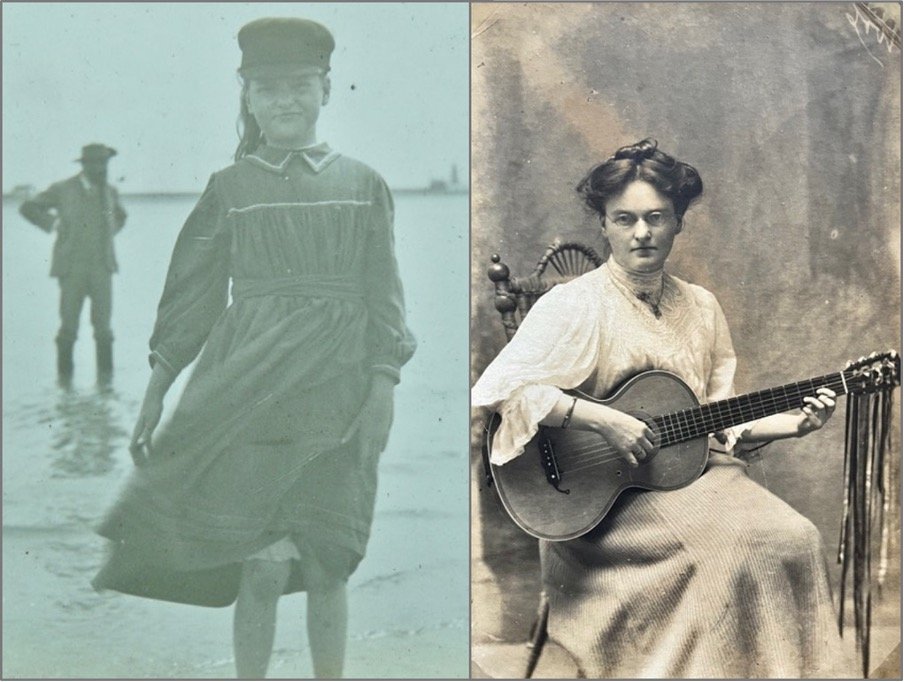
Emily Gilchrist: Courtesy of the Gilchrist family
Here, we see Emily as a child enjoying a paddle in the sea while on holiday at SP. In the second image, she plays the guitar. Like many of her sisters, she was an accomplished musician, also playing the piano and organ.
Emily is accompanied on the trip by Ella Anderson, whom we assume is a friend from Southport, but we know nothing about her.
The Visit to Southport
This will have been an extraordinary experience for all the girls. We suspect the itinerary included visits to churches and not much sea paddling, but even as they leave the train, they will feel transported to another world.
In 1908, Southport was at its Edwardian height, the most ‘refined’ of the Northern seaside resorts, blending Victorian respectability with newer yet tasteful modern amusements.
There were many well-kept public spaces, elegant tree-lined avenues, and wholesome, cultured leisure activities.
Very soon, they would arrive on Lord Street, described as one of the most beautiful in England - a wide, tree-lined boulevard with glass-roofed verandas and arcades. It was filled with elegant shops, milliners, outfitters selling the latest fashions, fancy goods stores, and tea rooms.
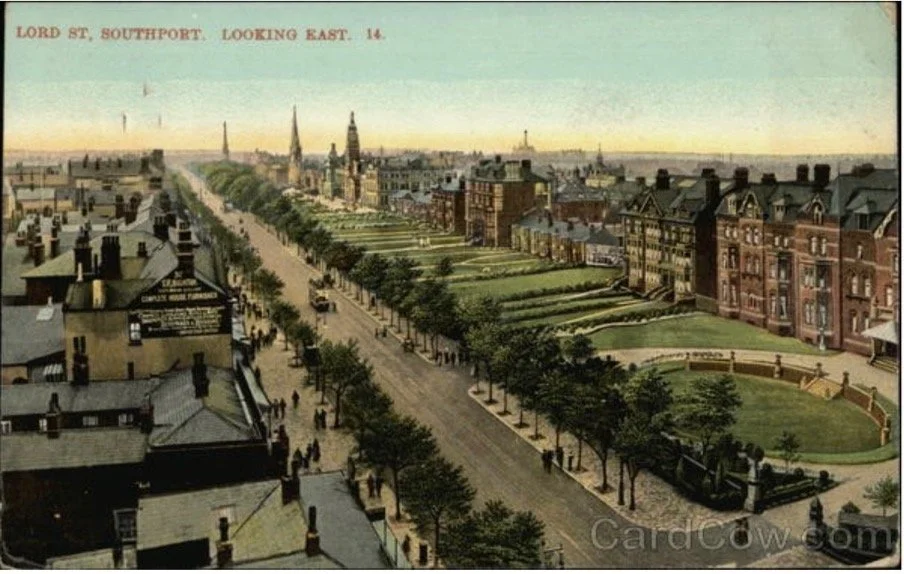
Lord Street, Southport, c1908. Source Internet.
If they could be pulled away from the shop windows, Lord Street led down to the beach, where the sands stretch for miles, and to the Pier, said to be one of the longest in the country.
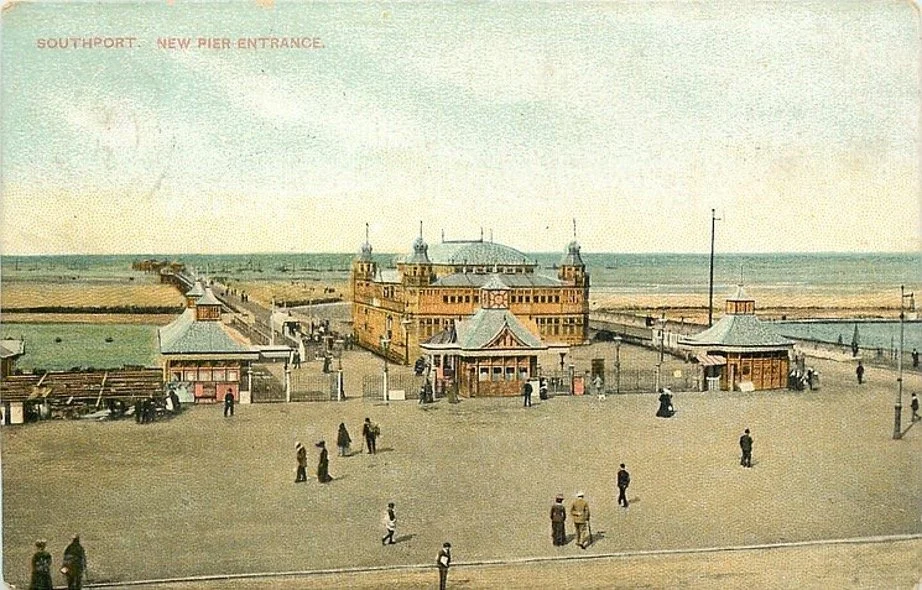
Southport Pier on a quiet day, c1905: Source Internet.
A little further on, they would arrive at the famous Marine Lake, a large saltwater lake with rowing boats and small pleasure craft for hire.
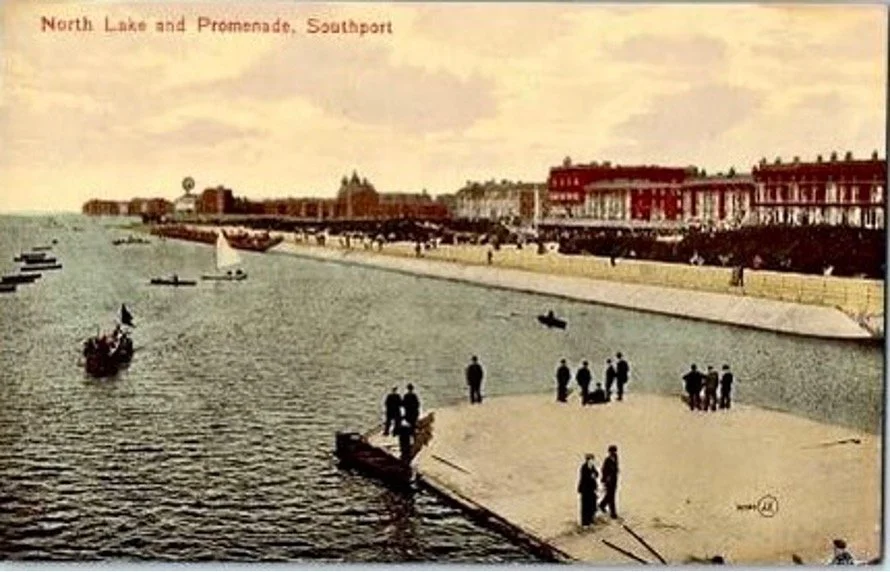
Southport Marine Lake, c1908: Source internet.
If it had been a fine day, they would certainly have visited Hesketh Park, with its exceptionally well-maintained ornamental gardens and an aviary, observatory, conservatory, Japanese garden, and its own boating lake.
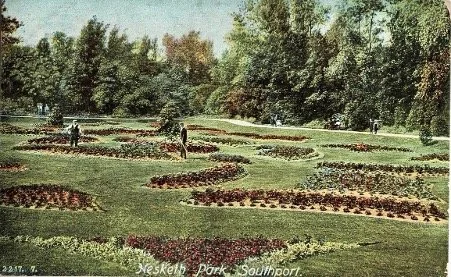
Hesketh Park c1905: Source Internet.
Perhaps, back to Lord Street, and a quick visit to a teashop.
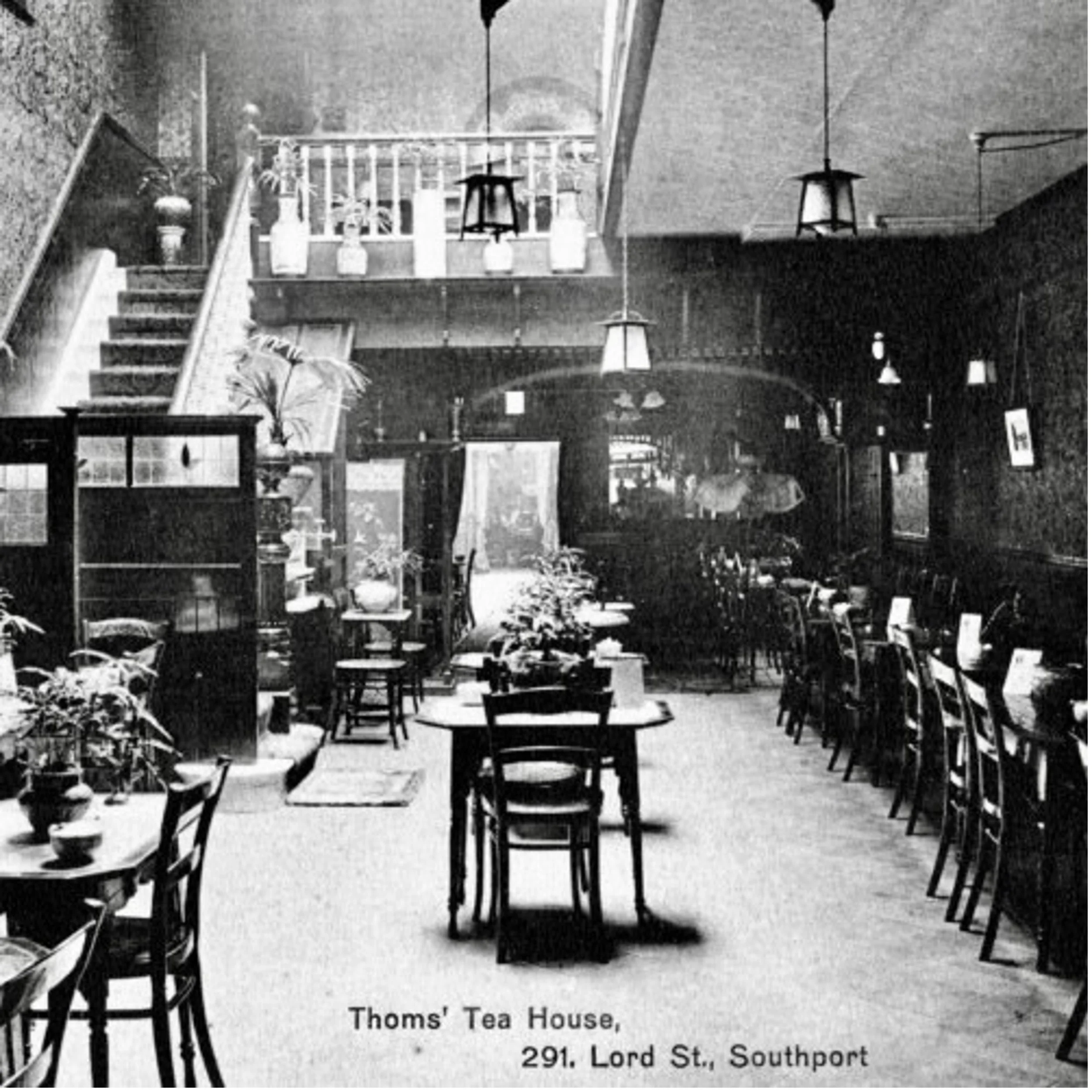
Southport Teashop c1908: Source Internet
Then the return journey home.
Family connections and later life
In any village group photo, we see close connections not only among immediate family members but also among others in the community, as the ties extend much further. These connections are of great interest because they provide insight into the village's social dynamics.
The two Spencer girls are Jessie Townley's cousins. Their mothers are sisters, both with the maiden name Seddon. We have previously told the story of their father, William Seddon, who, in 1877, lost his way home after an evening of refreshments at the Globe Hotel and drowned.
We are sorry for this, but both Florie, aged 28, and May, aged 22, Spencer died young in the summer of 1918, almost certainly from the dreadful Spanish Influenza, the pandemic that had spread across war-ravaged Europe. In the 1911 census, Florie was working for Katharine Swainson at number 22, next door to where Emily Gilchrist stayed with her family.
Jessie Townley had become a servant to the vicar of Bentham by 1911 and married Albert Lawson in 1920. Albert was a skilled horseman, and they lived on a farm in Scotforth, Lancaster.
Doris Smith connected her family to the Gardners through marriage. In 1918, she married William (Billy) Bowker. The Bowker family had lived at Hall Farm (number 14) for many years. Earlier, in 1906, William’s elder sister, Margaret, married Wilton Gardner, one of the four brothers of the girls in the photo.
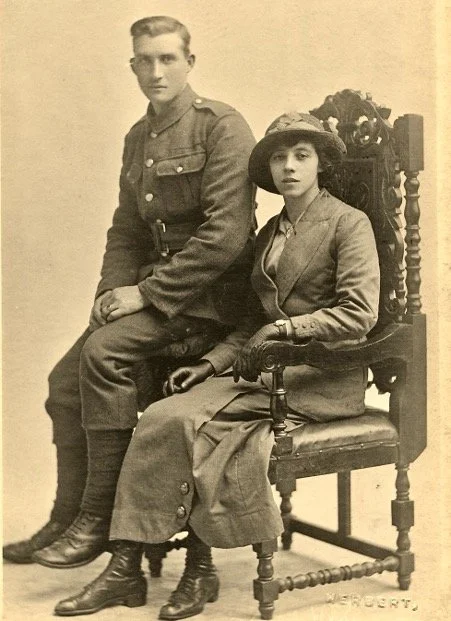
Wonderful wedding photo, a studio portrait of William and Doris taken in Lancaster in 1918: From the collection of Alan Smith
In another connection, Doris and William Bowker lived in Stodday - on the other side of the river from the village - and close to Walnut Bank, where Emily’s older sisters, Anne and Helen, lived, having moved from Southport. For a time, William worked as a chauffeur for the Gilchrist sisters. Later, William and Doris moved to Cumberland.
Of the Gardner sisters, the very shy Eliza married John Richards around 1910. He worked for James Williamson (formerly owner of Hall End House - number 22), and later for her brother Robert in his coal business. Her father, RWB Gardner, moved in with them in Lancaster after their mother, Ann, died in 1917, and stayed until his own death in 1940.
Bertha married Harry Wood, a wartime comrade of Charlie Walker, her sister Emily's husband. She lived in Lancaster and Morecambe. When both she and Emily were widowed, they lived together in Overton. Bertha lived until nearly her 102nd birthday, missing it by only three weeks.
Polly (Mary Ann), as we saw in our postcards article, lived with her aunt in Formby during WWI. During WWII, she worked as a housekeeper and confectioner for a family near Bolton. After the war, she returned to Lancaster and moved into a house owned by her brother, Robert. In 1952, she married John Reid, a retired farmer, and they moved to SP to live in the Summer House, which her brother James had bought for them.
Emily married Charlie Walker, who dedicated most of his working life to Robert Gardner’s businesses. In 1945, they purchased Tom Spencer’s house – another link – number 3 on the Lane. Living next door, in the other semi, was Tom Gardner, another of the Gardner brothers. Tom’s wife, Clarice, was born a Townley and is a cousin to Jessie
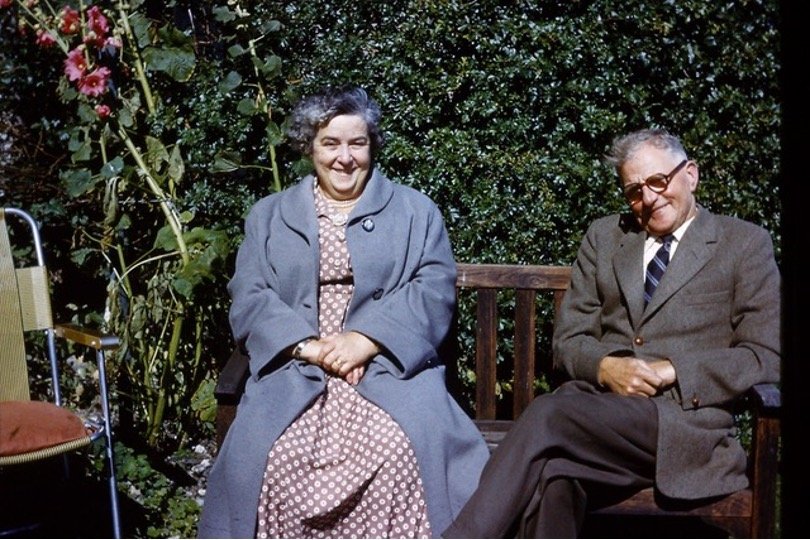
Emily and Charlie Walker, date unknown: A Peter Hall photo
Emily and Charlie were tireless community workers, both in SP and at Overton, especially for Memorial Hall.
None of these four sisters had children.
Little is known about Emily Gilchrist’s later years. She moved into a small house in Southport after her parents died, and she passed away in 1928 at the age of only 47, while residing in a farmhouse in North Wales.
A grand day out
These were daughters of fisherfolk, raised in a close-knit, hardworking community, yet already part of a new century in which women’s horizons were widening. We feel sure that as they walked the tree-lined boulevards and visited carefully chosen attractions, they marvelled at what they saw and giggled and laughed. Thanks to one carefully labelled postcard, their grand day out is not forgotten.
Old photographs
The website welcomes any older photographs of Sunderland Point, especially those featuring past residents no longer with us. The words may tell their story, but it’s the photographs that bring them back to life.
Special thanks to Alan Smith for the main photo and for providing photos of family members.
Next time, a special birthday or a criminal case….