Philip T. Gilchrist 1865 – 1956
A Biography
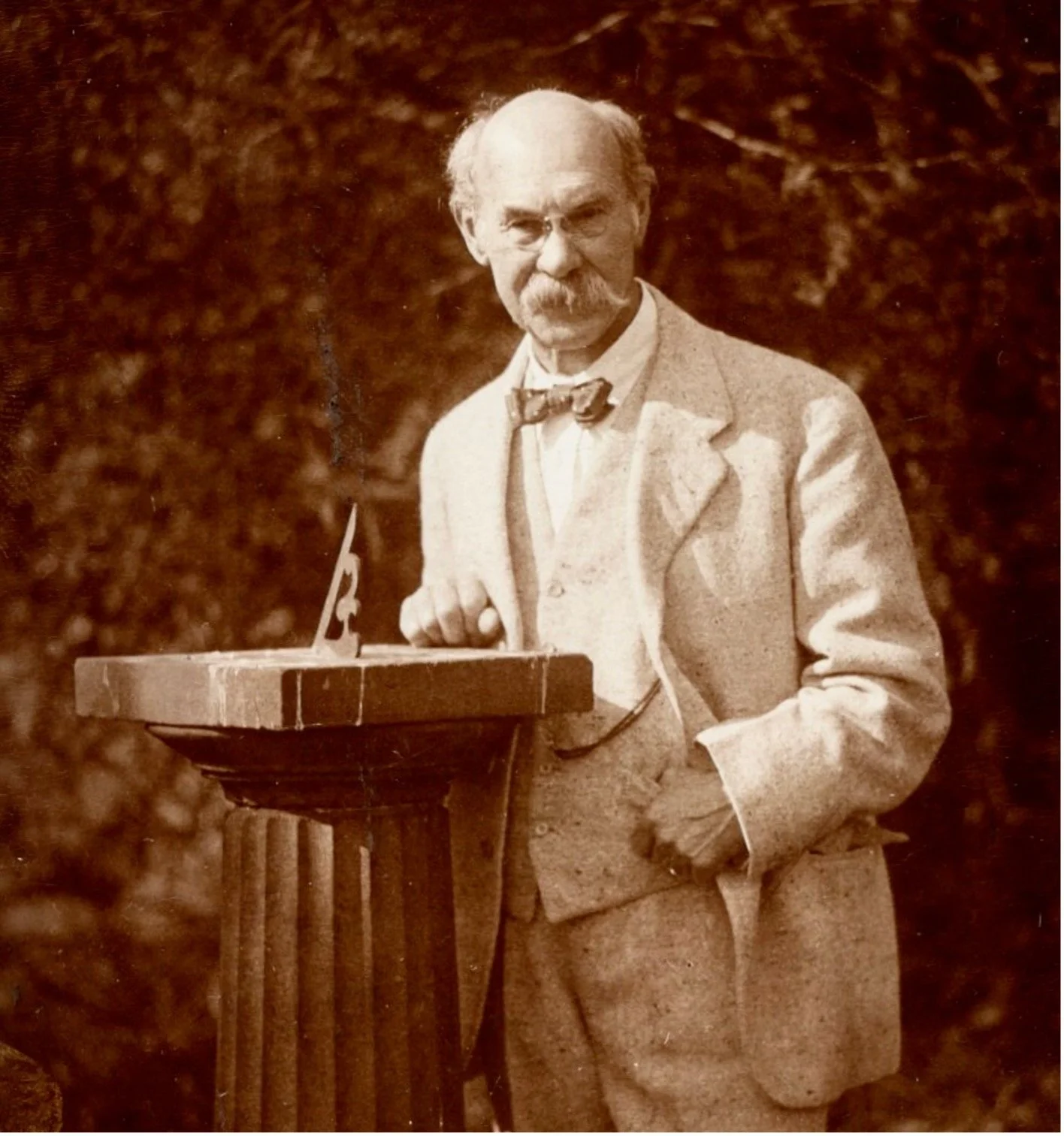
Philip in the garden of Dolphin House, c1935, with the sundial that once stood in the garden of ‘Bella Villa’, the family home in the 1890s (a favourite photo).
The Exhibition in Lancaster
In 2006, on the fiftieth anniversary of his death, Lancaster City Museums organised an exhibition of some of his Sunderland Point paintings at the Museum in Market Square.
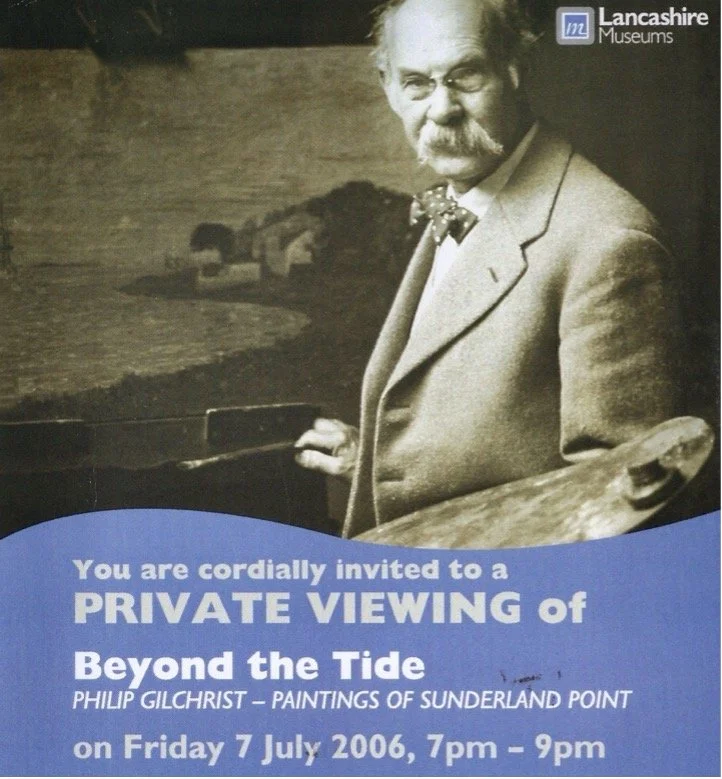
Notice for the private viewing: Courtesy Lancaster City Museums
The Manchester Art Gallery loaned one of Philip’s most famous paintings.
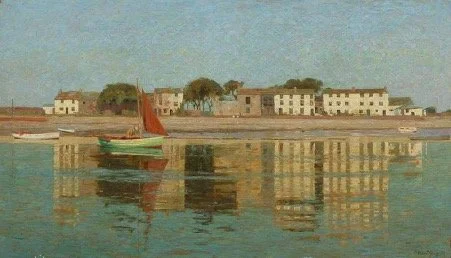
“A forgotten Lancaster Port” 1905: In the collection of the Manchester Art Gallery.
This enchanting portrayal of the old warehouses on the Second Terrace, reflected in the nearly still waters of the river, received high praise when shown in galleries in northern England and at the Royal Academy in London. It is an excellent example of Philip’s mastery of technique and marine painting, and, most importantly, his exquisite, sublime sense of colour.
It received the admiration of the Royal Academy
“The silence and desolation of a forgotten Lancashire port are admirably present in this picture, Philip Gilchrist of Southport, unique and singularly attractive”
The exhibition in Lancaster attracted over 13,000 visitors. Philip would have been unknown to many, and the quality of his work may have surprised. Few would know he achieved national importance and earned an entry in ‘Who’s Who’.
For over 50 years, Philip lived at Sunderland Point, but the connection goes back to his childhood and the summer holidays spent with his large family and friends at the Old Hall.
Our article introducing the gallery of his works looks at his paintings. This focuses on the man behind the brush.
Early Life and Family Background
Philip Thomson Gilchrist was born on 22 October 1865 in Stanwix, near Carlisle, the third child of George and Jane Gilchrist after the births of William and Anne. In their life they had 12 children, but only 8 survived to adulthood.
George Gilchrist, a bank manager originally from Kirkcaldy, Scotland, had moved south to Manchester, where he met Jane Helen Thompson. She was the daughter of Philip Thompson, a prominent Manchester merchant, banker, and dedicated political reformer. Thompson was one of the seven founders of the influential Anti-Corn Law League.
After Carlisle, they returned to Manchester when George was appointed manager of the Manchester branch of the Consolidated Bank. The family grew with the births of George junior, Jessie Theodora (Theo), Helen, Dora, and Emily.
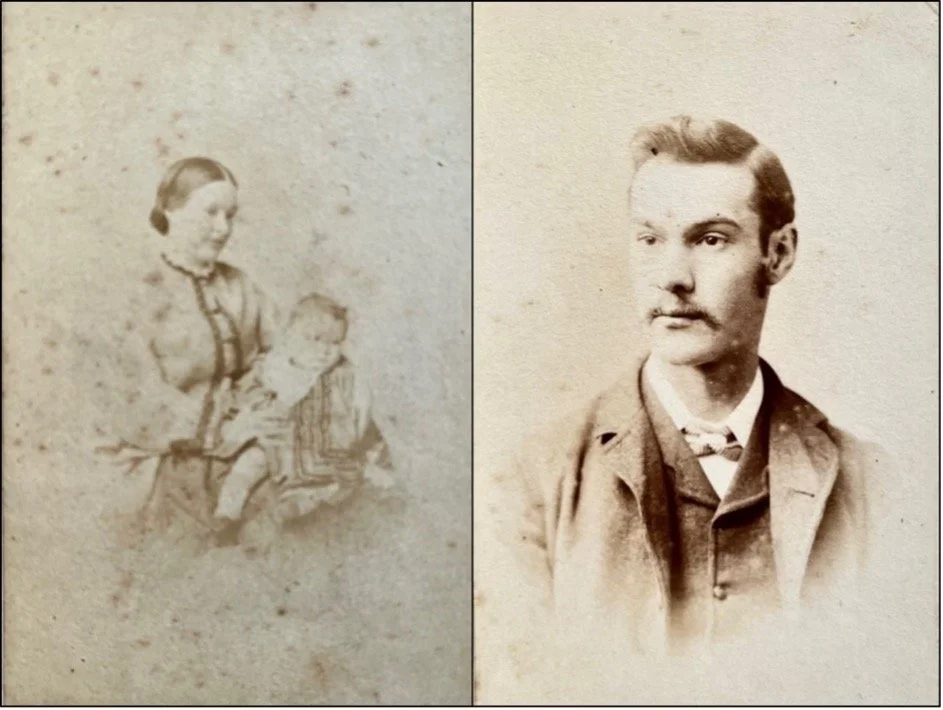
Philip as a baby with his mother in Stanwix, and as a young man (with lots of hair).
In the 1880s, they moved from Seymour Terrace in Stretford to the beloved ‘Bella Villa’ in Whalley Range, promoted as ‘a desirable estate for gentlemen and their families’.
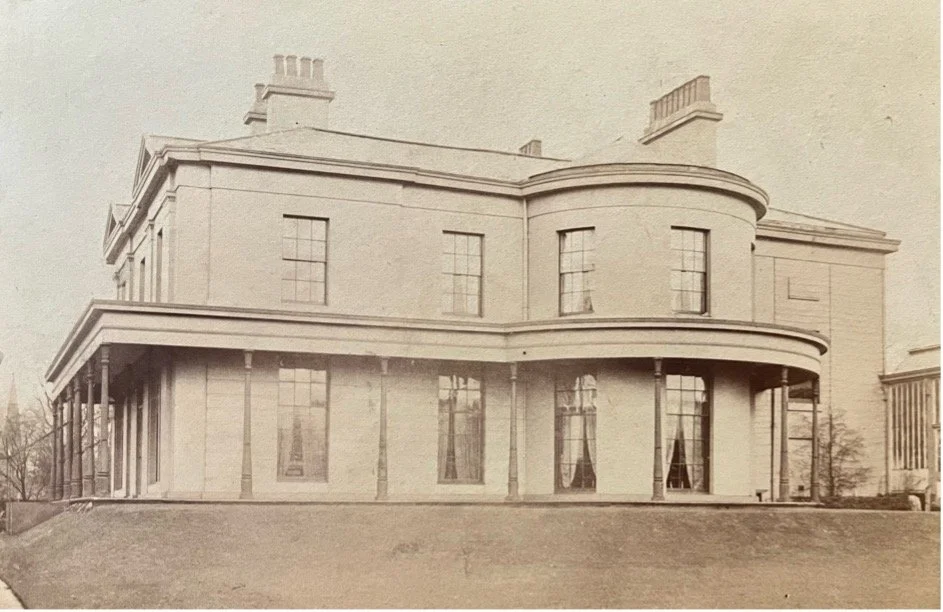
An external view of ‘Bella Villa’ c1890.
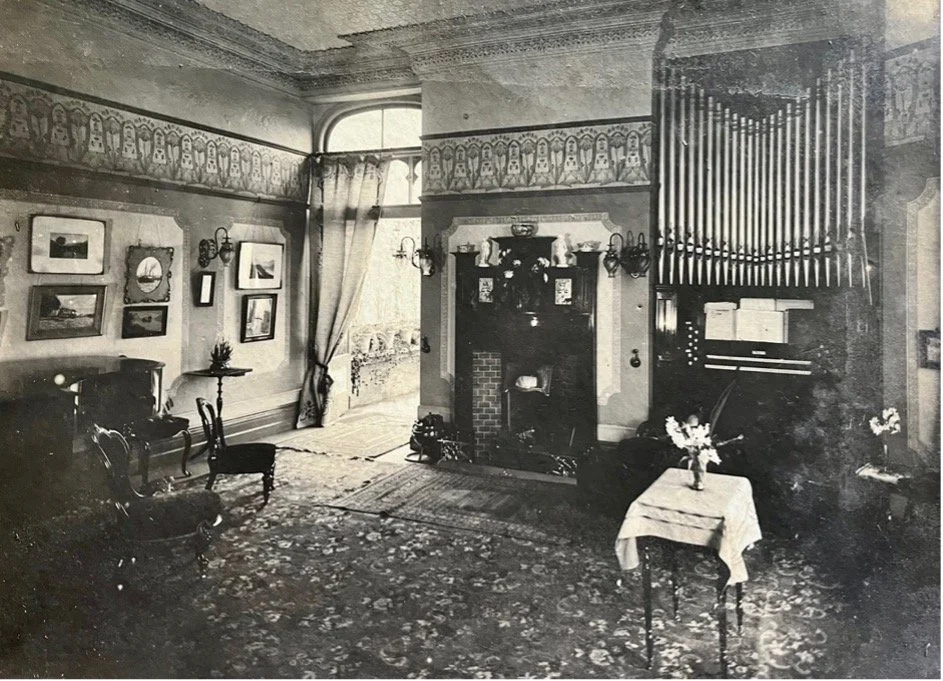
Inside Bella Villa, c1890.The pipe organ has music pages open at the ready.
They were a talented, artistic, and musical family. The daughters played (variously) the piano, organ, violin, and guitar, William was a notable flute player, and Philip was frequently asked to sing.
Their upbringing was comfortable, religious, and morally sincere. They were active members of the Whalley Range Presbyterian Church.
George (senior) added his name to an open letter opposing an alcohol licence to an inner-city Music Hall. The children grew up with strong expectations of public service and self-improvement. A close family bond developed and lasted throughout their lives. Five of the eight siblings eventually settled permanently at or near Sunderland Point.
Little is known about Philip’s education or his artistic talent, except that he boarded at Queenwood College near Stockbridge in Hampshire. It was a progressive school, founded in the late 1830s on utopian principles by Robert Owen.
First Contact with Sunderland Point
Philip’s sister, Anne, records the first of many visits in 1875, staying at the Old Hall (number 21), then owned by Gilbert Proctor Carr (Carr’s Biscuits), a client of George’s at the Bank in Carlisle.
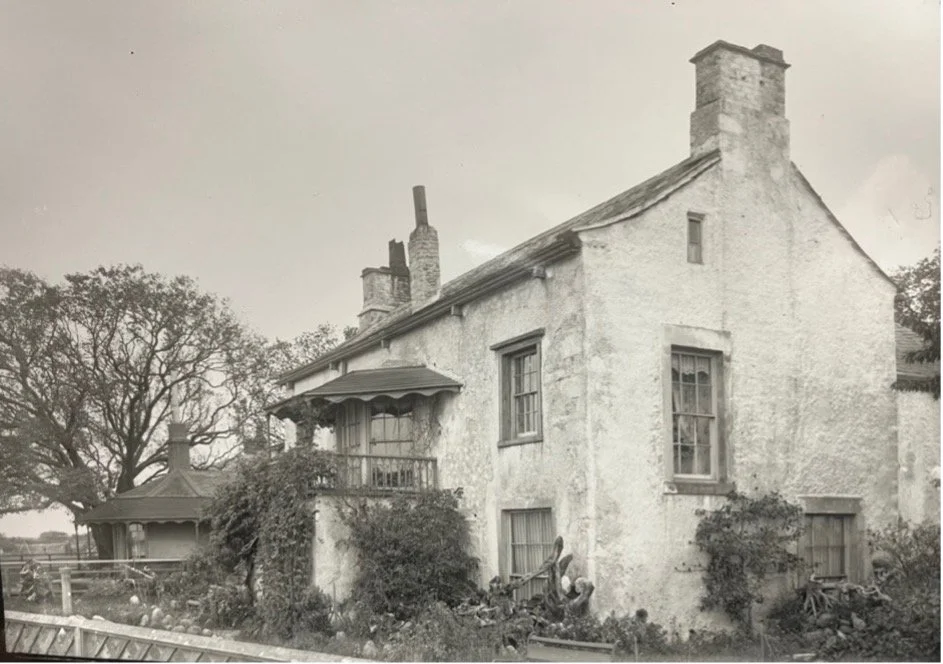
The Old Hall, c1900, a John Walker photo, courtesy of Lancaster City Museums.
The adjacent house was owned by the veteran and revered Town Clerk of Lancaster, Thomas Swainson, whose large family also spent summers at the Point. Relations were a little frosty at first, the high-minded evangelical Swainsons regarding the Gilchrists as a little too free thinking, ‘too relaxed, and they openly discussed the theatre.’
Family photographs reveal that the younger generation grew close, with George Gilchrist marrying Edith Swainson in 1901 and Dora later marrying Rev. William G. Swainson in 1908.
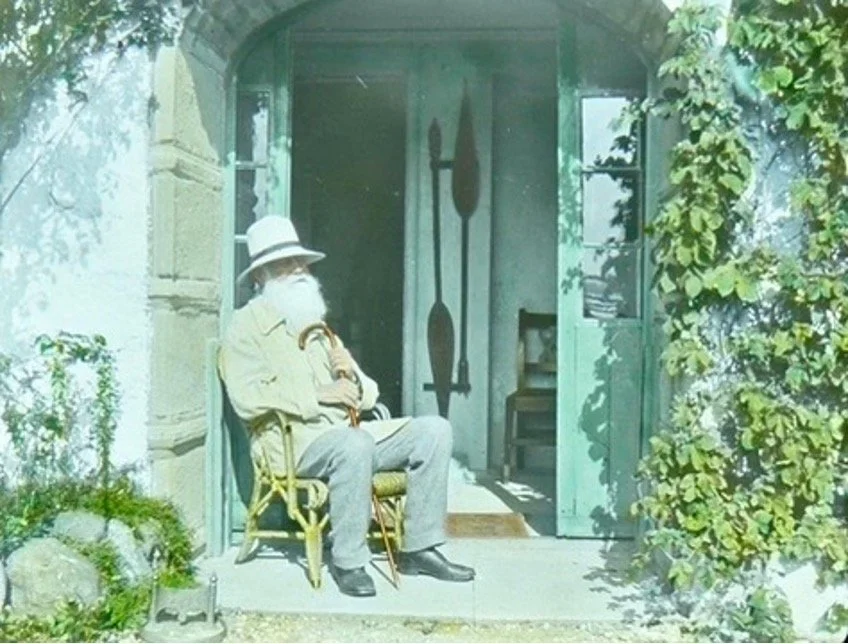
George Gilchrist (senior) enjoying the sun in the doorway of the Old Hall. A George Gilchrist (junior) photograph
Early career in Manchester
Philip was apprenticed to a Manchester cotton-printing company, where his artistic talent must have been an asset. Perhaps it was, for in 1888, at just 23 years old, Philip entered into a partnership with Frederick Leigh under the name of ‘Leigh and Gilchrist’, on Mosley Street in the heart of ‘Cottonopolis’.
Up and down this busy street, small enterprises worked with cotton buyers on designs for printed cotton goods, later manufactured in printing factories on the city’s outskirts.
During the eight years the partnership lasted, Philip was also sharpening his artistic skills. He joined the Manchester Graphic Club, one of many new cultural societies based at the Athenaeum in the city centre, described as:
‘Membership tended to be middle-class men and local artists who wanted regular, organised practice, a forum for showing work, and a base for social network and informal instruction’.
He became close friends with William Maxwell Reekie, a young cotton buyer and aspiring artist. They travelled together to find subjects to paint.
In 1893, while in the USA to paint the Niagara Falls, the local newspaper described them as‘well-known landscape painters in the north of England, who have executed several important portraits of public characters.’
Both Philip and Reekie studied under the artist Tom Mostyn (1864-1930), a notable Manchester painter known for highly skilled portraits and social-realist studies. Later, his style shifted towards mythic figures and, famously, ‘enchanting gardens’.
Tutored by Mostyn throughout much of the 1890s, Philip's influence is evident in his realistic compositions and in the use of ‘natural’ colours in landscapes.
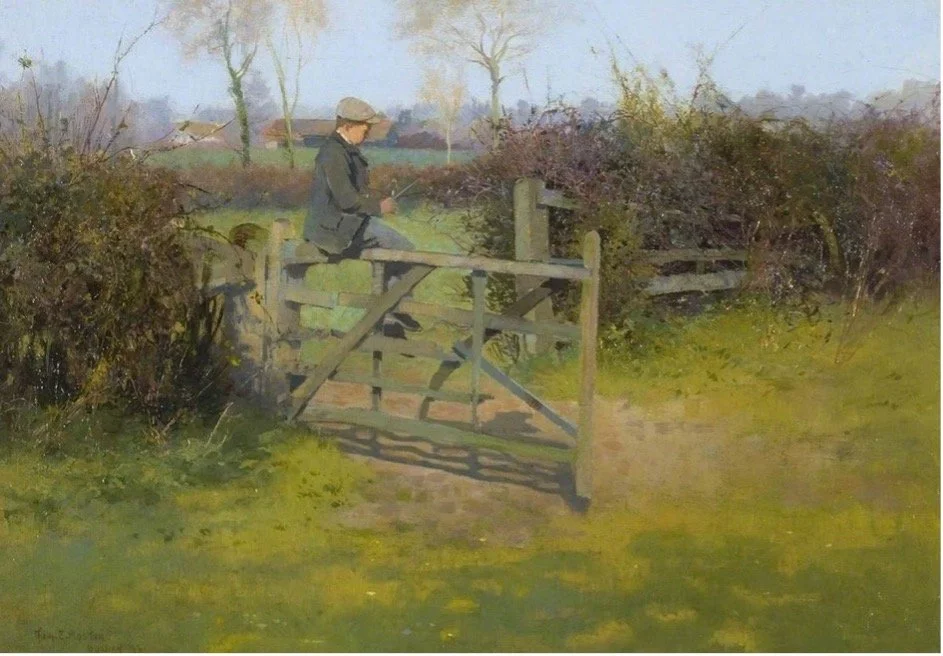
“Sitting on a gate, Bushy”, 1893, a ‘realistic’ painting by Tom Mostyn, in a private collection.
He also took up membership of the Manchester Society of Fine Arts, developing close friendships with fellow artists, including the talented illustrator, Roger Oldham.
Southport and Artistic Maturity (1895 – 1902)
In 1885, after the Consolidated Bank merged with Parr’s Bank. George senior decided to retire and move the family to Southport.
Well-to-do businesspeople from Liverpool and Manchester were escaping the smoke and grime by moving to the coast for healthy sea air. Southport, with its prosperous civility, was the preferred choice over less refined Blackpool.
This prompted Philip’s resolve to become a professional artist. The business partnership was dissolved, and he rented a studio on Manchester’s Exchange Street while commuting from Southport. The family's reaction is unknown, but there must have been mixed feelings, even serious doubts.
From 1896, Philip’s output expanded rapidly. He sent canvases to galleries across the country and was increasingly accepted into exhibitions. To further his reputation, he arranged viewings at his studio in 1901 and again in 1902.
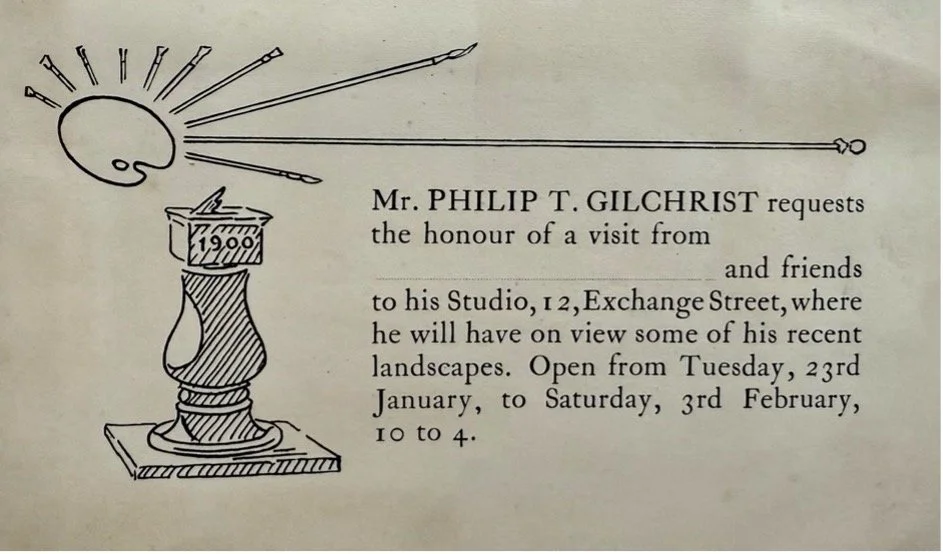
The invitation to the 1900 exhibition.
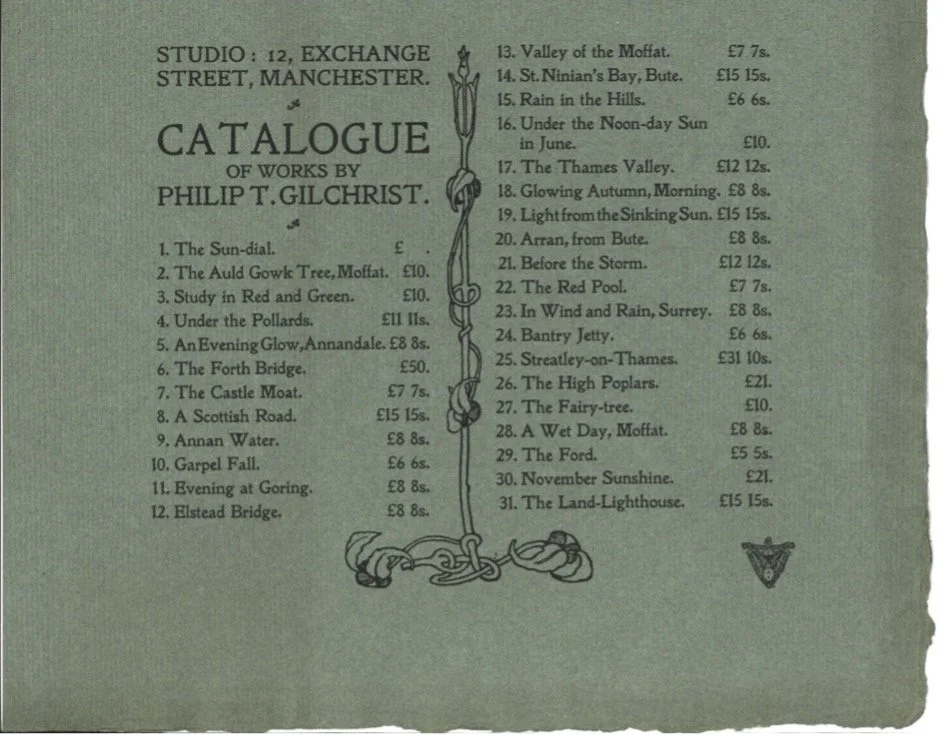
This is the catalogue of 31 paintings for the 1900 viewing. (Illustration perhaps by graphic artist and good friend, Roger Oldham).
Number 25, is ‘Streatley-upon-Thames’, when accepted for exhibition at the Manchester Academy of Fine Arts, the Manchester Courier said:
‘The place of honour on the walls has been properly assigned to Mr Philip T Gilchrist's ‘Streatley on the Thames’, a piece of landscape painting that will attract much attention. It is a painstaking composition and has considerable merit.’
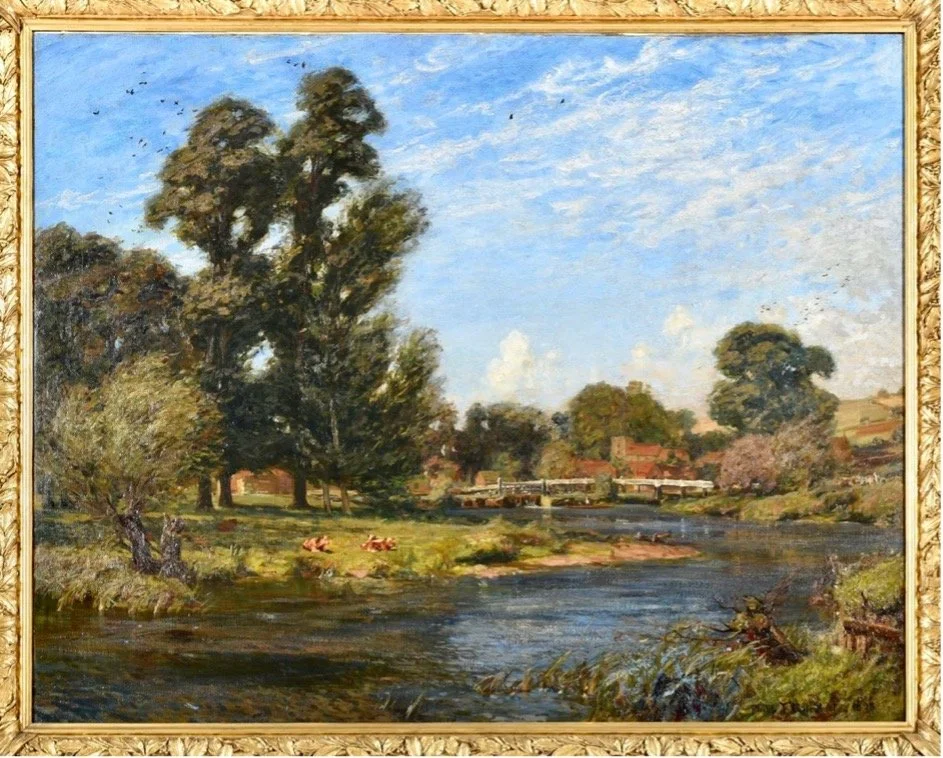
“Streatley-upon-Thames” c1900, number 25 in the catalogue on sale for £31.10 shillings.
During the early 1900s, Philip continued to travel extensively, not only throughout Britain but also to the Americas, countries bordering the Mediterranean, and in 1907, on an inspiring trip to Egypt.
Settling in Southport
The family gradually moved to Southport and settled into a house they named ‘Bazil Point,’ after the nearby peninsula just upstream from Sunderland Point. (Philip’s brother William referred to his Sussex residence as ‘Bazil Cottage’ and later called his Bournemouth home ‘Bazil House’).
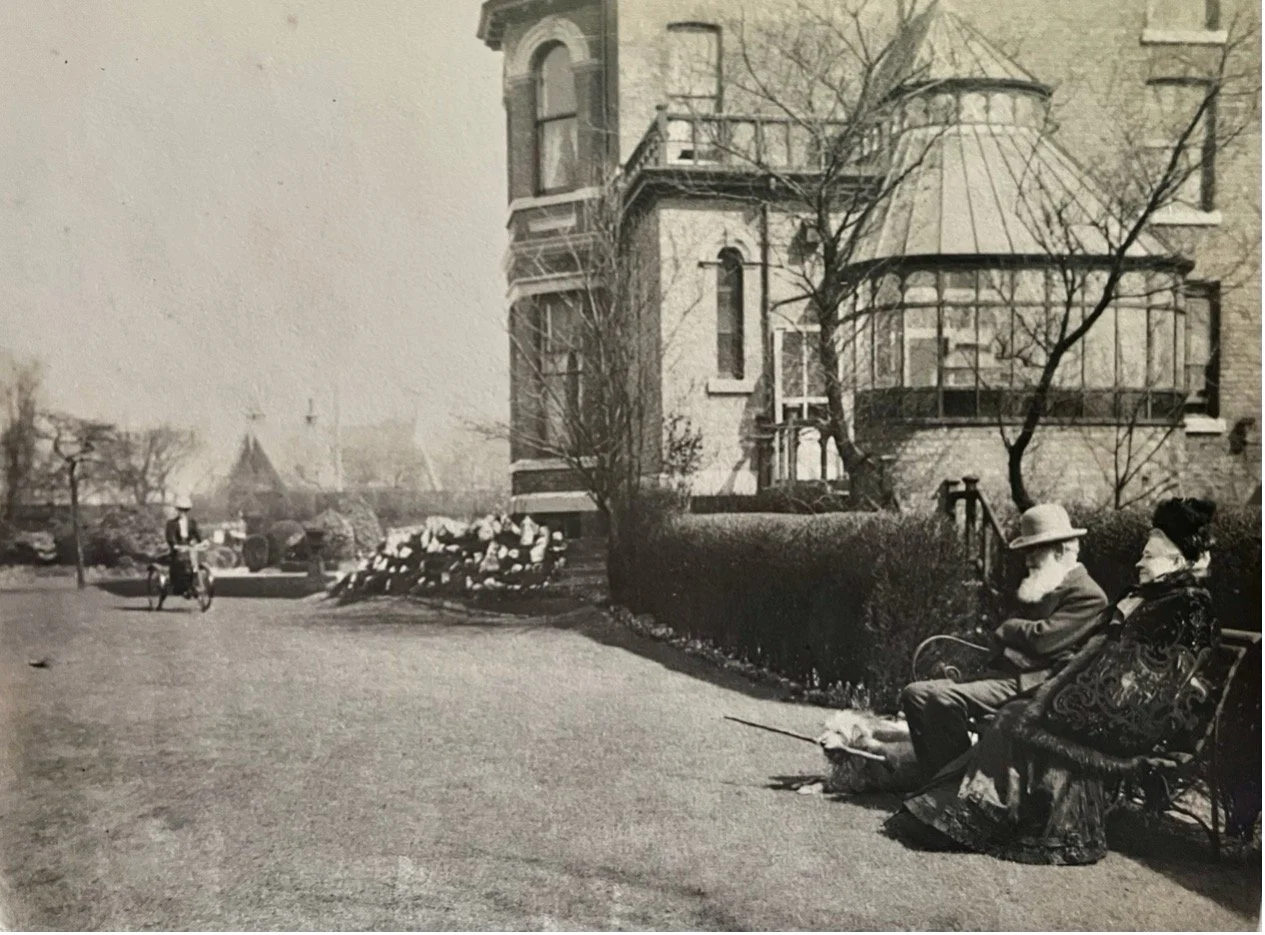
Bazil House c1900
Here is the house with Philip’s parents, George and Jane, sitting outside in the sunshine. The tri-cyclist is unknown, nor is the faithful dog with a stick.
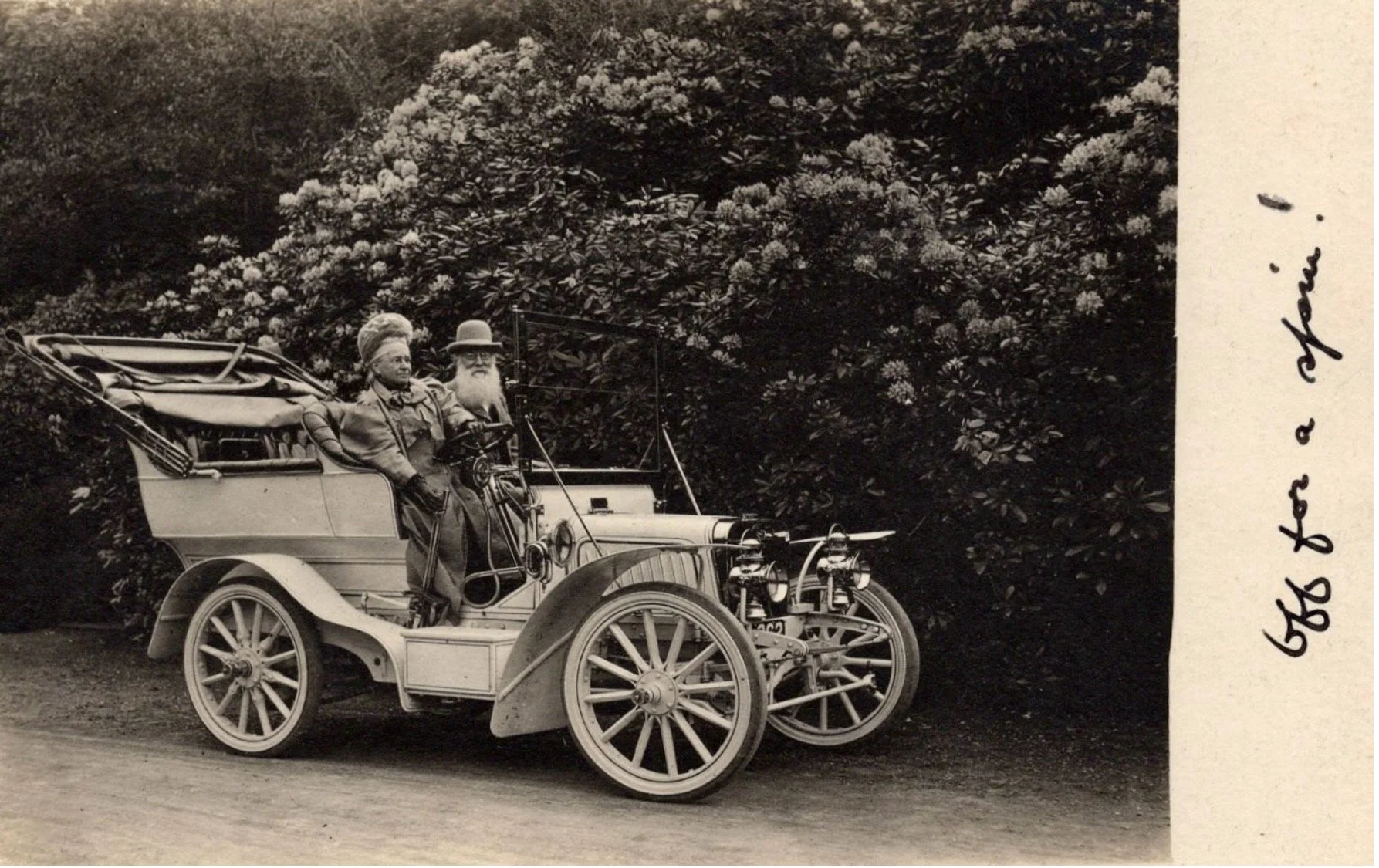
On the drive at Bazil House c1905
Here they are once more. Jane is pretending to be the driver. This photograph, sent by Philip in 1909 to his brother William marked, ‘Off for a spin!’ George is smiling happily at the joke.
The family attended the congregation at St George’s Presbyterian Church on Lord Street. The Minister, the Rev. James Mellis, and his family resided nearby on Park Street.
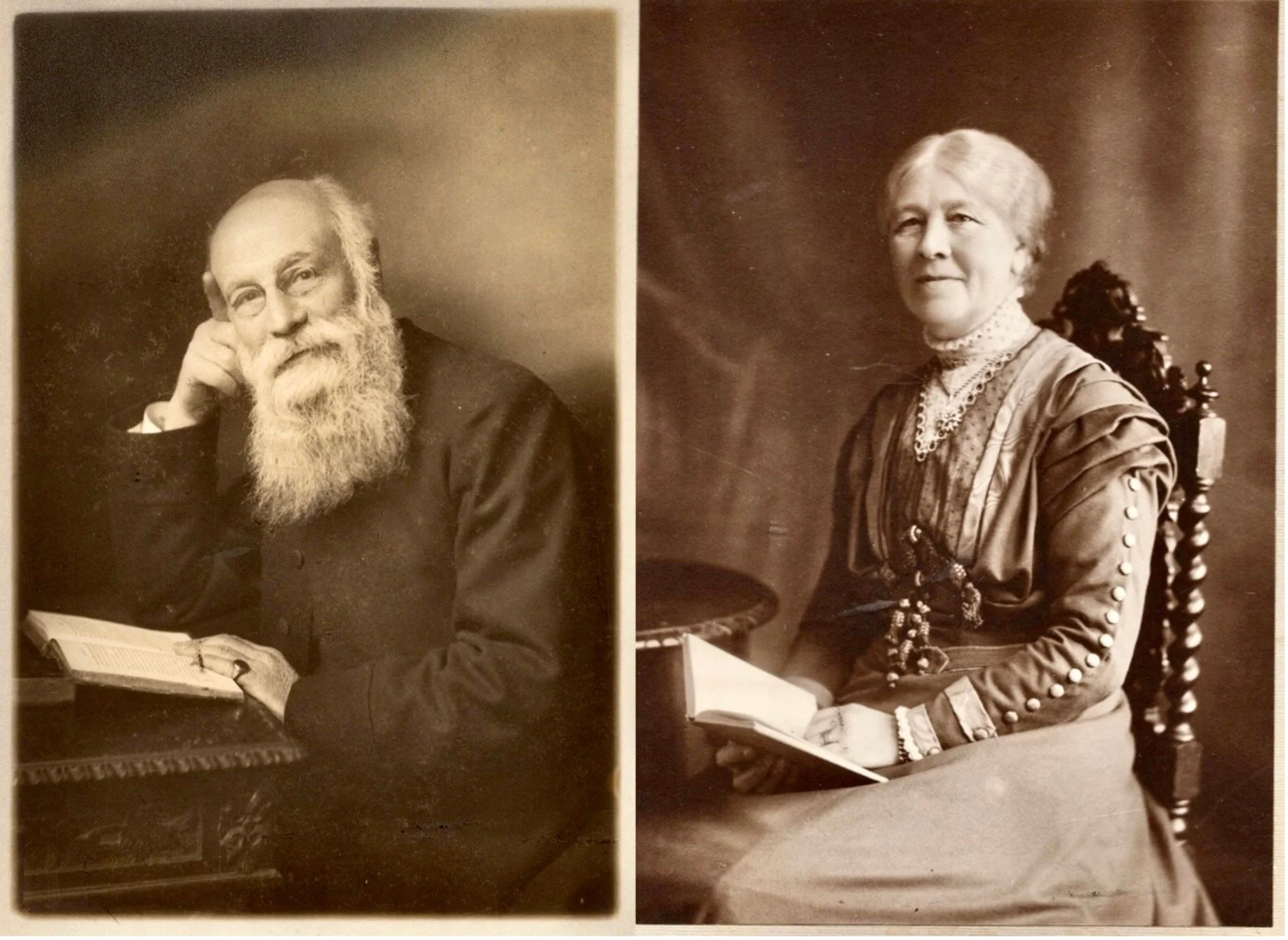
The Rev. James Mellis and his wife Jane.
James and Jane had three children, the church naturally united both families, and their eldest, Katharine, became close friends with Philip’s sisters.
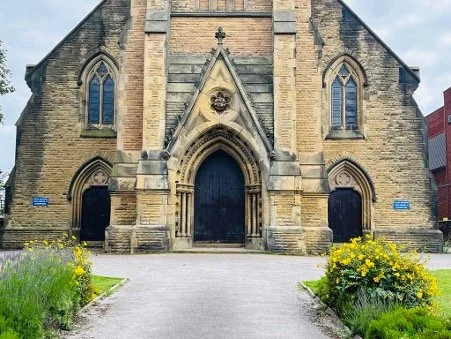
The Entrance to St George’s, Southport, now a United Reformed Church in 2024.
James Mellis, also a Scotsman, had been at St George’s since 1879 and was a man worthy of admiration. He raised substantial sums for charities, most notably for the town’s large infirmary, where he also served on the governing board.
He encouraged ‘improving’ social activities for young people. He must have been persuasive as well as quick off the mark, as we see Philip giving a lecture on ‘Art Criticism’ to the St George’s Mutual Improvement Association shortly after settling in Southport.
The Southport Courier reports on numerous fundraising events organised by the Church, in which the two families participated.
This is a typical example. What catches the eye is the music.
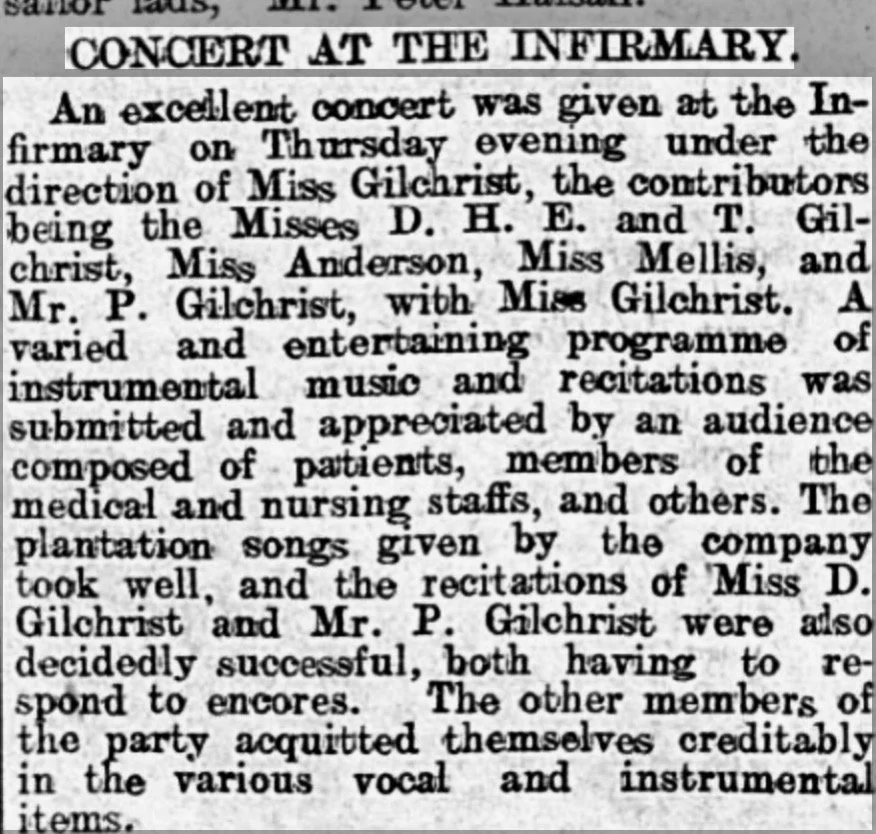
Southport Guardian, December 21st, 1901.
Miss Gilchrist, the director, was Anne, the eldest daughter, who became nationally renowned as a collector of folksongs, music, and folklore. (Link to the article about Anne)
The friendship with Katharine grew closer, and she joined the summer holiday at Sunderland Point.
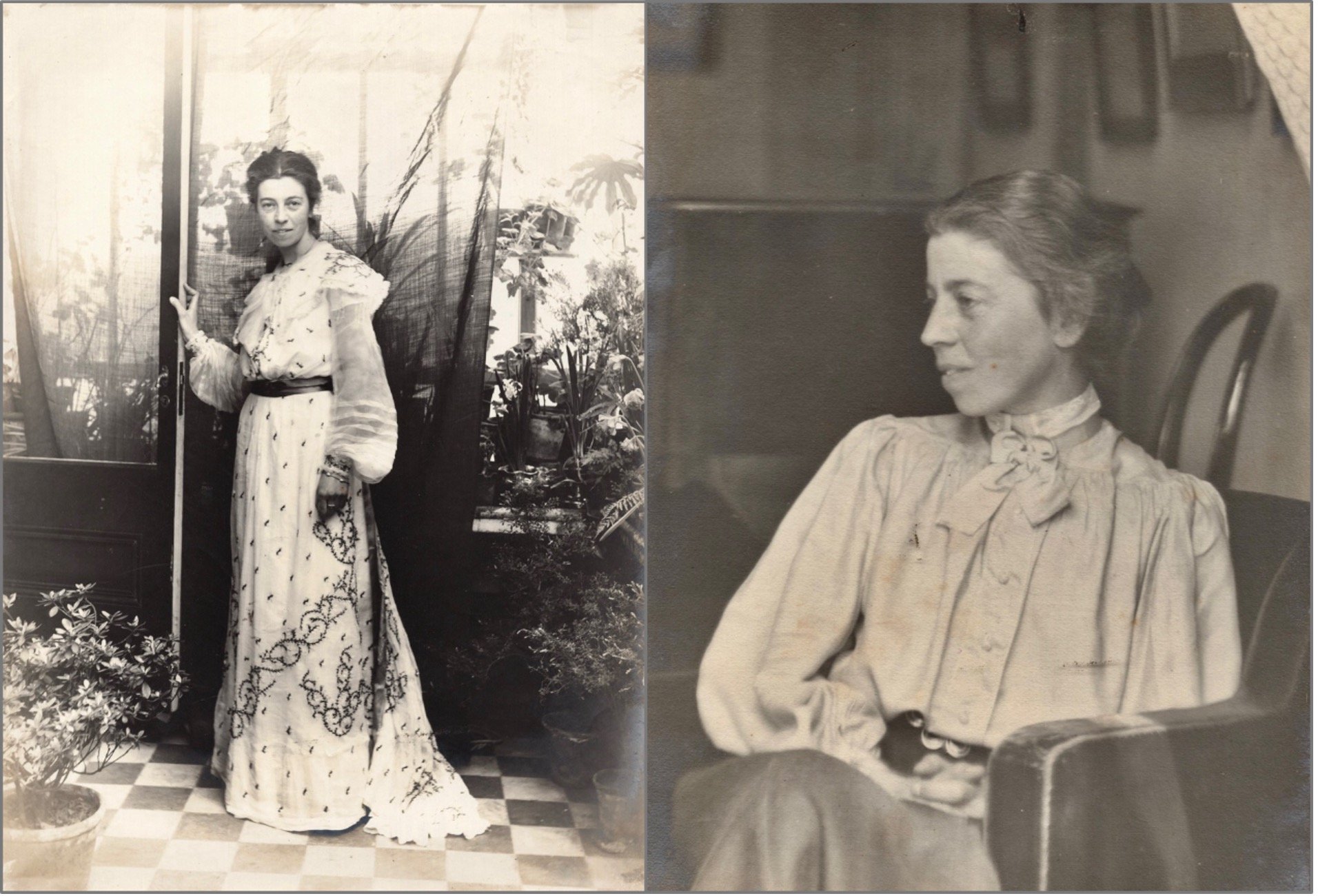
Katharine Grey Mellis at Southport, c1900-1905.
1900 – 1910: The years of achievement
The tutoring, travels, and mingling with other artists in Manchester and Liverpool's art academies, as well as Philips’ single-minded determination, resulted in a growing body of work that was admired by critics, fellow artists, and the public.
“The Iron Barque” 1901 is Phillips' first work to be accepted by the Royal Academy for the Summer Exhibition in 1901. Although there were grumbles over the greenness of the colouring, it won over the critics and began his reputation as a marine artist of rank.
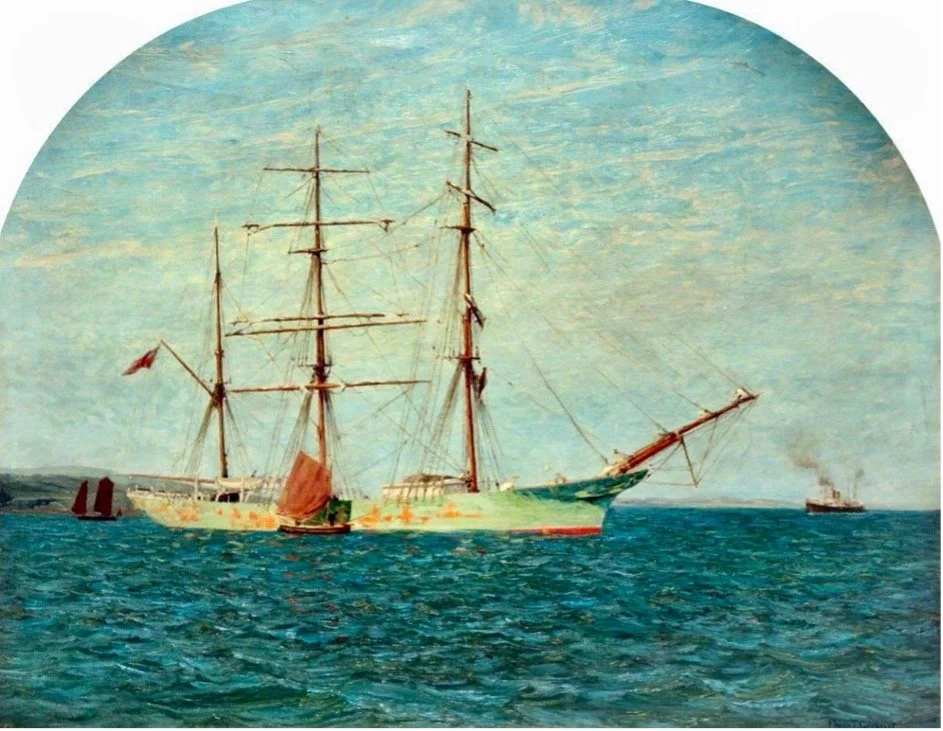
“An Iron Barque”, an early work shown at the Royal Academy in 1901, is in the collection of the Walker Art Gallery, Liverpool.
This 1903 painting of a classical theme, also shown at the Royal Academy, was almost certainly Philip’s favourite. The detail is astonishing, and the composition gives drama to the movement of the ships as they escape Xerxes' armies.
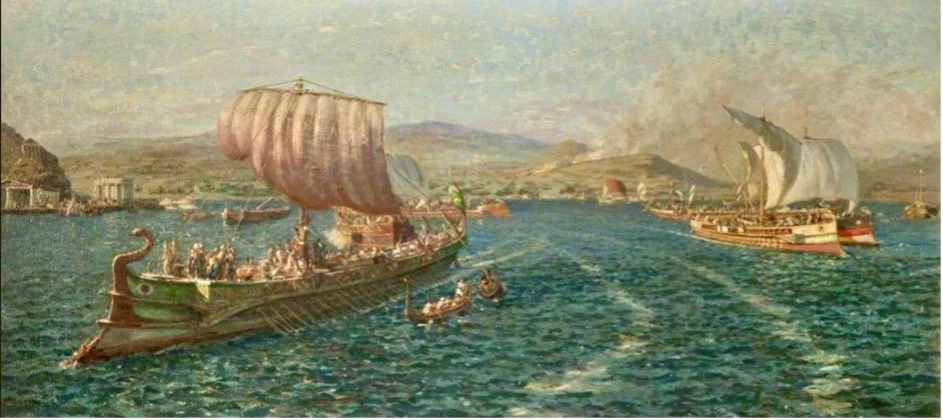
“Xerxes Burning Athens: Flight of the Athenians”. In 1951, this painting was shown at the Storey Institute in Lancaster during the Festival of Britain and was later donated to the City Museum by Philip.
Summer holidays at Sunderland Point
Looking at holiday photos taken during those years, it’s easy to imagine many happy summers, family picnics, paddling in the sea, messing about in boats, the concerts and church on Sunday. Perhaps even a little bit of high jinks.
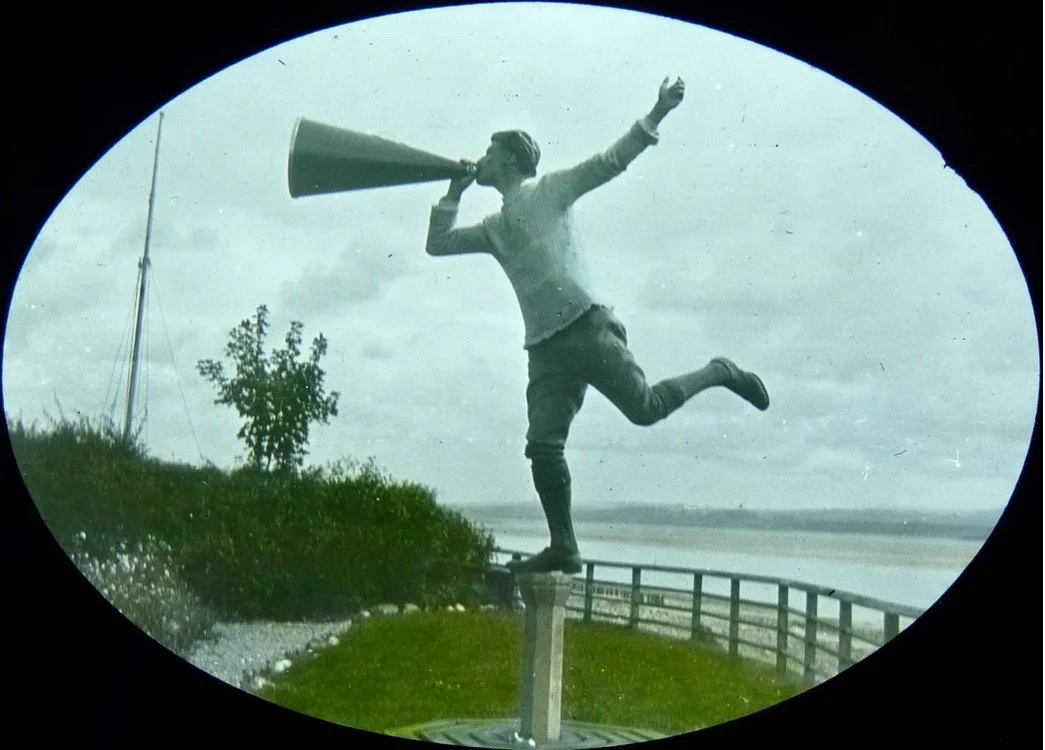
On the sundial at the Old Hall: A George Gilchrist (junior) photograph.
In Philip’s Who’s Who entry, he listed ‘boating’ as a hobby. In 1907, Philip had a sailing boat built by James Gardner in Overton, and it was launched by his niece Dora at the wharf near Lades Bridge (the first bridge on the causeway from Overton to SP). He called it ‘The Dolphin’.
Philip had seen dolphins on the Amazon and had become fascinated by them and their mythology —the belief that they possessed magical powers, saving sailors in shipwrecks from drowning and holding boats' anchors fast in stormy weather.
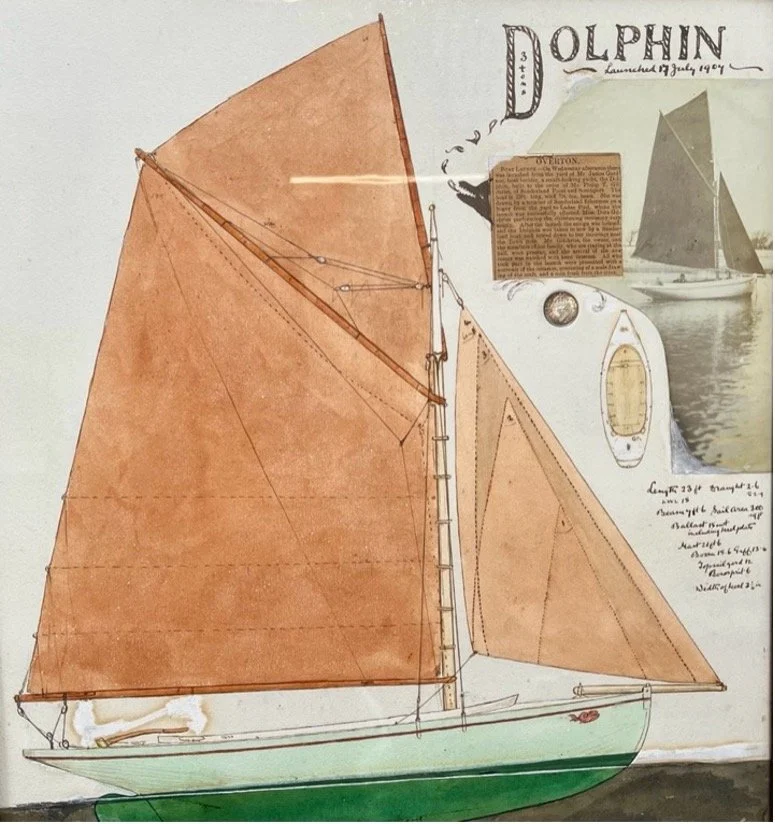
A collage of the boat built for Philip, including the newspaper cutting describing the launch in 1907.
Several photographs taken by his brother George feature Philip painting, perhaps confirming his commitment to establishing a reputation as an artist.
Here he is working on a small canvas with his sister, Theo.
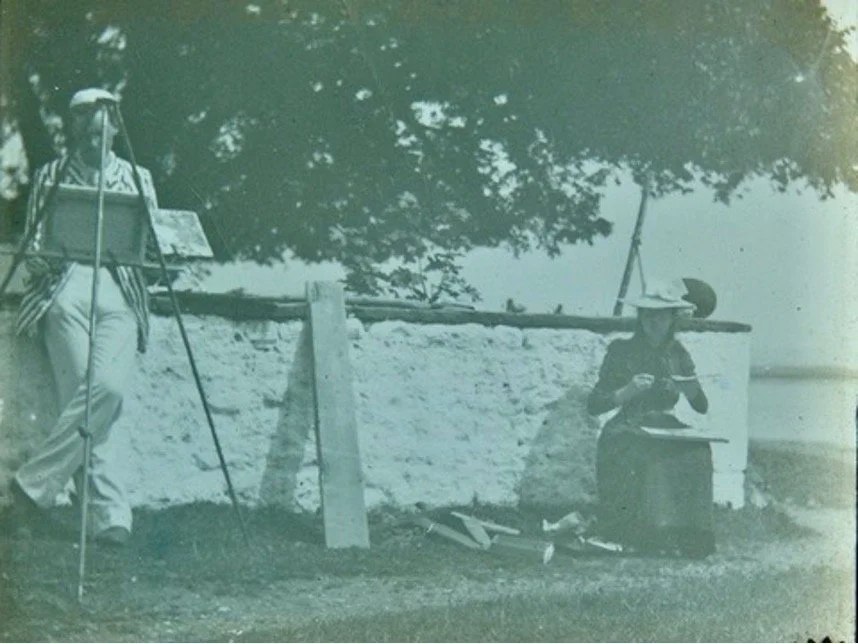
A George Gilchrist junior Photograph
Here is a much larger study, on the shore, hopefully, with admirers, William and John Swainson.
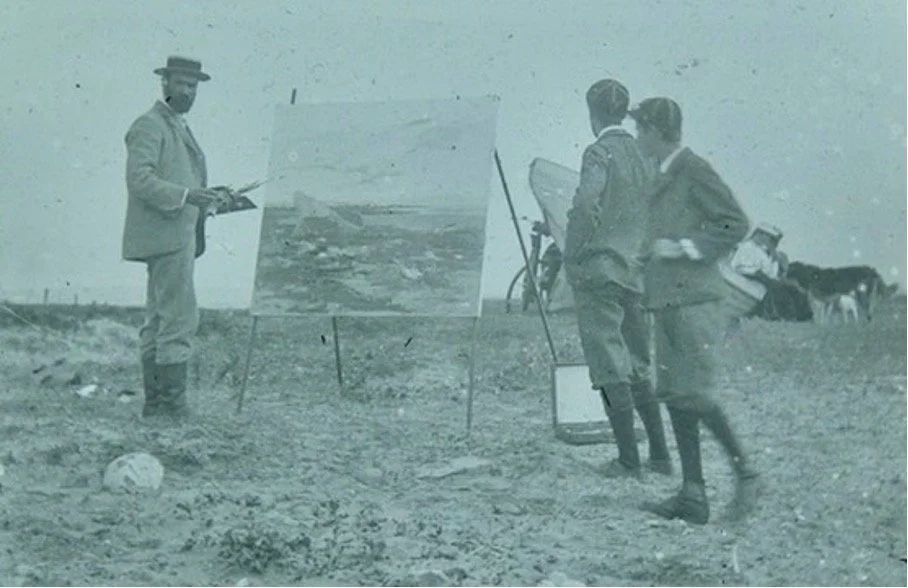
A George Gilchrist junior Photograph
Philip established an artist's studio in the house where the Reading Room is now located. He painted around the village and at Glasson Dock, taking time to study the details of ships.
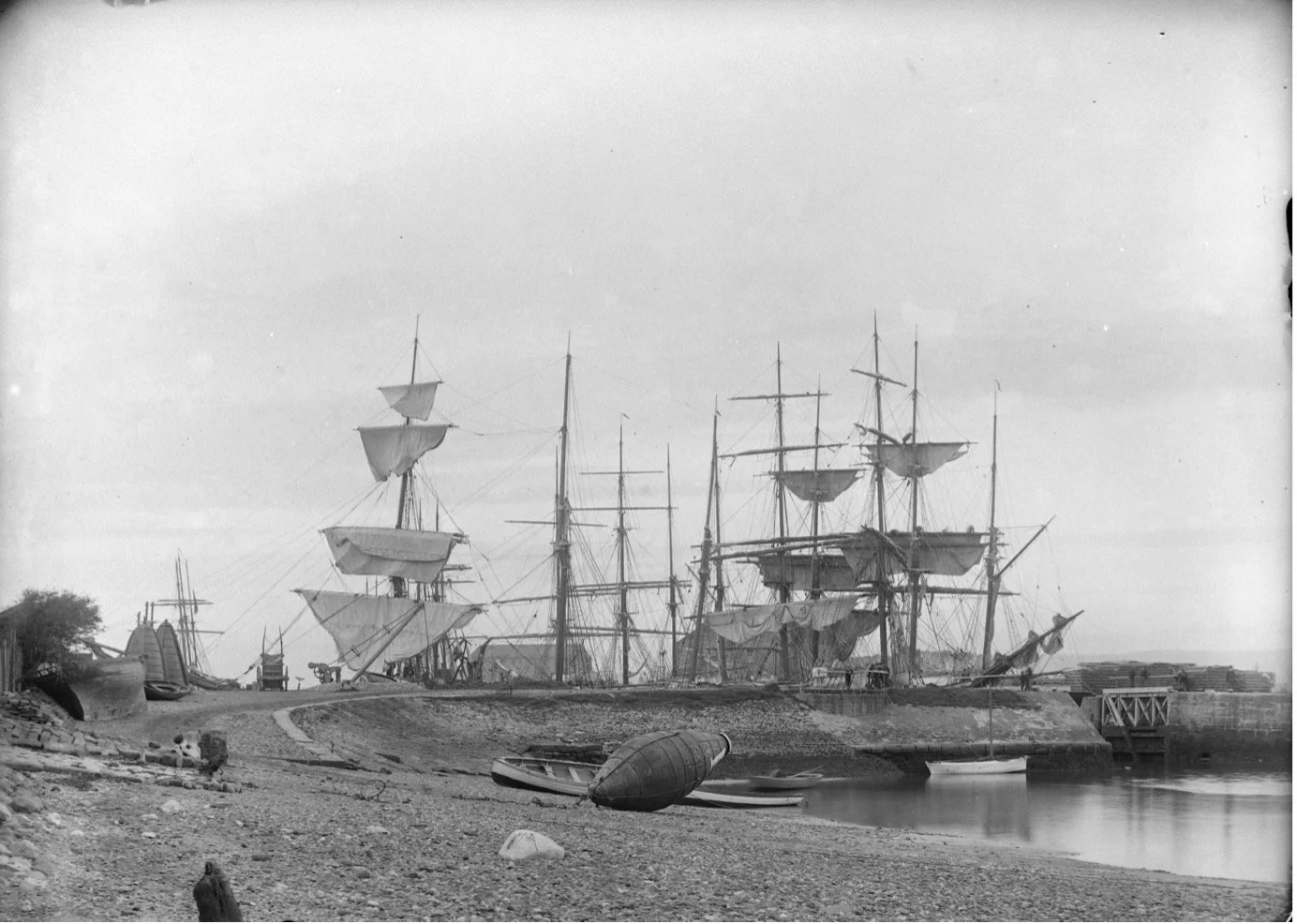
Sailing ships in Glasson Dock, c1890: A John Walker photograph courtesy Lancaster City Museums.
Friends visited, including Reekie, Oldham, and, importantly, William Wells.
William Page Atkinson Wells was one of Britain’s best-known landscape painters of the early 20th century. Introduced to the village by Philip, he spent several summers at the Point until moving to the Isle of Man in 1909.
This is his most famous Sunderland Point painting, which caused a sensation when displayed in 1909 at the Glasgow Institute of Fine Arts.
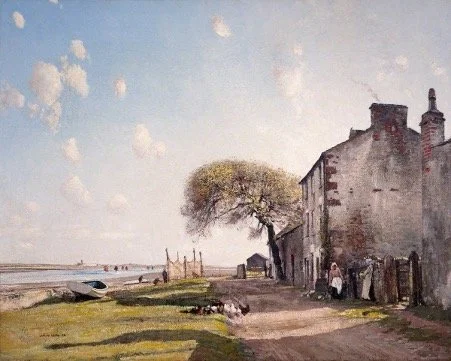
“A Lancashire Village” 1908. Courtesy City of Edinburgh Museums.
Wells lived in Preston, where he painted scenery for large-scale stage productions. He worked in Liverpool theatres while submitting paintings to the same exhibitions as Philip.
They painted together and both exhibited at the Royal Academy in 1906. Their works featured similar subjects, such as Wells' sketched view of the Second Terrace, which is a perspective similar to Phillip’s in “A Forgotten Lancashire Port” (as mentioned above).
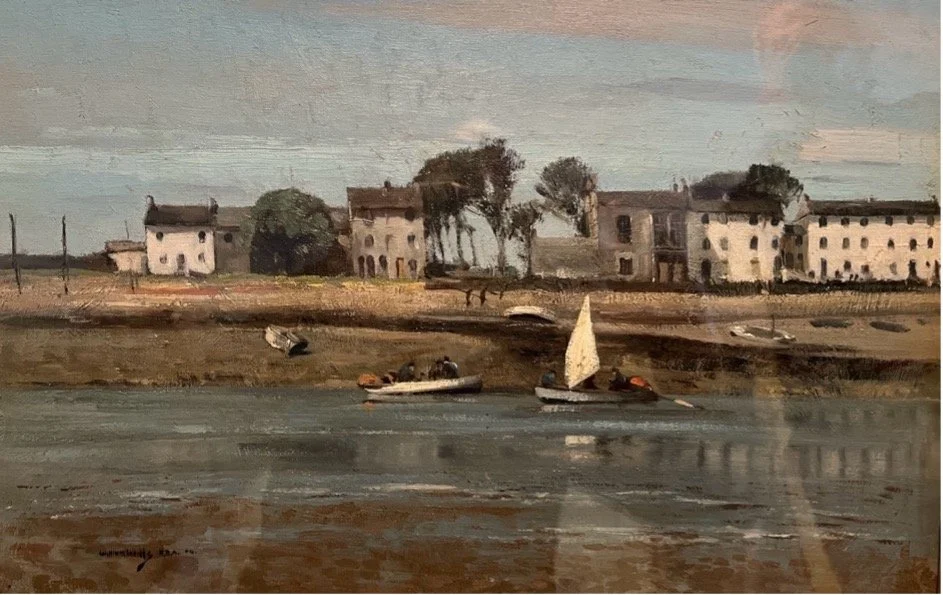
“Second Terrace at Sunderland Point” by William Wells, c. 1905: In a private collection.
When Philip’s ‘Sea Pinks’ was shown in 1908, a critic said he saw the influence of Wells. A much-admired painting and a favourite of Philip’s, he gave it to his future wife, Katharine Mellis.
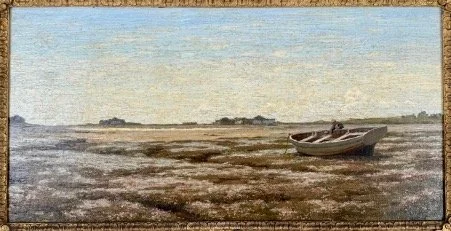
“Sea Pinks” 1908.
At the time of the initial Point visits, Wells had failed to sell any paintings and was seriously contemplating giving up. It was Philip’s friendship and encouragement—alongside the magic of SP—that persuaded Wells to persevere and create some of his finest works.
The Concerts
The family's annual musical performances at the Old Hall started in 1894, likely to help cover the overspending on the newly completed Mission Church. These events, aimed at village residents, continued for many years and eventually included Katharine. Philip, with his fine singing voice, was known for performing suitably polite comic songs.
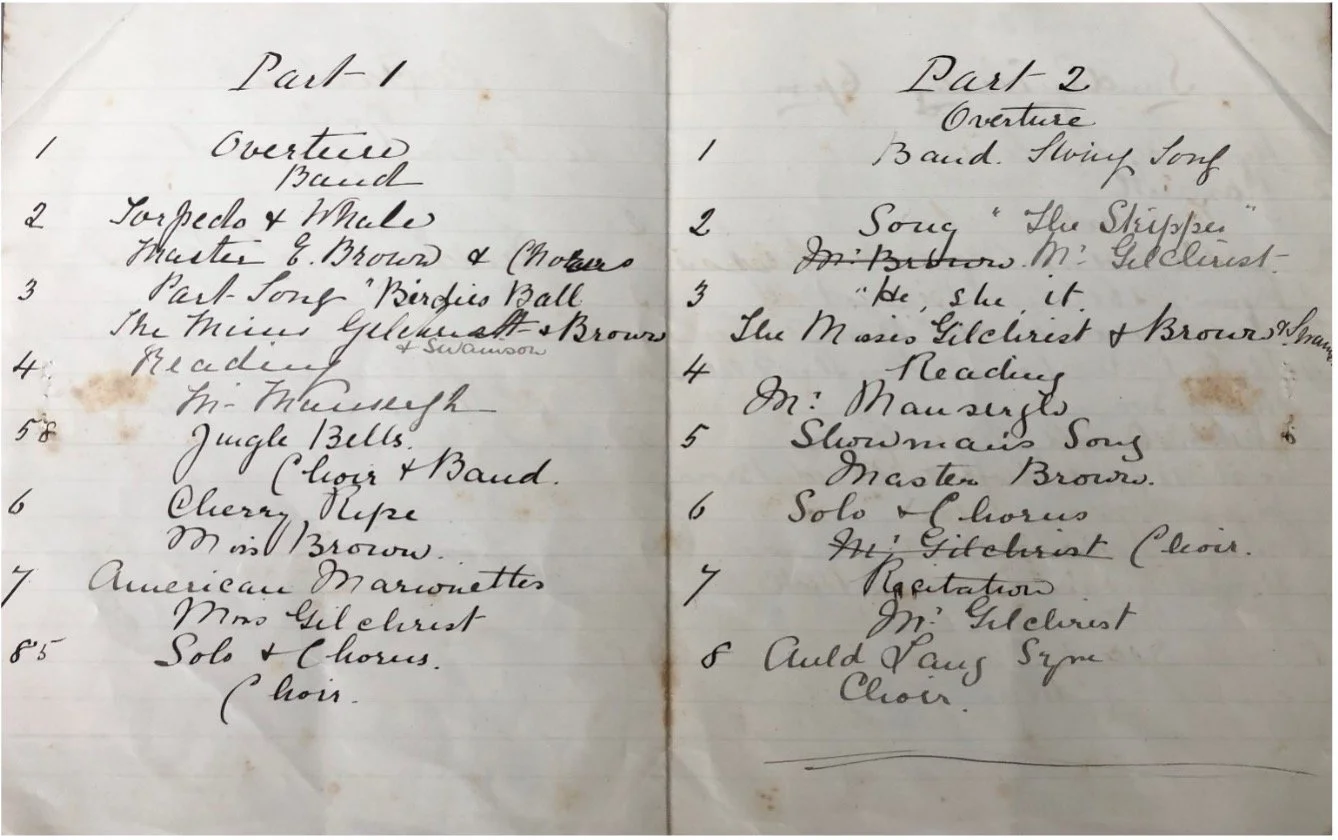
Programme for the concert held on 24th August 1894.
Reporting on the 1897 concert, the Lancaster Standard and County Advertiser reported, “Miss Mellis possesses a very sweet voice and is also an accomplished pianist”
The 1905 Exhibition at Southport
In October 1905, showing great self-confidence. Philip took over the entire Atkinson Art Gallery in Southport with an exhibition of 83 paintings.
Fortunately, wonderful photographs of the exhibition survive.
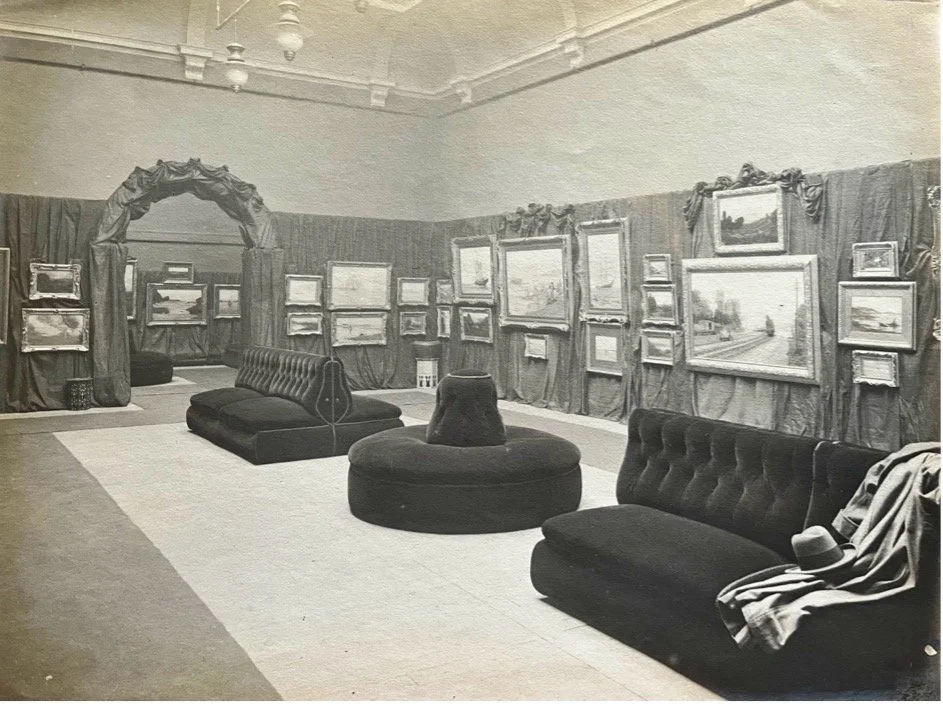
The Atkinson Art Gallery exhibition, 1905, room 1.
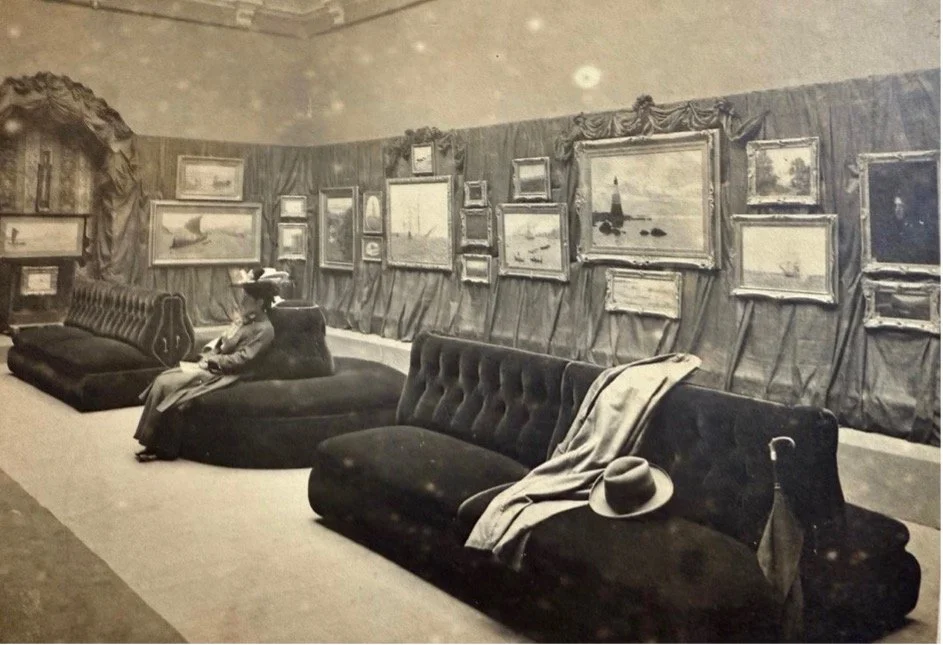
The Atkinson Art Gallery, room 2, 1905 (notice Philip’s hat, coat, and brolly in the foreground.
The large painting on the wall behind the sitter is the much-admired “The Coming Tide” (1904), the Plover Scar lighthouse is just recognisable.
It was a significant social event receiving extensive coverage in the local newspapers. The Mayor and Mayoress of Southport hosted a formal ' at home’ gathering of local dignitaries at the gallery. There was mention of Philip’s mother, who was attired in black brocade and a beaded velvet mantle. Her heliotrope bonnet had a purple ostrich tip and heliotrope strings’!
The superb “Southport Marine Lake”, which depicts the town’s famous boating lake, was a great success and was much praised in the local newspapers. ‘It is a scene that may be witnessed on any bright summer day, full of the gaiety of dancing small craft on gently rippled water.’
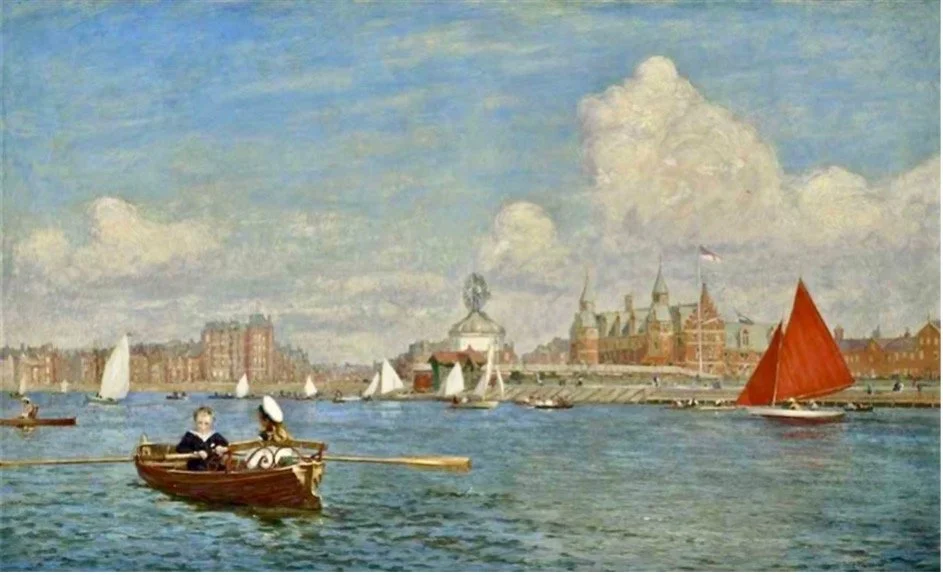
“Southport Marine Lake” 1905: in a private collection.
By 1906, Philip was receiving formal recognition as a professional artist. The Manchester Academy of Fine Arts elected Philip as a full member. This was despite some traditionalists objecting, saying he lived in Southport and had started his career in calico printing. Tom Mostyn’s persuasive speech secured his election. The Manchester Courier reported:
‘If a man could paint good pictures, he ought to be elected, whether he be a butcher, or baker, or candlestick maker, (to much laughter), as to lithographic artists, they paint better pictures than some who were professional painters, if they were a good enough painter, that was good enough for him’
For Philip, the greatest satisfaction was his election to the prestigious Royal British Academy in 1906, which allowed him to add R.B.A. after his name. Later in 1910, the Liverpool Academy of Arts followed suit, electing Philip as a full member.
1910: A year of success, great change and sadness
Philip, now in his mid 40s, was a considerable success. He had achieved his ambition to be recognised as a genuinely talented artist. He finalised a permanent home at Sunderland Point, and he married Katharine. His output of paintings was declining, and he planned retrospectives of his work, perhaps feeling his ambition and inspiration had begun to fade.
Sadly, later in the year, his beloved mother died.
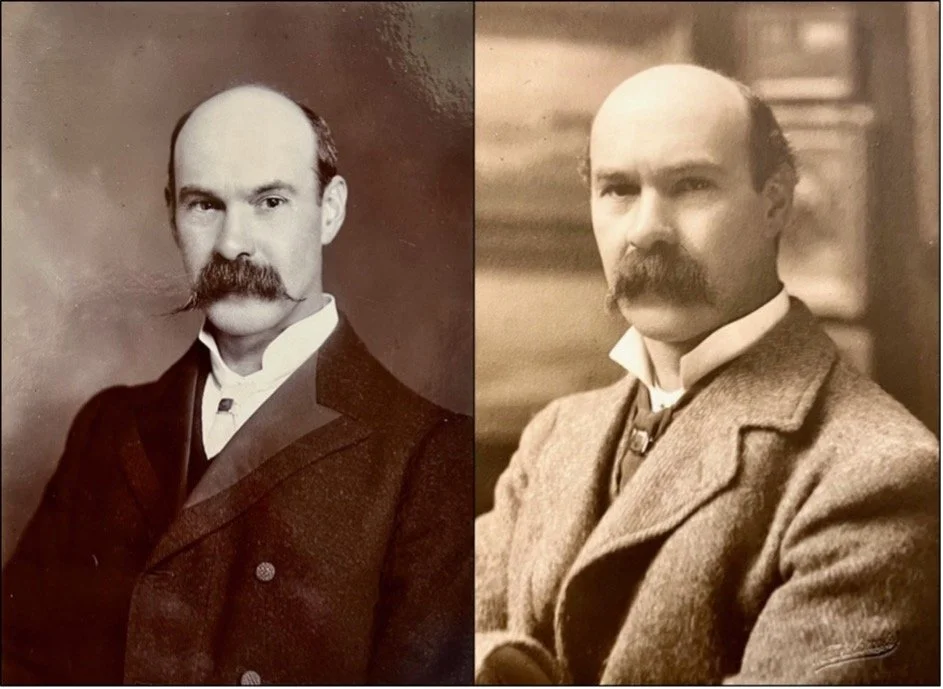
Two formal portrait photographs of Philip, on the left, taken in London, he is younger, very dashing, with an outstanding moustache.
Their marriage took place on April 14th 1910, in Southport. Philip was 45, and Katharine was 37.
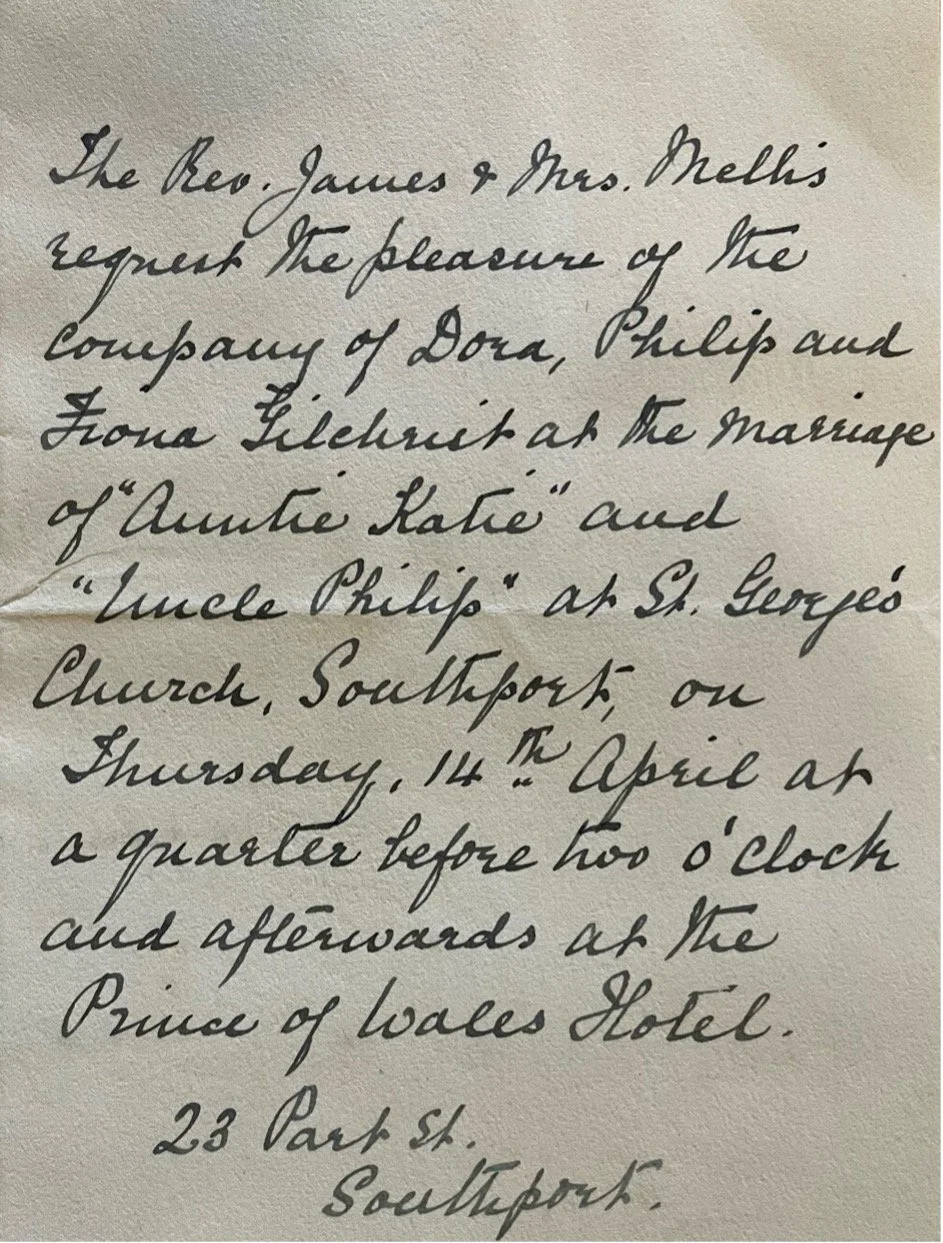
The charming wedding invitation was sent to Philip’s nieces and nephews, children of his brother George and his wife Edith (Swainson).
There are no surviving wedding photographs (nor any honeymoon destination). His brother, William, conducted the service, with his father-in-law, the Rev. James Mellis, in attendance. The best man (also lost in history) was Mr Ernest A. Williams. They moved into the new house.
Philip had leased the upper floors of Point Farm (No. 14) and created his first Dolphin House. He added the distinctive porch with an above-bay window, and stained-glass panels featuring dolphins were installed.
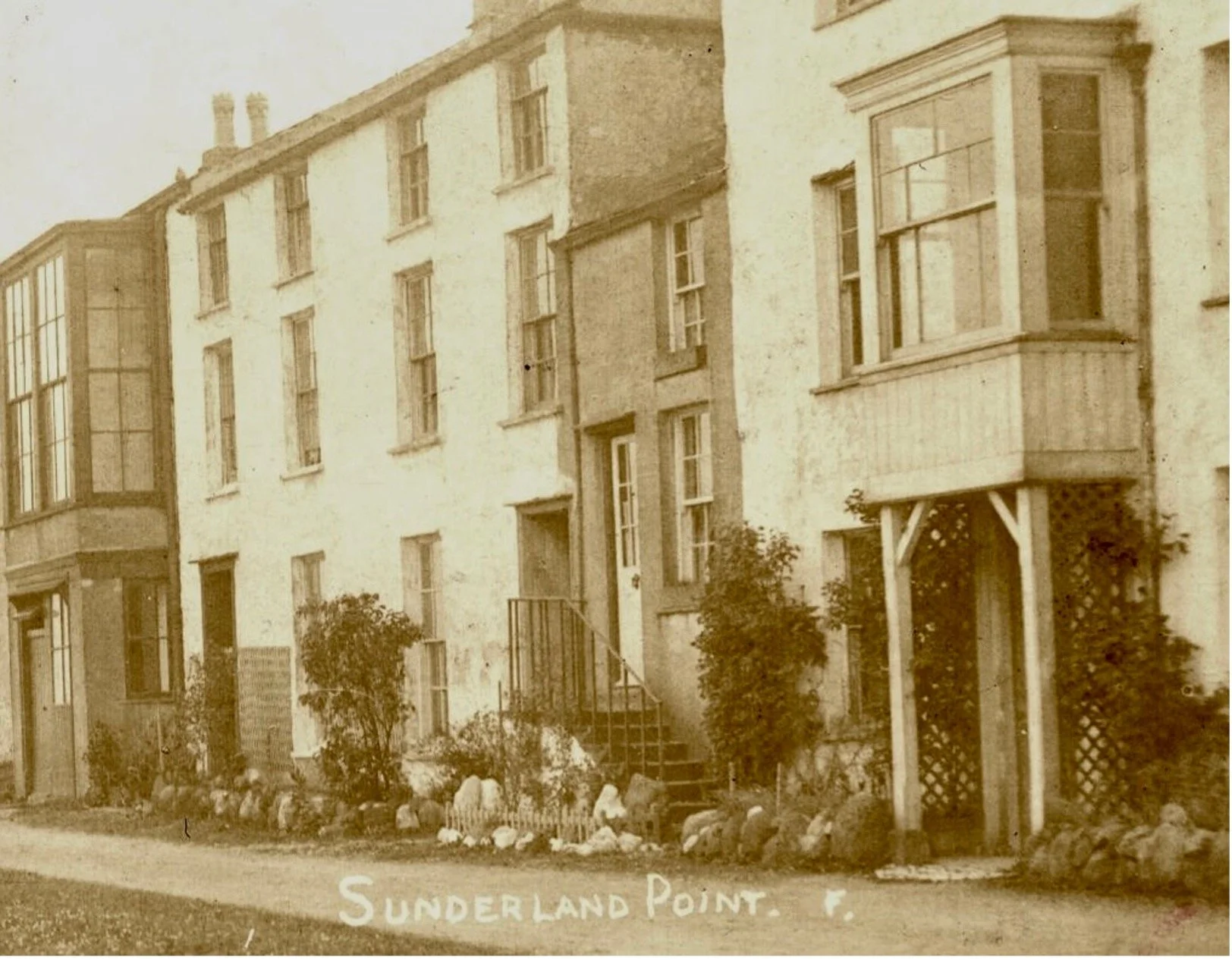
On the right, the porch and bay window at number 14 in the 1920s: Website collection
In a letter to his uncle William in 1909, he wrote, ‘I am going to live at Sunderland Point and have taken the house known as ‘Bowkers’ (where Wm Hodgson used to be), and I am busy with improvements. Plans and decorations are things in which I find much pleasure.’
The (first) Dolphin House
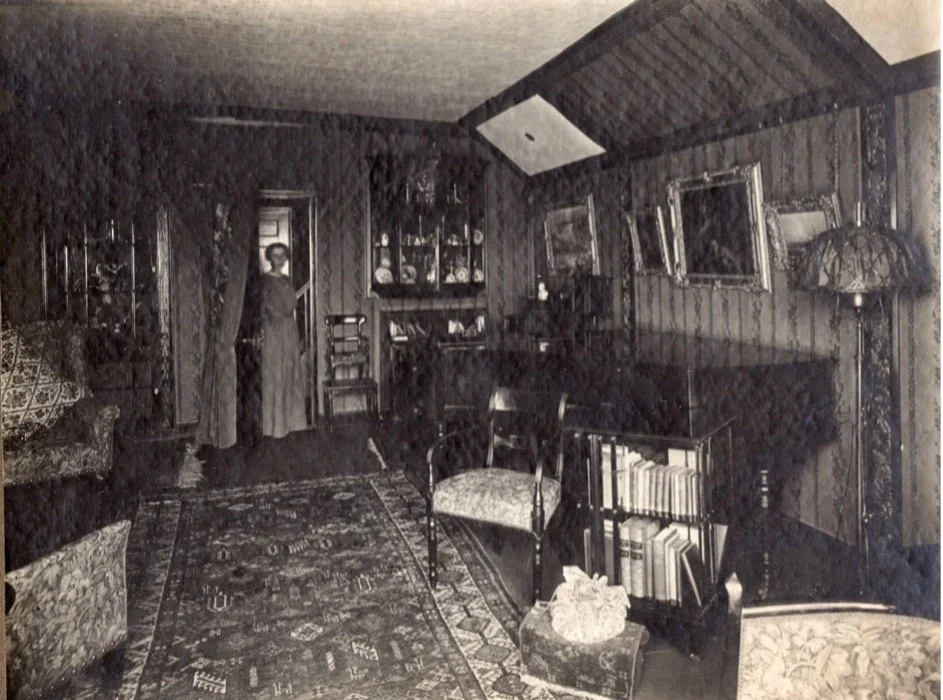
Inside the first Dolphin House, at Point Farm. Katharine is in the doorway.
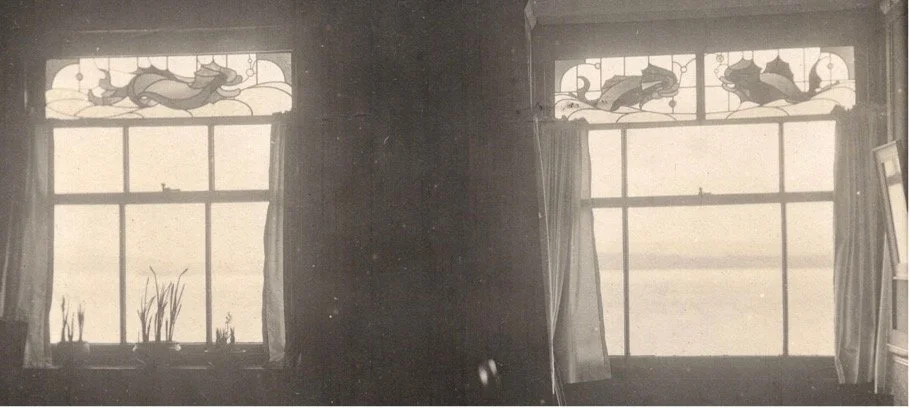
The dolphin windows, and a view of the river beyond.
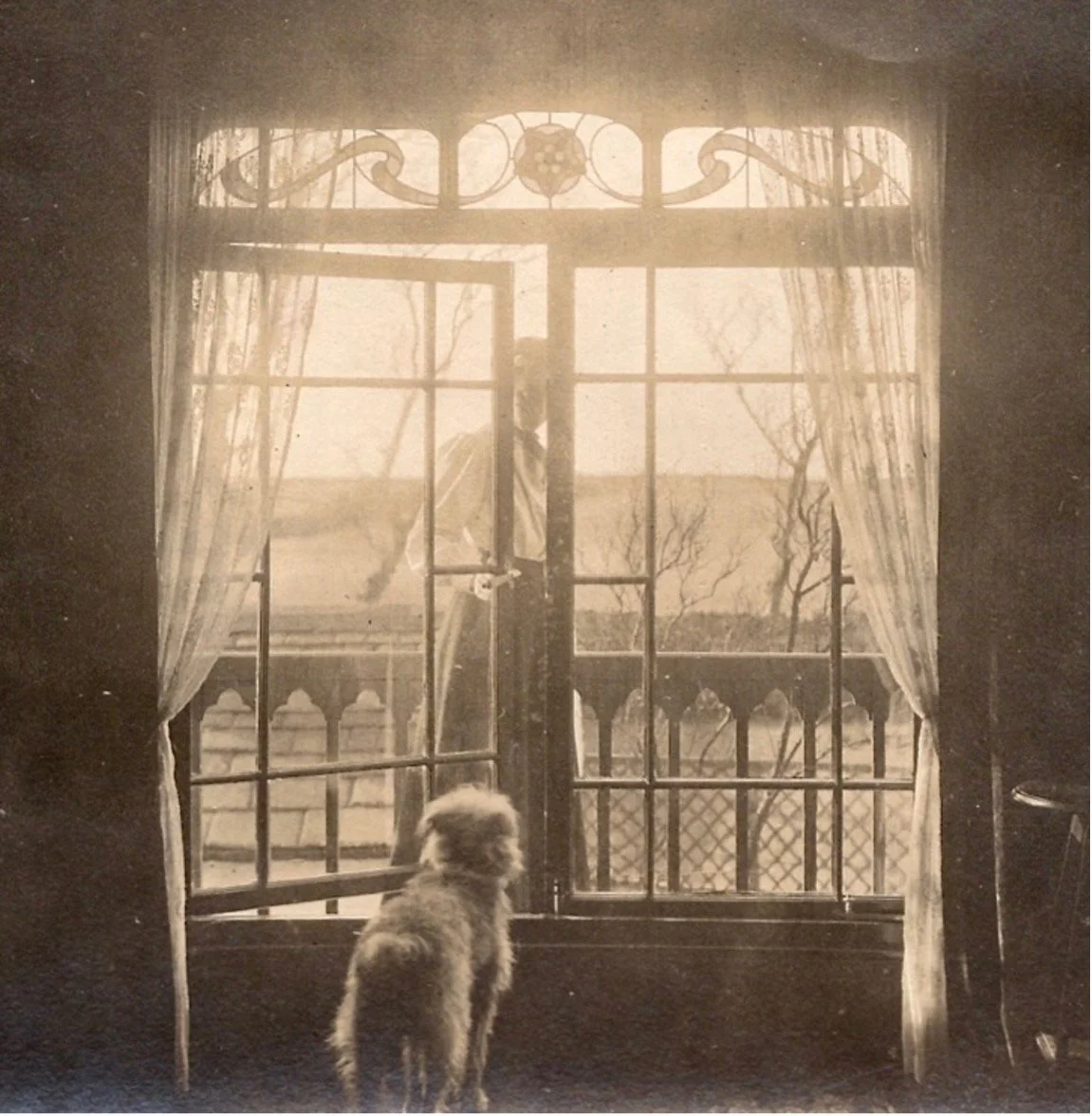
Katharine is outside the window at the rear of the building, her dog watching.
Just as Philip and Katharine had settled in, his brother George bought land at the Point that included the fields on either side of the Lane from the eastern to the western shores.
Philip leased a strip of land from George between the Terraces facing the river and began actively designing and constructing a new, much larger Dolphin House. (As there are many photographs of the building project, we have prepared a separate account.)
The 1910 Exhibitions
Philip organised major exhibitions of 79 paintings (including 15 on loan) at the Manchester Athenaeum, immediately followed by a display at the Glasgow Institute of Fine Arts.
There were positive reviews, many praising the chance to see his best-known paintings again.
The Southport Guardian wrote: ‘He [Philip] knows the sea in every mood; he appreciates the correlation between land and sea; he can paint you a bright, bubbling sea... or a calm, placid sea’
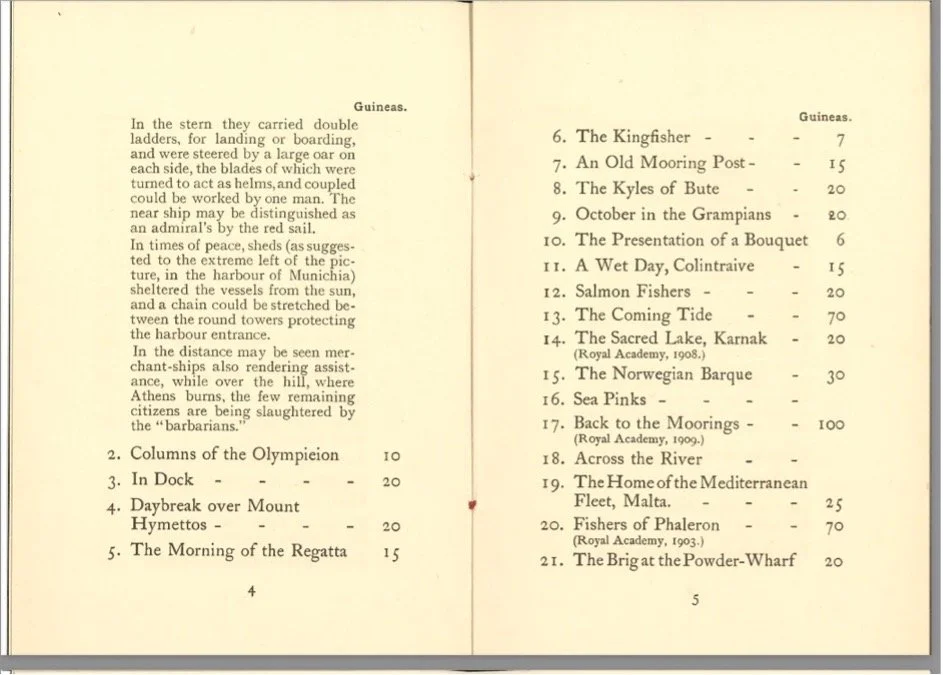
Exhibition at the Athenaeum, Manchester, 1910, pages from the catalogue
This is a favourite from the exhibition, number 17, also chosen for the Summer Exhibition at the Royal Academy.
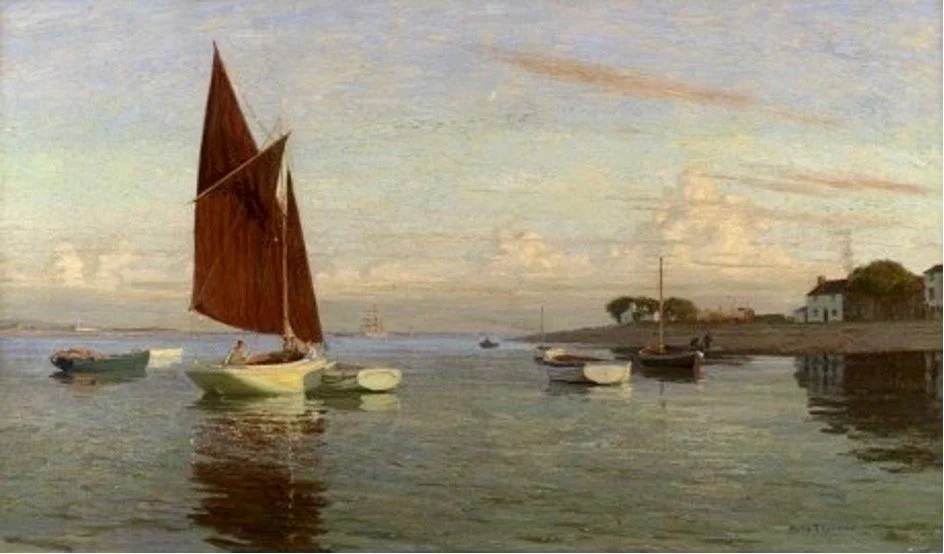
The subline “Back to the Moorings”, in a similar dreamy style to “A Forgotten Port”, was shown at the Royal Academy in 1909. In a private collection.
In 1912, as one of three professional painters, he was chosen to join the hanging committee for the Autumn exhibition of the Liverpool Academy of Arts at the Walker Gallery.
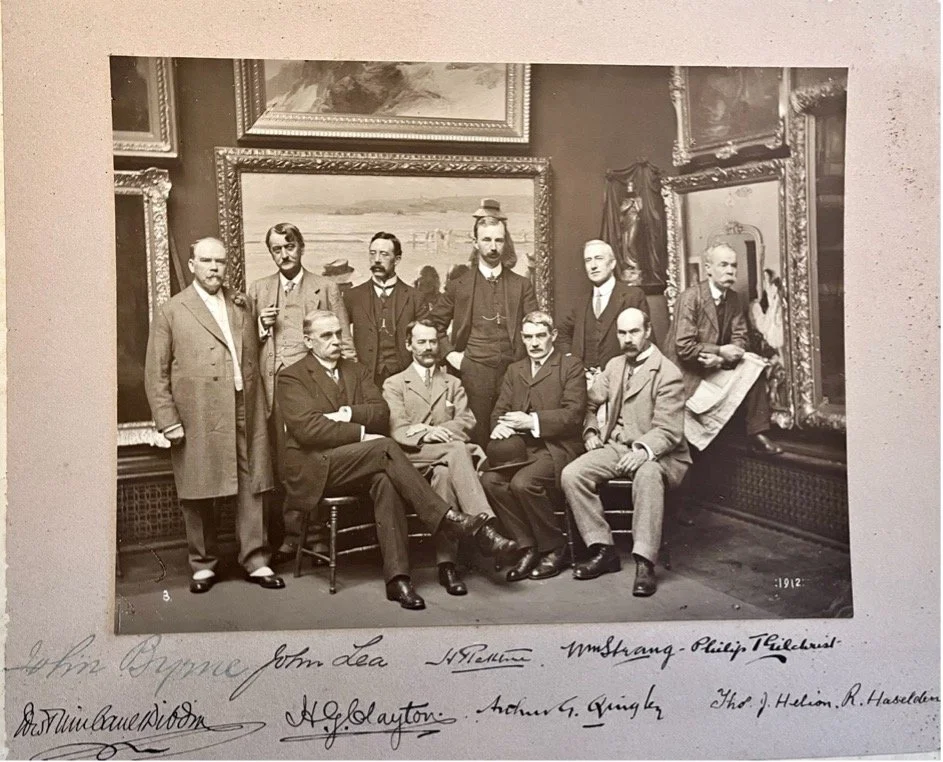
In this magnificent photo of the seriously minded committee, and their signatures, Philip is seated first on the right.
War and Responsibility
During the First World War, while living at Sunderland Point, Philip was required to obtain military permission to travel more than three miles to sketch. Joining other villagers, he volunteered for river-watch duties.
In the boathouse at Dolphin House, he established a small workshop where he crafted wooden crutches for soldiers wounded at the front.
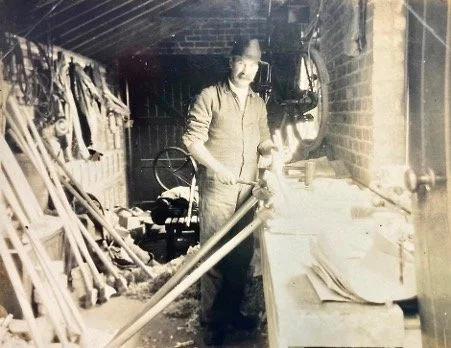
Philip is making crutches in his boathouse.
In 1915, he agreed to include his highly admired painting “The Rainbow” (1912) in an exhibition at the Royal British Academy in support of the war effort.
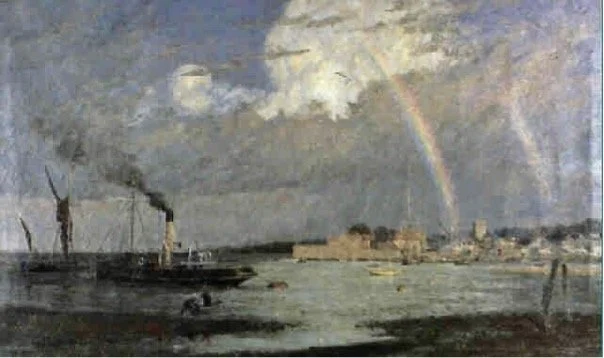
“The Rainbow” 1912: In a private collection.
For many years, Philip served as President of the Sunderland Point Reading Room. This organisation of villagers provided newspapers and periodicals for the well-used room, which was also the centre for a variety of often lively social activities.
This photograph shows villagers warming themselves in Philip’s studio, in the same building as the Reading room, sitting on beer crates beside a blazing fire, with a concertina ready for song.
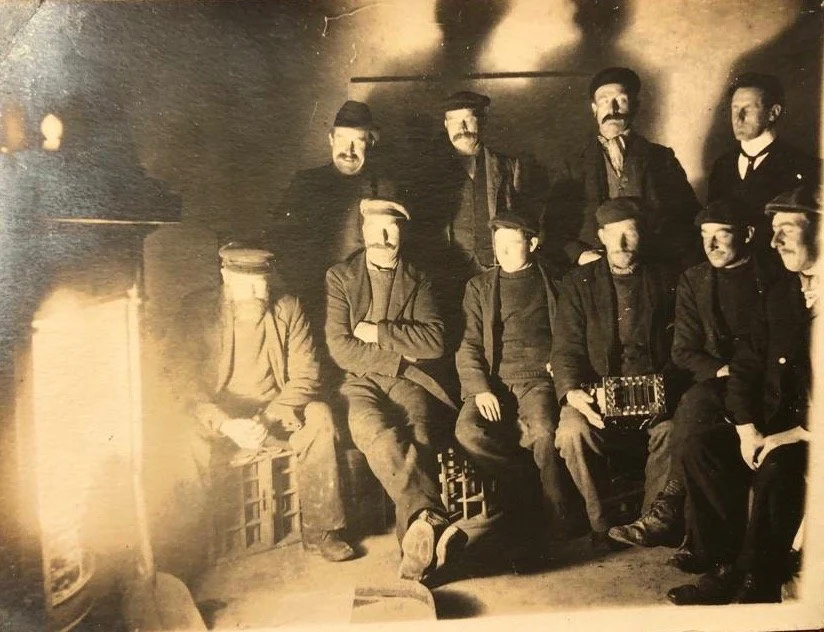
Inside the studio.
In 1917, George, Philip’s brother, tragically died after a long illness at age 49, leaving Edith with four young children. Dora, the eldest, was just 13. The following year, in 1918, Philip’s father also passed away.
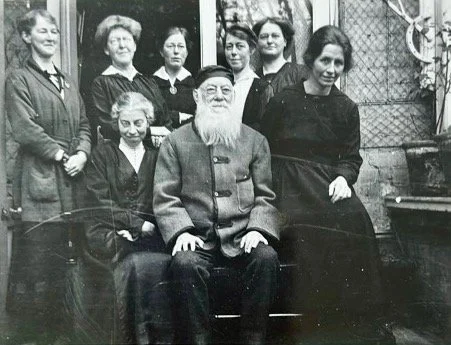
A family group at Southport, 1917.
They are smiling in this group photograph, but it’s a fateful image, taken in 1917, sometime after George junior's death, one of the last at Southport. George senior is seated in the centre.
Standing at the back are Philip’s five sisters, Theo, Anne, Helen, Dora and Emily. Seated on the left is his wife Katharine, and (uncomfortably) half-seated on the right is Edith, George junior's widow.
The responsibilities for his father's and brother's financial and property affairs largely fell to Philip. The land in the village owned by George was transferred jointly to Philip and three of the sisters: Dora, Anne, and Helen, with Dolphin House in Philip’s sole name.
Reluctantly but accepting it as his duty, Philip took over the daily management of the estate, including routine tasks such as arranging tenancies and overseeing repairs.
The family left the house in Southport. Anne and Helen relocated to Stodday, near Lancaster, on the opposite side of the river. Dora was in Liverpool.
Philip’s sister, Theo, married Alfred White in 1911. He sustained serious disability while serving in the army during the war and was unable to return to his banking career. In 1919, Alfred bought The Moorings (number 3) in the village from Arthur Mansergh.
The remaining sister, Emily, moved into a smaller house in Southport.
Following the bereavements and his new duties, Philip virtually ceased painting until the 1930s, apart from one remarkable commission.
Queen Mary’s Dolls House (1922-24)
In 1922, he was asked to create a miniature painting for the ‘Queen Mary’s Dolls’ House’, part of the 1924 Empire Exhibition and now on display at Windsor Castle.
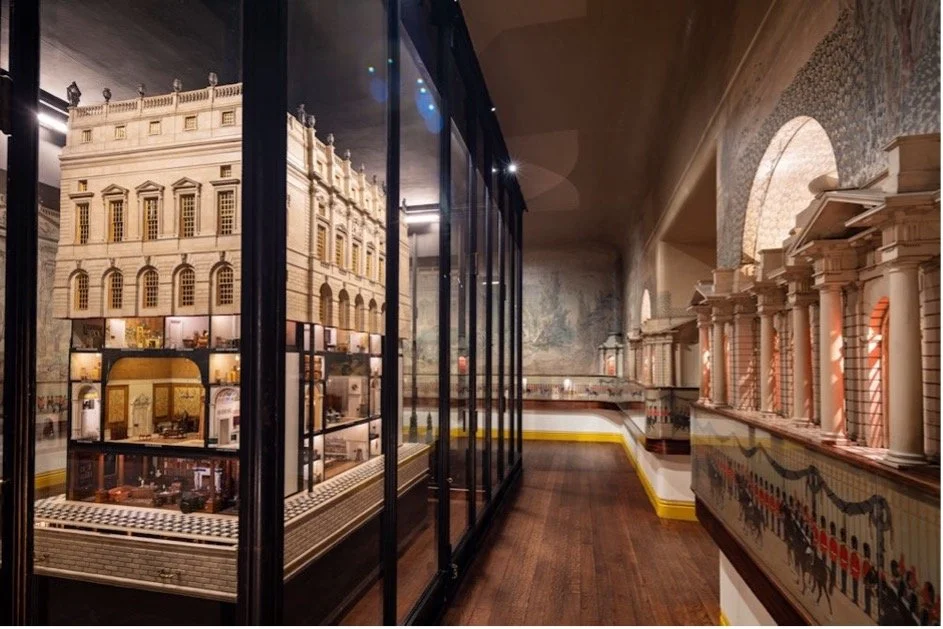
Queen Mary’s Doll’s House, Windsor Castle: by permission of the Royal Collection Trust.
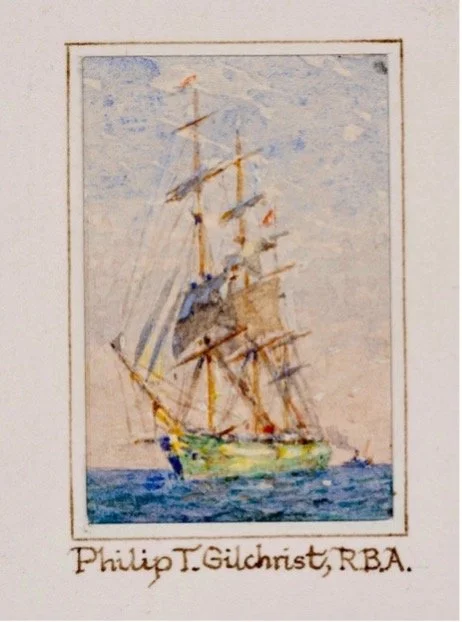
Measuring just 3.7 × 2.4 cm, it depicts a ship at sea and is inscribed on the reverse: “When my ship comes home.”
Family Life, Loss, and Later Work
The close, devoted relationship with his sisters continued, including Edith (George’s widow), who, with her children, stayed intermittently at Hall End House (number 22).
Philip was exchanging letters with Dora in Liverpool, and in one of them, he describes the effects of the Great Storm of 1927. The letter is clearly affectionate and offers a vivid account of what happened and its impact on the villagers (as described in our article).
When Dora’s husband, the Rev. William Swainson, retired in 1948 from his role as vicar at Hornby in the Lune Valley, they moved to live at the Old Hall.
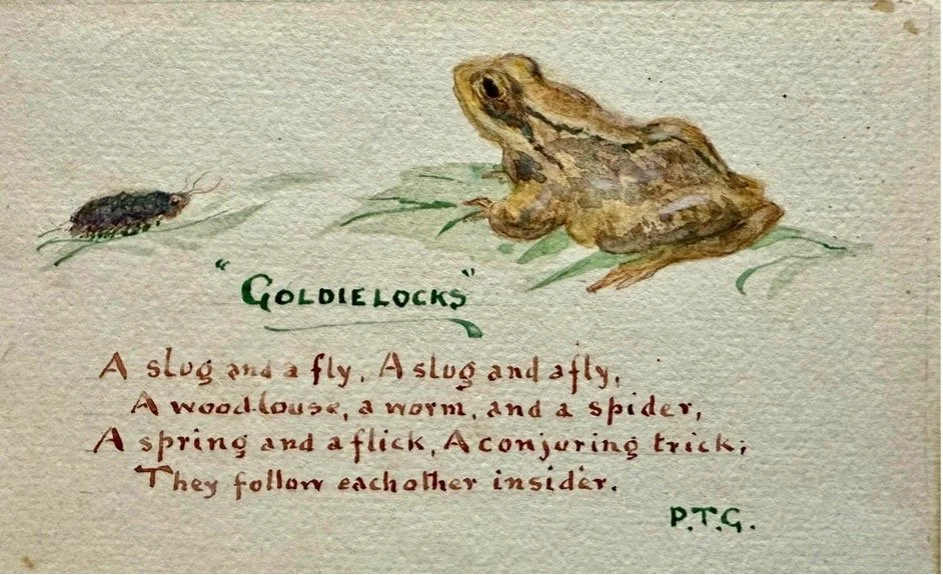
At Christmas and birthdays, Philip sent charming, handcrafted greeting cards, many with rhymes, to his sisters and other close relatives. Here are two examples.
This one is for Theo and includes the sundial, once at Bella Villa, now in the Garden at Dolphin House, a symbol of shared childhood.
The recipient of this delightful card is unknown.
Apart from welcome visits from family and picnics in the garden, Philip and Katharine lived a mostly quiet life. It’s known that Katharine suffered from a lengthy and terminal illness. In photographs of this time, she often appears sitting quietly, a pale figure, as in this example.
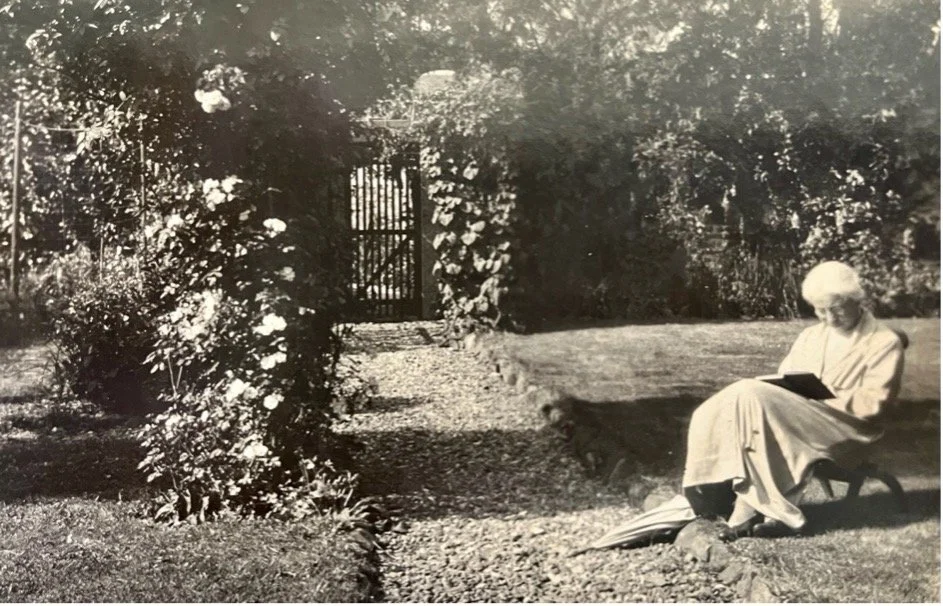
Katharine in the garden at Dolphin House, perhaps early 1930s.
She died in July 1932, at age 60. In a letter dated June 1933, Philip wrote, ‘This is a rather forlorn house – my wife died last year’. He added, ‘Since the days of the war, I have done little painting and only exhibited on a few special occasions. Family affairs occupied my time.’
Perhaps to console himself after this loss, Philip painted more frequently. In addition to new works, he revised older paintings (some of which he reduced in size) and created new versions from existing drafts. Between 1934 and 1954, he completed 28 paintings, including several watercolours.
He maintained his membership of the Southport Palette Club, exhibiting seven works, including this one, in 1935 (when Philip was 70). It was also displayed at the Royal Academy in 1936.
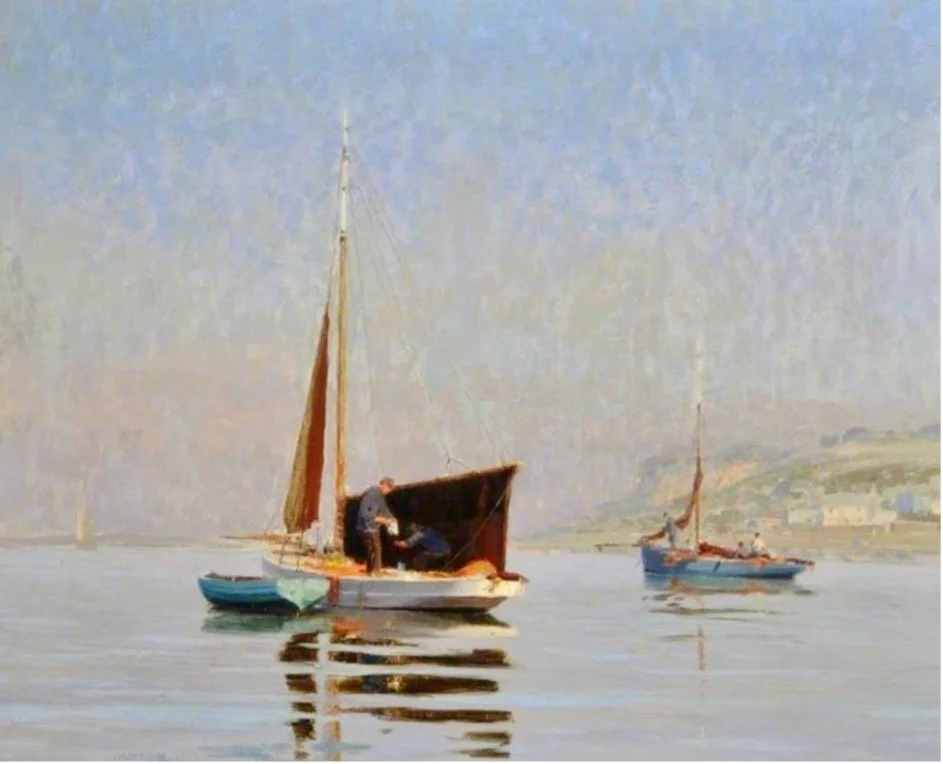
“Tar for the mainsail”, 1935. A glorious blend of colours. In the collection of Doncaster Art Gallery.
In Hugh Cunliffe's book about Sunderland Point, he writes that Philip always sent him a postal order on his birthday and that, ‘I remember him as a rather remote bearded figure and a shy, kindly man.’
Philip’s great nieces, Janet and Christine (nee Mowat), have only vague memories of Philip from their teenage years in the 1950s. Christine thought of him as ‘a kindly, gentle old man who enjoyed being visited by any and all members of the family.’ She believed ‘he had given up painting by then.’ They also remember the house as very dark, filled with paintings.
Dorothy Calverley also remembers Philip: “When Ken and I got married, we got presents from everyone at the Point, including Philip Gilchrist, who gave us two paintings, but they weren’t his own - they were of Chinese scenes.
“I remember my dad, Arnold, moaning about them, saying: ‘What are you going to do with them? Why’s he given you paintings?’ But Ken and I were really grateful - and we went round to thank him personally at Dolphin House. I’d always been a little frightened of him when I was little - with his beard, he seemed like Santa Claus.’
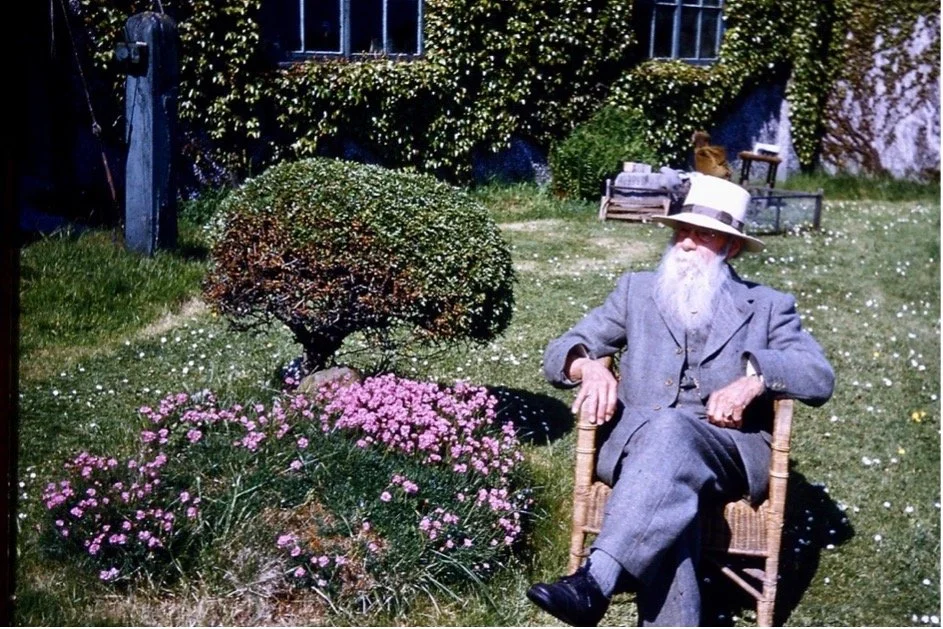
Philip in the Garden at Dolphin House. A Peter Hall Photograph
During his final years, he was mostly confined to his bed and cared for by his housekeeper, the formidable and dependable Miss Edith Stamper, a loyal helper who protected Philip’s privacy from unexpected visitors.
Philip died on 31 March 1956, aged 90. Philip’s sister, Dora, and her husband, William, came to live in Dolphin House and Edith Stamper was found a home in the village.
The Legacy
Beginning in 1900, Philip's comprehensive records document over 250 paintings. However, the true count is higher, as not all images before 1900 are recorded. His works were sold, donated to public galleries, or generously gifted to family, friends, and villagers.
Philip is remembered for several outstanding paintings, many of which depict Sunderland Point, and for his significant contribution to British Marine Art. He was a highly skilled technician with an exceptional talent for colour.
The superb collection of photographs, papers, and artefacts, well kept by his family, reveals the strong family bonds centred on Philip and his sisters. Later accounts may depict Philip as a somewhat distant, slightly austere figure, but the preserved archive clearly demonstrates he was a sincere, humorous, generous, and sensitive man who fulfilled his artistic ambition.
We give special thanks to the Gilchrist family for the open access to their collection of Philip’s paintings and material about his life, and for permission to publish on the website.
Next time, a film star…sort of.