Bobby Orr’s Horse
‘A Distressing Sight Near Skerton Bridge’
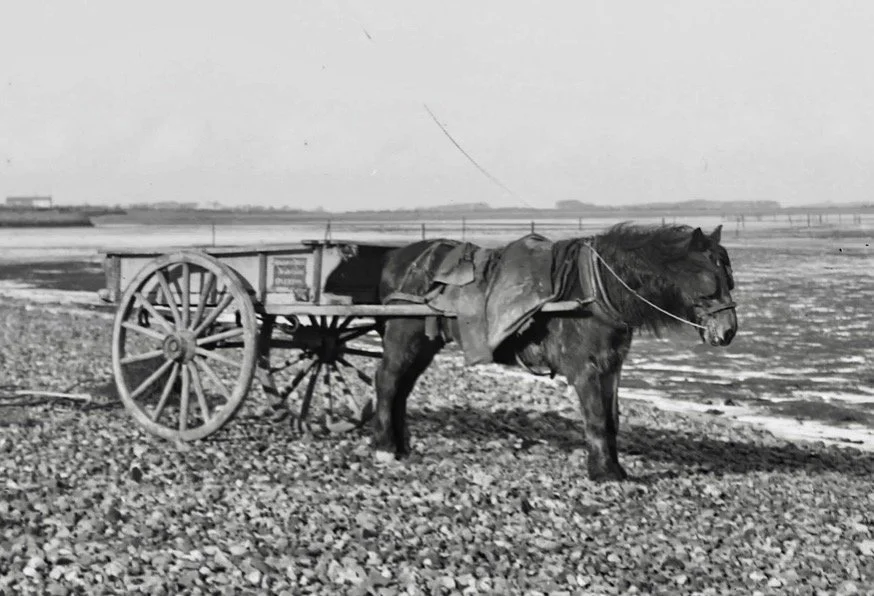
A pony and cart at Sunderland Point in the 1890s: John Walker photo courtesy Lancaster City Museums.
On 11 February 1888, a Sunderland Point fisherman was stopped on his way into Lancaster by a Police Constable and an officer of the Society for the Prevention of Cruelty to Animals. Robert (Bobby) Orr, a resident of the village and a part-time carrier, was reported to the authorities for working his horse in an unfit state.
Shortly after, he was summoned to the Court in Lancaster to answer for the offence.
Growing concern about animal cruelty generated intense public interest in the case, which received extensive coverage in the press. This summary is based on the report published in the Lancaster Gazette on 25 February 1888, nearly 150 years ago.
Robert, aged 54, lived in the village at the Old Customs House (no. 3A). With him were his sister Elizabeth, aged 51, and her daughter Ann, aged 30. All three were born in Middleton and had lived in a cottage in Carr Lane, where his father, John Orr, had a small three-acre croft. On his father's death in 1873, they moved to the village. All three were unmarried.
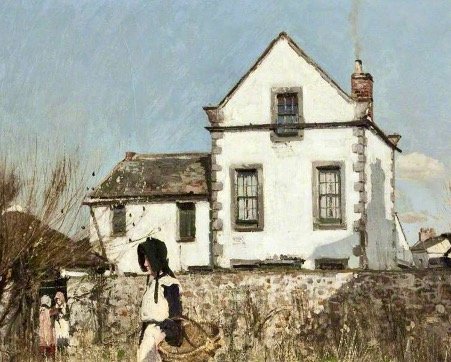
The Old Customs House: Extract from a William Wells painting c1906: Courtesy Harris Museum and Art Gallery, Preston.
Bobby was a hardworking man, just scraping a living. It was not looking good for him on his day in Court.
The Court Proceedings
It was held before E. B. Dawson, Esq. (Chairman), E. Clark, Esq., and A. Seward, Esq.,
The experienced chairman, Edward Bousfield Dawson, was a barrister-at-law, called to the bar at the Inner Temple after studying at University College, London. He had recently been appointed Vice-Chairman of the Lancaster Quarter Sessions. He was also a prominent civic leader and landowner in Lancaster, living at Aldcliffe Hall.
E.B. Dawson by R. E. Morrison. Hanging in the Shire Hall at Lancaster Castle: Art UK.
(The use of bold type is by us highlighting key details)
The Case for the Prosecution
In the newspaper report, Inspector Temperley of the Society for the Prevention of Cruelty to Animals said that at 10 am on Saturday, the 11th inst., he was on duty near Skerton Bridge and saw the defendant driving a decrepit old pony attached to a cart loaded with mussels. The animal was much distressed and very lame on three legs.
On examination, he found the left foreleg very much inflamed, the animal suffering from incipient ringbone and a contracted tendon, and quite unfit for work. (This is a painful degenerative limb disease developing with age and work.) However, there were no sores or wounds on the pony
He said the defendant told him, “the pony had been bad on and off for some time and was 28 years old, and that if he would forgive him, he would not do it again”.
Pc Sandham, who accompanied the Society’s Officer, gave corroborative evidence, saying the pony’s left fore foot was very hot and inflamed.
During questioning, Pc Sandham stated that the load on the cart weighed approximately 2 cwt (101 kilograms), including a bag of mussels, some baskets, and blankets.
The Defence
Bobby said he had only worked the pony for about five or six days during the winter. It had been lame before, but he thought it a good deal better. He had to bring the mussels and thought he would try it.
“It went right enough at first,” he explained, “but began to be worse on nearing the town.”
He disagreed with the policeman, saying the load was only 1.5 cwt (75 kilos).
Bobby then called three witnesses to speak on his behalf. The first was Robert Mansergh.
(Robert was a leading Lancaster businessman and property owner at Sunderland Point, who was about to build the big red-brick house he would call ‘The Moorings’), who said:
He had known the pony for a great number of years, describing it as “a notorious pony and the ringleader of all the ponies and horses in the neighbourhood”, and they had 15 to 20 on the loose on the marsh.
The pony had led many horses into trouble over the last 15 to 20 years. They had been obliged to hobble it, and it had become so used to it that it went as if lame. (Hobbling limited the animal’s stride; it could still stand and graze but could not run or wander far.)
The defendant was the last man to be cruel to anything. He was an innocent, kind-hearted man who scratched his living off the skeer. Since the end of summer, when the horse began to be lame, the defendant had walked to town three times a week, carrying the mussels on his back, and on returning carried a stone of corn on his back for the Galloway (feed for a type of horse).
For the last few weeks, he had come to Lancaster with the pony once. He could not pick a cwt of mussels in two days if it were to save his life. The pony formerly belonged to his father, and neither he nor his sister could bear the idea of “putting it away or doing anything with it”. It had a full run and plenty to eat.
He concluded by saying, “I think the Officer has piled it on pretty thick this morning”
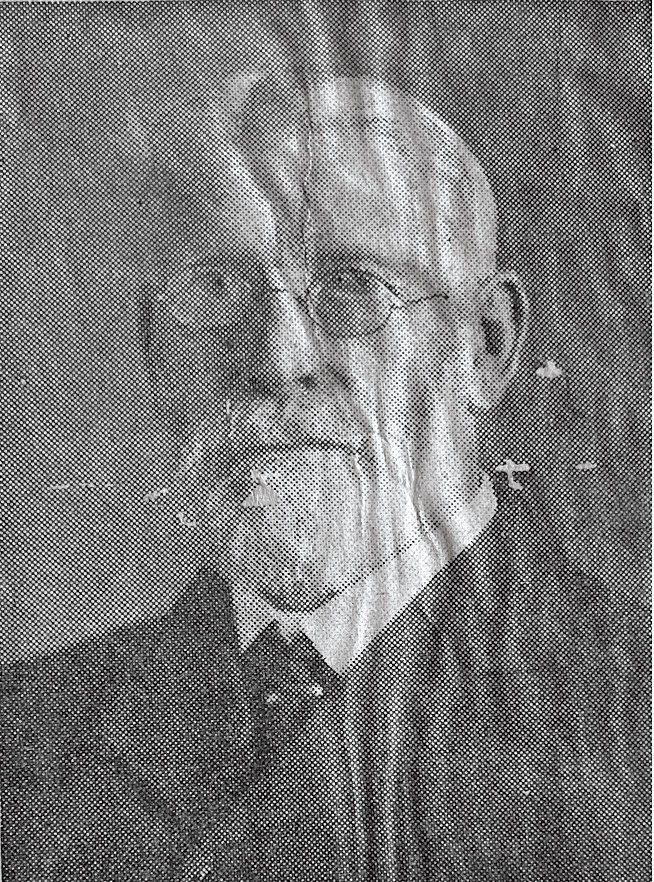
Robert Mansergh, from a newspaper cutting in a scrapbook belonging to James W Gardner: From the collection of Rosemay Lawn
Next, Bobby called seventy-five-year-old Thomas Swainson (who had been the Town Clerk of Lancaster for almost 30 years. He had owned Hall End House, number 22, in the village since 1872.)
He gave the defendant an excellent character, describing him as “a kind-hearted man, and was sure he would not be guilty of cruelty to any animal”.
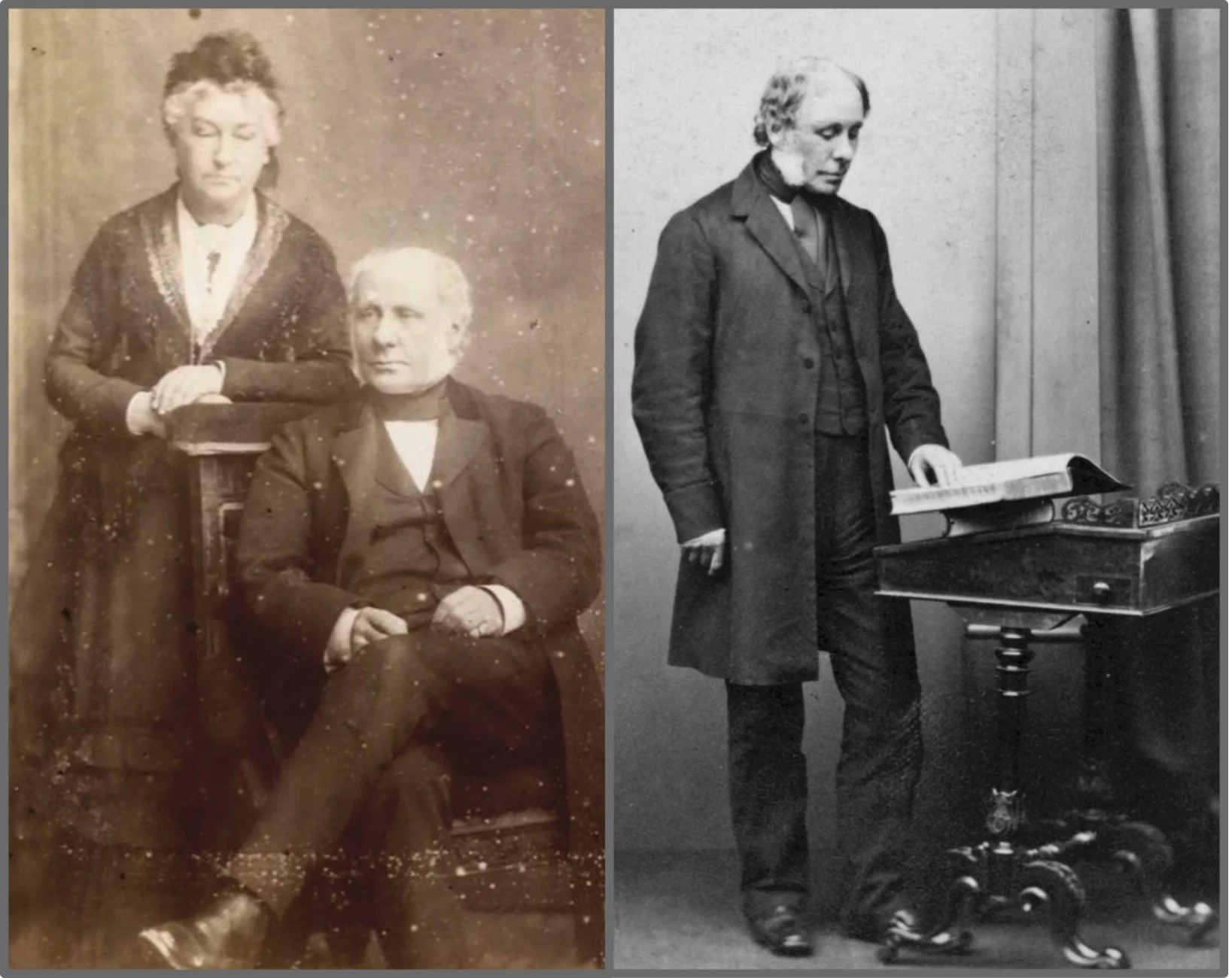
On the left, Thomas and Sarah Swainson, courtesy the Gilchrist family and right from the Red Rose collection of Lancashire County Council
Finally, Bobby called Arthur Mansergh (Robert Mansergh’s son), who corroborated the evidence of the last 2 witnesses.
He added that, although not a veterinary surgeon, he “had a good deal of experience with horses and had examined the pony’s feet, finding no inflammation. It had been lame, and there had been a gathering on one foot, but that had gone away”.
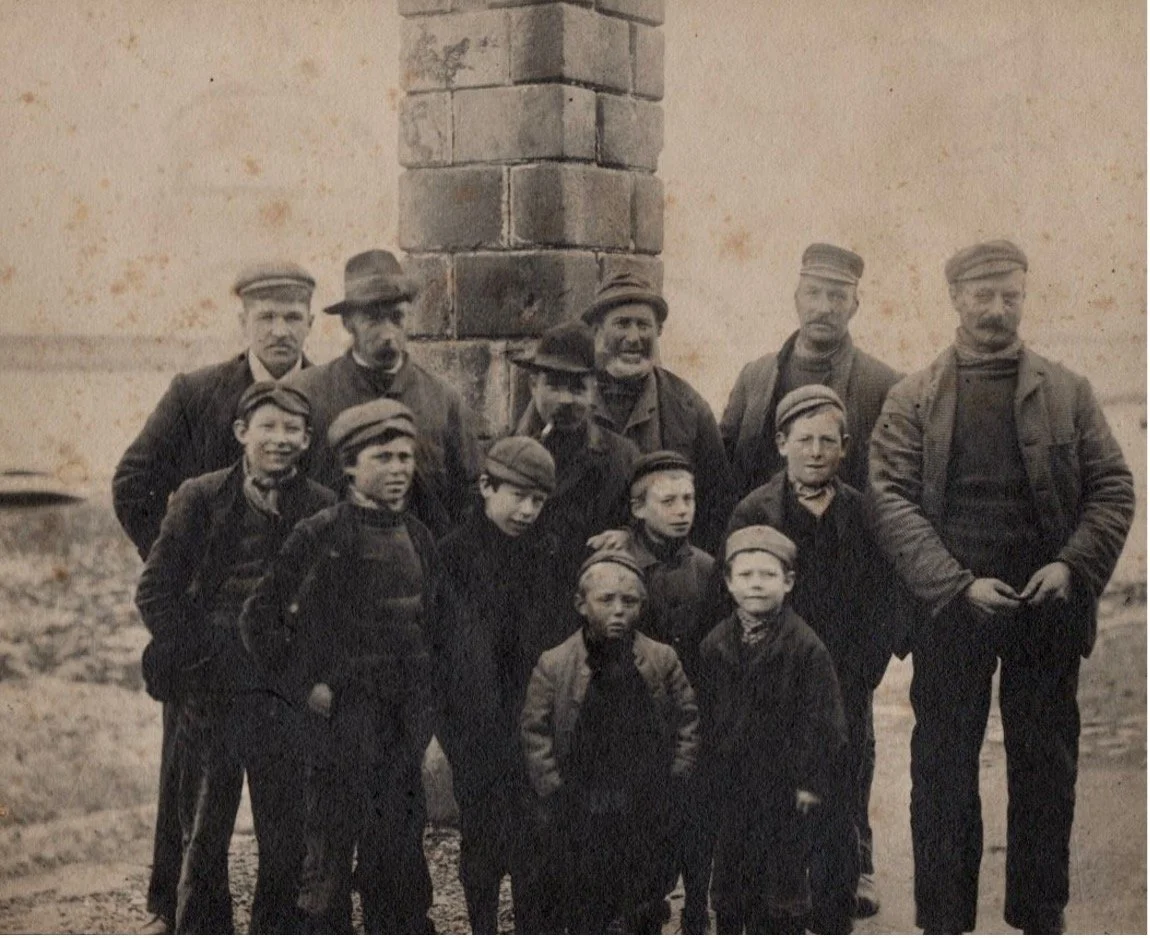
Arthur Mansergh would have been 21 at the time of the court case. Here he is, top left, in a contemporary (and favourite) photograph: From the collection of Rosemay Lawn.
The chairman adjourned the case to consider their verdict. Bobby had all but admitted that by the time he reached Lancaster, the horse was lame.
An Adjournment
Now we should pause for a moment. This is a remarkable story. Bobby was semi-literate. He had worked as a labourer on his father’s small farm before trying his hand at fishing - mostly the back-breaking work of scratching for mussels. He had some found work transporting goods to and from Lancaster, but was reliant on a 28-year-old horse inherited from his lond-dead father. His sister kept house, and Ann, her illegitimate daughter, was a washerwoman in the village.
His life was such that when the pony was lame, he had to walk to Lancaster three times a week, carrying a sack of mussels on his back, and then return with a stone of corn.
And yet, the aged Thomas Swainson, the venerated Town Clerk of Lancaster, and Robert Mansergh, who had grown his father’s oilcloth business to national standing, came to speak for him.
They will have volunteered to do this. They will have heard about the case and, having known Bobby, felt it their duty to come to the Court.
It will come as no surprise that Messrs. Swainson, Mansergh, and the chairman, Dawson, knew each other well. They were at the summit of Lancaster civic life. They served together on committees covering school attendance, the development of the hospital and medical services, numerous charities, and the application of the Poor Law.
Both Mansergh and Dawson were dedicated members of the Congregational Church.
All three were highly principled religious men and members of temperance societies and would have sought opportunities to refuse an alcohol licence that came before Dawson.
The Verdict
We think the Bench's deliberation was short. For Dawson, the words of these two men carried great weight. They were back in Court, and, as the newspaper reported, the Chairman addressed the defendant.
The Court considered the pony was suffering pain on the 11th inst. But considering the good character given him by the Town Clerk of Lancaster and other witnesses, if he would promise not to bring the pony to Lancaster again, they would dismiss the case.
– The defendant gave the necessary promise at once –
The Chairman said that having heard of his character and kindness, they did not think he had wilfully put the horse to pain.
– Defendant replied that he had not –
And that was it for Bobby. He would have felt all the troubles of the world lifted from his shoulders.
The Inspector for the Society for the Prevention of Cruelty to Animals asked Is there anything regarding costs? The Chairman said no.
The inspector asked again, saying that the society would have to pay the legal costs, which would be thought of as a fine on the society. The Bench said they would consider the matter, and the case was closed.
On reflection, and mindful of public opinion against animal cruelty, the Court agreed to pay the Society's costs.
Afterwards
Soon, all three will move to number 18, where they will live together for many years. At the time of Bobby’s arrest, the house looked like this.
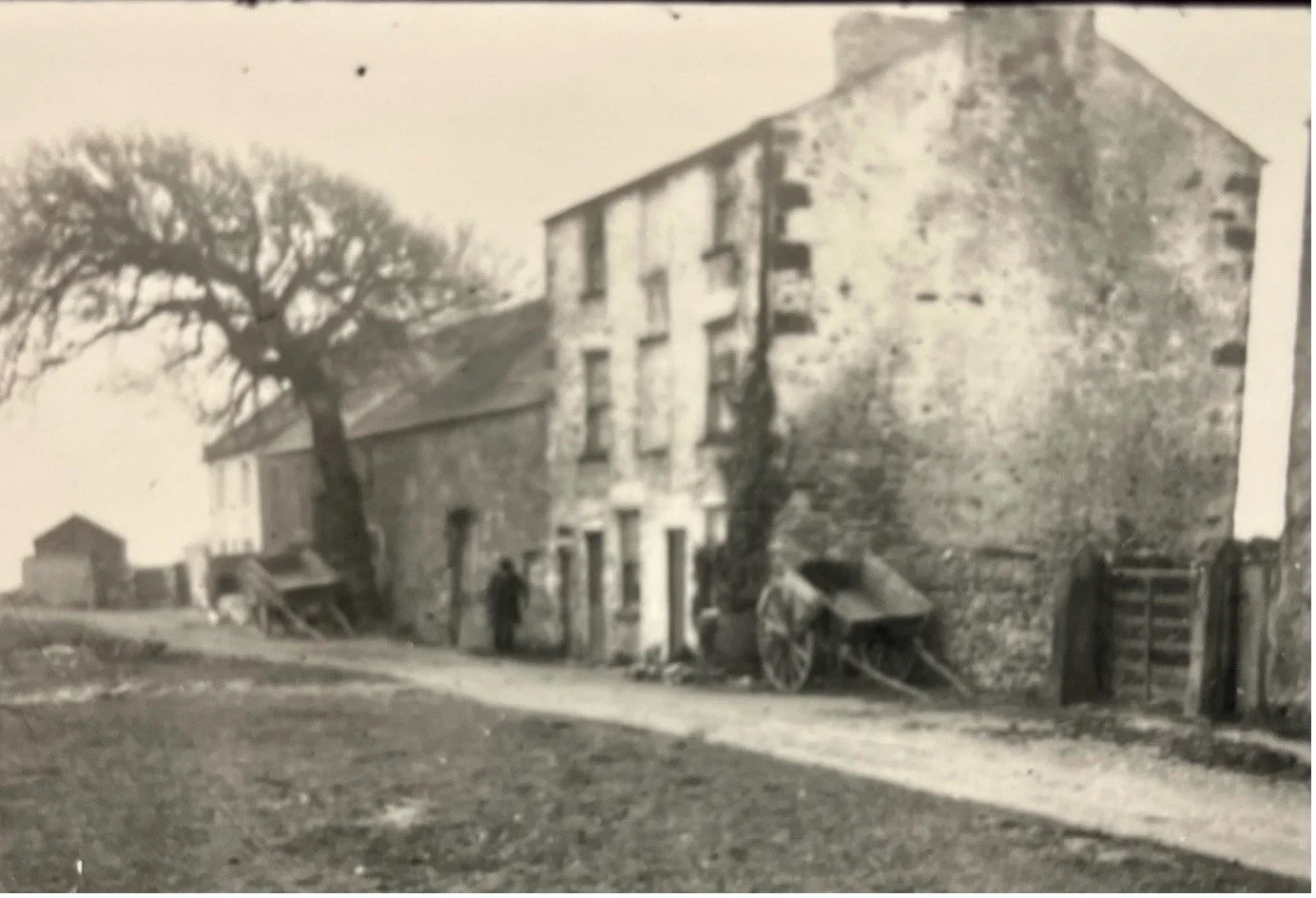
Houses 18 and 19, c1890: A John Walker photograph courtesy Lancaster City museums.
Elizabeth died in 1907, and Bobby in 1910. Ann continued the carrier trade for a time, but by 1921 she had moved to Morecambe to serve as a companion to a Miss Barlow. Ann died in 1941 at the Poor Law institution on Quernmore Road, formerly known as the Workhouse.
Hard lives.
Finally, some images.
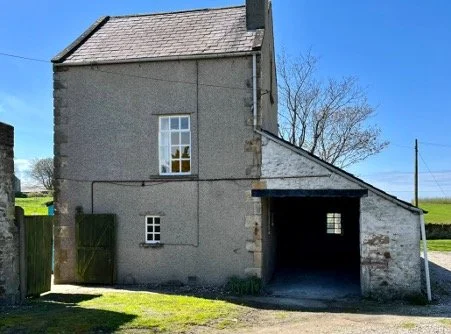
House 3a, the old Customs House, in 2025: Website Collection
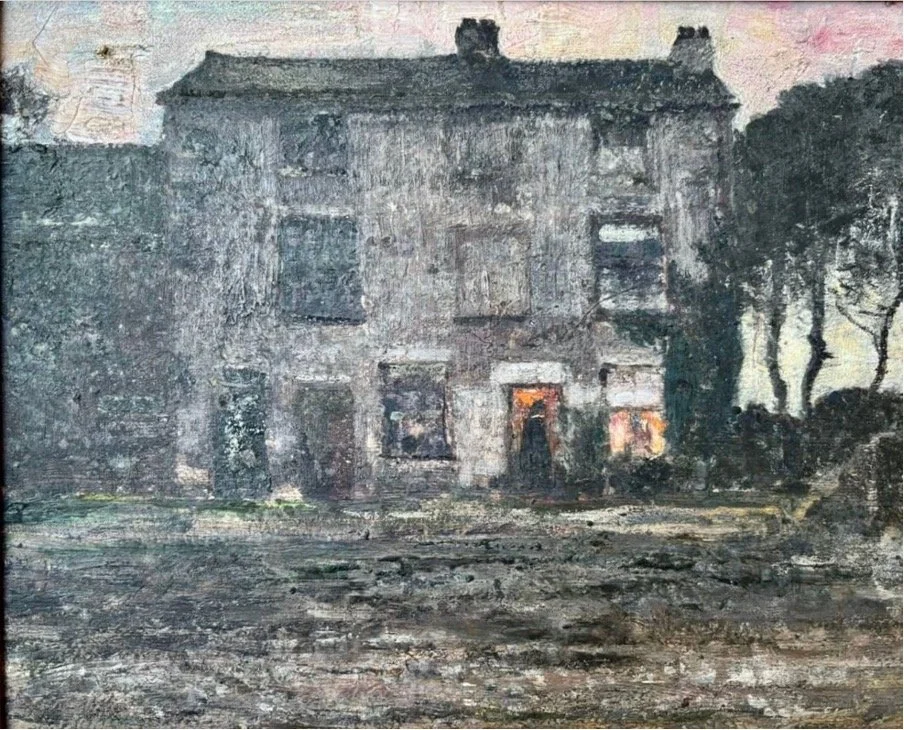
Houses 18 and 19 in William Wells’ painting ‘The Carrier’s House’ c1908, courtesy of the Gilchrist family
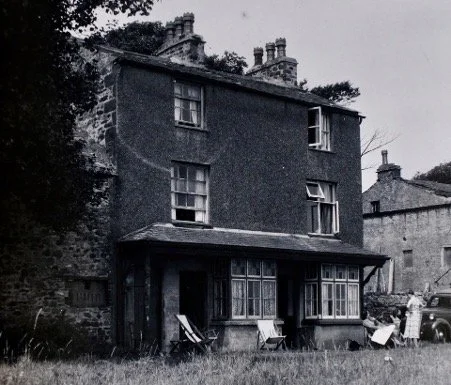
Houses 18 (right) and 19 in the early 1950s: From the collection of Rosemary Thacker
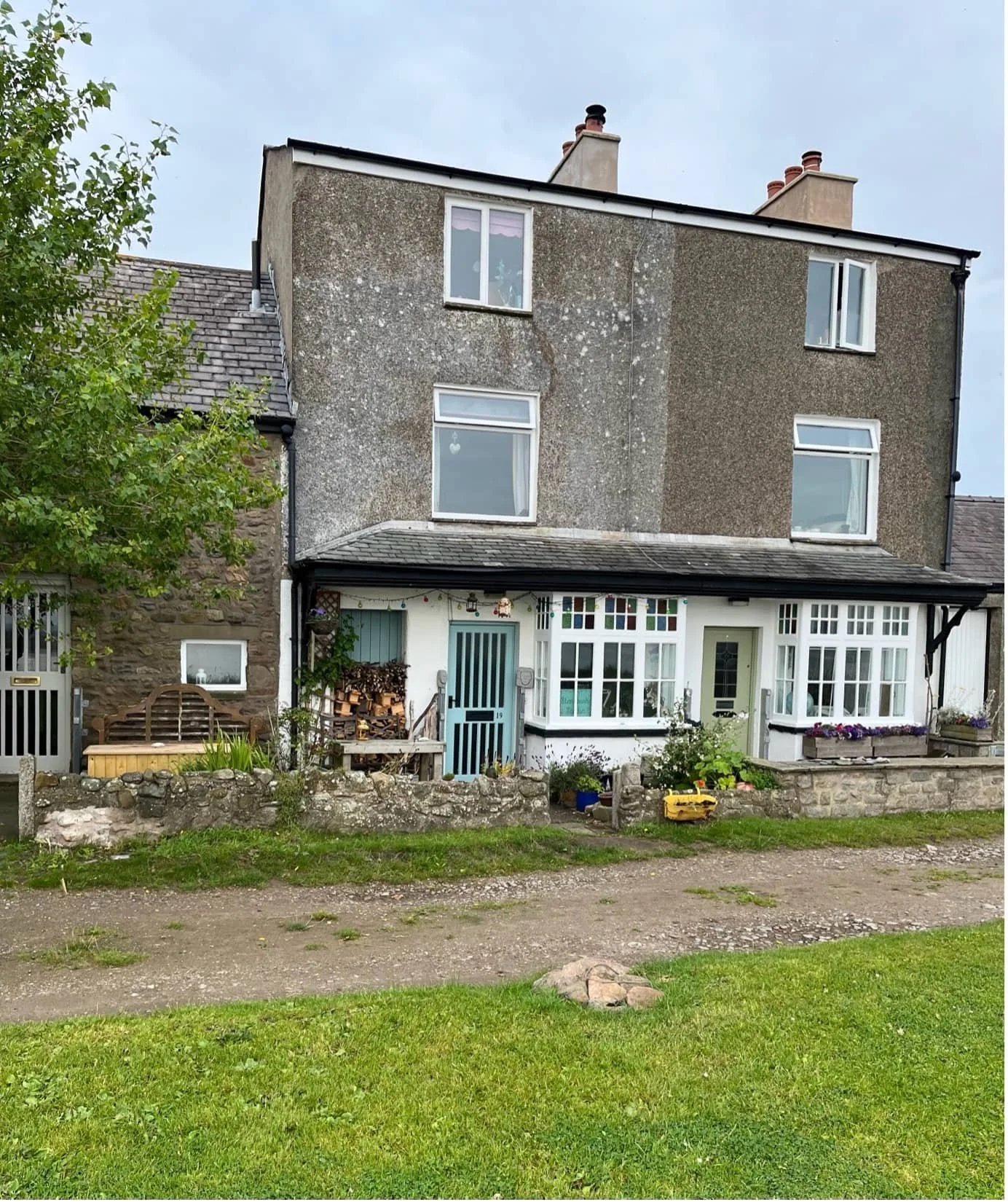
Houses 18 and 19 in 2025: Website collection.
Next time, a very special birthday…..