The Anchorage&The Gardner Family
Part Two
Here is part two, from 1953 when Rober Gardner returned to the Anchorage to the present day
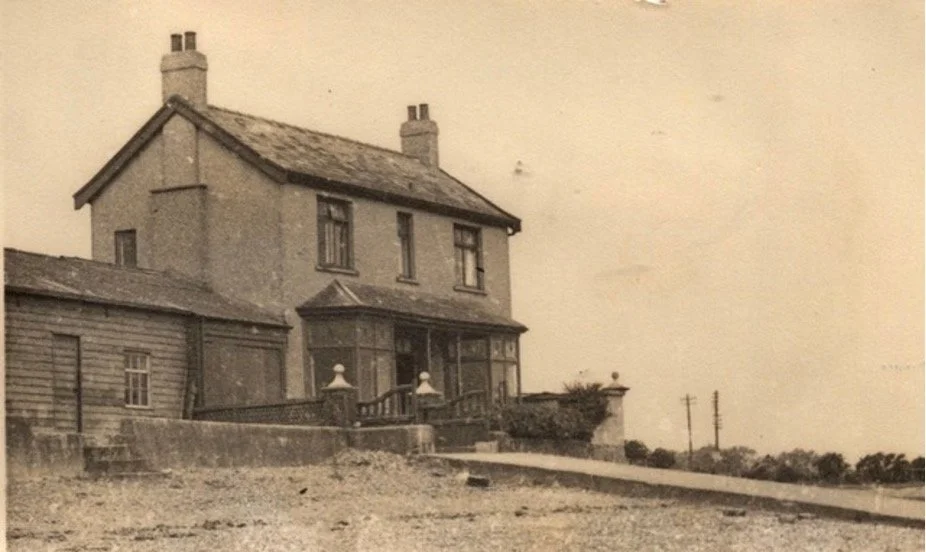
The Anchorage before Robert Gardner’s modifications: from the collection of Wilton Atkinson.
Robert Gardner’s return to Anchorage, 1953–1957.
By 1953, Robert had successfully expanded his shipping business, increasing the Gardner fleet, with its black funnel and broad white band bearing the letter “G”, to fourteen vessels, including two schooners.
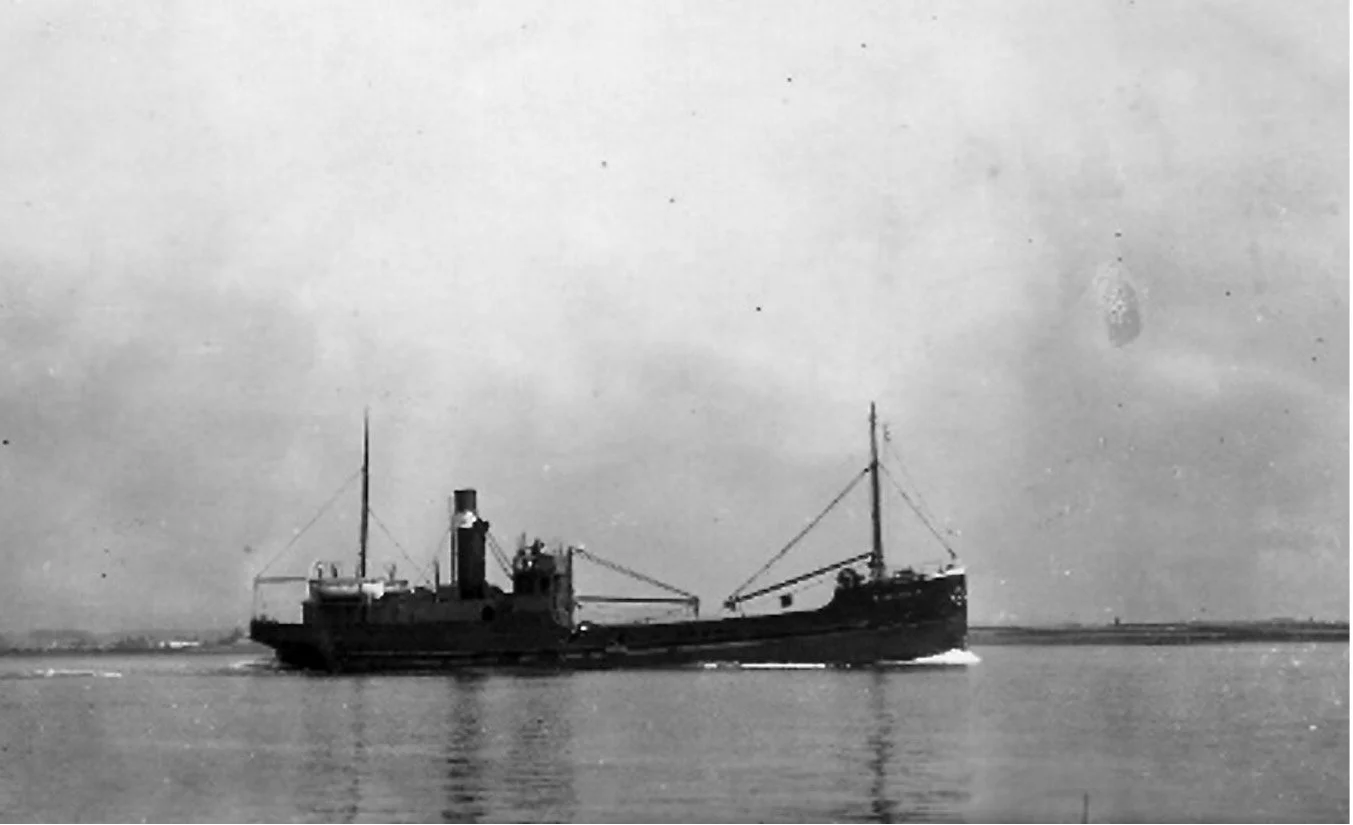
‘Mountcharles’ viewed from the Anchorage, outward-bound used for bringing China clay for the production of Lino from Cornwall to James Williamson's in Lancaster. Collection Gardner family
Robert’s interests included Ellel Quarry, Anthony Bell & Son (Plumbers), R Gardner & Co (Coal Merchants), Robert Gardner (Shipbrokers & Builders), James Holmes (Glass), Thomas Newall (Floor Coverings), and Shrigley & Hunt (Stained Glass), which supplied glass panels for Dolphin House.
Robert, a keen sportsman and benefactor, was Chairman of Lancaster City Football Club and the North West Football Combination. He was also President of the Lancaster YMCA and Vice Chairman of the Lancaster Port Commissioners. He served on committees for the Westfield War Memorial Village, Red Rose Boys Club, and Lancaster Chamber of Commerce. Additionally, he supported the Red Rose Amateur Dramatic and Operatic Society and the Lancaster Footlights, some of these roles his son Cyril later held
Thomas Newall Ltd was a wholesaler of floor coverings. Around 1931, Robert also served as Company Secretary at Arthur H. Mansergh & Son Ltd, working with his brother Wilton, the Managing Director. The two firms merged in January 1954 and moved to St. George’s Works. After Robert and Wilton died in the late 1950s, Cyril Gardner, Robert’s son, became Managing Director. He had been a Director since 1954.
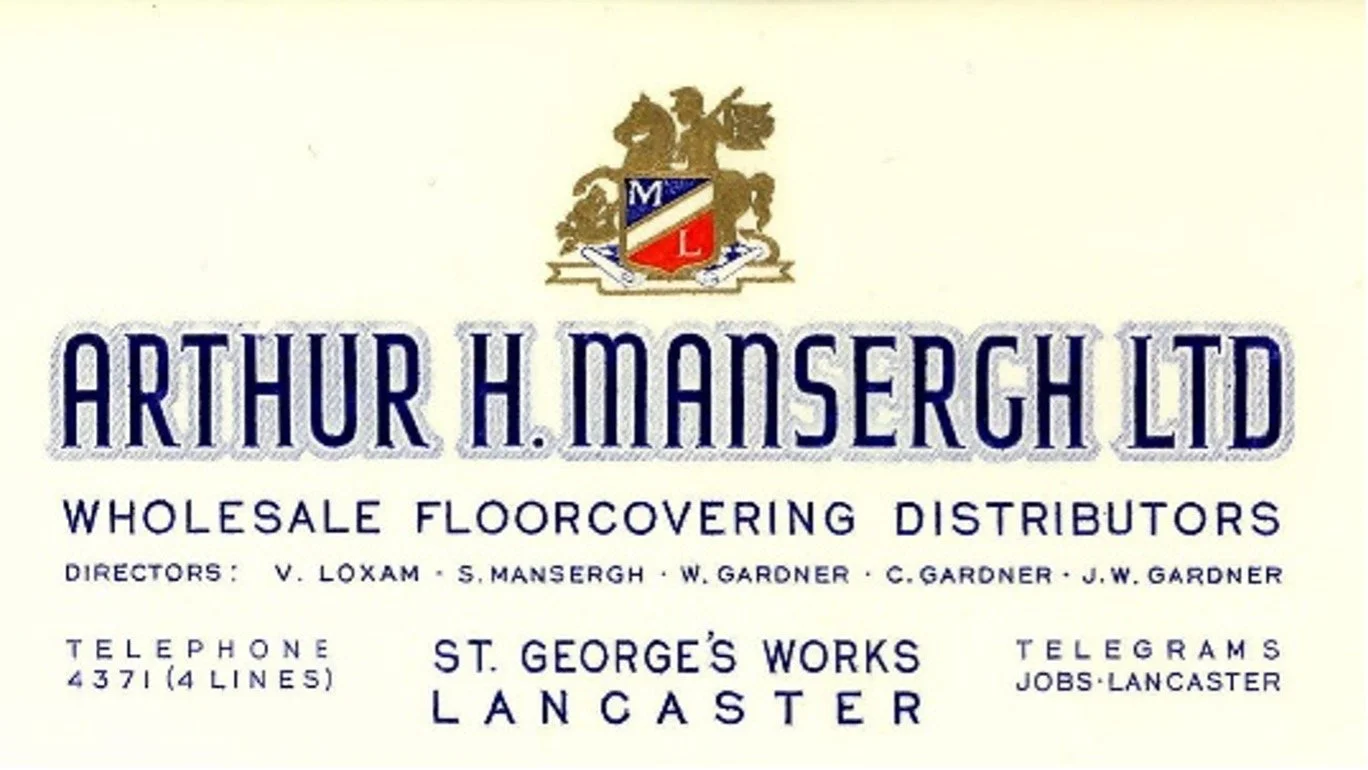
Letter heading for the Mansergh company: Collection of the Gardner family
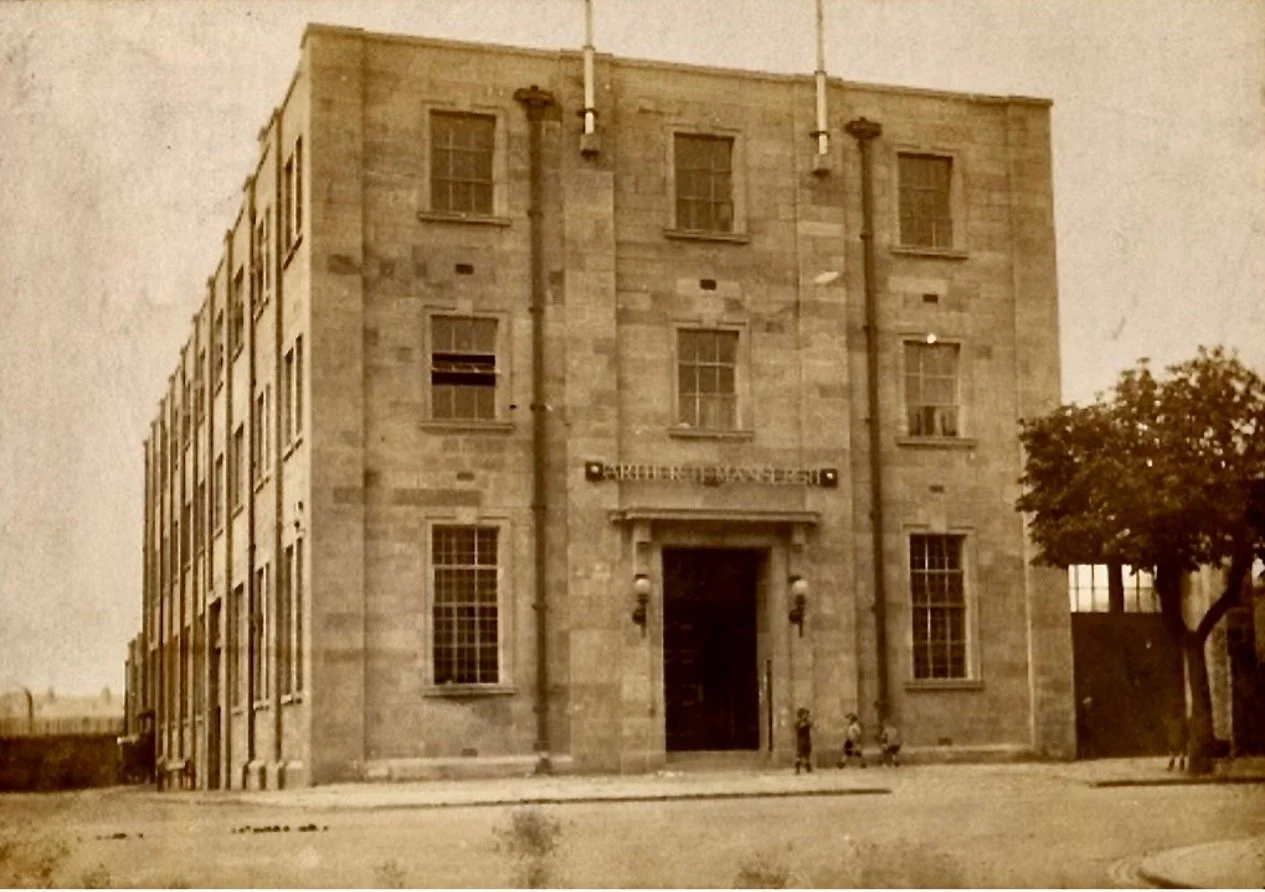
The Arthur H Mansergh building on the corner of Cable Street and Water Street, Lancaster. Demolished to make way for the Sainsbury supermarket: Collection of the Gardner family.
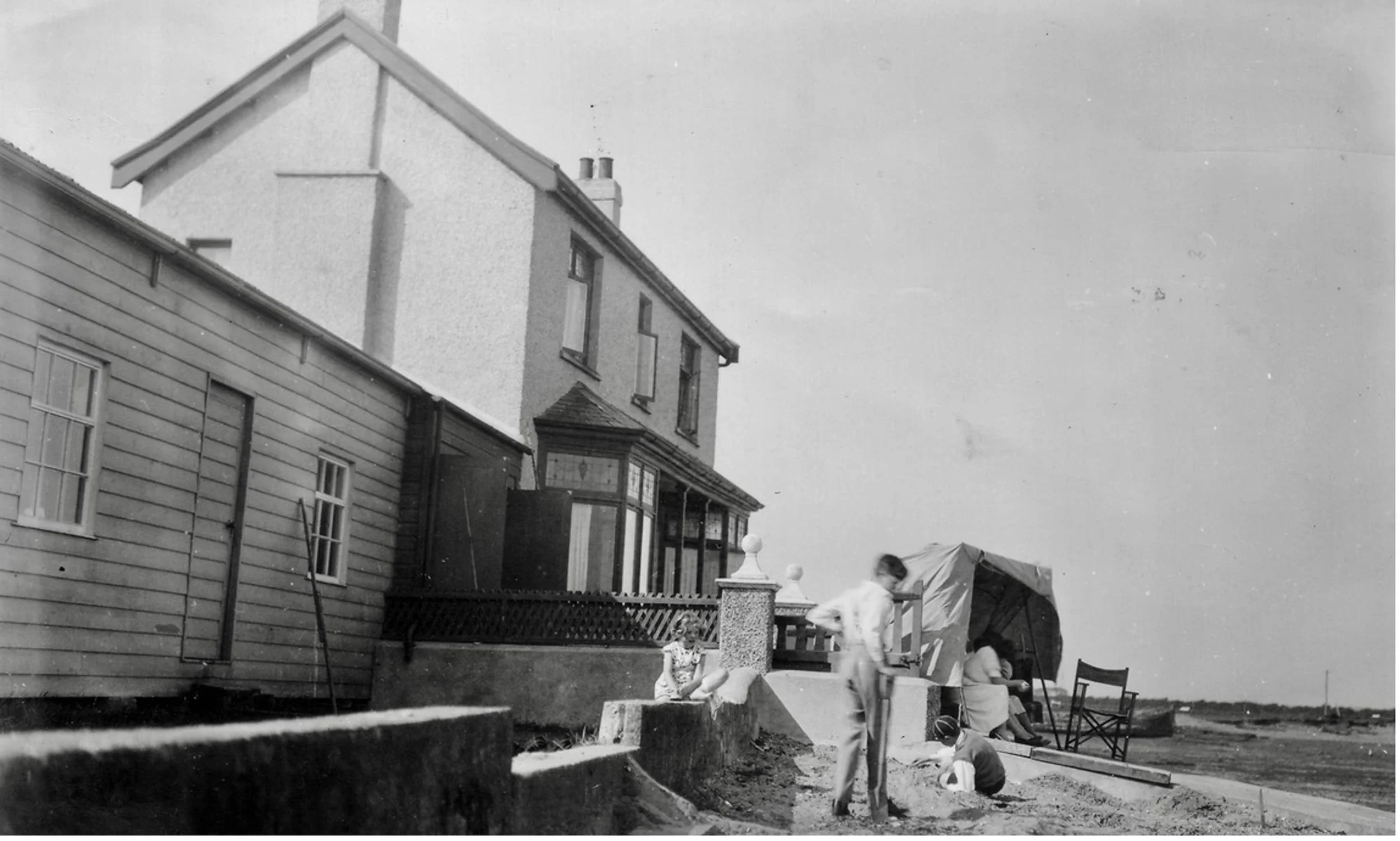
The Anchorage, c1952: from the collection of Wilton Atkinson
On returning to the Anchorage, Robert oversaw major modifications to the site and its buildings. To accommodate a new double garage, the small plot of land where the boathouse had stood was purchased in 1954 from Arthur Mansergh's family, and the boathouse was then relocated several metres from the main house.
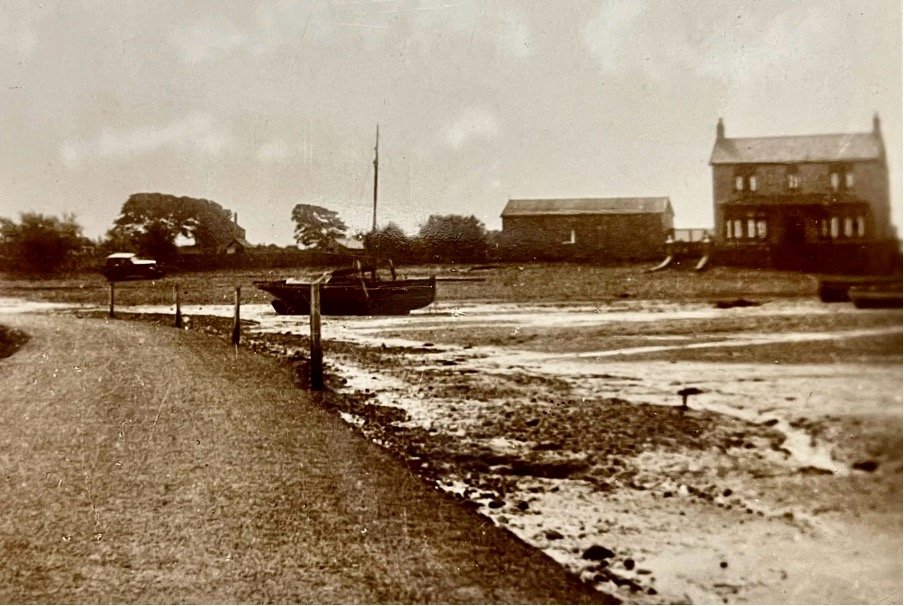
The Anchorage, as originally built, with Arthur Mansergh’s Boathouse a short distance from the house. His yacht ‘Sue’ can be seen in the foreground: Website collection.
In this second photograph, with construction underway, we see that the Boathouse has been moved to the left of the house, and a new garage has been built in its place.
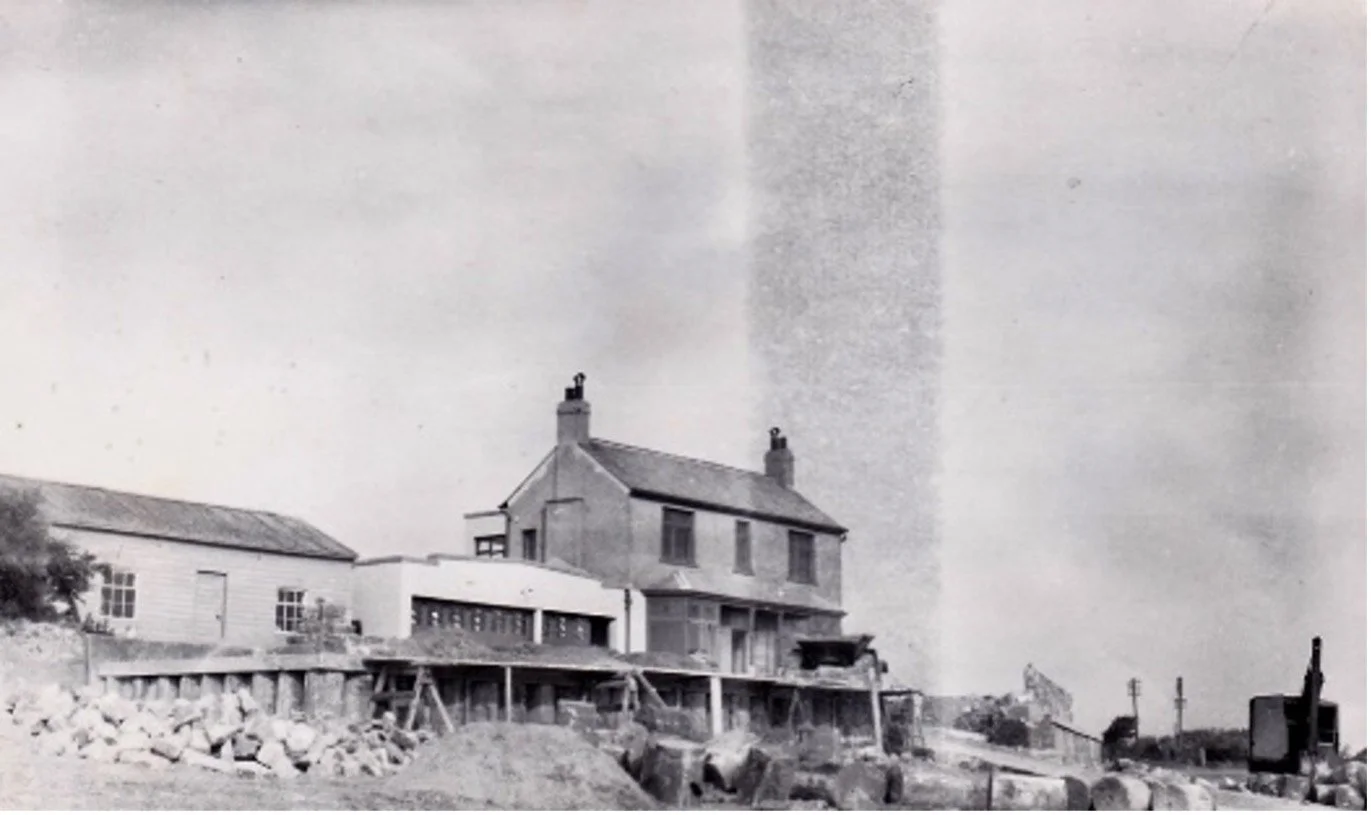
Building works on the front of the Anchorage, 1954, with the double garage installed: Photo courtesy of the Gardner family.
We also notice in the photograph the construction of a large forecourt in front of the house, the extended ramp to the foreshore, and the start of a new perimeter wall. Robert used recycled materials from St. George’s Works, including steel girders and 7” x 3” floor joists.
In the centre of the photograph, just peeking behind the house, is the new rear extension, which includes a conservatory and a first-floor sunlounge giving panoramic views to the South, West, and North of the property.
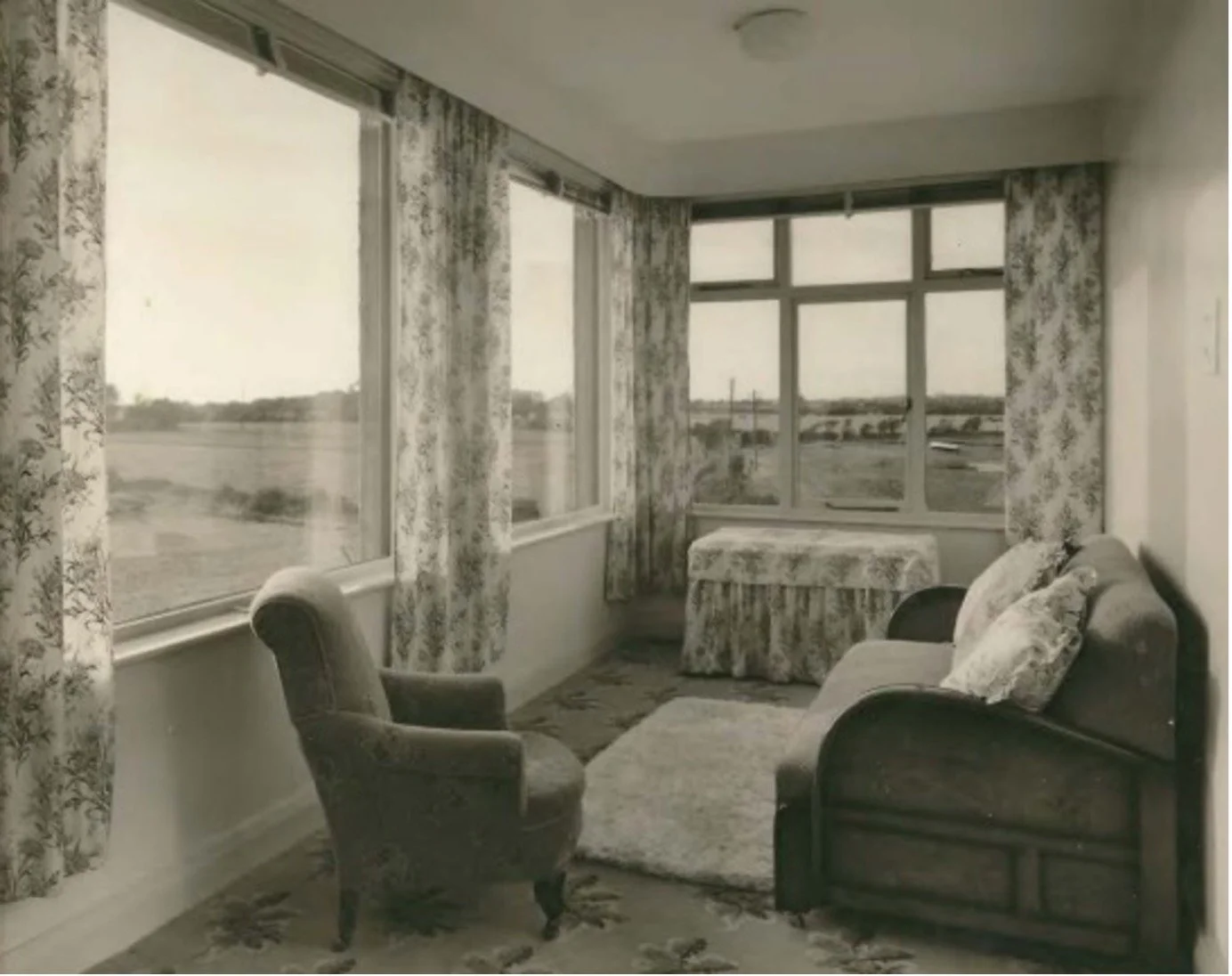
The Sunlounge, furnished c. 1956, with a view of Beany Hill and Meadow Farm to the left: From the Gardner family collection
Margaret Darby, who came to live at Sunderland Point c. 1961, said she advised Robert and Gertie on the furnishings in the Anchorage while working for Gorrill’s home furnishing business in Lancaster.
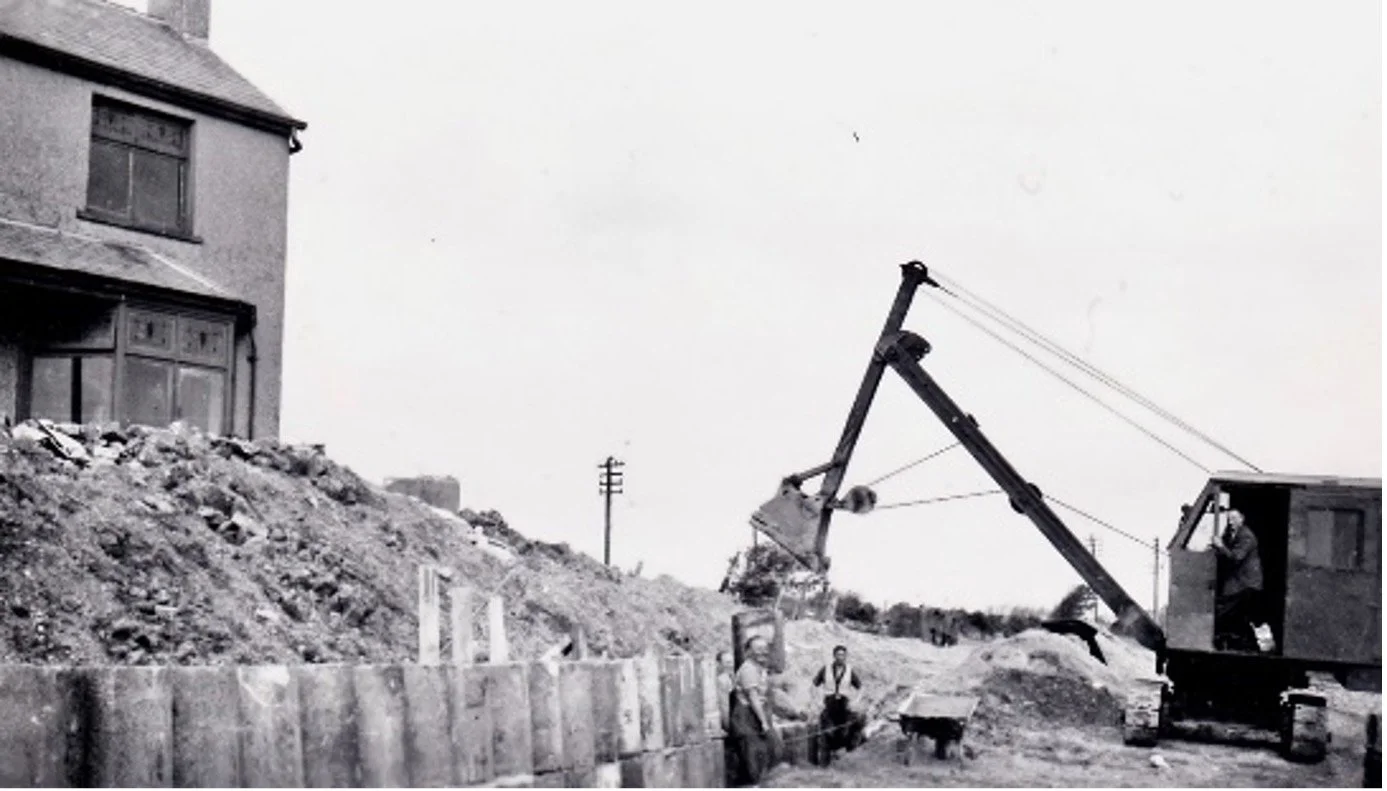
Preparing the foundations for the forecourt and sea defences, c. 1954: Photo courtesy Gardner family
Observe the many concrete cylinders supporting the forecourt. They were wartime leftovers, manufactured to be placed on the road to deter German vehicles in the event of an invasion. Many of these blocks are still visible on the side of the causeway.
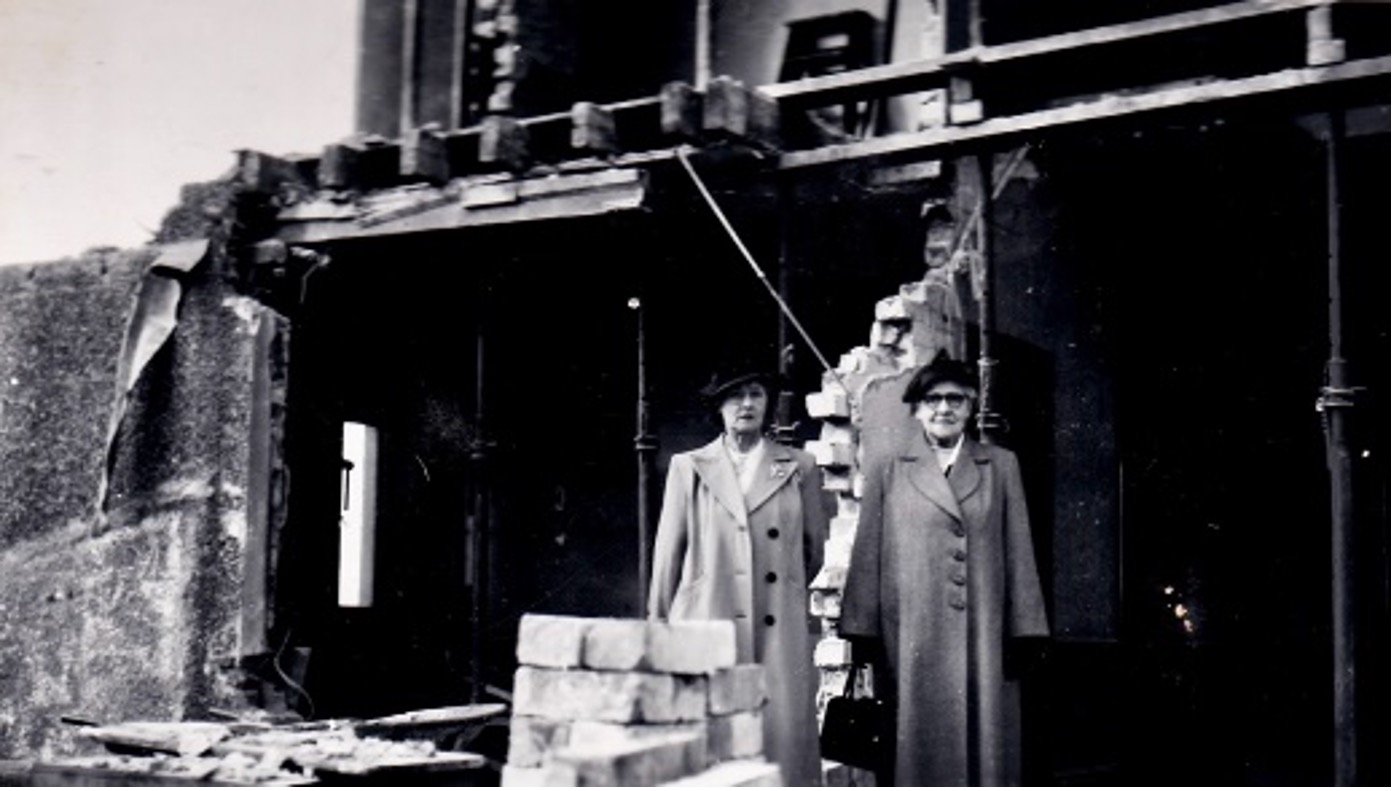
Inspecting the building works at the back of the Anchorage, 1954, on the left is Gertie, Robert’s wife, with her sister Florrie: Courtesy of the Gardner family.
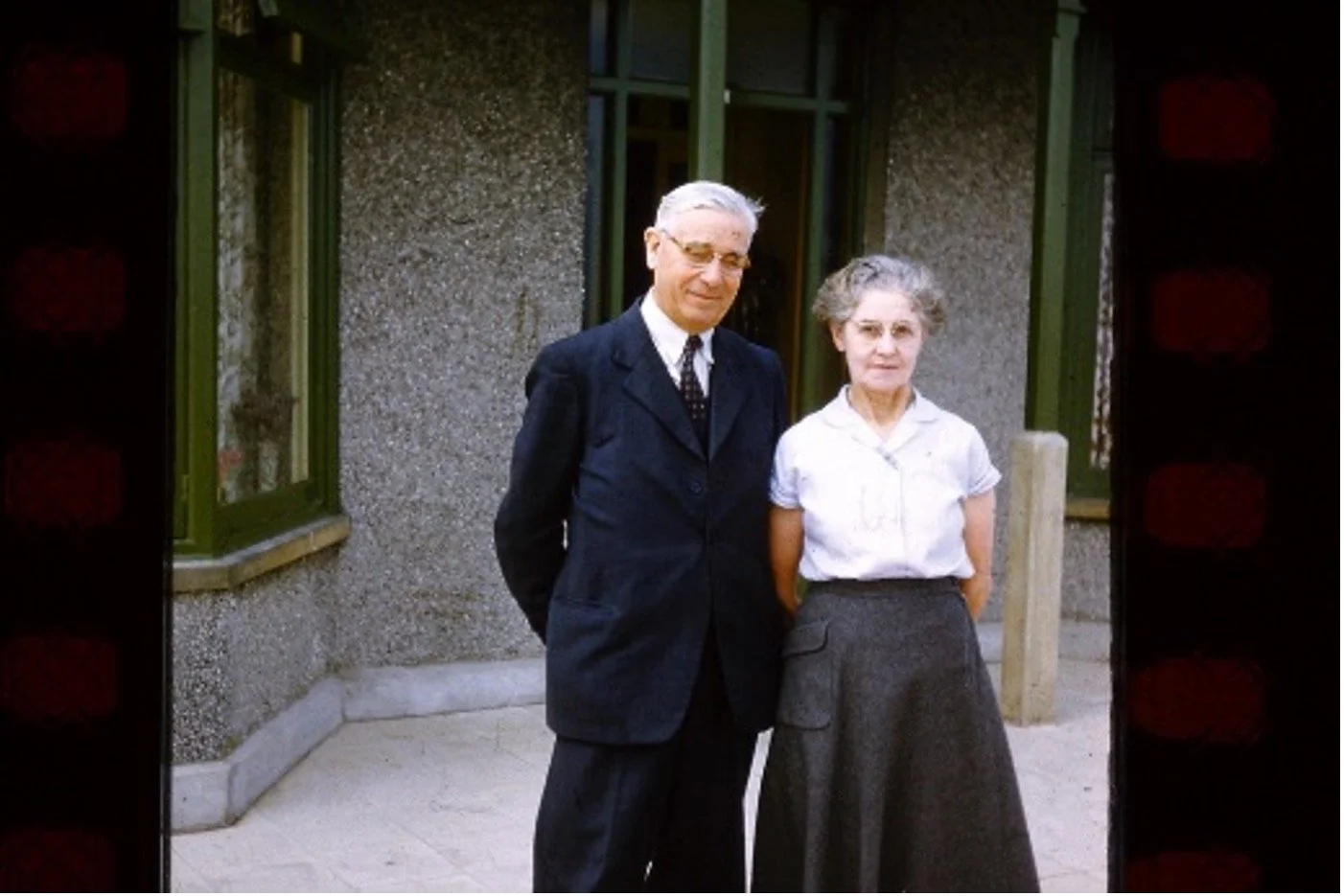
Robert and Gertie Gardner outside the completed Anchorage in 1956: A Peter Hall photograph.
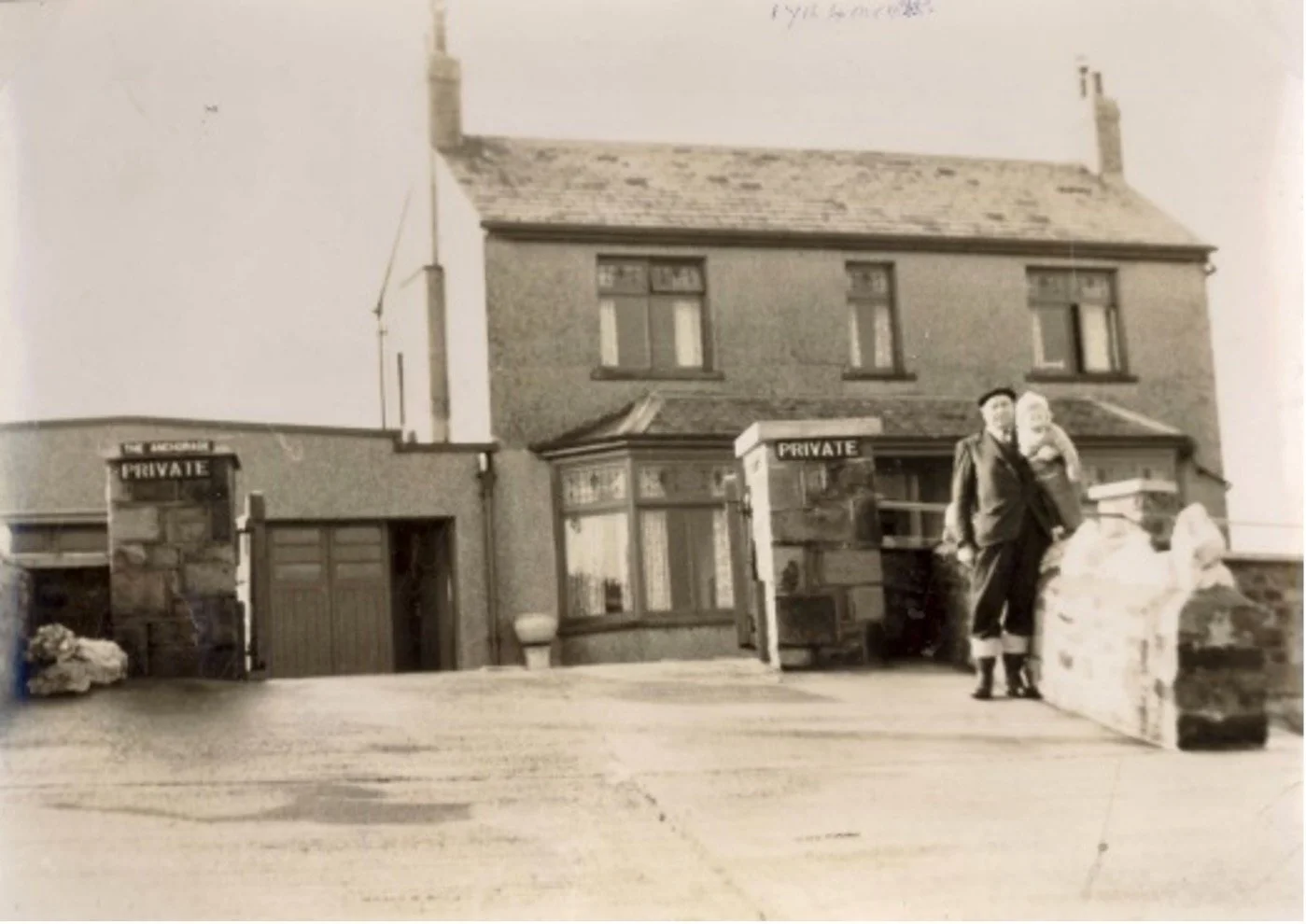
Robert Gardner, with his two-year-old grandson, Stephen Loxam, in February 1957.
Whilst extending the Anchorage, Robert also built a pier on the riverside of the causeway, enabling the use of his dinghy “Vera” on low tides. Thomas, Robert’s brother, owned the sister dinghy “Elsie”, named after his daughter, who married Harry Birkett and farmed at Hall Farm (14 Second Terrace). Elsie sadly died at the early age of 44 years, leaving a young family of three. Thomas, Jean and Vera.
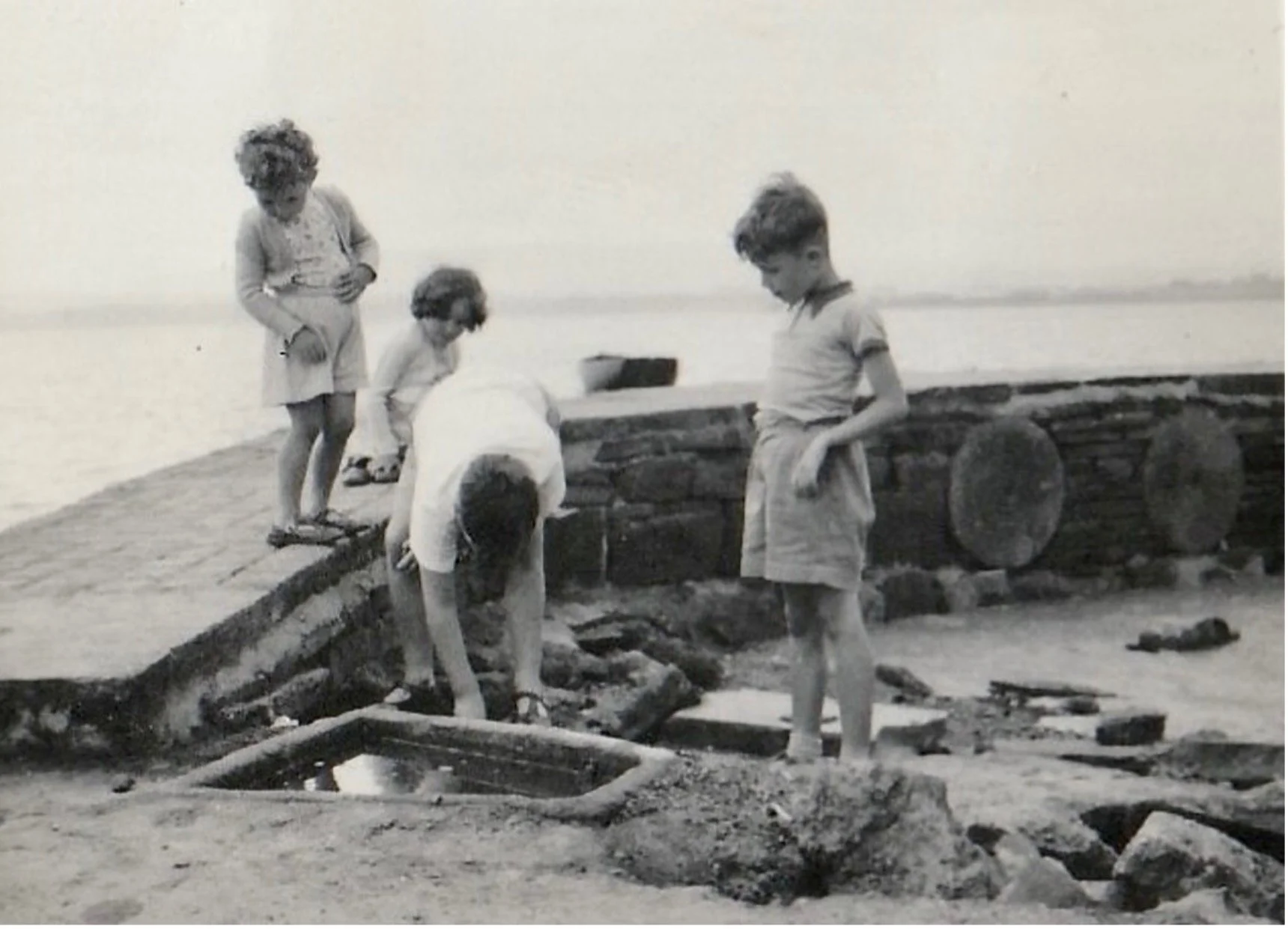
Robert and Gertie’s grandchildren, Robert Greenfield with Roger, Douglas and Jill Gardner, on the pier in 1957. Notice the wartime concrete cylinders in the structure and the stone trough in the foreground, now located on the right-hand side of the Anchorage gates.
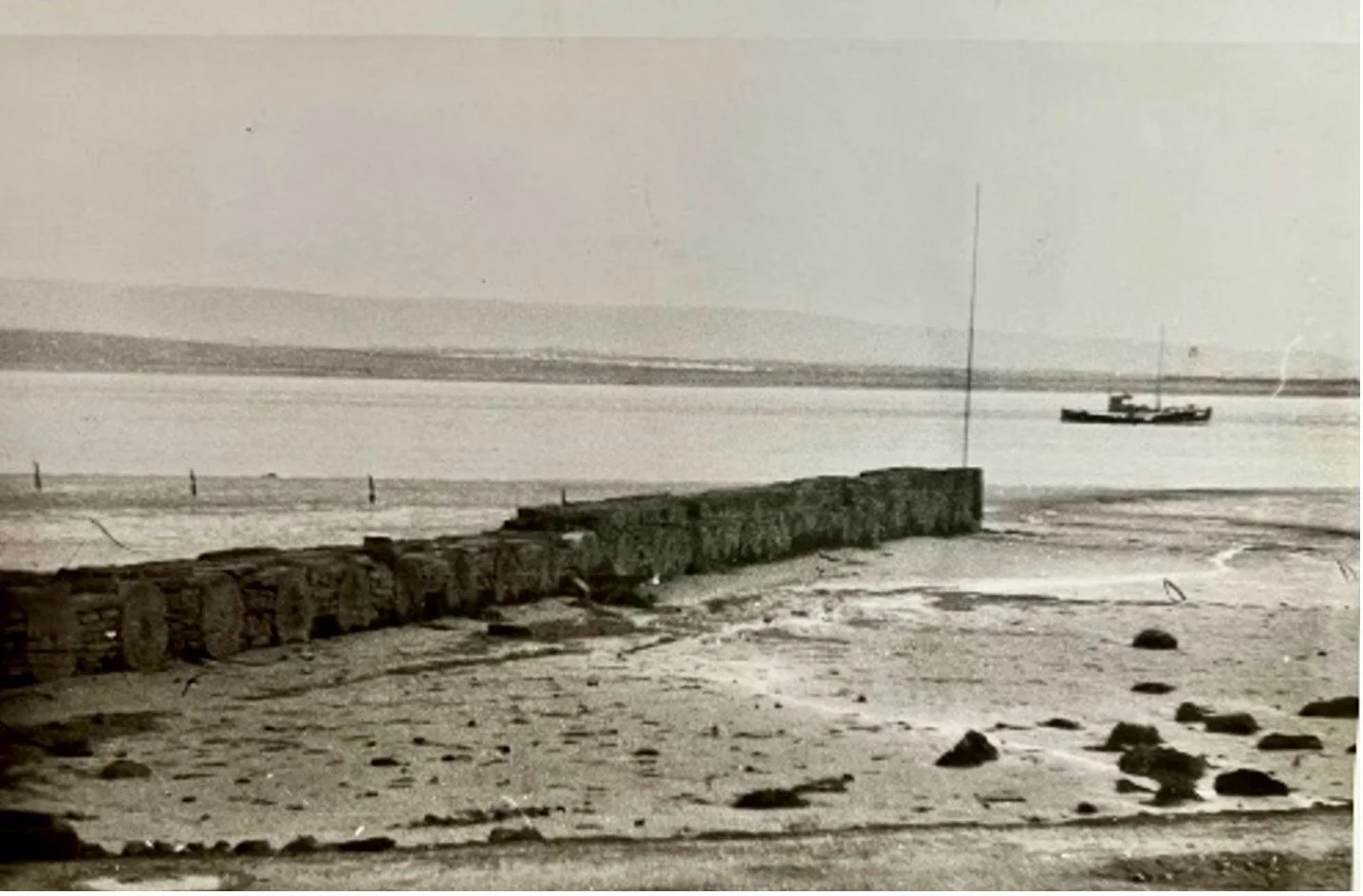
The Pier, before being demolished in 1978, was due to health and safety grounds and the imposition of rent by the Duchy of Lancaster. David Hargreaves (Sunderland Brows Farm) assisted in the removal.
On 15th September 1957, there was a strong wind and a high tide. After fitting the storm boards in front of the Anchorage, Robert collapsed in the garage and died the following day at Lancaster Infirmary.
On 26th September, the Town Clerk, on behalf of the City of Lancaster, wrote a letter of condolence to Gertie.
“I have known Mr Gardner for many years and had the greatest admiration for him, his business ability and integrity. Perhaps, however, it was his kindly and modest nature which endeared him to his many friends, of whom I count myself as one.”
After Robert’s sudden death at 68, the Anchorage was incorporated into a family trust. His widow, Gertie, remained there, living with her daughter, Vera, her husband, Ron, and their son, Stephen, who had moved from Lancaster to care for her—except when she visited her older daughter, Nora Greenfield, in Lancaster. The Anchorage welcomed Ron and Vera’s daughter Christine, who was born in April 1958.
Ronald had met Vera when she was working as a veterinary assistant in Lancaster.
Ronald (Ron) Loxam was the son of Thomas and Lillian (descendants of the Longton family dating back to 1230), who farmed at Ripley Farm near Ripley St Thomas School in Lancaster.
Ronald and Vera Gardner shared the same birthday, 11 January 1930. Following their 1953 marriage, Ronald began working for Robert Gardner’s businesses.
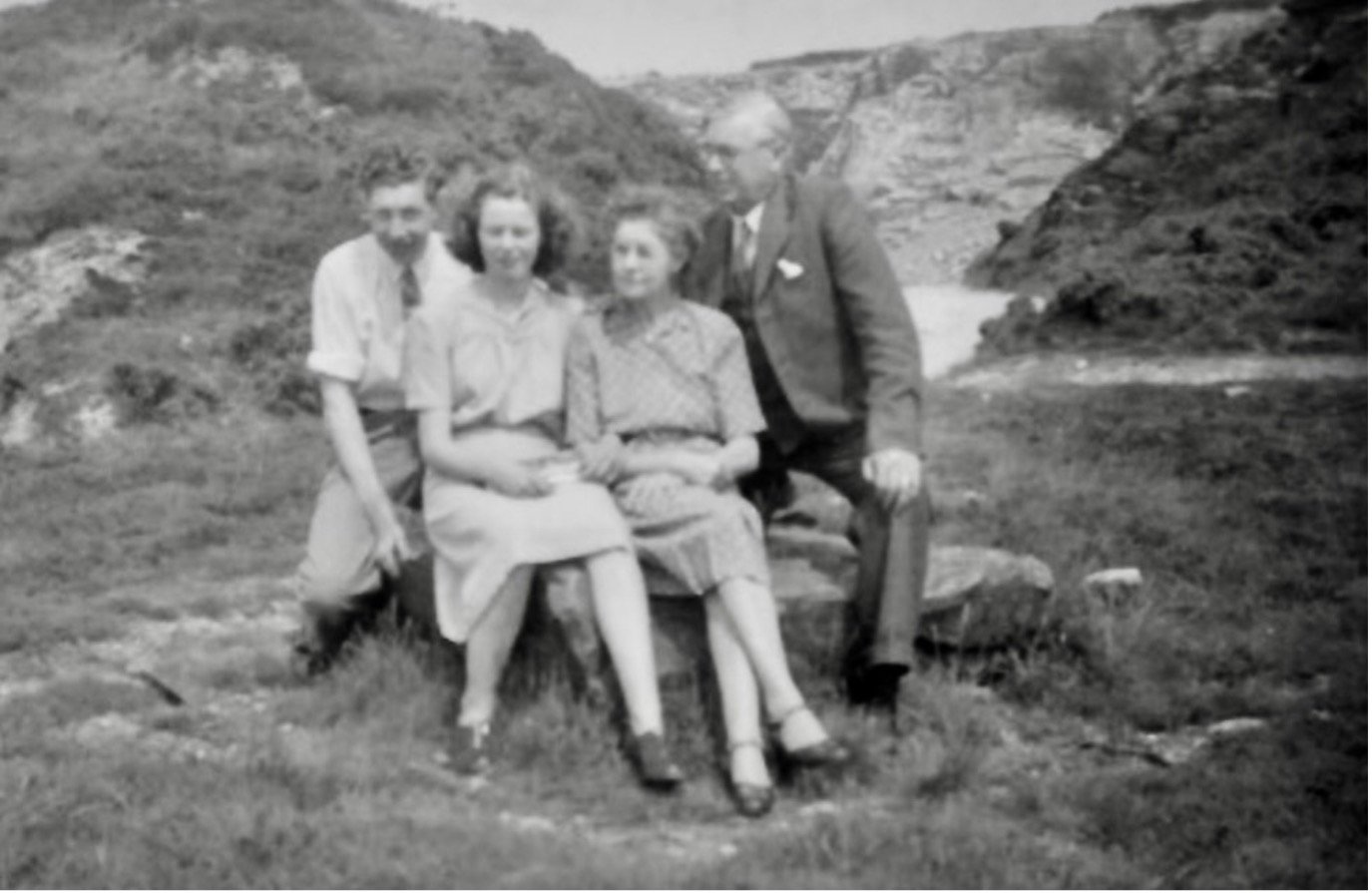
Picnic at Robert’s Ellel Quarry in 1947. From Left: Ronald Loxam, Vera Gardner, both aged 17, with her parents, Gertie and Robert Gardner. Collection of the Gardner family
In 1961, when the sea defence banking was being constructed, Cyril Gardner purchased the land that abuts the north-west side of the Anchorage from the owners of Meadow House Farm.
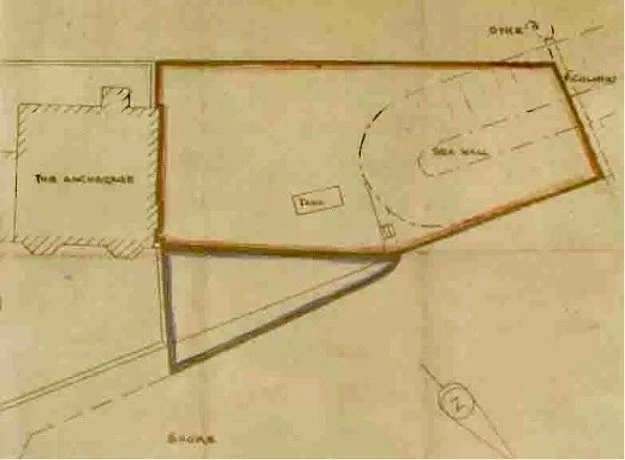
The Anchorage Land, edged in red, was purchased in 1961: Courtesy of the Gardner family.
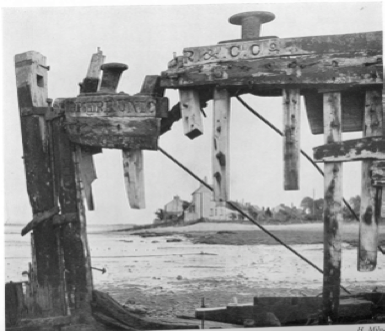
Remains of the old barge c1950 with view to the Anchorage: Collection of the Gardner family
Above is Robert’s former Shropshire Union Canal barge. Many of the children at Sunderland Point used to play on it until it was washed away in the November 1977 storm, which also destroyed the West End pier at Morecambe.
When Gertie died in 1979 and her son, Cyril, died only 10 days later, Ronald and Vera Loxam bought the Anchorage.
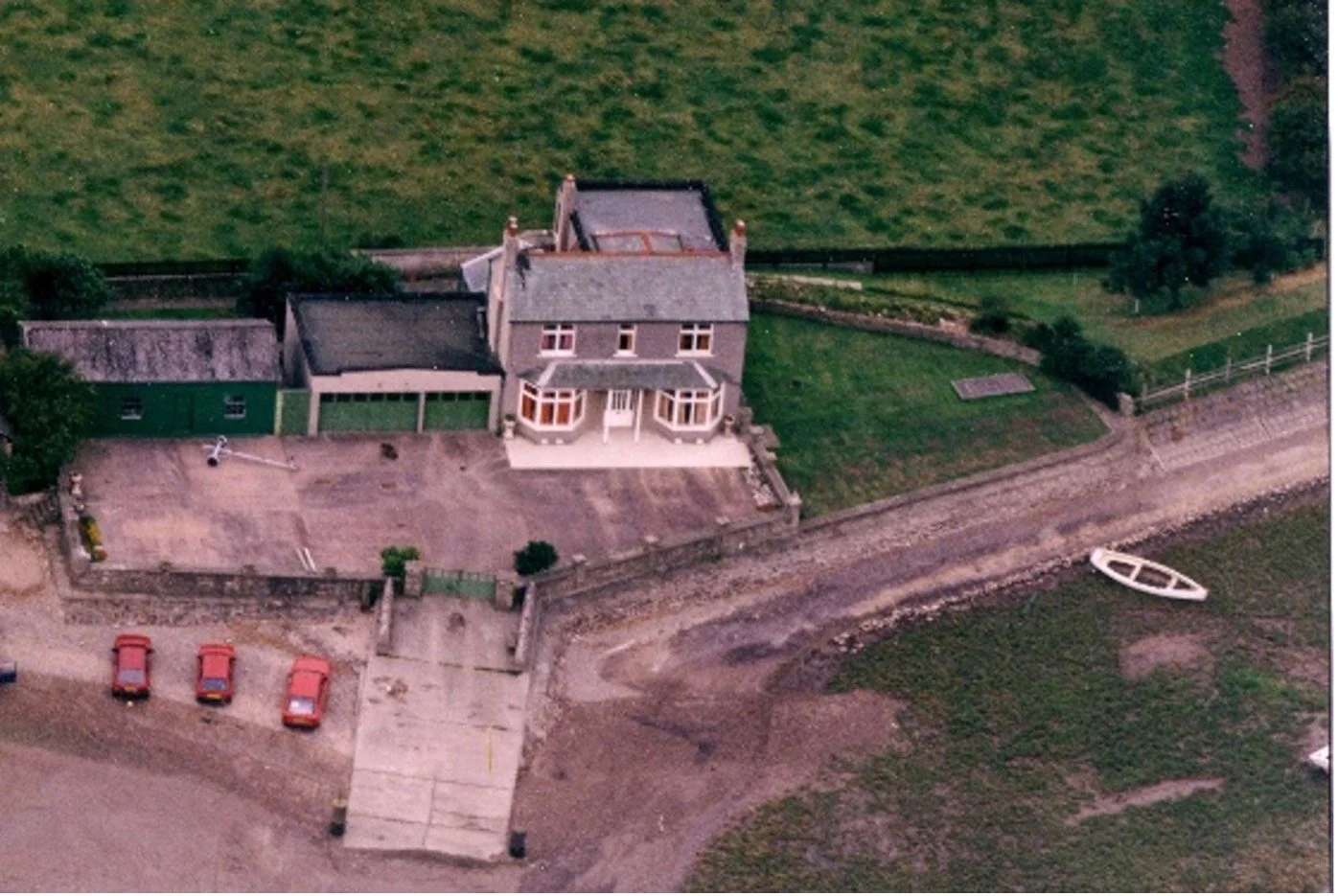
Aerial photo of the Anchorage, 1980: Collection of the Gardner family
In 1984, the Loxam family bought the main part of the St George’s Works site, which Robert had purchased from James Williamson in 1948.
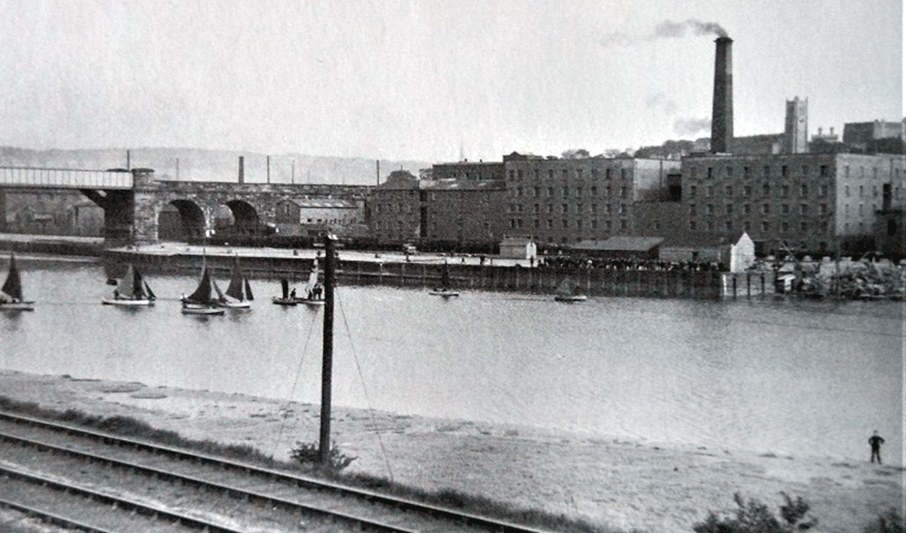
James Williamson & Son. St George’s Works, St George’s Quay, Lancaster, constructed between 1854 and 1860 to produce linoleum floor coverings and table Baize: collection of the Gardner family
The Loxam family established a successful general wholesale and commercial letting business and had plans to redevelop the site. However, in November 2006, Lancaster City Council, through a contested compulsory purchase, acquired the property.
The Anchorage experienced severe flooding during the November 1977 storm, and although the water did not enter the house, measures were taken to strengthen flood defences.
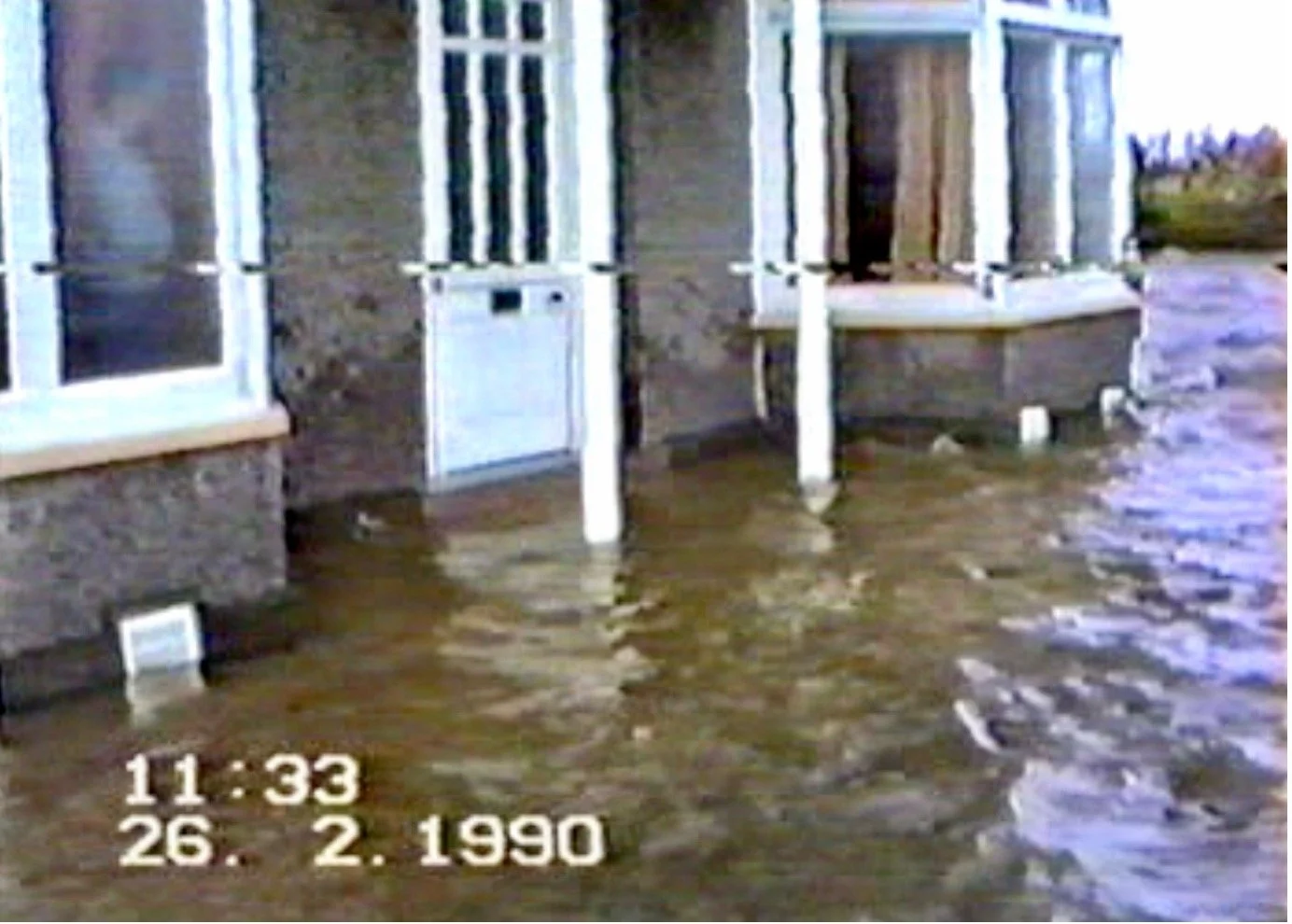
Still from a film showing the tide up to the front door in 1990: courtesy of the Gardner family.
In 2004, the perimeter wall of the Anchorage was extended to join the existing seawall.
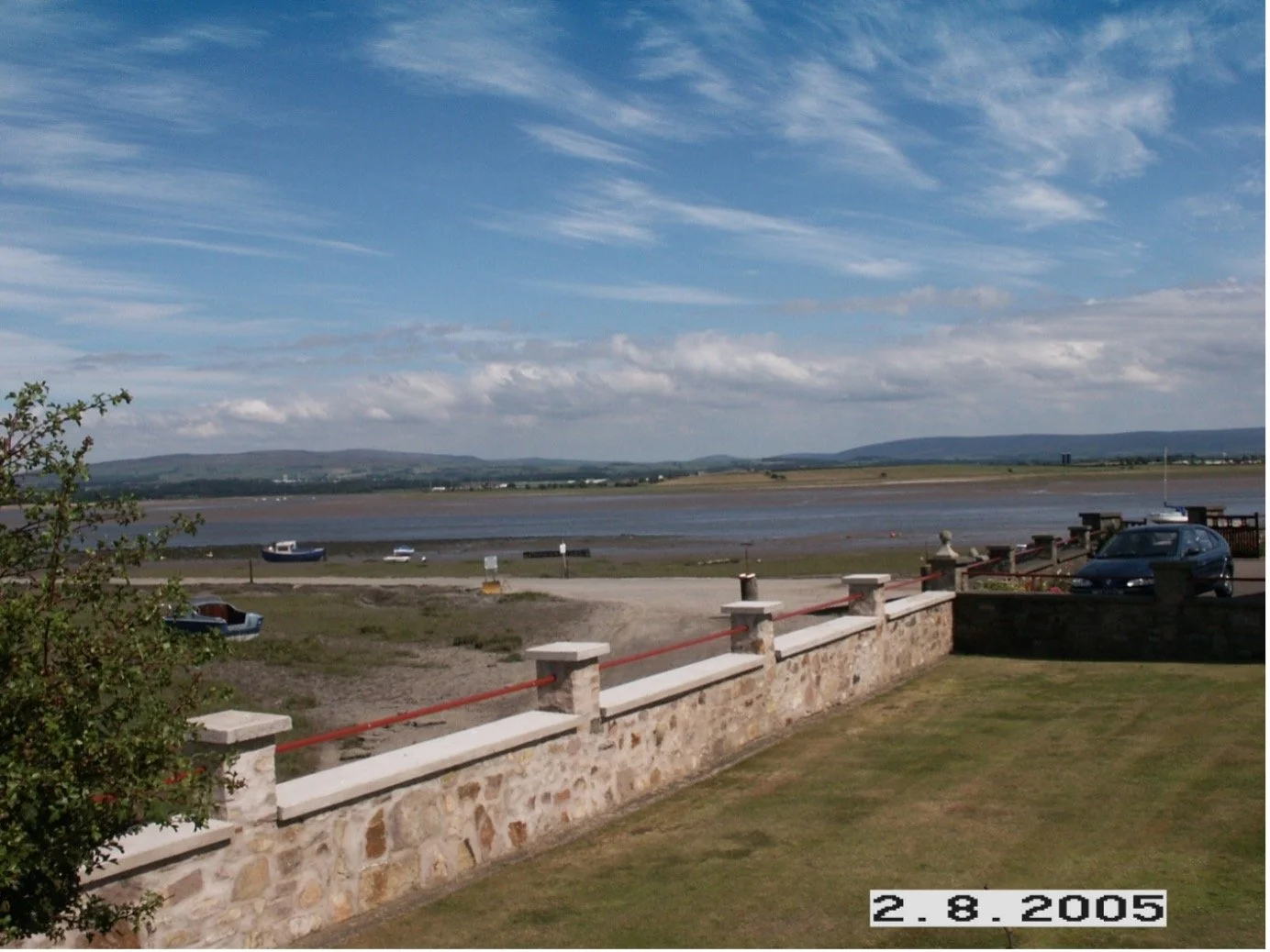
The Anchorage wall built by John Baxter, c. 2004, with stone from St Georges Work’s Works: Collection of the Gardner family.
The Anchorage’s flood defences were later enhanced by the introduction of storm boards located at the gates.
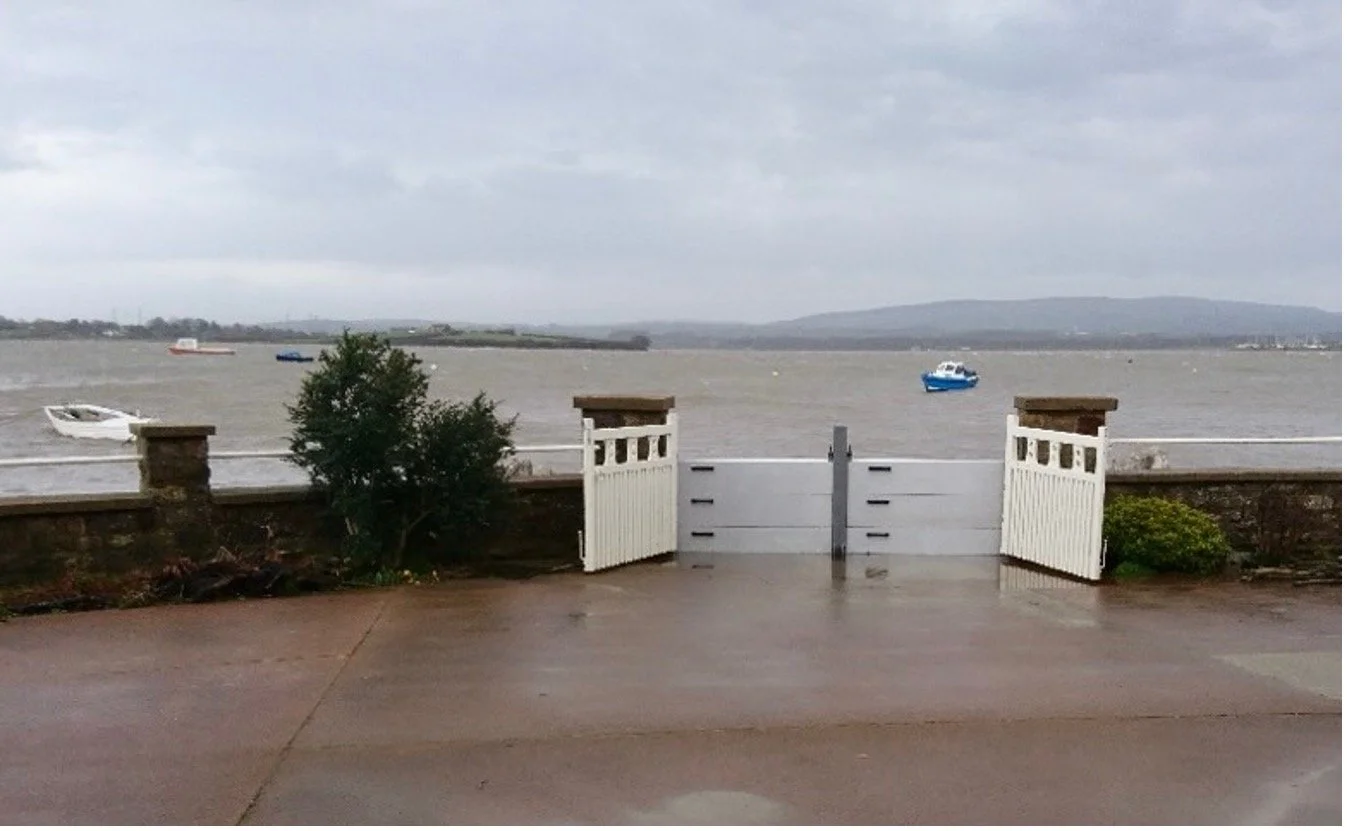
The Anchorage’s Flood protection was installed by the Environment Agency in 2008: Collection of the Gardner family
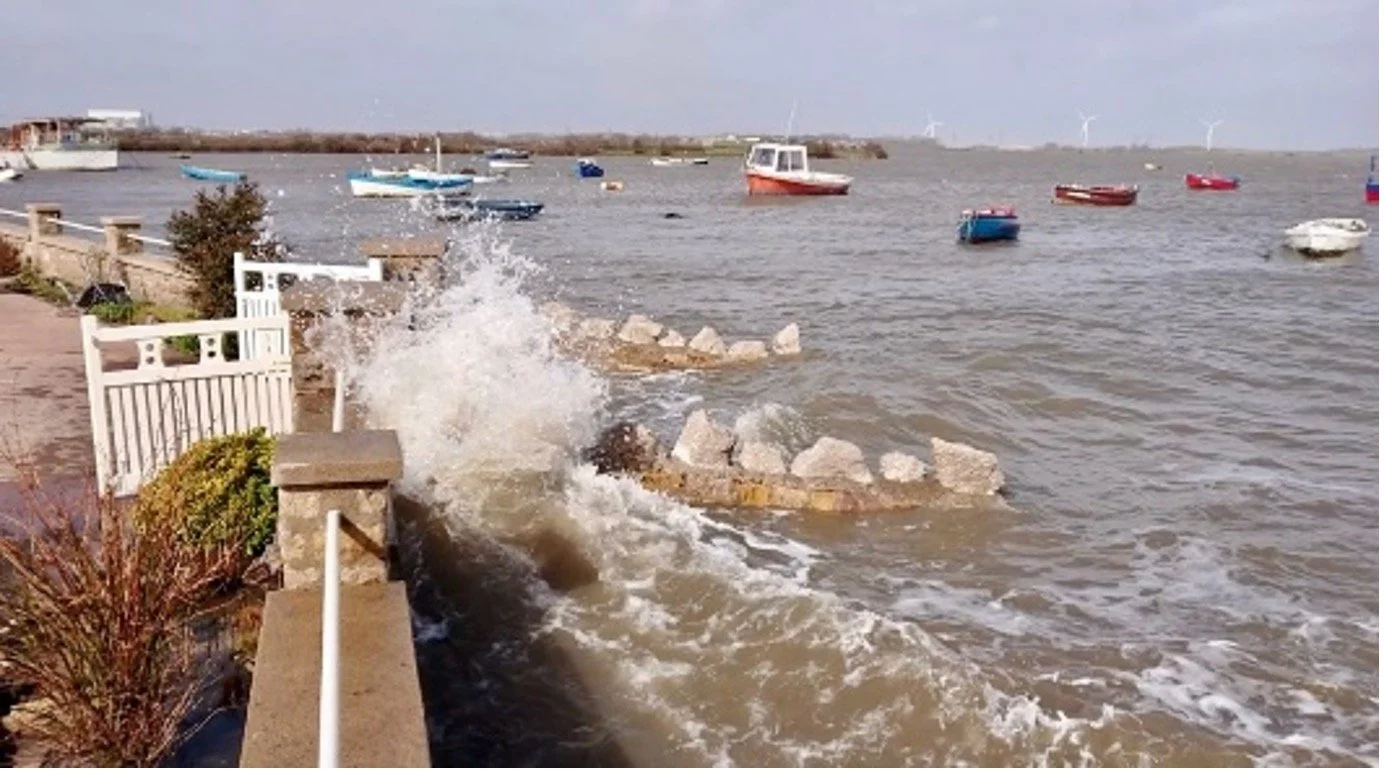
The tide lashing the flood defence at the entrance to the Anchorage in February 2020: Courtesy of the Gardner family
Vera Loxam died on 19th January 2009, and Ronald died on 21st August 2017 on what would have been their 64th wedding anniversary.
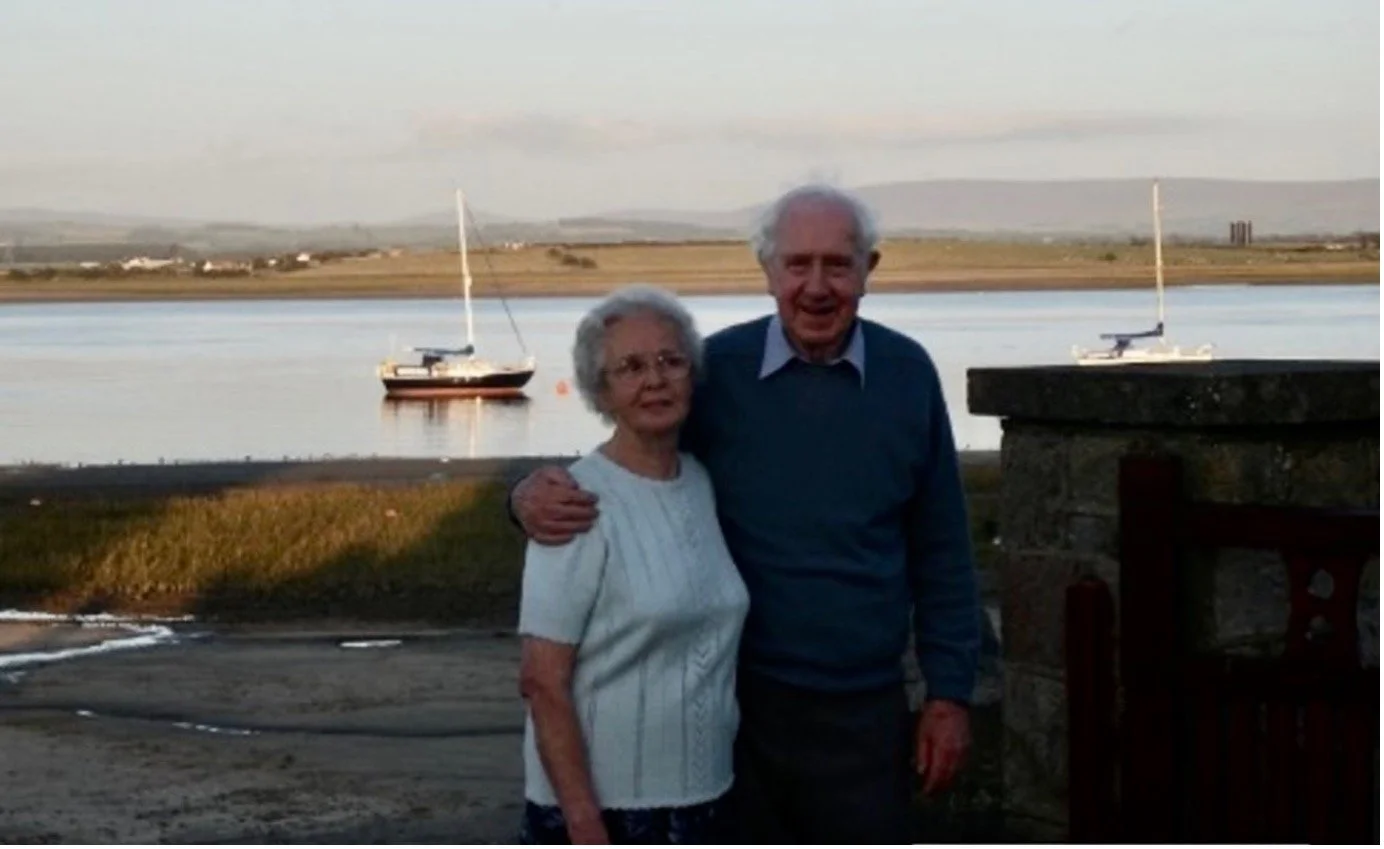
Vera and Ronald Loxam at the gates to the Anchorage in August 2005: Courtesy of the Gardner family
The Future
Following Ronald’s death, the Anchorage passed down to the Gardner family's next generation, Stephen and Christine. Stephen returned to the Anchorage in 2017, and sister Christine, partner David, and son Richard are regular visitors.
Stephen is making improvements to The Anchorage with Christine’s astute advice and guidance, while maintaining some of its original 1920s features.
Stephen has two sons, James and David, and five grandchildren, Erin, Max, Toby Thomas, Gus and Harry. Christine has one son, Richard. The Anchorage will remain in the possession of the descendants of the Gardner/Loxam family for the foreseeable future.
Some favourite photos
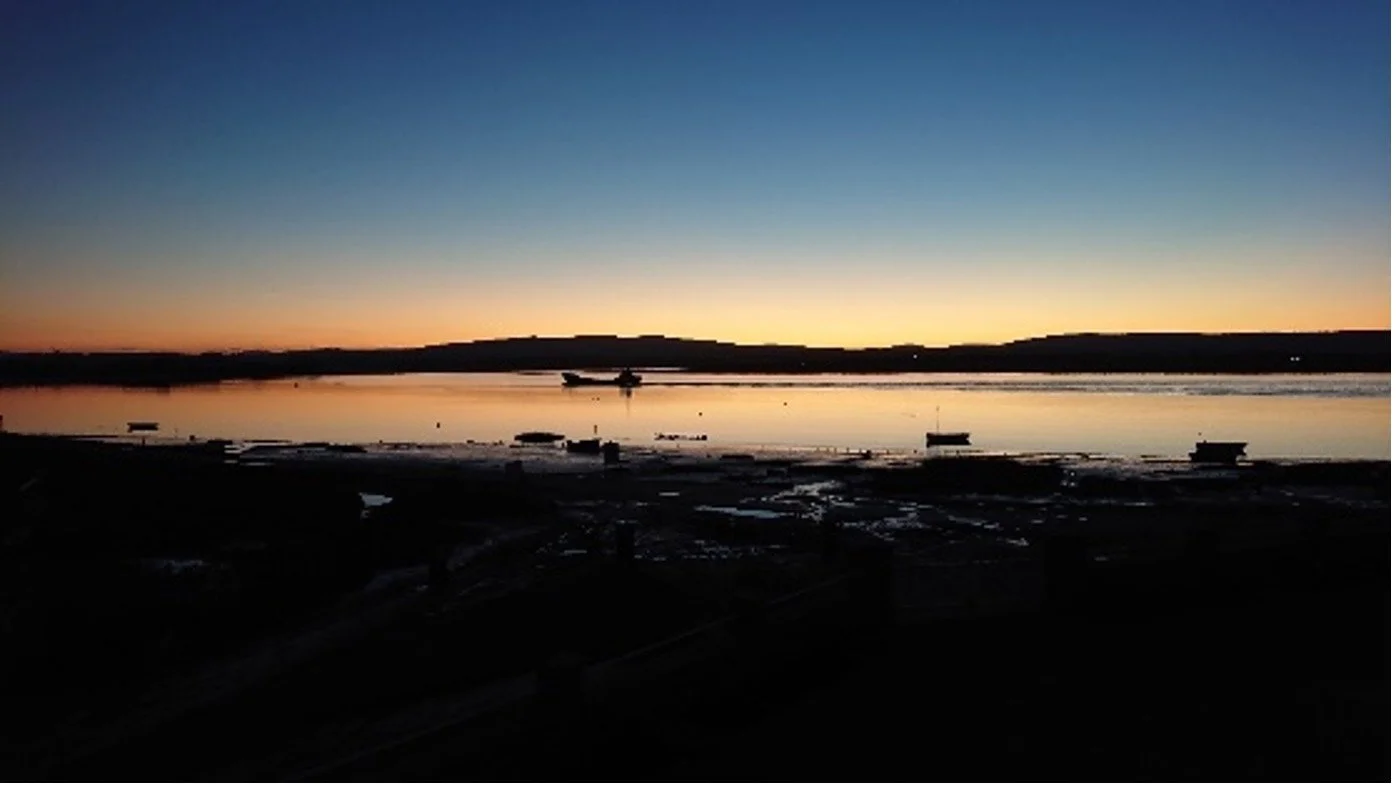
Sunrise at the Anchorage, October 2021
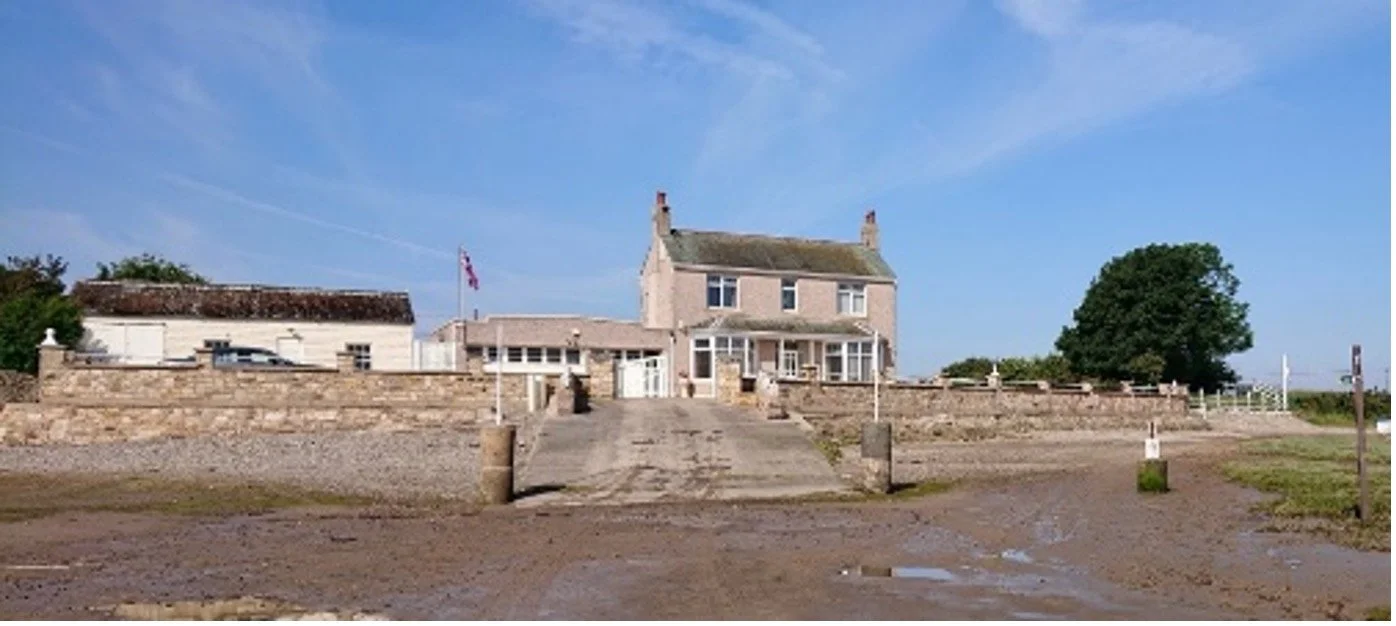
The Anchorage with flags flying, Queen Elizabeth’s Platinum Jubilee in 2022
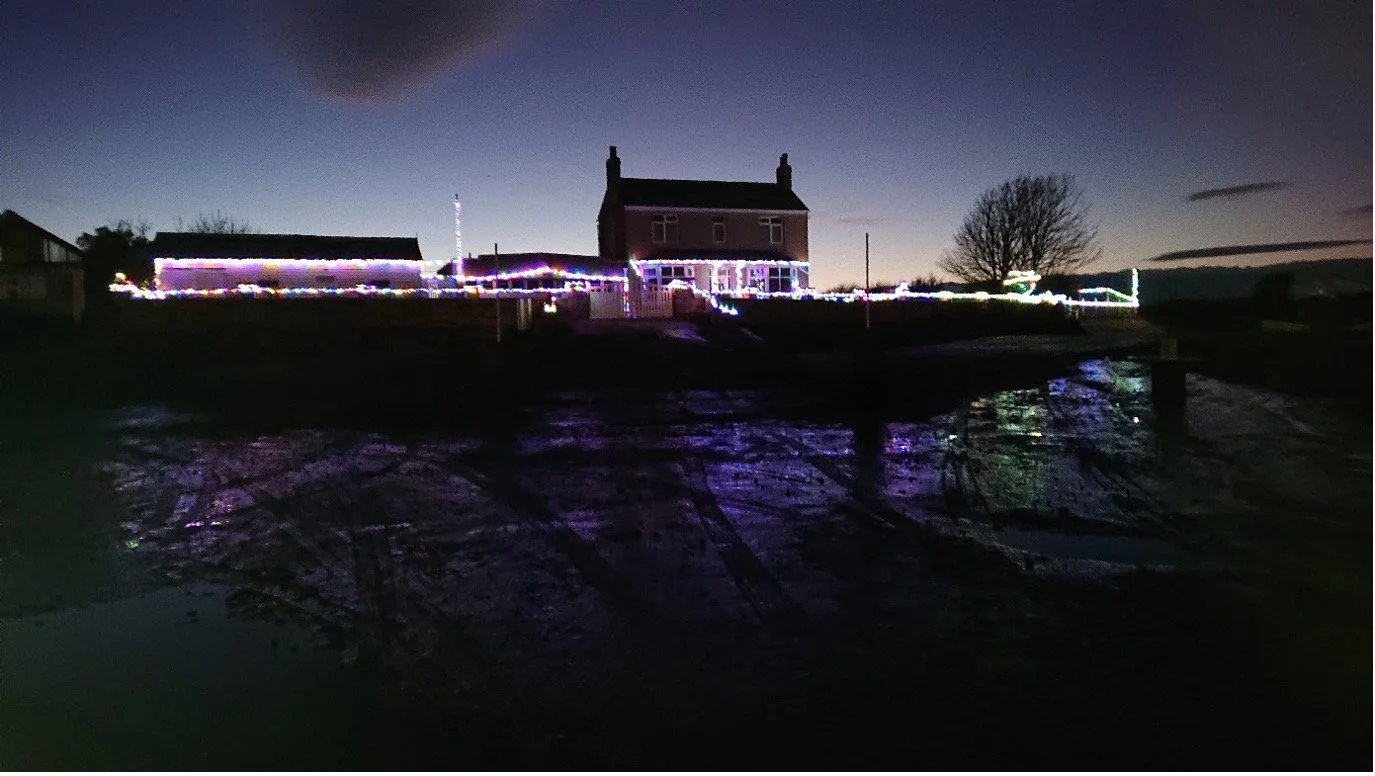
Christmas lights at the Anchorage, December 2022
We are grateful to Stephen Loxam, Christine Thomson (née Loxam), and Jill Sheldon (née Gardner) for providing information and photographs. Special thanks to Jill, who researched James Glover Gardner's biographical details.
The book by Edward Grey, “Lancaster’s Little Ships,” records Robert Gardner’s Role in the Coastal Trade 1924-1962.
Next time the house history of Gravel Cottage